Skip to content

Best Roses for Georgia

Best Roses for Georgia

Black spot spreading up from the lower leaves by midsummer is the sign that a rose was bred for a drier place than Georgia. Disease-resistant shrub roses and rugosas are practical choices for Georgia’s humid summers, and Georgia guidance also recommends Drift roses for landscapes. Hybrid teas can grow here too, as long as a spray program stands behind them.

Best Roses to Grow in Georgia

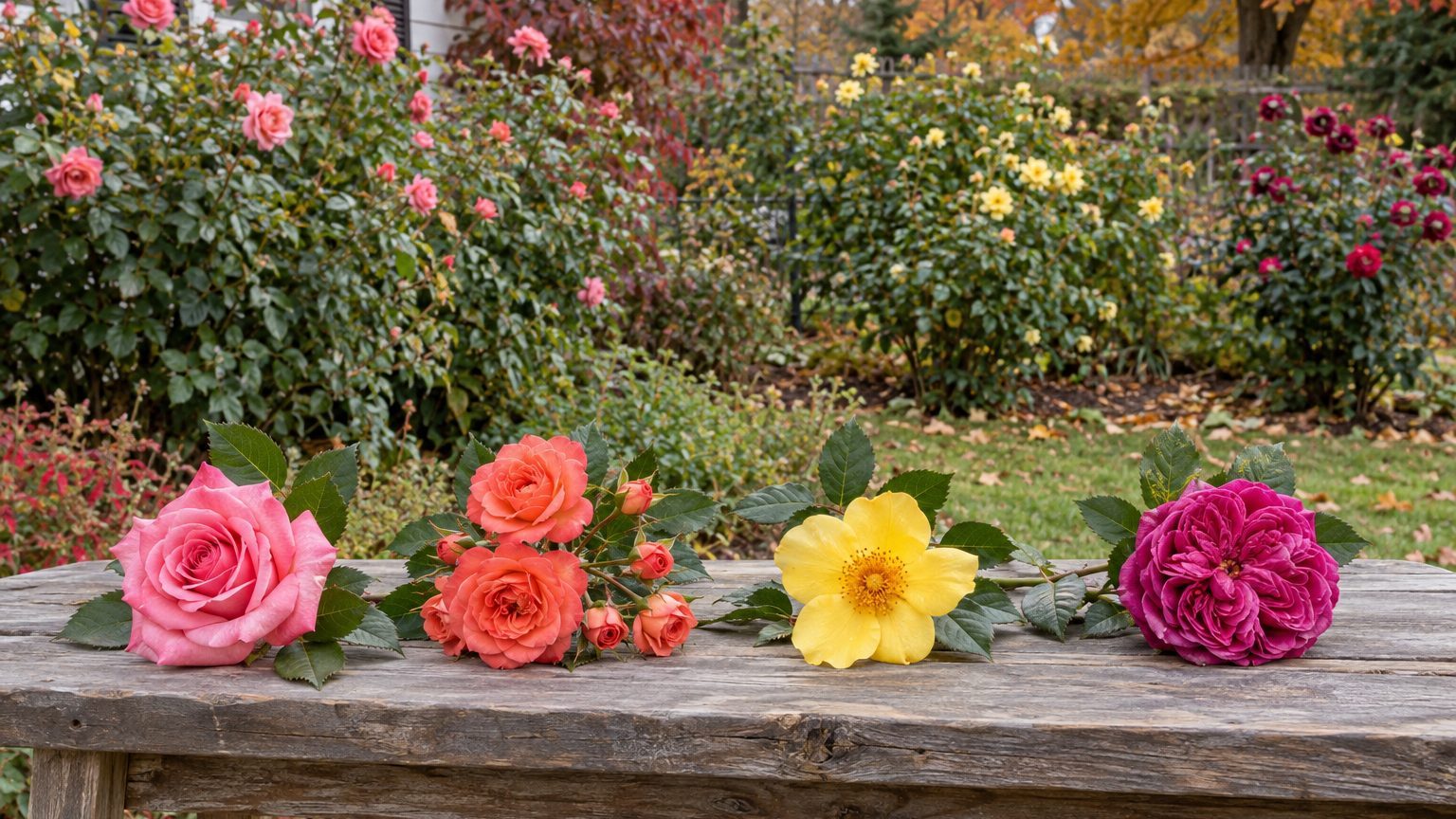
Healthy roses in bloom

Disease-resistant shrub roses, Drift roses, rugosas and old garden roses do well in Georgia. Humid summers favor leaf diseases, and winters run from USDA zone 6a to 9b across the state, so a tough, low-spray plant serves you better than a delicate one.

Shrub Roses

Shrub type roses bloom beautifully with few chemical controls needed. That makes them the low-effort choice for a front bed where you would rather not be mixing up sprays regularly.

The more susceptible kinds, hybrid teas among them, need an effective spray program in place before the growing season begins.

Drift Roses

Drift roses have been recommended for Georgia landscapes as a companion to Knock Out roses, and they come in a wide color range. Red Drift, Pink Drift (a double pink), Apricot Drift, Coral Drift, Peach Drift and White Drift are all available.

Popcorn Drift blends white and yellow.

Knock Out Roses

Knock Out roses work well as the backbone of a mixed planting. A Georgia public rose garden pairs them with Drift roses and floribundas such as the yellow Julia Child and the white Iceberg.

At home, combine tough shrub roses, low groundcover roses and floribundas for color.

Rugosa Roses

Rugosas offer useful disease resistance in a humid summer. Blanc Double de Coubert, Fru Dagmar Hastrup, Rugosa Alba and Topaz Jewel resist black spot, powdery mildew and Cercospora leaf spot.

The alba rose Alba Semi-Plena carries the same resistance.

Old Garden Roses

Old garden roses do not need the hard pruning that many modern roses get, and heavy cutting can ruin their graceful shape and sharply reduce flowering.

Once-blooming old garden roses flower on last year’s wood, so prune them right after they bloom, never in early spring.

Hybrid Teas

Hybrid teas need a rigorous spray program to keep black spot at bay. If you love the form, choose a resistant one such as Pride N Joy.

Among floribundas, Sexy Rexy resists black spot, and so does the grandiflora Prima Donna.

How to Choose a Rose for a Georgia Garden

Start with how much spraying you are willing to do, because that decision narrows the list faster than color or size. Then look at what the planting spot asks of the plant.

Regular feeding belongs on the calendar from March through September.

Your situation What suits it in Georgia Why
Humid summer, black spot every year Rugosas such as Blanc Double de Coubert or Topaz Jewel They resist black spot, powdery mildew and Cercospora leaf spot
Little time for spraying Shrub roses Shrub types bloom well with few chemical controls
You want hybrid tea blooms Pride N Joy, with a spray program It resists black spot, but hybrid teas still need spraying before the season starts
Mixed front bed with color Drift roses with Julia Child and Iceberg floribundas Georgia rose gardens combine them with Knock Outs
Old-fashioned look, less pruning Old garden roses They do not need hard pruning

Timing matters as much as the variety. Prune repeat-blooming roses such as hybrid teas, floribundas and modern shrub roses in February and March, as the buds swell. Plant bare-root roses in February or March, though January, April, November and December also work. Potted roses can go in later. Feed monthly from March through September. Without a soil test, a 16-4-8 or 12-4-8 fertilizer is the usual choice.

Which Roses Suit Different Parts of Georgia

Timing and winter exposure shift from the mountains to the coast.

  • North Georgia and the mountains: Fall freezes arrive earlier than elsewhere in the state and buds swell later, so prune toward the later end of the pruning window and take extra care with anything tender.
  • Atlanta: The city runs warmer than the countryside around it, so a neighbor in the surrounding hills may see frost sooner than you do.
  • South Georgia and the coastal plain: Winters are milder and buds swell earlier, so prune toward the start of the window.

Humid summers are a given in every one of these places, which is why disease resistance matters in all of them.

Rose Buying Mistakes to Avoid in Georgia

Hybrid Teas Without a Spray Plan

Hybrid teas are prone to black spot in a humid summer. Either commit to a spray program that starts before the growing season, or choose a shrub rose or a resistant selection such as Pride N Joy.

Planting Only Knock Outs and Drifts

There is no cure today for rose rosette disease in domestic cultivars like Knock Out and Drift. A mixed bed can add variety, but it does not provide a cure for rose rosette disease.

Planting Roses Too Close

A small plant in a nursery pot looks lost in the ground, so many gardeners crowd roses together. Space them 5 to 6 feet apart when you plant in February, so air can move through the foliage in a humid summer.

Where to Get Rose Advice in Georgia

University of Georgia Extension publishes rose guidance written for Georgia conditions, and your county extension office can answer questions about your own soil and bed.

  • Visit the extension website in winter, when you are choosing varieties before February planting.
  • Call your county office before the March feeding season to ask about soil testing.
  • Bring a leaf with spots to the county office in summer, so the disease can be identified before you spray.

Common Questions

Can You Plant a Potted Rose After the Bare-Root Window?

Yes. Potted roses can go in later than bare-root ones, which are best planted in February or March.

Are Climbing Roses a Good Choice in Georgia?

Climbing roses are hardy across the entire state and grow fast, with many varieties and colors. They are subject to disease and insects, so check the plant regularly through summer.

Is Any Rose Resistant to Rose Rosette Disease?

Researchers are studying the wild species Rosa setigera and Rosa palustris, which resist the virus, to understand how their immune response works. Knock Out and Drift roses have no cure once infected.
Wollerton Old Hall Rose: Size, Zones, Pruning and Care

Wollerton Old Hall Rose: Size, Zones, Pruning and Care

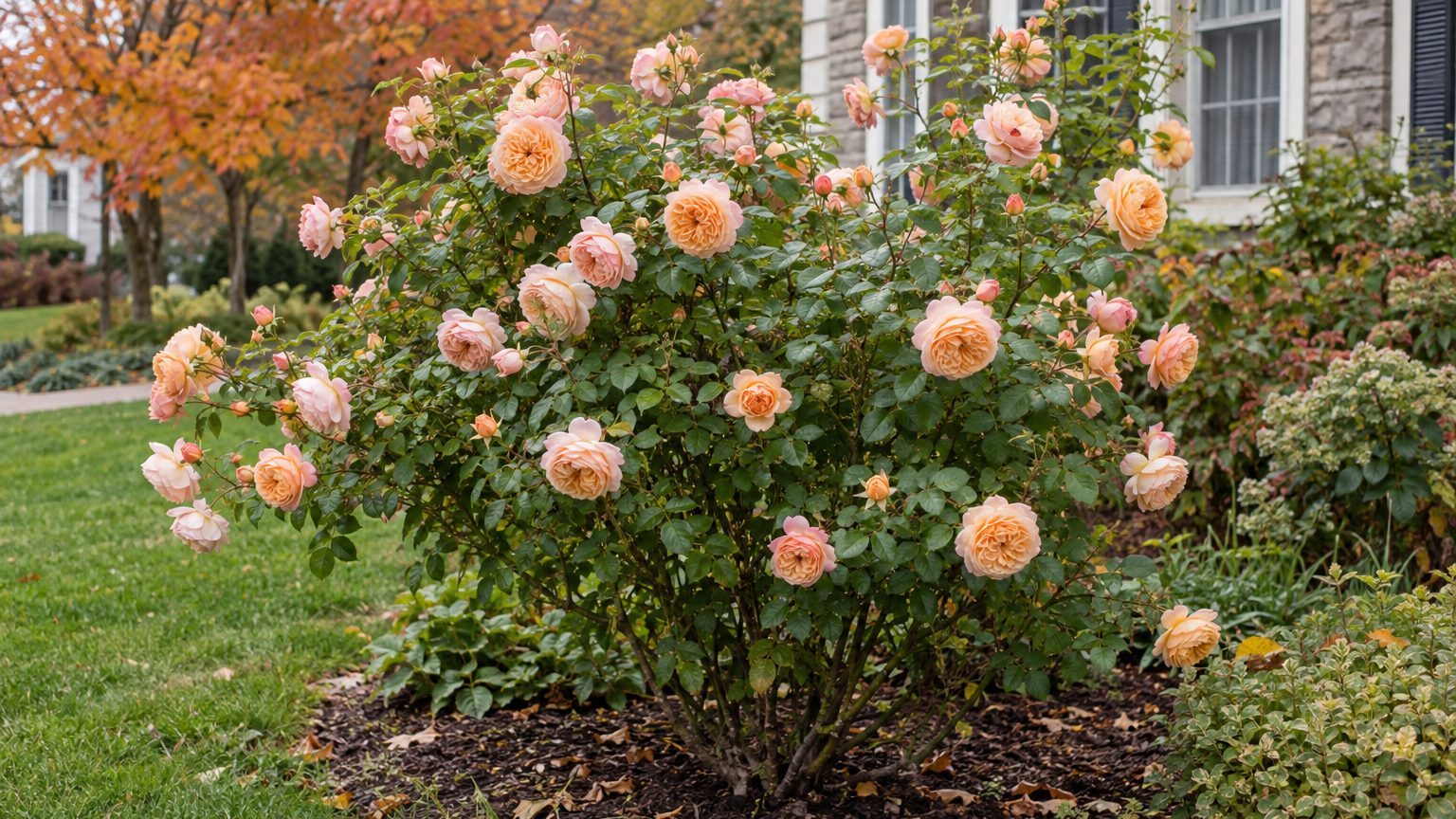
Wollerton Old Hall is a tall rose with apricot-and-yellow flowers and a strong fragrance. It is an English rose that can be trained up or left as a shrub.

What Is the Wollerton Old Hall Rose?

Wollerton Old Hall is a deciduous climber in the rose family, bred by David Austin of Great Britain and introduced in 2011. It can be grown as a climber against a support or kept as a large shrub, and it reaches 5-12 feet tall.

The flowers are solitary, fully double and rounded, 3–4 inches across, in a blend of apricot and yellow. Their fragrance is strong, and it counts among the most fragrant of the English roses.

Bloom begins in late spring or early summer. Because it is a good repeat bloomer, flowers return after the first flush, which makes it more than a one-season show.

Where Does the Wollerton Old Hall Rose Grow Best?

This rose is rated for USDA Plant Hardiness Zones 5a, 5b, 6a, 6b, 7a, 7b, 8a, 8b, 9a and 9b.

  • Ohio River Valley and the Mid-Atlantic: Ohio, Pennsylvania and Virginia sit well inside the range, with winters cold enough to rest the plant and summers it can handle.
  • Carolina Piedmont and the Southeast: North Carolina, Georgia and Tennessee fall in the middle to warmer zones, where the climber can be grown.
  • Willamette Valley and Puget Sound: Oregon and Washington have mild, moist conditions that suit it, though good air movement matters more where mornings stay damp.
  • Red River Valley and the northern Upper Midwest: Check with your local county extension office about whether this rose survives the winter there.
  • Southern Florida and the hottest desert Southwest: Check with your local county extension office about whether this rose grows well there.

The state selector just below this section leads to the page for your state, where local timing is laid out.

How to Care for the Wollerton Old Hall Rose Through the Year

Spring Wake-Up

Spring Wake-Up — Wollerton Old Hall Rose: Size, Zones, Pruning and Care

As buds swell and the first leaves open, check the canes for dead tips and loosen any ties that have tightened over winter. A climber that has been tied up since last year often needs its ties redone as the canes thicken.

Feed as growth starts and water at the base, not over the leaves, to keep the foliage dry.

Late Winter Pruning

Prune in late winter to control size and remove damaged or diseased canes.

Take out dead and weak wood first, then shorten the rest to fit the space. If you grow it as a climber, leave the strongest canes long and tie them down as close to horizontal as they bend.

First Flush

First Flush — Wollerton Old Hall Rose: Size, Zones, Pruning and Care

The apricot-and-yellow flowers open in late spring or early summer and reach 3–4 inches across.

Cut a few for the house. The fragrance fills a room.

Summer

Remove spent flowers by cutting back to a healthy leaf so the plant sends up more bloom. Water deeply at the base in dry spells, and keep mulch around the roots to hold moisture.

Watch the tallest canes, which can whip around in storms. Tie in new growth as it comes.

Autumn

Ease off feeding so the canes can harden before cold arrives. Rake up fallen leaves around the base, because old foliage that stays on the ground can carry problems into the next year.

Hold off on heavy cutting. Pruning belongs to late winter.

Winter

The plant drops its leaves and rests.

Use the quiet season to repair the trellis or wire before the new growth needs it.

Wollerton Old Hall Rose Diseases and Weak Points

Like most roses, this one does best with sun, airy spacing and watering at the soil rather than over the leaves. Dense, crowded canes hold moisture longer, which favors the leaf problems roses are known for.

Look for spots on the leaves that spread, paired with leaves yellowing and dropping from the lower canes, before treating anything. A single yellow leaf alone tells you little. Cutting out damaged or diseased canes in late winter, and clearing fallen leaves, keeps trouble from building.

The other weak point is size. A rose that tall will outgrow a small space unless it is pruned and tied each year.

Is the Wollerton Old Hall Rose Right for Your Yard?

It suits a gardener with a sunny wall, fence or arbor and a willingness to prune and tie each year. It is a poor fit for a tiny bed or a spot with no support nearby, and for anyone wanting a rose that needs no attention.

  • Fence or arbor owners will find a tall, narrow plant that fills vertical space without spreading wide, best planted where its scent reaches a path or seat.
  • Check the support before you buy the plant, then mark late winter on the calendar for the first pruning.

Common Questions

Can You Grow Wollerton Old Hall on a Trellis?

Yes. It grows as a climber, so a sturdy trellis, wall wires or an arbor works well. Tie the canes loosely as they grow so they do not rub the support.

Should You Deadhead Wollerton Old Hall?

Yes, cut spent blooms back to a healthy leaf. Because it repeats, removing old flowers encourages the next round instead of letting the plant put energy into seed.

Can You Grow Wollerton Old Hall in a Pot?

Its mature size can make container growing difficult.

Winchester Cathedral Rose: Size, Zones, Pruning and Care

Winchester Cathedral Rose: Size, Zones, Pruning and Care

White cups of petals open in clusters, fade, and a fresh round of buds follows on the same bush. That is the habit of the Winchester Cathedral rose, a compact shrub that suits a front bed or the corner beside the steps. Its size, climate range, pruning and yearly care decide how well it does in your yard.

What Is the Winchester Cathedral Rose?

This is a shrub rose in the rose family, grown for double white flowers with a cup shape. Each bloom measures 2-3 inches across and holds 40-60 petals, which gives it a full, layered look even though the individual flowers are not large.

The flowers come in clusters. That gives the bush a generous look in a bed.

The plant itself stays tidy. At maturity it reaches 3-4 feet in height and the same in width, so it fills a spot without swallowing the path. Blooms return in flushes through the season, not in one short burst.

Where Does the Winchester Cathedral Rose Grow Best?

This rose is rated for USDA zones 4a through 9b. Winter cold and the warmest southern edge are where the differences show up.

  • Upper Midwest: Compare your local USDA zone with the rose’s listed range and use local advice for winter protection.
  • Northeast and Mid-Atlantic: Compare your local USDA zone with the rose’s listed range.
  • Southeast and Gulf Coast: Compare your local USDA zone with the rose’s listed range.
  • South Florida and the Rio Grande Valley: Compare your local USDA zone with the rose’s listed range before planting in South Florida or the Rio Grande Valley.

The state selector just below this section leads to the page for your state, where the months for each task are laid out for your own climate.

How to Care for the Winchester Cathedral Rose Through the Year

Waking

Waking — Winchester Cathedral Rose: Size, Zones, Pruning and Care

New leaves break from the buds on the canes as the weather warms. Spread compost around the base so the soil is fertile when growth speeds up, and keep it back from the canes so they stay dry at the crown.

Pruning

Late winter is the time, while the buds are still tight. Cut out dead and diseased canes first, then shorten the rest to keep the bush near its 4-foot width. Late-winter pruning removes dead and diseased canes and controls the plant’s size.

Bloom

Bloom — Winchester Cathedral Rose: Size, Zones, Pruning and Care

The first flush opens as clusters, and each cluster fades at its own pace. Flowers return in flushes through the season.

Summer

Water deeply at the soil, not over the leaves, and do it regularly in dry spells.

Fall

Rake fallen leaves from under the bush and put them in the trash or a hot compost pile, not back on the bed. Hold off on any hard pruning, since a cut now pushes tender growth that winter will damage.

Winter

At the cold edge of the range, use your state page for local winter-protection timing. In milder zones, leave the canes standing until late winter pruning.

Winchester Cathedral Rose Diseases and Weak Points

This rose has good disease resistance. Regularly check the leaves for signs of trouble.

Placement matters: give the bush full sun in fertile, well-drained soil.

Threat How Winchester Cathedral handles it
Disease in general Good disease resistance

Check the undersides of leaves and the tips of new shoots, and remove any damaged or diseased canes at pruning time so they do not linger into the next season.

Is the Winchester Cathedral Rose Right for Your Yard?

It suits a gardener with a modest bed who wants white flowers in flushes and a plant that stays near 4 feet. It needs late-winter pruning to remove dead and diseased canes and control its size.

  • If you have a small front bed or a spot by the walk, it fits at its mature size, and the state page for your yard gives the pruning months that match your climate.
  • If your local USDA zone falls outside the listed range, or you want a tall climber, look at other roses instead.
  • If you are ready to plant, open the state selector and follow it to your state’s page before you buy.

Common Questions

Is the Winchester Cathedral Rose Fragrant?

Yes, the double white flowers carry a light to moderate fragrance. It is a soft scent, so it reads best near a seat, a path or an open window.

Where Did the Winchester Cathedral Rose Come From?

It is a sport of Mary Rose, found by David C. H. Austin in 1988. A sport is a branch that differs from the parent plant, and in this case the difference gave a white-flowered shrub.

How Much Sun Does a Winchester Cathedral Rose Need?

Full sun, in fertile, well-drained garden soil. A bed that stays soggy or sits in shade will not give the same flushes of bloom.

William Baffin Rose: Size, Zones, Pruning and Care

William Baffin Rose: Size, Zones, Pruning and Care

A William Baffin in full June bloom carries large clusters of deep pink flowers. This hardy climbing rose suits cold-winter yards, climbs a fence or arbor with a little help, and keeps flowering after the big first show.

What Is the William Baffin Rose?

William Baffin is a repeat-blooming climbing rose that grows on its own roots, so it is not grafted. It can be grown as a large shrub or trained as a climber, and it reaches 8 to 10 feet in height with a wide spread.

The flowers are semi-double, deep pink and 3 inches across, with bright gold stamens in the center. They open in large clusters, and each flower carries 15 to 20 petals.

Growth is very vigorous and upright. Without support it sprawls, so a trellis, fence or arbor does real work for this rose.

Where Does the William Baffin Rose Grow Best?

William Baffin is hardy in USDA Zones 3 to 7, which makes it a dependable climber for cold climates. Its exceptional hardiness makes it a dependable climber for cold climates.

  • Upper Midwest: Compare your local USDA zone with the rose’s listed range. Canes that suffer in a hard winter are simply pruned back in spring.
  • Northeast and New England: Compare your local USDA zone with the rose’s listed range. Plant it where it gets support, since it sprawls without it.
  • Mountain West: Compare your local USDA zone with the rose’s listed range. Prune this bush early to remove winter damage and deadwood.
  • Mid-South and Lower Midwest: Compare your local USDA zone with the rose’s listed range.

The state selector just below this section leads to the page for your state, where the local timing is spelled out.

How to Care for the William Baffin Rose Through the Year

Waking Up

When buds begin to swell, check the canes for winter damage. Dead or blackened wood is easy to spot against green, living stems. Tie in any long canes that came loose from their support over winter.

Pruning

Prune early in the season to remove winter damage and deadwood. Then cut out old, weakened long canes as needed, which leaves room for fresh growth. Because this rose repeat-blooms, a light hand keeps the climbing framework intact.

Bloom

Bloom — William Baffin Rose: Size, Zones, Pruning and Care

The heaviest flowering comes in June, followed by lighter bloom through summer. The bloom season runs from June to October, since the plant sets more buds and keeps going until frost.

Summer

Suckers may appear around the base. Because the plant grows on its own roots, they are simply the plant spreading and expanding, so there is nothing to fix. Keep long canes tied to their support as the growth gets heavy.

Autumn

Flowering continues into October, so leave the last blooms alone and let the plant wind down with the first frosts. Pull any dead or fallen cane debris from the base before winter.

Winter

Exceptional hardiness makes this rose suitable for cold climates. Leave the canes on their support through winter, and wait for spring to see what damage, if any, needs cutting out.

William Baffin Rose Diseases and Weak Points

Disease resistance is a strength of this rose. It is a climber known for exceptional hardiness and disease resistance.

Its vigorous, sprawling habit needs room and support.

Threat How William Baffin handles it
Black spot Resistant
Mildew Resistant
Winter cold Exceptional hardiness, with some cane damage still possible

Sprawling is the real habit to manage. Without support the plant flops, and a vigorous upright grower of 8 to 10 feet can crowd a small bed quickly.

Is the William Baffin Rose Right for Your Yard?

This rose suits a yard with a sturdy fence, arbor or wall and enough room for a plant that grows wide. It fits gardeners who want color from June to October and have room for its vigorous growth.

  • A cold-winter yard in Zones 3 to 7 gets a dependable climber; prune it early to remove winter damage and deadwood.
  • A small patio or tight border is a poor match, since the height and spread outgrow it fast.
  • Your state page gives the local months for pruning and planting, so open it through the state selector before you buy.

Common Questions

Is William Baffin a Climbing Rose or a Shrub?

It can be grown either way. As a climber it needs support, and unsupported it grows as a large, sprawling shrub.

Does William Baffin Bloom More than Once?

Yes, it is a repeat bloomer. The heaviest flush comes in June, with lighter bloom through summer into October.

Why Is My William Baffin Sending Up Shoots Away from the Main Plant?

The rose grows on its own roots and is not grafted, so the shoots are the plant spreading and expanding. They are not a sign of a problem.

White Meidiland Rose: Size, Zones, Pruning and Care

White Meidiland Rose: Size, Zones, Pruning and Care

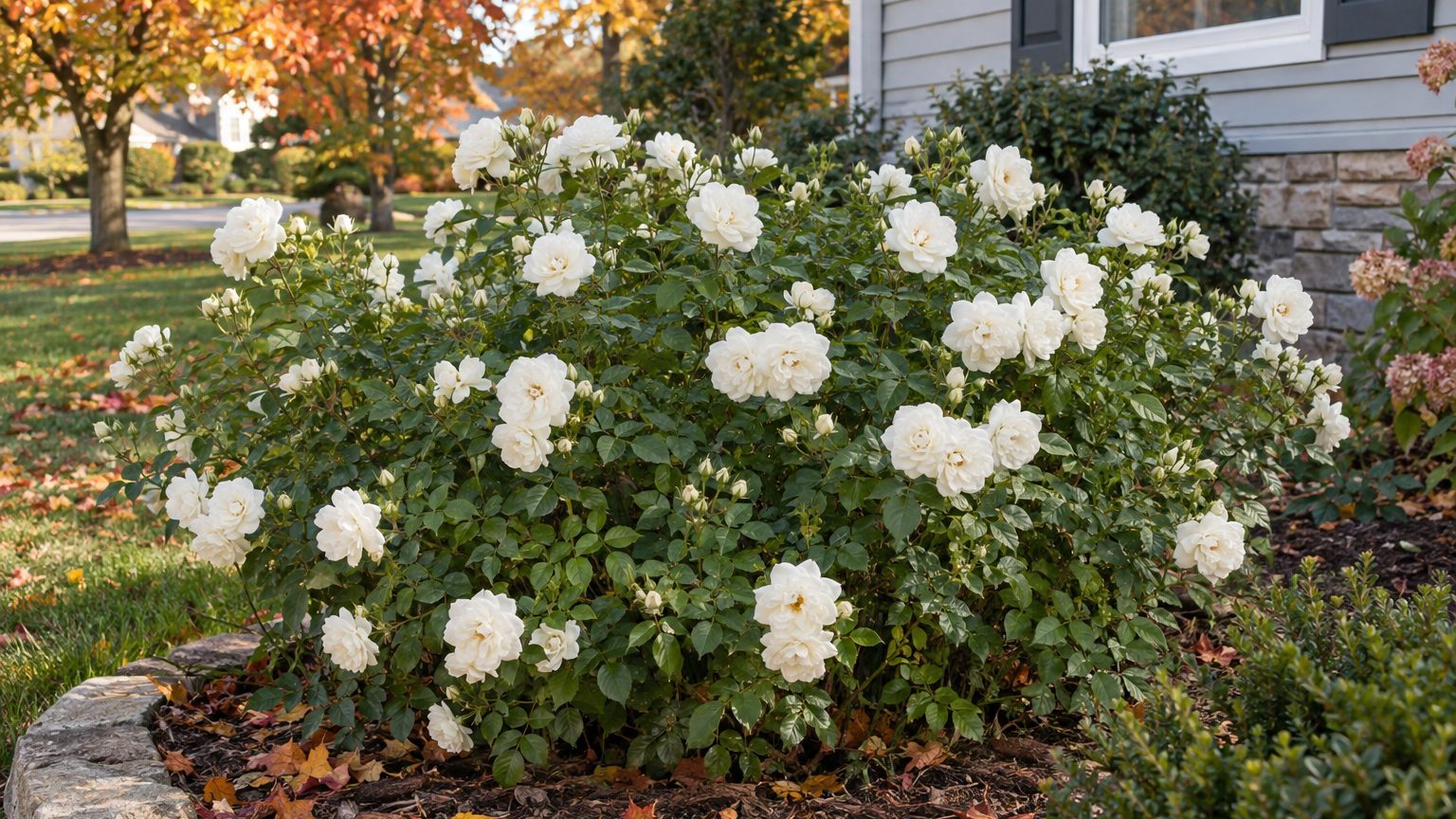
In late spring and early summer, a low mound of white double blooms spreads across the front of the border and keeps flowering well after the first flush fades. That is the White Meidiland rose, a ground-hugging shrub rose. Here is where it grows, when to prune it, and what each season asks of you.

What Is the White Meidiland Rose?

White Meidiland is a hybrid miniature shrub in the rose family, bred in France in 1987 by Marie-Louise (Louisette) Meilland. It grows as a wide, low mound rather than a tall bush, reaching 1-3 feet in height. That keeps it below windowsills and fence tops.

The plant spreads far more than it rises, covering 4-7 feet of ground over time. Give it that room from the start, because a rose planted too close to its neighbors ends up crowded and damp.

The flowers are white, double, and borne in large clusters. They open from late spring to early summer and repeat afterward, which is why the plant keeps looking dressed well beyond its first flush.

Where Does the White Meidiland Rose Grow Best?

This rose is hardy in USDA zones 4a through 9b.

  • Upper Midwest: In southern Minnesota and Wisconsin, compare your local USDA zone with the rose’s listed range. In colder areas, compare your local USDA zone with the rose’s listed range before planting.
  • Northeast and Mid-Atlantic: Compare your local USDA zone with the rose’s listed range.
  • Gulf Coast: Compare your local USDA zone with the rose’s listed range.
  • South Florida and the Keys: Compare your local USDA zone with the rose’s listed range before planting in South Florida or the Keys.

The state selector just below this section takes you to the page for your own state, where the local timing is laid out.

How to Care for the White Meidiland Rose Through the Year

Waking Up

Waking Up — White Meidiland Rose: Size, Zones, Pruning and Care

When growth starts, the plant needs fertile, well-drained soil and a layer of mulch that helps the ground hold moisture. Keep mulch loose around the base so air still reaches the crown.

Pruning

Prune in late winter, after the last foliage has fallen and before new spring growth appears. Start by removing dead, damaged or diseased wood, and cut out every dark brown or black stem.

On a plant more than a few years old, take out about 1/3 of the oldest, thickest branches to encourage new growth. To shorten the plant, trim each branch back to the height and shape you want. Reducing it by 4 to 8 inches is an option, though it is not necessary.

Bloom

Large clusters of double white flowers arrive from late spring into early summer. The blooms repeat afterward, so the plant keeps producing flowers through summer rather than stopping after one flush.

Summer

Water at the soil line instead of from overhead, since wet leaves invite disease. Full sun suits it best, and the mulch laid in spring keeps the roots from drying out between waterings.

Fall

Leaves drop in fall, and that drop is the signal that pruning season is coming. Leave the cutting until late winter and, in the meantime, rake fallen foliage out from under the mound so it does not sit against the canes.

Winter

At the cold edge of its range, check your state page for local winter-protection advice. Use the quiet months to check that nothing crowds the mound, and make a note of dark stems to cut out at pruning time.

White Meidiland Rose Diseases and Weak Points

The plant is listed with good disease resistance. Good disease resistance does not remove the need for sensible spacing and dry foliage.

Avoid crowding and wet foliage. Space the plants generously and water at the base to help prevent disease.

Threat How White Meidiland handles it
Common rose diseases Good disease resistance
Crowded planting Avoid crowding to help prevent disease
Overhead watering Water at the base to keep leaves dry
Dark brown or black stems Remove them all at pruning time

Cutting out dead, damaged and diseased wood each late winter keeps the center of the mound open and clean for the season ahead.

Is the White Meidiland Rose Right for Your Yard?

It suits a gardener with a sunny spot and room to let a shrub spread wide. It needs late-winter pruning, but it does not suit a small, tight bed.

  • It fits a sunny border front, a bank, or an open stretch where a low mound can fill the ground.
  • It is a poor match for a narrow strip, a cramped bed, or a zone colder than 4a or warmer than 9b.
  • Before you buy, open your state page to see the pruning window that applies where you live, then mark it on the calendar.

Common Questions

Can You Grow a White Meidiland Rose in a Container?

Yes. It can be used in a container as well as in the ground. Choose a pot large enough to hold the spreading mound and fill it with fertile, well-drained soil.

Will a White Meidiland Rose Bloom in Shade?

It grows best in full sun but tolerates light shade. Deep shade is a poor fit, so give it the sunniest spot available if you want a full show of flowers.

Can White Meidiland Rose Be Planted on a Slope?

Yes. It works as a ground cover on slopes and can cascade over a rock wall. The wide, low habit covers bare soil, and mulch around the plants helps hold moisture on a hillside.

Westerland Rose: Size, Zones, Pruning and Care

Westerland Rose: Size, Zones, Pruning and Care

Apricot clusters opening on a fence or arbor, with a spicy scent drifting across the yard, are what Westerland is grown for. This rose can be trained as a climber or left as a large shrub, and the choice changes how you prune it and how much room it needs.

What Is the Westerland Rose?

Westerland is a shrub or climbing rose in the rose family, bred by Reimer Kordes in 1969. It is vigorous enough to be grown free-standing or trained against a structure.

The flowers are double, apricot, and up to 5 inches across. Each carries 20-25 ruffled petals and a strong spicy fragrance, and they open in clusters.

The plant repeats its bloom through the season. Expect 8-12 feet in height, especially in warmer climates, with a spread of 3-6 feet.

Where Does the Westerland Rose Grow Best?

Westerland needs moist, well-drained, fertile soil and full sun. Its height shifts with the climate, so where you live decides whether it stays a big shrub or becomes a tall climber.

  • In warm climates, give it a sturdy fence or arbor from the start.
  • Central Maryland: Fall can turn dry here, and a dry stretch in that season is worth watching. Check the soil around the roots and water when it is parched.
  • Use the plant tag to plan for Westerland’s mature height in your location, and give it full sun.

Check with your local county or provincial extension office for local pruning months and frost timing.

How to Care for the Westerland Rose Through the Year

Early Spring

Early Spring — Westerland Rose: Size, Zones, Pruning and Care

As growth wakes, check that the soil stays moist but drains freely, since Westerland dislikes sitting wet. Fertile ground supports vigorous growth for the climbing season ahead.

Pruning

Prune in late winter to early spring to remove winter damage and shape the plant. Where a light trim is all it needs, wait until late winter or early spring.

Climbing roses are pruned less harshly than shrub roses. Westerland blooms on last year’s stems and on stems growing this summer, so heavy cutting removes flowers you would have had.

Bloom

Flowers come in clusters and keep arriving nearly continuously through the season. Cut spent clusters if you like a tidy look, and leave the canes themselves alone.

Summer

Tall stems that overshoot an arbor can be tipped after peak bloom. The cut makes side branches near the arbor corners that are easier to tie in.

Another option is to let the top canes grow taller and arch over the arbor on their own, draping across the top.

Fall

Do not prune in fall. Keep watching the soil for dryness, because dry autumns do happen, and a steady drink keeps the roots in good shape going into winter.

Winter

Winter preparation depends on your climate, so check with your local county or provincial extension office. In central Maryland, if mulch is not already down, lay it about 3 inches thick over the root zone and leave the canes standing until late-winter pruning.

Westerland Rose Diseases and Weak Points

The foliage of Westerland is fairly disease-resistant. Resistant is not immune, though, and black spot and mildew still deserve a regular look.

Check the leaves through the growing season, especially after humid weather, and remove affected foliage when it appears.

Threat How Westerland handles it
Leaf diseases in general Foliage is fairly disease-resistant
Black spot Watch for it despite the resistance
Mildew Watch for it despite the resistance

In central Maryland, monitor the soil for watering needs during a dry fall. Water when needed and keep the root zone mulched.

Is the Westerland Rose Right for Your Yard?

Westerland suits a yard with a fence, wall, or arbor to cover and a sunny spot that drains well. It asks for little pruning, but it will not fit a tight corner.

  • Choose it for a tall support where you want repeat bloom and fragrance, and plant when the soil can be worked.
  • Skip it for a small bed or a narrow strip where a plant reaching 8-12 feet would crowd walkways.
  • Check with your local county or provincial extension office for the pruning months that fit your local winter, then mark them on the calendar.

Common Questions

Can You Grow Westerland in Partial Shade?

It tolerates partial shade, though full sun is what it prefers. Choose the sunniest wall or fence you have and treat shade as a compromise.

Can You Cut Dead Canes Whenever You See Them?

Yes. Dead or diseased canes can come out at any time of year, even when the main pruning is still months away.

Why Is It Hard to Bend Westerland Canes Onto a Support?

Climbing roses grow upright and arch, then hold on with their thorns rather than by twining. Their stems are not very bendy, so guide them early and tie in the side branches that form after tipping.

The Pilgrim Rose: Size, Zones, Pruning and Care

The Pilgrim Rose: Size, Zones, Pruning and Care

A rose that opens soft yellow and flat as a saucer is easy to spot in a border, and The Pilgrim is one of those. It grows as a bushy shrub in most yards and stretches into a climber where winters are mild.

What Is the The Pilgrim Rose?

The Pilgrim is a hybrid English rose bred by David Austin in 1991. It is sold as a shrub and also trained as a climber, so the same plant can fill a border or cover a fence, depending on your climate and how you tie it.

The flowers are soft yellow, showy and fragrant. They start cup-shaped, then gradually open to a large, flat rosette packed with 60 to 140 petals.

Growth is vigorous and bushy. Blooms come in several flushes from summer to fall rather than in a single burst, which keeps color in the yard late into the season.

Where Does the The Pilgrim Rose Grow Best?

The Pilgrim is hardy in both cold and warm climates, but its habit changes with the weather. Its final form depends on the climate and how it is trained.

  • Gulf Coast: Check with your local county extension office before deciding how much room and support it needs.
  • Upper Midwest: Check with your local county extension office before treating it as a shrub or a climber.
  • Carolinas and the Mid-Atlantic: Check with your local county extension office before choosing a freestanding or trained form.

Your local county extension office can tell you the months that fit your local climate.

How to Care for the The Pilgrim Rose Through the Year

Waking Up

Waking Up — The Pilgrim Rose: Size, Zones, Pruning and Care

As growth restarts, check the planting spot. The Pilgrim tolerates shade but flowers best in full sun with fertile, humus-rich, well-drained soil. Improve poor soil before planting so it is fertile, humus-rich, and well drained.

Pruning

Prune in late winter, before new growth gets going. Cut last season’s growth back by one-third, and take some of the older stems down to the base so the plant keeps making fresh wood.

On a climbing plant, tie new shoots in horizontally. Cut the side shoots that flowered back by two-thirds.

Bloom

The first flush opens as the weather warms, and the plant keeps producing in waves from summer to fall. Cut flowers for the house if you want to enjoy the fragrance indoors.

Summer

Good airflow matters here because mildew is the plant’s soft spot. Keep the center of the shrub open, water at the base rather than over the leaves, and watch new growth for a powdery coating.

Autumn

The last flush often arrives as nights cool. Enjoy it, and keep an eye out for deer, since they chew this rose and tender fall growth is easy for them to reach.

Winter

Winter protection depends on local conditions, so check the guidance for your state before cold weather arrives. Use the quiet months to plan late-winter pruning and to set up a support if you want a climber.

The Pilgrim Rose Diseases and Weak Points

The Pilgrim has good resistance to the usual rose diseases. Its trouble spots are specific, and they are easy to plan around once you know them.

Threat How The Pilgrim handles it
Usual rose diseases Good resistance
Mildew Susceptible
Deer Susceptible to chewing

If deer walk through your yard, protect the plant with a fence or netting. For mildew, keep the plant open to airflow and the foliage dry.

Is the The Pilgrim Rose Right for Your Yard?

It suits a sunny spot with decent soil where you want scent and a full, old-fashioned flower. It is less suited to shade or to open yards with heavy deer traffic.

  • Choose it for a border or a fence when you want fragrant yellow blooms over a long stretch of the season.
  • Skip it, or fence it, if deer visit often and you cannot protect the plant.
  • Contact your local county extension office to see the months for planting and pruning where you live.

Common Questions

How Far Apart Should You Plant the Pilgrim Roses?

Allow 3-5 feet between plants in a group. That spacing gives each shrub room to fill out and lets air move through, which helps with mildew.

Can the Pilgrim Rose Grow in Shade?

It tolerates shade, but flowers best with full sun.

How Do You Get More Flowers from the Pilgrim Rose?

Deadhead the spent blooms. Removing them encourages more flowers, and with several flushes from summer to fall, that adds up.

The Fairy Rose: Size, Zones, Pruning and Care

The Fairy Rose: Size, Zones, Pruning and Care

Clusters of small pink flowers spilling over the edge of a border from late spring until frost are the mark of The Fairy rose. It stays low, asks for little pruning and grows across a long span of the country, so size, hardiness and care are what matter most when you plant it.

What Is the The Fairy Rose?

The Fairy is a dwarf shrub rose in the Polyantha class, a group of small roses that carry their flowers in clusters. The plant is bushy and compact, with small glossy leaves that stay tidy through the season.

Each flower is a cup-shaped, light pink double, one inch across. The petals, 8 to 25 of them, stack into a small rosette, and the clusters open over a long stretch of the year.

Height runs from 2 ft. 6 in. to 3 ft. 0 in. Width runs from 2 ft. 0 in. to 3 ft. 0 in. Leave room for the larger figure, since the shrub grows 3 feet tall and wide in a good spot.

Where Does the The Fairy Rose Grow Best?

The Fairy is listed for USDA Plant Hardiness Zones 5a, 5b, 6a, 6b, 7a, 7b, 8a, 8b, 9a, 9b, 10a, 10b, 11a, and 11b. Where you sit along that run changes how much attention the plant needs.

  • Upper Midwest and New England: Use your state page to check whether your location falls within The Fairy’s listed hardiness zones.
  • Colorado: Gardeners here can plant it among the roses that do well in the state.
  • Mid-Atlantic and Southeast: Use your state page to check local hardiness and winter care.
  • Gulf Coast and Florida: Use your state page to check local hardiness and care.

The state selector just below this section opens the page for your own state.

How to Care for the The Fairy Rose Through the Year

Spring Wake-Up

Spring Wake-Up — The Fairy Rose: Size, Zones, Pruning and Care

When the buds swell on the canes, the rose is waking. Look the shrub over then, and note any cane that reaches well past the mound.

Pruning

Prune lightly in late winter or early spring, and only to control the size. A rose this compact does not need to be cut back hard, so shorten the stray growth and leave the rest.

Bloom

Flowering starts in May and continues until frost. The small clusters keep opening continuously from May until frost.

Summer

Summer is mostly watching. Water at the base of the plant rather than over the foliage, which keeps the small glossy leaves dry. The blooms lighten in the heat, and the pink may fade to blush white.

Fall

Flowers keep coming until frost, so the season ends when the cold arrives. There is no need to stop the shrub early. Let it bloom through and leave pruning for the next late winter.

Winter

Protect the crowns in cold winter areas. A mound of mulch or soil over the base of the plant, put on once the ground has cooled, shelters the part of the shrub that regrows in spring.

The Fairy Rose Diseases and Weak Points

The Fairy has good disease resistance, and that starts with the leaves. Small and glossy, they stand up well to the fungal problems that spot and yellow many roses.

Its limits are modest. The flowers may fade to blush white during summer.

Threat How The Fairy handles it
Fungal leaf diseases Small, glossy leaves have good resistance
Air pollution Tolerates it, so it suits spots near streets
Summer sun Flowers may fade to blush white

Good resistance is not immunity, so watch the leaves in a damp season. Space the plants so air moves between them.

Is the The Fairy Rose Right for Your Yard?

The Fairy suits a yard with limited room and little time for pruning. It does not suit a gardener who wants a rose to scent the yard or one that grows tall.

  • Use it along a walkway, at the front of a border or on a slope, where a low shrub of 3 feet fits the space.
  • Pass on it if you want a tall, fragrant rose, since this one stays short and carries little scent.
  • Pick your state in the selector to open your state’s page, and check it for the months that fit your yard before you prune or protect the crowns.

Common Questions

Can You Use the Fairy Rose on a Slope or Over a Wall?

Yes. It is among the roses grown as ground covers, which are low varieties useful on sloping banks, as borders for walkways or cascading over walls.

How Old Is the Fairy Rose?

It was introduced in 1932, which makes it a long-standing rose in American gardens.

Does the Fairy Rose Have a Scent?

The fragrance is mild to none. Plant it for the color and the clusters, not for perfume.

Sweet Juliet Rose: Size, Zones, Pruning and Care

Sweet Juliet Rose: Size, Zones, Pruning and Care

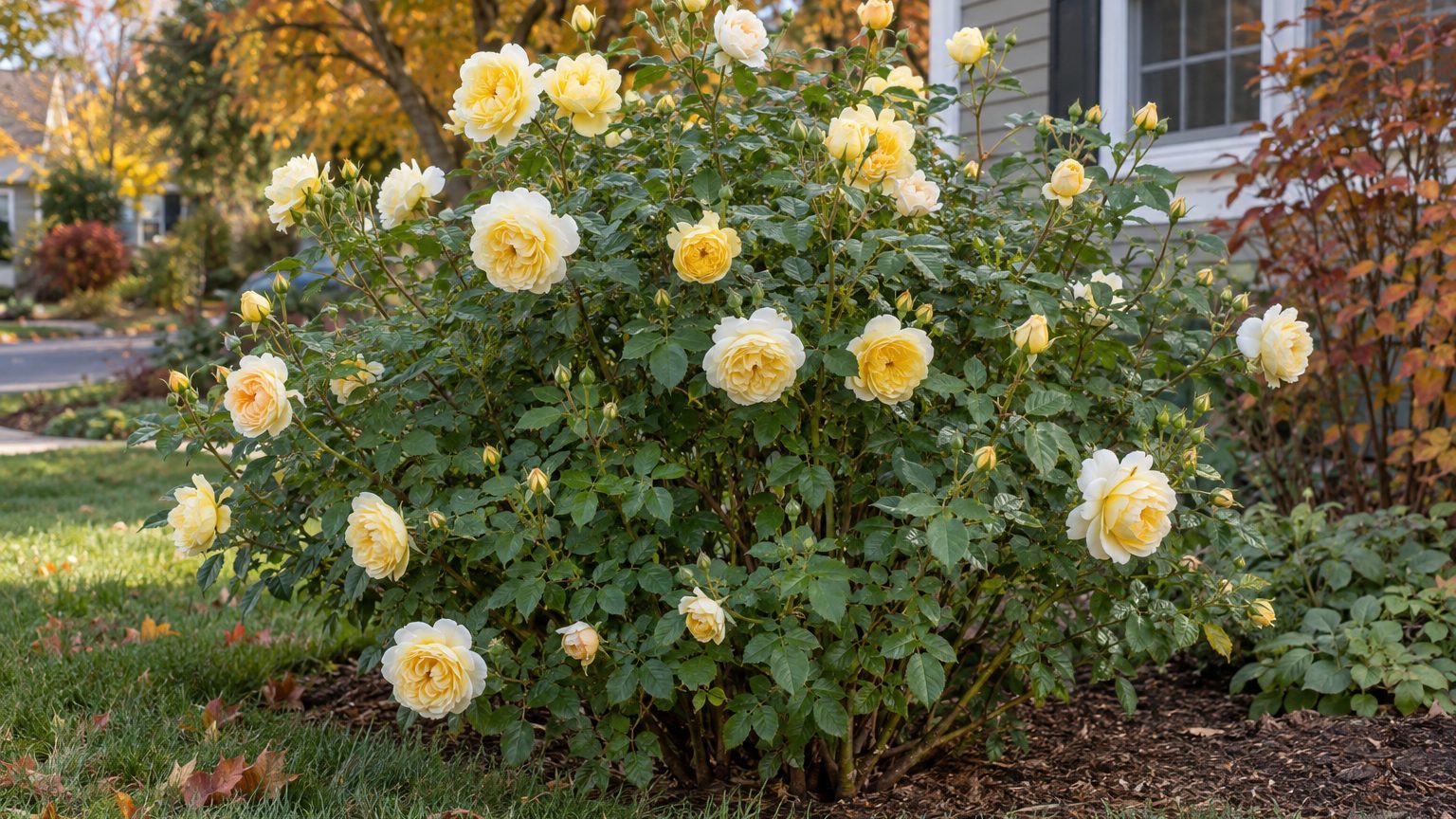
During a flush, Sweet Juliet carries fragrant, very full apricot-blend flowers in small clusters. It grows as a dense shrub that fills out to the base, fitting a front bed or a spot beside the patio.

What Is the Sweet Juliet Rose?

Sweet Juliet is a shrub rose that grows 3-5 feet tall and 2-3 feet wide. The form is dense and fills out to the base, so the plant looks full from the ground up instead of leggy and bare at the bottom.

The fragrant double flowers are an apricot blend, 2-3 inches across and very full with 40-70 petals. They open in small clusters in flushes throughout the season. The glossy foliage grows on stems with prickles.

Where Does the Sweet Juliet Rose Grow Best?

Light, soil and winter wind all matter to this rose. Full sun and rich, well-drained, moist soil give the best flowering, and the places below show how that plays out.

  • Where winter wind has a clear run at the canes, protect the plant before cold weather settles in.
  • A spot near a wall or fence can break winter wind while still allowing full sun.
  • Where heavy soil holds water, choose a bed that drains well.
  • In rainy climates, choose a well-drained bed in full sun and keep the soil moist.

The state selector just below this section takes you to the page for your own state, where the local months for each job are laid out.

How to Care for the Sweet Juliet Rose Through the Year

Waking Up

Waking Up — Sweet Juliet Rose: Size, Zones, Pruning and Care

When the buds begin to swell, the rose wants regular watering and fertilizing to keep a quality appearance. Feeding at this stage supports the flushes of bloom that come later. Water at the base to keep the foliage dry while you watch for leaf disease.

Pruning

Prune in late winter, before new growth gets going. Cut out dead, diseased and crossed canes first. Then trim to control size while preserving its dense form.

Bloom

Bloom — Sweet Juliet Rose: Size, Zones, Pruning and Care

Flowers come in flushes, with quieter gaps between waves of color. Cut a spent cluster back to a healthy leaf to keep the shrub tidy. On a calm day, the fragrance is easier to notice.

Summer

Regular watering helps maintain the plant’s appearance through summer. Keep the soil evenly moist rather than soaked, and keep feeding so the plant has fuel for the next wave of buds.

Fall

As the flushes thin out, clear fallen leaves from the base of the plant. Watch for rose black spot and rose rust, so a clean bed gives next season a better start. Hold off on heavy pruning until late winter.

Winter

Winter wind can damage the canes. Set up a screen or wrap the plant on the windward side, and leave the shaping cuts for late winter.

Sweet Juliet Rose Diseases and Weak Points

Sweet Juliet has good disease resistance for a rose. Good does not mean immune, so check the leaves regularly through the growing season.

Downy mildew, powdery mildew, rose black spot and rose rust are worth watching for, and winter wind is another weak point. Catching trouble early keeps it from spreading to the rest of the plant.

Threat How Sweet Juliet handles it
Downy mildew Watch for it, resistance is good for a rose
Powdery mildew Watch for it, resistance is good for a rose
Rose black spot Watch for it, resistance is good for a rose
Rose rust Watch for it, resistance is good for a rose
Winter wind Can damage canes, so protect the plant

Pruning out diseased and crossed canes in late winter removes infected wood. Pick up fallen leaves too.

Is the Sweet Juliet Rose Right for Your Yard?

Sweet Juliet suits a gardener with a sunny spot and room for a plant 2-3 feet wide. It asks for regular watering and feeding, so it is a poor fit for a corner that gets neglected or stays shaded.

  • A sunny bed near a wall or fence gives the roots good soil and the canes some shelter from winter wind.
  • A deep shaded border or a spot with soggy soil is better left to another plant.
  • Before you buy, open your state page from the selector to find the pruning months for your area.

Common Questions

Who Bred the Sweet Juliet Rose?

David Austin of the United Kingdom bred it in 1989 and named it after a famous Shakespeare character.

Does Sweet Juliet Have Thorns?

Yes. The stems carry prickles, so wear sturdy gloves when pruning or cutting flowers.

How Many Petals Does a Sweet Juliet Flower Have?

Each flower is very full, with 40-70 petals, which gives the rounded, layered look.

Souvenir de la Malmaison Rose: Size, Zones, Pruning and Care

Souvenir de la Malmaison Rose: Size, Zones, Pruning and Care

A Souvenir de la Malmaison in full flush, with its flat, quartered blooms opening pale pink and white, stops people on the sidewalk. This old Bourbon rose asks for room, a protected spot and a light hand with the pruners.

What Is the Souvenir de la Malmaison Rose?

Souvenir de la Malmaison is a hybrid Bourbon shrub in the rose family, bred by Jean Beluze of France before 1843 and released in 1850. It grows as a bushy shrub rather than a climber, reaching 2-6 feet tall and 3-6 feet wide in full sun.

The flowers are white blended with light pink, very double, with 75 petals and up to 5 inches across. They start out cupped, then open flat and quartered, mostly solitary or in small clusters. The fragrance is a moderate to strong tea rose scent.

Where Does the Souvenir de la Malmaison Rose Grow Best?

This rose is listed for USDA Plant Hardiness Zones 5a, 5b, 6a, 6b, 7a, 7b, 8a, 8b, 9a, 9b, 10a and 10b. Its double flowers ball up in wet weather, and black spot and mildew show up in rainy areas.

  • Pacific Northwest, such as western Oregon and Washington: The hardiness fits, but long wet springs are the test. Plant it under an eave or beside a wall where the blooms stay dry.
  • Southeast and Gulf Coast, such as the Carolinas, Georgia and Louisiana: Warm zones suit it, yet humid, rainy stretches invite black spot and mildew. Pick an open, protected site with air moving through.
  • Upper Midwest and Northeast, such as Minnesota, Wisconsin and New York: Zone 5a is the cold limit listed, so the colder parts of these states sit at the edge. A sheltered spot may help.
  • Southwest and interior West, such as Arizona, Nevada and Utah: Zones up to 10b are listed, and drier air keeps the flowers from balling. Full sun is still the setting for the size given above.

The state selector shown just below this section takes you to the page for your own state.

How to Care for the Souvenir de la Malmaison Rose Through the Year

Waking Up

Waking Up — Souvenir de la Malmaison Rose: Size, Zones, Pruning and Care

As buds swell in spring, the shrub starts its bushy growth, and it needs full sun to reach its full size. Check the spot you chose: if rain tends to hit the bed hard, a protected location is the better home for those heavy flowers.

Pruning

Go light. This rose does not do as well when it is pruned hard, so limit the work to dead or crossing wood and a modest shaping of the shrub. Keep the cuts modest and leave the framework alone.

Blooming

Blooming — Souvenir de la Malmaison Rose: Size, Zones, Pruning and Care

The first flowers open in late spring or early summer, and the rose then reblooms in flushes through the season. Pick off spent blooms that have been spoiled by rain, since wet petals can ball and hang on the shrub.

Summer

Between flushes, keep the foliage dry where you can, because black spot and mildew can occur in rainy areas. Water at the base of the plant rather than overhead, and give the shrub the width it needs so air moves through.

Fall

Fall flowers may still come as the last flush of the season. Rake up fallen leaves from beneath the shrub, since leaves that carried black spot are a source of trouble the next year.

Winter

Where local winters are cold, ask a local garden center or rose society whether the shrub needs protection. Avoid heavy pruning in every part of its listed range.

Souvenir de la Malmaison Rose Diseases and Weak Points

Rain can affect both the flowers and the foliage. Rain damages the blooms directly and also sets the stage for leaf diseases.

Keeping the flowers out of heavy rain helps prevent them from balling.

Threat How Souvenir de la Malmaison handles it
Heavy rain Flowers tend to ball, so a protected location helps
Black spot Can occur in rainy areas
Mildew Can occur in rainy areas
Hard pruning The rose does not do as well if overly pruned

Choose a site with full sun, shelter from heavy rain and room around the shrub.

Is the Souvenir de la Malmaison Rose Right for Your Yard?

It suits a gardener with a sunny, sheltered corner and space for a shrub up to 6 feet wide. It is a poorer match for a soggy site or for anyone who prefers to prune hard each year.

  • Choose it if you want large, scented, quartered blooms and a repeat show in flushes, and plant it where rain cannot reach the flowers easily.
  • Skip it for a rain-soaked, shaded or tight spot, where balled blooms and leaf spots would frustrate you.
  • Open the page for your state through the selector to see the months for pruning and planting where you live.

Common Questions

How Big Does a Souvenir De La Malmaison Rose Get?

It grows 2-6 feet tall and 3-6 feet wide in full sun, so allow for both its height and its width.

Does Souvenir De La Malmaison Bloom More than Once?

Yes. The first flowers come in late spring or early summer, and it then reblooms in flushes through the season.

Can You Prune Souvenir De La Malmaison Hard?

No. Heavy pruning makes the rose do less well, so trim lightly and keep the shrub’s framework.

The almanac, state by state. Every date on this site comes from a state’s own frost facts and its extension service’s calendar — and says where it comes from.