Skip to content

Drift Rose: Size, Zones, Pruning and Care

Drift Rose: Size, Zones, Pruning and Care

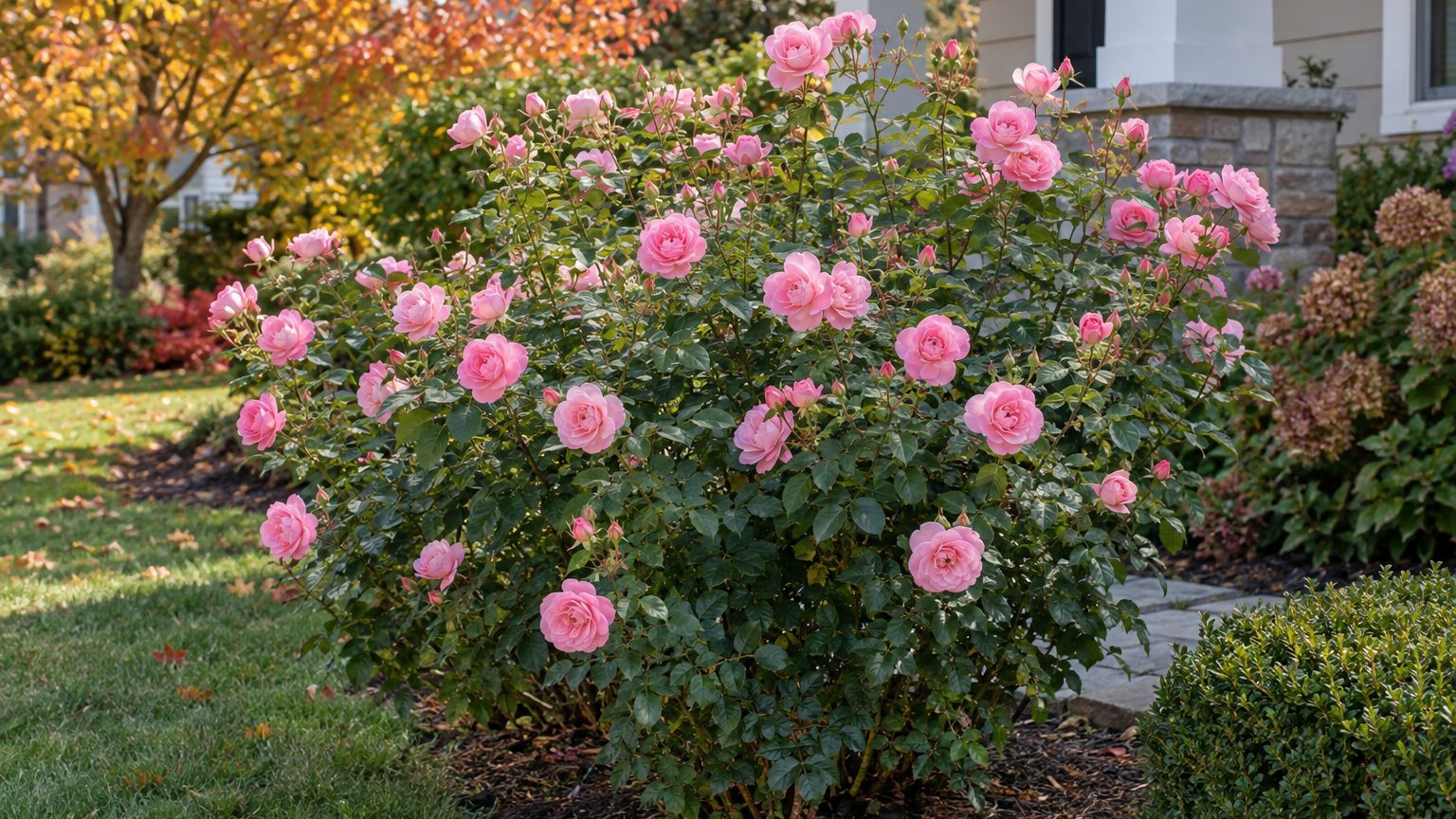
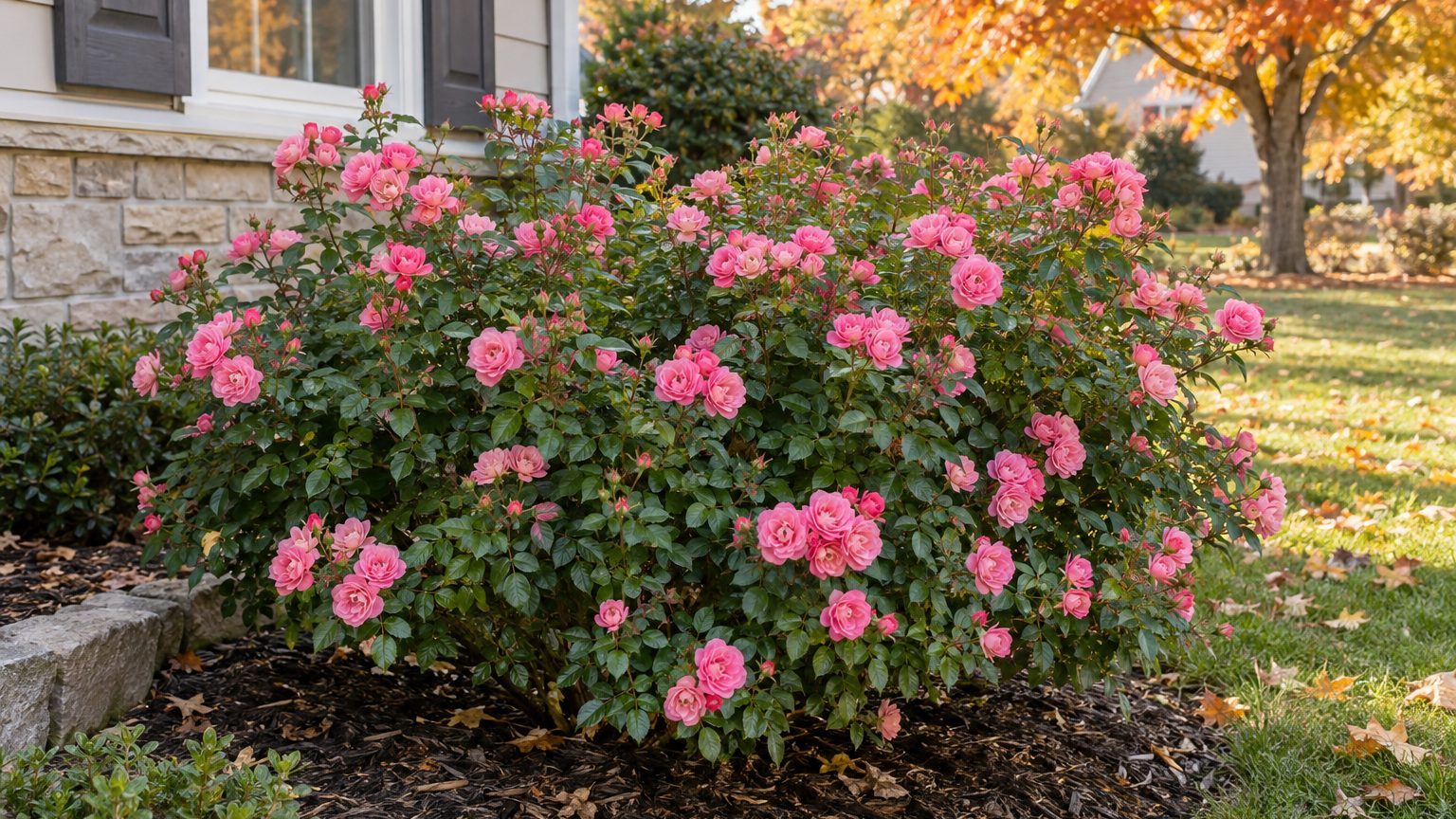
Drift roses are low, spreading shrubs that cover themselves in flowers from spring until frost, usually with no pruning at all. They suit the front edge of a bed, a slope, or a container by the steps.

What Is the Drift Rose?

Drift is a series of landscape roses bred by crossing vigorous, disease-resistant groundcover roses with reblooming miniature roses. The result is a small, mounding shrub with the toughness of the first parent and the steady flowering of the second.

It stays compact at 2-3’ high and 3-5’ wide, so it rarely outgrows its spot. It blooms more or less continuously from spring to frost.

The series is sold under color names such as Coral, Peach, Pink and Red, and the flower form varies from fully double to semi-double depending on the selection.

Where Does the Drift Rose Grow Best?

Sun and early watering matter more than the map. A Drift rose does well wherever it gets full sun, and it struggles wherever shade or dry spells hit a young plant. Check the plant tag for the hardiness zone before you buy. These differences between regions are the ones that change how you site it.

  • Florida and the Gulf Coast: Give it full sun and water it consistently until it is established. After that, it tolerates drought extremely well.
  • Pacific Northwest (Oregon, Washington): Give it the sunniest spot you have. Even partial shade leaves roses sparse and leggy, with poor flowering and less disease resistance.
  • Upper Midwest (Minnesota, Wisconsin): Place it in an open bed with no tree cover, and look at the tag for its hardiness zone before planting.
  • Southwest and Texas: Full sun is easy to find here, so focus on regular watering through the first season, because a young plant can suffer seriously from drought.

The state selector just below this section takes you to the page for your own state, where the timing is spelled out for where you live.

How to Care for the Drift Rose Through the Year

Spring Wake-Up

Spring Wake-Up — Drift Rose: Size, Zones, Pruning and Care

New growth starts as the weather warms, and this is the time for the first feeding. Apply a balanced fertilizer, since Drifts appreciate regular fertilizer to support their flower-happy habit. A young plant should be watered consistently until it is established on its own.

Pruning

Drifts usually don’t require pruning. If a cane is dead or damaged, cut it back to healthy wood. Otherwise leave the mounded shape alone, since it forms without shearing.

Bloom Season

Bloom Season — Drift Rose: Size, Zones, Pruning and Care

Flowers come more or less continuously from spring to frost, so there is no single flush to wait for. Keep the plant in at least 6 hours of sun a day, and more is better. Light is the main thing that decides how heavily it flowers.

Summer

Give a second feeding of balanced fertilizer in mid-summer, from late June to early July. An established plant handles dry weather well, but a plant that is not yet established still needs steady water through the heat.

Autumn

Blooming continues until frost, so there is little to cut back. Stop feeding and let the plant slow down on its own as the days shorten and the weather cools.

Winter

The plant rests through the cold months. Where winters are hard, check the plant tag for its hardiness zone, and look at your state page for local timing before you plant.

Drift Rose Diseases and Weak Points

Drift roses are relatively problem free and tolerate disease very well. That reputation comes from the cross of vigorous, disease resistant groundcover roses with reblooming miniature roses.

The weak points are mostly about placement and the first season, not about the variety itself.

Threat How Drift handles it
Powdery mildew Excellent resistance, but it can still get it, and a severe case can cause defoliation and plant death
Partial shade Plants get sparse and leggy, flower poorly, and are less disease resistant
Drought Extremely tolerant once established, but a young plant can suffer seriously

Moving a shaded plant into full sun is the most direct fix for weak growth, and steady watering carries a new plant until it is established.

Is the Drift Rose Right for Your Yard?

Drift suits a sunny bed, a slope, or a pot where you want color without much upkeep. It does not suit a shaded corner, because roses grown in even partial shade decline.

  • Plant it along a walk or at the front of a border, where the low mound will not block taller plants.
  • Skip sites that receive less than 6 hours of sun a day.
  • Use the state selector under the where-to-grow section to open your state page before you plant, and follow the timing given there.

Common Questions

How Many Drift Rose Varieties Are There?

The series has grown to 12 selections. Coral, Peach, Pink and Red were the original four, and later additions include Apricot, Popcorn and Sweet.

Do Drift Roses Have a Scent?

Some do. Apricot Drift is softly scented, and Sweet Drift has nicely scented double pink blooms.

When Did Drift Roses Come Out?

They first appeared in 2007 with four cultivars. That makes them a compact landscape rose that blooms more or less continuously from spring to frost.
Carefree Beauty Rose: Size, Zones, Pruning and Care

Carefree Beauty Rose: Size, Zones, Pruning and Care

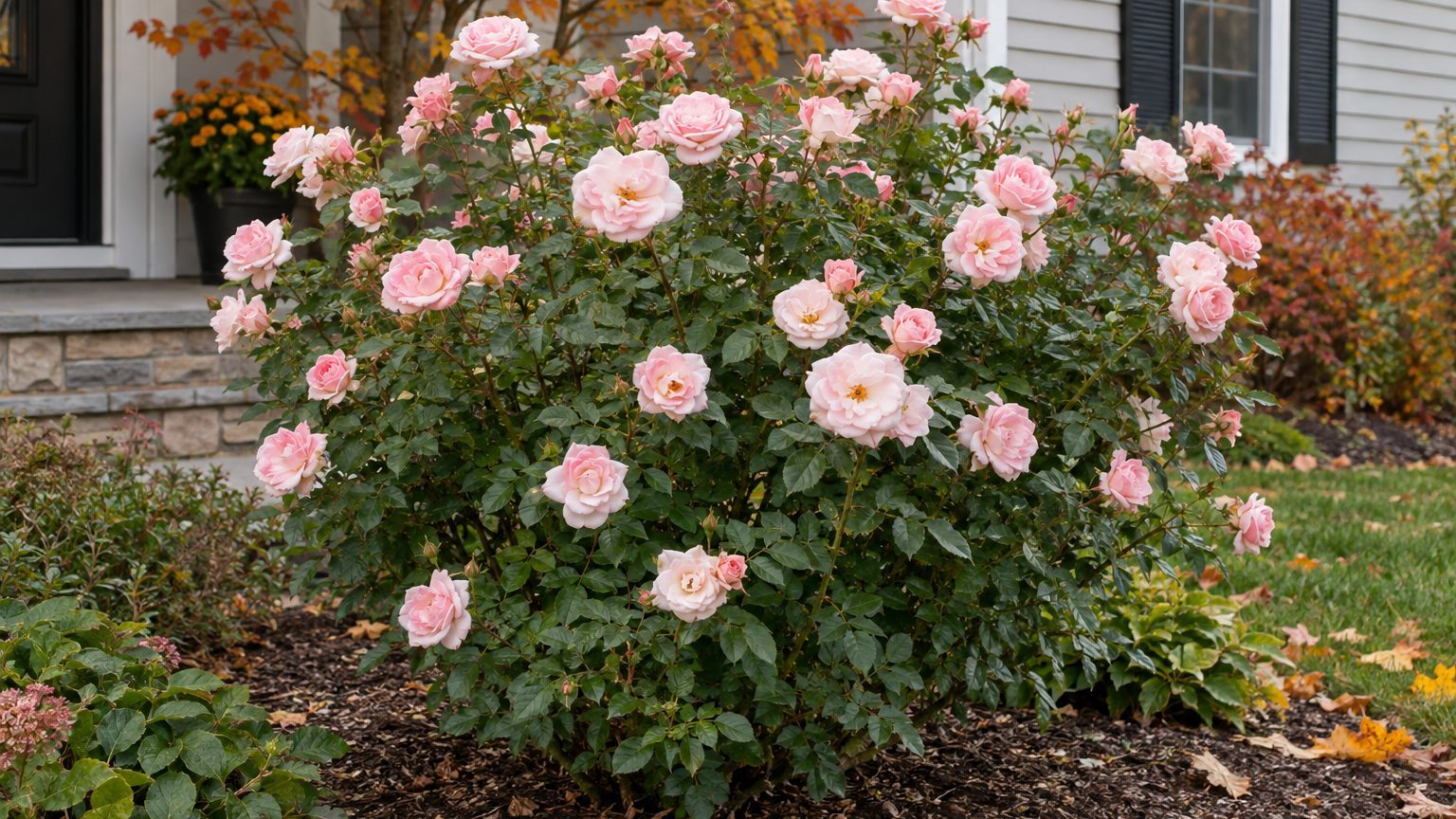
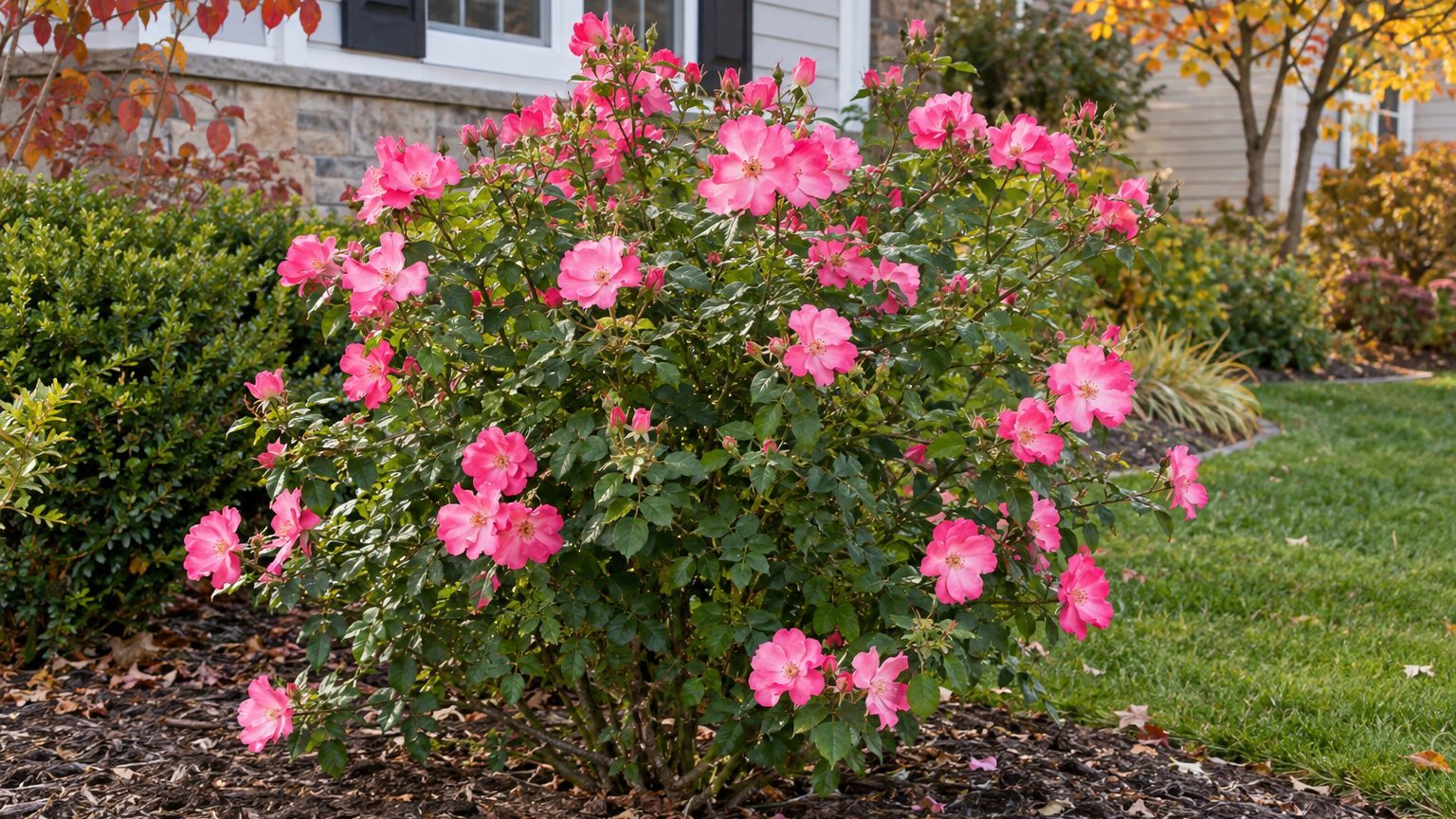
Carefree Beauty has flat, deep pink flowers with a loose tuft of petals at the center. It is a tough shrub rose that blooms from spring to frost without much fuss.

What Is the Carefree Beauty Rose?

Carefree Beauty is a shrub rose with a vigorous, somewhat open habit. It reaches about 5′ tall and 5′ wide, which puts it in the medium shrub class. Introduced in 1977, it is not a climber or a tight little bedding rose.

The flowers are deep, rich pink and semi-double, up to 4″ across. They open flat, with a few irregular, loose petals at the center and an occasional white stripe running through them.

Large orange hips form from nearly every flower. They give the shrub a second kind of color after the blooms, and they are part of why it looks good in a perennial border.

Where Does the Carefree Beauty Rose Grow Best?

This rose is hardy in zones 4-9. It was bred in Iowa to handle cold, long winters, and it also copes with hot, dry summers in Texas. Its limits sit at the extremes of the map.

  • Upper Midwest: Minnesota, Wisconsin and Iowa have the long winters this rose was bred for, and it is a fit for yards on the colder edge of its range.
  • Texas Hill Country and the Panhandle: Hot, dry summers are where this rose has proven itself, as long as the planting site gets full sun and good air circulation.
  • Gulf Coast: Spacing and airflow matter in humid conditions.
  • Northern Minnesota and the high Rockies: Check your hardiness zone before planting.

The state selector just below this section leads to the page for your state, with local months and timing.

How to Care for the Carefree Beauty Rose Through the Year

Spring

Spring — Carefree Beauty Rose: Size, Zones, Pruning and Care

New canes leaf out as the weather warms. Pick a spot in full sun with good air circulation, because both sun and moving air do much of the work of keeping the foliage healthy.

Pruning

Use your state page for local pruning guidance.

Bloom

Bloom — Carefree Beauty Rose: Size, Zones, Pruning and Care

Flowers come in successive flushes through spring, summer and fall. Leaving spent flowers allows the large orange hips to form.

Summer

Summer heat is where Carefree Beauty shows its toughness. A new rose still needs regular water until established. A mature shrub can handle hot, dry summers.

Autumn

Blooms continue until frost. As the weather cools, leave spent flowers so the large orange hips can develop.

Winter

Check your state page for local winter protection guidance.

Carefree Beauty Rose Diseases and Weak Points

This rose was selected for toughness, but no shrub is immune to a poor site. A poor site can still create problems.

Shade and poor airflow are the most likely troubles. The table pairs each threat with how the rose handles it.

Threat How Carefree Beauty handles it
Long, cold winters Bred in Iowa to withstand Midwest winters, hardy in zones 4-9
Hot, dry summers Performs well in Texas, where summers are hot and dry
Shade and stagnant air Needs full sun and good air circulation to do well

Beyond these, check the plant tag or ask your county extension office about disease pressure in your area, since local humidity changes what shows up.

Is the Carefree Beauty Rose Right for Your Yard?

It suits a yard with a sunny spot and room for a shrub 5′ across. It fits gardeners who want repeat flowers without a demanding routine. It is a poor match for a shady corner or a tiny bed.

  • Choose it for a perennial border or as a single focal plant, where the pink flowers and orange hips show across the seasons.
  • Skip it for deep shade or tight spaces, where airflow suffers and the shrub outgrows its place.
  • Open your state page and check the months for planting and pruning before you buy.

Common Questions

How Far Apart Should You Plant Carefree Beauty Roses?

Space them 7′ apart on centers. For a sea of color, plant groups of 3 to 5 plants.

Where Does Carefree Beauty Fit in the Garden?

It works as an accent in perennial borders and beds. It can also be massed or used as a single specimen to create a focal point.

Who Developed Carefree Beauty?

Dr. Griffith Buck bred it, and it was introduced in 1977. It was named the 2006 Earth-Kind Rose of the Year.

Bonica Rose: Size, Zones, Pruning and Care

Bonica Rose: Size, Zones, Pruning and Care

A Bonica rose sends out long, arching canes tipped with pink flower clusters, and that spreading shape deserves room. Bonica roses reach a certain size, thrive in particular zones, need pruning at the right time and stay healthy in your yard when cared for through every season.

What Is the Bonica Rose?

Bonica is a shrub rose bred by Meilland, and it behaves as a mounding shrub, more rambling than upright. Mature plants reach 3-5 feet tall and 4-5 feet wide, so the width matters as much as the height when you choose a spot.

The flowers are double and pink, 3-4 inches across, mildly scented and carried in clusters toward the tips of the canes.

Bloom runs from late spring until frost. In the fall, the plant sets orange rose hips.

Where Does the Bonica Rose Grow Best?

Bonica is rated for USDA zones 4–9. Full sun and moist, fertile, well-drained soil suit it, and light shade is tolerated. The state selector right below this section leads to the page for your own state.

  • Upper Midwest, such as Minnesota and Wisconsin: Check your local hardiness zone and ask locally what winter protection is appropriate.
  • Mid-Atlantic and Ohio Valley, such as Pennsylvania, Ohio and Virginia: Check your local hardiness zone before planting, because conditions vary within each state.
  • Deep South and Gulf Coast, such as Georgia, Alabama and Texas: Check your local hardiness zone and choose a site with well-drained soil.

Check your zone against the plant tag before buying, especially at the zone 4 and zone 9 ends.

How to Care for the Bonica Rose Through the Year

Spring Wake-Up

Spring Wake-Up — Bonica Rose: Size, Zones, Pruning and Care

New growth starts as the weather warms, and this is the moment to confirm the plant has sun and drainage. Moist, fertile soil gives it the best start, so work in compost if the bed is thin.

Pruning

Prune in late winter, before the buds swell. Cut out damaged and diseased canes first, then shorten the rest to control the size. Bonica spreads wide, so trimming the outer canes keeps it from crowding a path or a neighbor.

Bloom

Bloom — Bonica Rose: Size, Zones, Pruning and Care

Flowers open in clusters from late spring until frost. Because the blooms are held toward the cane tips, give the arching canes room to spill.

Summer

Keep the soil evenly moist, since the plant prefers moisture to dry ground. Water at the base rather than over the leaves, and clear any spent clusters if you want a tidier look.

Fall

Orange rose hips form in the fall. Leave them in place if you like the color, since they add interest while the flowering winds down toward frost.

Winter

Leave the canes standing until late winter, when pruning takes over. In zone 4, ask locally what winter protection is appropriate for your yard.

Bonica Rose Diseases and Weak Points

Bonica has good disease resistance and reliable landscape performance. It also has good resistance to black spot.

Good resistance still falls short of immunity, so airflow and sun matter. Give the shrub good airflow and enough sun to support healthy foliage.

Threat How Bonica handles it
Black spot Good resistance
Disease in general Good resistance, with reliable landscape performance

Watch the plant through the season and prune out damaged or diseased canes in late winter.

Is the Bonica Rose Right for Your Yard?

Bonica suits a yard with a sunny spot wide enough for a 4-5 foot spread and an owner prepared to give it routine rose care. It is a poor fit for a narrow bed or a deep shade corner.

  • Plant it where it has room to mound, in full sun, and check the plant tag for the mature size before you dig.
  • Prune in late winter, then watch for blooms from late spring onward.
  • Open the state page for your state through the selector above to see the planting and pruning months that fit your zone.

Common Questions

Does the Bonica Rose Bloom More than Once?

Yes. Flowers come in clusters from late spring until frost, so the plant keeps producing rather than flowering in a single flush.

Can the Bonica Rose Grow in Light Shade?

It tolerates some light shade, though full sun is preferred. A spot with morning sun and bright afternoon light is a reasonable compromise.

Is the Bonica Rose Fragrant?

The scent is mild. The flowers are large and double, but they are grown for their color and clusters more than for perfume.

Belinda’s Dream Rose: Size, Zones, Pruning and Care

Belinda’s Dream Rose: Size, Zones, Pruning and Care

Belinda’s Dream is a pink shrub rose that keeps opening many-petaled blooms as the nights turn cool. It grows into a sturdy, upright bush that wants one big haircut in spring and little else. Its size, the zones it handles, and the care it wants through the year come down to a few plain points.

What Is the Belinda’s Dream Rose?

Belinda’s Dream is a shrub rose with a fast-growing, sturdy, upright habit. It can reach 5 feet in height by 3-4 feet wide, so it needs room to fill out rather than a spot squeezed against a walk.

The medium pink flowers are very double, with 100+ petals, and open up to 4″ across. They carry a rich fragrance and are produced in abundance throughout the growing season.

Where Does the Belinda’s Dream Rose Grow Best?

This rose is hardy in zones 5-9, which takes in a large share of the country, with a few regional differences worth knowing.

  • Gulf Coast: Compare your local hardiness zone with Belinda’s Dream’s zones 5-9 before planting. Cool, damp spells are when black spot is most likely to show up on the leaves.
  • Southeast and Mid-Atlantic: Check the local hardiness zone before planting, because conditions vary within each state.
  • Midwest and Northeast: Check the local hardiness zone before planting, because conditions vary within each state.
  • Upper Midwest and northern Rockies: Check the local hardiness zone; sites colder than zone 5 fall outside this rose’s rated range.

The state selector just below this section leads to the page for your state, with the months that apply where you live.

How to Care for the Belinda’s Dream Rose Through the Year

Spring Wake-Up

Spring Wake-Up — Belinda's Dream Rose: Size, Zones, Pruning and Care

As the canes leaf out, watch the weather more than the calendar. Belinda’s Dream is a fast grower, so once warm days arrive it moves quickly, and a late freeze can nip tender new shoots.

Pruning

Pruning — Belinda's Dream Rose: Size, Zones, Pruning and Care

This rose needs one major pruning each spring, after the last chance for a freeze. Cut it back then and shape the bush. Light pruning improves its appearance and blooming frequency, so there is no need to cut hard every time you pick up the shears.

Bloom

Flowers come in successive flushes from spring to frost. Cutting spent blooms with a good length of stem keeps the shrub tidy, and the long stems suit a vase.

Summer

Summer asks little. The rose does not need constant care to keep blooming, and it is tolerant enough of disease that fungicide sprays are seldom required. Water at the base and keep leaves dry when you can.

Fall

Blooms keep coming into fall, and cool, damp weather is when black spot may appear. Rake up fallen leaves under the bush so spotted ones do not sit around the base. The flowering will carry on regardless.

Winter

Ask a local garden center how much winter protection is appropriate in your yard. Wait for spring to prune, since the major cut comes after the last chance of a freeze.

Belinda’s Dream Rose Diseases and Weak Points

Belinda’s Dream is disease tolerant, but it is not disease resistant, and the difference matters when leaves start to look rough. Spots or a white film do not mean the plant is failing.

When conditions are most favorable for disease, it can pick up fungus on the foliage, yet it stays vigorous and keeps producing quality flowers.

Threat How Belinda’s Dream handles it
Black spot Can appear in cool, damp weather, but vigor and blooming are not affected
Powdery mildew Leaves can show a white, powder-like coating, yet the rose survives and keeps flowering

Fungicide sprays are seldom required; good air movement and dry foliage help limit disease pressure.

Is the Belinda’s Dream Rose Right for Your Yard?

It suits a gardener who likes hybrid tea form on a sturdy shrub rose. It needs open space for a bush up to 5 feet tall and a spot that gets real sun. It is a poor match for tight borders or a spot where you want a low edging rose.

  • Your state’s page gives the months for your last freeze and your pruning window, so check it before the buds swell in spring.
  • If you are in a cold corner near the edge of zone 5, ask a local garden center how the rose fares in your neighborhood before planting.

Common Questions

Is Belinda’s Dream a Hybrid Tea Rose?

No, it is a shrub rose. It borrows the high center bloom and long stem of a hybrid tea, along with the toughness of antique and old-fashioned roses.

Can You Cut Belinda’s Dream for a Vase?

Yes. The long stems, high-centered blooms and rich fragrance suit cut arrangements.

Does Belinda’s Dream Grow as a Climber?

No. It grows as a sturdy, upright shrub rather than a climber, so it stands on its own without a trellis or wall to lean on.

Abraham Darby Rose: Size, Zones, Pruning and Care

Abraham Darby Rose: Size, Zones, Pruning and Care

Those big, heavy blooms of Abraham Darby tend to nod on the stem, so one good way to enjoy them is at nose level, where the fruity scent reaches you. Abraham Darby is a shrub whose size, hardiness range, and seasonal care needs all shape how it performs in your yard.

What Is the Abraham Darby Rose?

Abraham Darby is a hybrid shrub rose in the rose family, bred by David Austin of the United Kingdom in 1985. It grows as a bushy, rounded shrub, 5-7 feet tall with a 3-5 foot spread, so it needs real room.

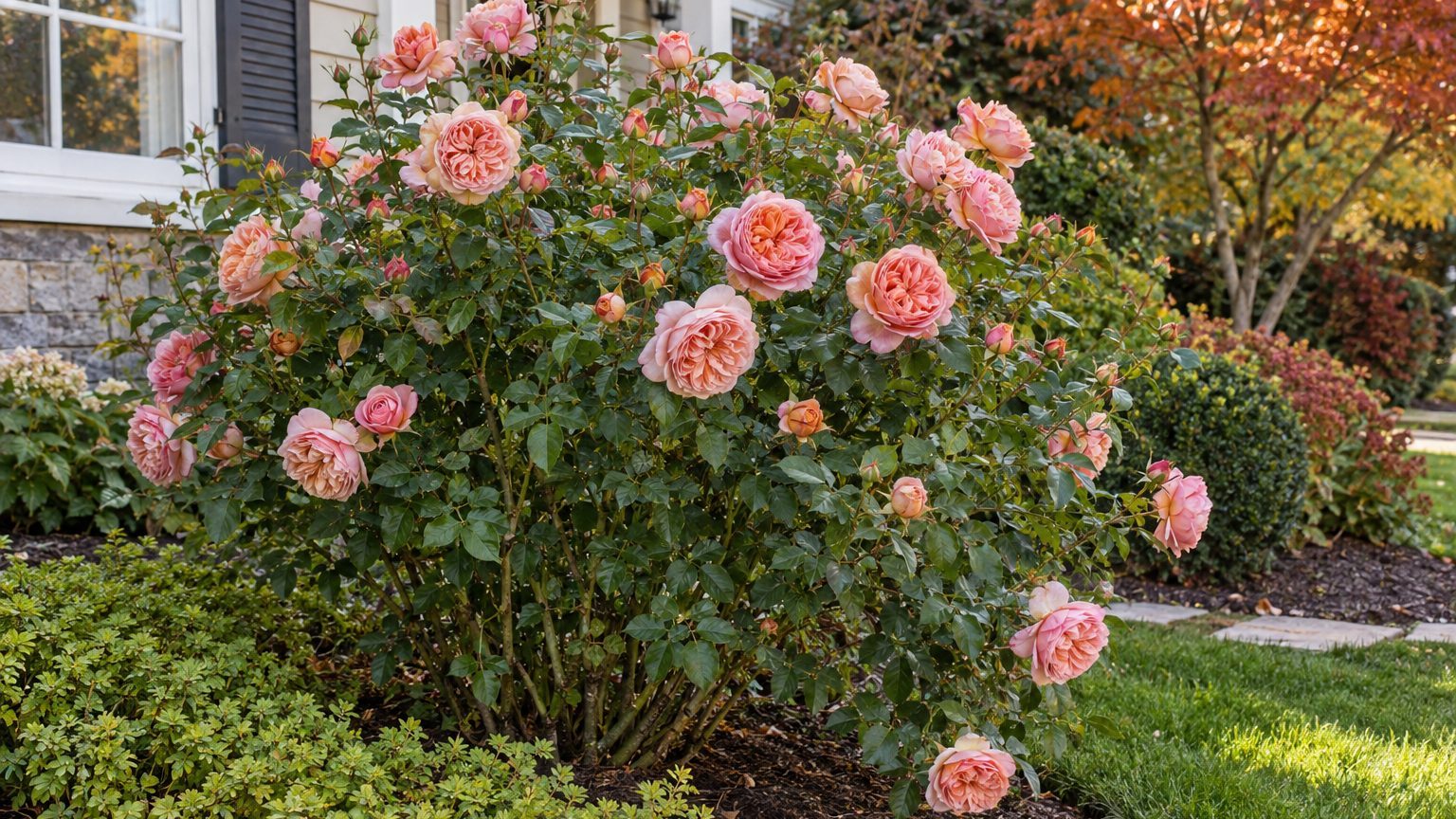
The flowers are apricot, yellow and pink blended, with a quartered shape and a rich fruity fragrance. Each full double bloom carries 50-70 petals and measures 4-5 inches across.

In mild climates the canes can reach 8-10 feet, which makes training it as a climber an option if you want height on a fence or post.

Where Does the Abraham Darby Rose Grow Best?

This rose is rated for USDA zones 5a through 10b, which covers a long list of states, from cold winters to warm coasts. Climate changes how tall it gets and how you treat it.

  • Upper Midwest and Northeast, such as Minnesota, Wisconsin and New York: Check your local hardiness zone before planting, because conditions vary within each state.
  • Mid-Atlantic and Southeast, such as North Carolina, Virginia and Georgia: Check your local zone and allow room for the rose’s mature size; it blooms in small clusters through fall.
  • Gulf Coast and California coast: Check local conditions; in a mild climate, it can reach 8-10 feet and be trained as a climber.

The state selector just below this section takes you to the page for your own state, where the months for your yard are laid out.

How to Care for the Abraham Darby Rose Through the Year

Spring Wake-Up

Spring Wake-Up — Abraham Darby Rose: Size, Zones, Pruning and Care

Choose a spot in full sun with amended, well-drained soil that stays moist.

Pruning

Pruning — Abraham Darby Rose: Size, Zones, Pruning and Care

Check the pruning calendar for your state before cutting Abraham Darby back. Cut out dead and weak canes first, then shorten the rest to shape a rounded form.

If you are training it as a climber in a mild climate, leave the strongest canes long and tie them in.

Bloom

The flowers arrive in small clusters and keep coming through fall. Because the blooms are large and heavy, they nod, and stems can bend after rain. Planting where you can look up into the flowers, or near a path, shows them off.

Summer

Keep the soil evenly moist, as this rose prefers moist garden soil. Water at the base and avoid wetting the leaves, which helps with rust. Remove spent clusters to encourage the next flush.

Fall

Blooms continue into fall, so there is no need to stop deadheading early. Clean up fallen leaves around the base, especially any with orange spots, so problems do not carry over.

Winter

Use local rose-care guidance to decide whether winter protection is needed in your yard.

Abraham Darby Rose Diseases and Weak Points

Abraham Darby is generally disease resistant.

Its one noted weakness is rust, a fungal disease that shows as orange pustules on the leaves.

Threat How Abraham Darby handles it
Rust Susceptible, so watch the undersides of leaves
Disease in general Generally resistant

Good airflow, watering at the base and picking up fallen leaves all reduce rust. The nodding blooms are a weak point of a different kind, since heavy flowers can bend stems after rain.

Is the Abraham Darby Rose Right for Your Yard?

It suits a sunny yard with room for a shrub up to 7 feet tall, and a gardener who likes scent and steady flowers. It is a poor fit for shade, tight beds, or soil that stays soggy.

  • You will find a large, fragrant shrub with blooms through fall, best planted where you can reach the flowers at nose height.
  • Check the plant regularly for signs of rust.
  • Open your state page from the selector to see the months for planting and pruning where you live.

Common Questions

Can You Grow Abraham Darby in a Container?

With a 5-7 foot mature height and a 3-5 foot spread, it outgrows most pots. An in-ground spot in full sun suits it better.

Can You Train Abraham Darby as a Climber?

Yes, in mild climates it can reach 8-10 feet and be trained up a support.

Does Abraham Darby Smell?

It has a strong, rich fruity fragrance, noticeable from the big double blooms.

When to Prune Roses in Yukon

When to Prune Roses in Yukon

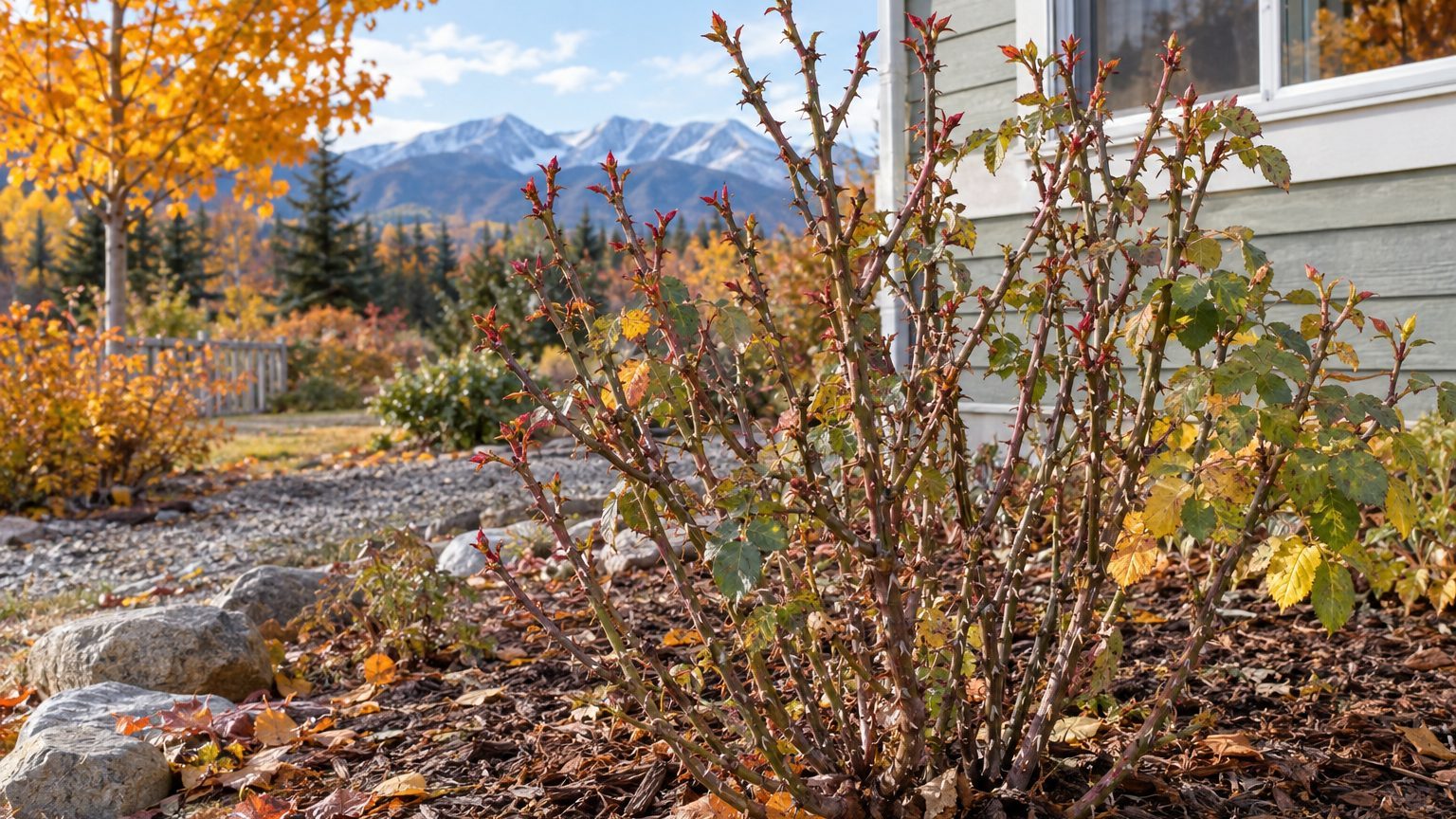
Snow still lingers in the shade when the first rose canes in a Yukon yard start to show a hint of red at the buds. That is the cue to look at your pruners. In the territory, repeat-blooming roses get their main cut in May, and once-blooming roses wait until the flowers fade.

When to Prune Roses in Yukon

Rose canes at pruning time

May is the month for pruning repeat-blooming roses in Yukon. Dates for the territory follow the nearest comparable climate, since no local source publishes rose timing, so confirm yours with a local garden centre, a rose society or a territorial gardening group.

Snow cover lasts into spring here, and the rose should be growing before you cut.

Rose type When to prune in Yukon Why
Repeat-blooming roses (hybrid teas, floribundas, modern shrub roses) May, once growth is active They flower on new wood, so the spring cut shapes the season’s stems, and cutting too soon removes wood that frost has not yet sorted out.
Once-blooming roses (old garden roses, ramblers, many climbers) Right after they bloom, never in spring They flower once a year on last year’s wood, so a spring cut removes the buds.

Repeat-blooming climbers have no separate timing for Yukon, so ask a local rose grower how yours have behaved. Keep in mind that hybrid teas, grandifloras and floribundas need winter protection in cold winters, while hardy shrub roses such as Knock Out or the Explorer series do well without extra cover. In Yukon’s cold, tender types may show dead canes when growth starts in May.

How to Tell When Your Roses Are Ready to Prune

The roses themselves give a better signal than the calendar, especially in a territory where spring arrives late and unevenly.

  • Buds that swell and turn from tight and dark to plump and reddish show that the plant is waking up, but wait for active growth before cutting.
  • New shoots pushing from the canes show you which wood is alive, so cut back to a healthy bud above living tissue.
  • Snow gone from the base of the plant means the crown is no longer buried, and any winter mound can be pulled away to check the canes.
  • Canes that stay brown and brittle with no swelling buds are dead, and you can remove them down to green wood or to the base.
  • A frost forecast after the buds open is a warning to hold off or cover the plant, because the average last spring frost at Whitehorse is June 5, and in half of years it falls later.

Pruning too early makes it harder to see which wood survived winter, so wait for active growth.

Should You Prune Roses in Fall or Winter in Yukon?

No. Nothing in the calendar for the territory calls for fall or winter pruning, and a hard cut before the plant restarts in spring leaves open wounds in the cold. Leave the canes as they are through winter.

Tender roses need winter protection in cold winters, and that protection matters more than any autumn cut. Hardy shrub roses and rugosas usually cope without it. Repeat-blooming roses wait until May, while once-blooming roses wait until just after flowering.

How Rose Pruning Dates Shift Across Yukon

The territory is large, and the May window moves with where you garden.

  • Whitehorse is in Canadian hardiness zone 1b, which does not convert to a USDA zone. Watch the buds before cutting.
  • Dawson City and other northern communities: spring runs behind Whitehorse, so let active growth—not the calendar—tell you when to prune.

Higher or shadier spots in any yard thaw later than sunny ones, so different parts of the same garden can follow different timetables.

Where to Get Rose Advice in Yukon

Canada has no county extension offices, so rose questions go to the territory’s agriculture staff, local gardening groups and nurseries. Start with Yukon’s own gardeners, since they know which roses came through the last winter.

  • Agriculture and Agri-Food Canada, linked as Agriculture and Agri-Food Canada, offers federal gardening and plant information, and it is worth a visit before you buy roses in spring.
  • A local garden centre or rose society can tell you which varieties wintered well, and the weeks before the May cut are the time to ask.

Common Questions

When Should You Plant Roses in Yukon?

June is the month for bare-root roses, and potted roses can go in later. Let the soil warm and the worst frost pass before the bare roots go in the ground.

When Should You Feed Roses in Yukon?

Feed regularly from May through July, then stop by August 1. Late feeding pushes soft growth that cold will damage before it hardens.

Which Roses Grow Best in Yukon?

Rugosa roses are the hardy choice for cold northern gardens. Hybrid teas, grandifloras, floribundas and miniatures are tender and do not reliably overwinter, so give them protection or treat them as short-lived.

When to Prune Roses in Wyoming

When to Prune Roses in Wyoming

A rose cane that stays green and plump through a Wyoming winter is a cane worth keeping, and the old brown tips are what get cut once the weather settles. Spring is the pruning season here for repeat-blooming roses, and April is the month to plan around.

When to Prune Roses in Wyoming

Rose canes at pruning time

Prune repeat-blooming roses in April. If spring runs cold, May is a workable fallback. Cutting then, before new growth is far along, lets the bush put its energy into canes that will carry this summer’s flowers.

Wyoming’s spring frosts last into May in many places, so pruning too early invites damage to fresh shoots. Roses that bloom only once follow a different rule.

Type of rose When to prune in Wyoming Why
Hybrid teas, floribundas, modern shrub roses April, or May if spring is late They bloom on new wood, so a spring cut shapes the canes that will flower
Old garden roses, ramblers, once-blooming climbers Right after they bloom, never in spring They flower once a year on last year’s wood, so a spring cut removes the flowers

Repeat-blooming climbers are not on the calendar as a separate task, so ask your county extension office before cutting them hard. Hardy shrub roses such as Knock Out or the Explorer series perform well without extra protection, which means less winter dieback to trim away. Hybrid teas, floribundas and grandifloras need winter protection in cold winters, and that protection comes off in April, around the time pruning starts.

How to Tell When Your Roses Are Ready to Prune

Calendar months set the window, but the bush itself says when to pick up the shears within it.

  • Buds along the canes swell and turn red or green, which tells you the plant is waking and you can see which canes survived.
  • The winter mound of soil or mulch has been removed, because pruning is easier once the crown is uncovered and you can see where live wood begins.
  • The hardest freezes have passed, since a cut invites new growth that a late hard frost would burn.
  • Canes show a clear contrast between green, living tissue and brown, shriveled wood, so you know how far down to cut.
  • Forsythia blooming nearby is a familiar neighborhood cue that spring has truly arrived and roses are ready for the shears.

Cut back to a bud that points outward, and keep going down until the center of the cane looks white or pale green rather than brown.

Should You Prune Roses in Fall or Winter in Wyoming?

Not much, and not hard. Fall and winter are for protecting roses, and the pruning stays light. Severe cuts before the plant has gone dormant or while winter lingers can leave it exposed.

Height is the exception. Shorten only canes that are likely to whip or break under snow and wind. That is a reasonable guide for tall canes on Wyoming roses too. Cut nothing else.

Winter protection goes on in November, once nights have turned hard-freezing for several days, though October or December can work if the weather runs early or late. Mound soil over the crown, deeply enough to cover the base of the canes, according to extension advice. Leave the real pruning for April.

How Rose Pruning Dates Shift Across Wyoming

Wyoming’s roses face a wide spread of conditions, with hardiness zones running from 3a to 6a in the USDA system and frost possible in any month at higher elevations. The usual April window is a guide, and your elevation moves it.

  • High plains and mountain towns such as Laramie: spring comes later, so lean toward May and let the buds swell before you cut. Frost-free days are fewer here, so waiting costs little.
  • Lower basins and river valleys such as Sheridan or Cody: April is more dependable, though a cold snap can still arrive, so watch the buds rather than the date.
  • Cheyenne and the southeast: April suits well, with the last spring frost typically between May 7 and May 18 at the reference city, so keep the shears ready but the heavy cuts patient.

Higher ground has a shorter season, so protect the plant and wait for it to wake before cutting.

Where to Get Rose Advice in Wyoming

Local conditions vary enough that a nearby expert helps, especially for choosing hardy varieties. County extension offices carry statewide guidance to your neighborhood.

  • Visit University of Wyoming Extension for guidance on roses suited to your elevation, and check in late winter before spring pruning.
  • Call your county extension office to ask which rose types survive winters near you, ideally before you buy or plant bare-root roses in April.

Common Questions

Can You Plant Roses in Wyoming in Spring?

Yes. Bare-root roses go in during April or May, as soon as the ground can be worked and while the plants are still dormant. Potted roses can go in later.

When Should You Fertilize Roses in Wyoming?

May through July is the main feeding stretch, with April and August also workable. Extension advice is an all-purpose fertilizer at regular intervals through the growing season, stopping in late summer so tender late growth does not meet the first frost.

When Do You Take Winter Protection Off Roses in Wyoming?

April is the usual month, with May also fine in a cold spring. Remove the mound gradually once the danger of hard frost has passed, rather than all at once.

When to Prune Roses in Wisconsin

When to Prune Roses in Wisconsin

Soil or leaves mounded around the base of each rose is a familiar sight in Wisconsin yards, and it usually comes off before the pruning shears come out. Spring is when repeat-blooming roses get their main cut here, while once-blooming types want the shears after they flower. The timing depends on how each rose blooms.

When to Prune Roses in Wisconsin

Rose canes at pruning time

Prune repeat-blooming roses in April or May, once the winter mound is off and a hard freeze is no longer likely. Hybrid teas, floribundas and modern shrub roses all follow that spring window.

Roses that flower only on last year’s wood follow a different rule, and a spring haircut would remove the buds before they open.

Type of rose When to prune in Wisconsin Why
Repeat-blooming roses (hybrid teas, floribundas, modern shrub roses) April to May The winter mound is off and the chance of a hard freeze has passed, so cuts will not be followed by frozen tips.
Once-blooming roses (old garden roses, ramblers, many climbers) Right after they bloom, never in spring They flower on last year’s wood, so spring cuts remove the season’s flowers.

Repeat-blooming climbers do not get a separate window here, so ask your county extension office before cutting them hard. Cold winters matter too. Hybrid teas, floribundas and grandifloras need winter protection, while hardy shrub roses such as Knock Out or the Explorer series perform well without extra covering. A hardy rose also means less to remove in April, which helps explain why many Wisconsin gardeners lean toward them.

How to Tell When Your Roses Are Ready to Prune

Wisconsin springs swing from mild to bitter, so the plant itself is a better guide than the date on the wall calendar.

  • The winter mound is coming off, which in Wisconsin starts in April and can run into May, and it should be removed in stages so the canes are not shocked.
  • A hard freeze no longer looks likely, which tells you that fresh cuts and the tender growth below them will not be burned.
  • The buds on the canes are swelling, and that is the signal to cut just above a plump bud that points outward.
  • Some canes look dark and discolored, which means they are dead and should be cut back until the inside of the stem is clean.
  • Small, weak or injured stems show up once the mound is gone, and removing them now sends energy into the strong canes.

If the buds have not moved, wait. Waiting into May costs the rose nothing.

Should You Prune Roses in Fall or Winter in Wisconsin?

Mostly no. In fall, limit pruning to very long stems that would whip in the wind and loosen the plant in its bed. Leave the rest of the cutting for spring, because the plant needs its wood going into winter.

Severe pruning belongs after the roses restart, not before. A rose that is cut hard in winter has lost the canes you may need to replace winter damage, and you cannot tell which canes are dead until growth begins.

Winter work is about protection, not shears, and the right moment for that is covered in the questions below.

How Rose Pruning Dates Shift Across Wisconsin

Wisconsin spans USDA hardiness zones 3b to 6a, so a statewide schedule gets stretched across very different winters. The months above stay the same, but where you fall inside them changes with your location.

  • Lake Michigan shoreline: the lake delays the first fall freeze here, so roses stay active later in the season, and in spring the cold water can hold buds back, so watch them before you cut.
  • Madison and the inland south: freezes arrive in early October, and gardeners here can usually start in April once the mound is off and the buds begin to swell.
  • The Northwoods: freezes come far earlier than in the south, winters are harsher and mounds stay on longer, so May is the safer month for pruning.

Whichever part of the state you garden in, let the swelling buds make the final call.

Where to Get Rose Advice in Wisconsin

Local help is worth using when a cane looks damaged or you are unsure which type of rose you own. The state and county offices can identify problems and confirm timing for your own yard.

  • The University of Wisconsin-Madison Division of Extension publishes gardening guidance you can read before spring pruning begins.
  • Your county extension office can answer questions about hardiness and winter damage, and a visit in April is well timed.
  • County master gardener volunteers often help with identification, so bring a cutting of a cane whose type you are unsure of.

Common Questions

When Should You Put Winter Protection on Roses in Wisconsin?

November. Wait until several hard freezes have passed and the rose is fully dormant, because covering too early can keep the plant growing when it should be resting.

When Can You Plant Bare-Root Roses in Wisconsin?

Plant bare-root roses in April or May. If spring stays cool, bare-root roses can also be planted in June, while potted roses can go in later once severe frost has passed.

When Should You Feed Roses in Wisconsin?

Feed in late April and again when the plants reach peak bloom, and keep going no later than July. Feeding after July pushes soft growth that has little time to harden before winter.

When to Prune Roses in West Virginia

When to Prune Roses in West Virginia

A rose cane that sits dormant and bare through winter starts swelling at the buds as spring warms, and that swelling is the cue to bring out the pruners. In West Virginia, that work belongs mostly to March, with a little room on either side depending on the yard and the rose.

When to Prune Roses in West Virginia

Rose canes at pruning time

Repeat-blooming roses are best pruned in March in West Virginia. The job can also be done in February or April, depending on how the season runs and how high your yard sits.

Once-blooming roses follow a different rule. They flower on last year’s wood, so a spring cut removes the coming season’s blooms.

Type of rose When to prune in West Virginia Why
Hybrid teas, floribundas and modern shrub roses March, or February to April They bloom on new growth, so a heavy spring pruning just as the buds break dormancy sets up the season’s flowers.
Old garden roses and once-blooming climbers Right after they bloom, never in spring They flower once a year on last year’s wood, and spring pruning removes the buds.
Repeat-blooming climbers March, or February to April They flower on current season’s growth, so they are pruned in spring once winter protection comes off.

Old garden roses deserve a lighter hand than modern roses. Hard pruning can ruin their graceful shape and sharply reduce flowering. Ramblers also bloom once, so they get the same after-bloom trim.

How to Tell When Your Roses Are Ready to Prune

Months give you a window, and the plant itself tells you the day. These signs are worth watching as late winter turns to spring.

  • Buds along the canes begin to swell, which tells you the rose is breaking dormancy and the pruners can come out.
  • Forsythia comes into bloom, a long-standing signal growers use to start the pruning season on repeat-blooming roses.
  • The hardest freezes have passed, so new growth stimulated by your cuts is less likely to be caught by a late cold snap.
  • Any winter mound of soil or mulch has been pulled back from the base, since pruning follows the removal of winter protection.
  • Canes show green under the bark when scratched lightly, while brown and shriveled wood is dead and should be cut back until you reach healthy tissue.

A mild stretch in February can tempt you to start early, but swelling buds are a better guide than a warm afternoon.

Should You Prune Roses in Fall or Winter in West Virginia?

Fall and winter are for very little cutting. Long canes can be shortened a bit so winter wind does not whip them around and loosen the roots, but leave shaping cuts for spring.

Severe pruning waits for spring. A heavy cut in fall invites tender new growth that may not harden off before cold arrives, and the canes you leave also help shelter the crown through winter.

Feeding follows the same logic. Stop fertilizing late in the season so new growth can harden before winter. Feeding is best from April through August here, with March possible once the first leaves appear.

How Rose Pruning Dates Shift Across West Virginia

The state ranges from USDA hardiness zone 5a to 7a, and elevation shifts the pruning window across West Virginia.

  • Charleston and the Kanawha Valley: The river valley warms earlier, so buds swell sooner and March pruning fits comfortably. Charleston’s last spring freeze falls between April 9 and April 23.
  • The Allegheny Highlands: Higher ground stays cold longer in spring and freezes earlier in fall, so lean toward the later part of the window and let the buds decide.
  • The Eastern Panhandle: Treat this area as in between, and watch forsythia in your own neighborhood as your cue.

Roses in colder pockets also gain from hardy varieties, since a rose bred for a colder zone needs little added protection in a milder one.

Where to Get Rose Advice in West Virginia

For advice tuned to your own yard, West Virginia University Extension is the place to start, and its county offices know the local conditions.

  • The county extension office can answer questions about your rose varieties and local timing, and a visit in late winter lets you plan before the buds swell.
  • Master Gardener volunteers connected to the county office can help you assess cane damage or disease.

Common Questions

Can You Prune Roses in February in West Virginia?

February works in some years, mainly for repeat-blooming roses in milder yards. Wait for swelling buds and keep an eye on the weather, since a hard freeze after cutting can nip new growth.

Should You Cut Dead Canes Before the Buds Swell?

Dead wood can come out whenever you spot it, since brown, shriveled canes are no use to the plant. Save the shaping cuts on repeat bloomers for spring, when you can see where living wood begins.

What If You Missed Pruning a Once-Blooming Rose?

Leave it alone until the flowers fade, then prune right after bloom. Cutting in spring would remove the buds that carry this year’s flowers, so a late pruning is better than an early one.

When to Prune Roses in Washington

When to Prune Roses in Washington

Rose canes in Washington wake up fast once the weather softens, and the pruning shears should be out about then. Cut at the right moment and the bush rebuilds into a strong, well-shaped plant. Cut at the wrong one and you either trim off a season of flowers or invite frost damage on tender new shoots.

When to Prune Roses in Washington

Rose canes at pruning time

Prune repeat-blooming roses in February and March, or in April if the season runs late and the forsythia is only just blooming. That covers hybrid teas, floribundas and modern shrub roses, which flower on new growth.

Cutting before the last hard freeze can cause dieback that means pruning all over again. Pruning later also pushes back the first flush of bloom, so there is a small trade between safety and an early start.

Type of rose When to prune in Washington Why
Repeat-blooming roses (hybrid teas, floribundas, modern shrub roses) February and March, or April when the forsythia blooms They flower on new wood, and pruning ahead of a hard freeze risks dieback.
Once-blooming roses (old garden roses, ramblers, once-blooming climbers) Right after they finish flowering, never in early spring They flower on last year’s wood, so a spring cut removes the coming blooms.

Climbers that rebloom have no separate month of their own here. Check how the variety behaves: prune a repeat bloomer in spring, but wait until the petals have dropped if it flowers just once a year.

How to Tell When Your Roses Are Ready to Prune

Months set the window, but the plant itself tells you which day inside it is right, and these signs are worth watching from late winter on.

  • Swelling buds along the canes mean the plant is starting to grow and ready to be pruned.
  • Forsythia in bloom is the traditional signal in Washington that roses can be pruned, so a bright yellow hedge nearby works as a free reminder.
  • A hard freeze that has passed, with no forecast for another, tells you new growth will not be nipped right after you cut.
  • Winter mulch mounded around the base can come off once the cold is behind you, which also lets you see the crown and the lower canes clearly.
  • Canes that are green and plump inside show live wood, while brown and shriveled canes should be cut back until you reach healthy tissue.

West of the Cascades these signs usually show up sooner than they do in the colder interior, so watch your own bushes rather than a neighbor’s across the mountains.

Should You Prune Roses in Fall or Winter in Washington?

Mostly no. In fall and winter, avoid routine pruning; shorten very long canes if the wind could whip them around and loosen the roots. Leave the real pruning, with its shaping and thinning, until the plant starts growing again.

Cutting hard in the cold months stimulates new growth that frost can kill, and it can force you to prune again. The work that does belong to the cold season is protection, in November and December, once the plant is dormant and before a hard frost arrives. It applies in cold areas only. Mound loose material over the base of the plant, such as:

  • Shredded leaves
  • Compost
  • Pine needles
  • Sawdust

Tender roses benefit from this, and the mound comes off in spring when the forsythia and the swelling buds say the season has turned.

How Rose Pruning Dates Shift Across Washington

Washington runs from mild coast to high desert, and the calendar months above lean earlier or later depending on where your yard sits.

  • Seattle and the Puget Sound lowlands: the mild maritime climate lets you work in February and March, and the forsythia here usually blooms earlier than in the interior.
  • Spokane and the Yakima Valley: east of the Cascades the season is shorter and winters bite harder, so lean toward the April end of the window and let the forsythia and swelling buds decide.
  • Cascade foothills: higher ground stays cold longer than the lowlands below it, so wait for the hard freezes to be done before the first cut.

A mild spell on the coast is not permission to hurry, because a cold snap can still follow and catch fresh growth.

Where to Get Rose Advice in Washington

Washington State University Extension publishes rose guidance written for the state’s own conditions, and your county office can speak to the quirks of your local climate.

  • The extension’s rose care calendar lays out the seasonal chores, so read it in winter before the pruning window opens.
  • Your county extension office can help with variety questions, so call or visit in late winter, ideally with a photo of the canes.

Common Questions

When Should You Plant Bare-Root Roses in Washington?

February and March suit bare-root roses, because dormant plants can build strong roots before spring growth begins. Potted roses are more flexible and can go in from April through June.

When Should You Fertilize Roses in Washington?

Start in March at bud break and continue through July, with August also fine. Feed regularly through the growing season, then stop in late summer so the plants can head toward dormancy.

Can You Plant a Potted Rose in Summer?

Potted roses can go in even after new growth has begun, and early summer gives them the best odds of settling in before the heat of midsummer arrives.

The almanac, state by state. Every date on this site comes from a state’s own frost facts and its extension service’s calendar — and says where it comes from.