Skip to content

Best Peonies for New Brunswick

Best Peonies for New Brunswick

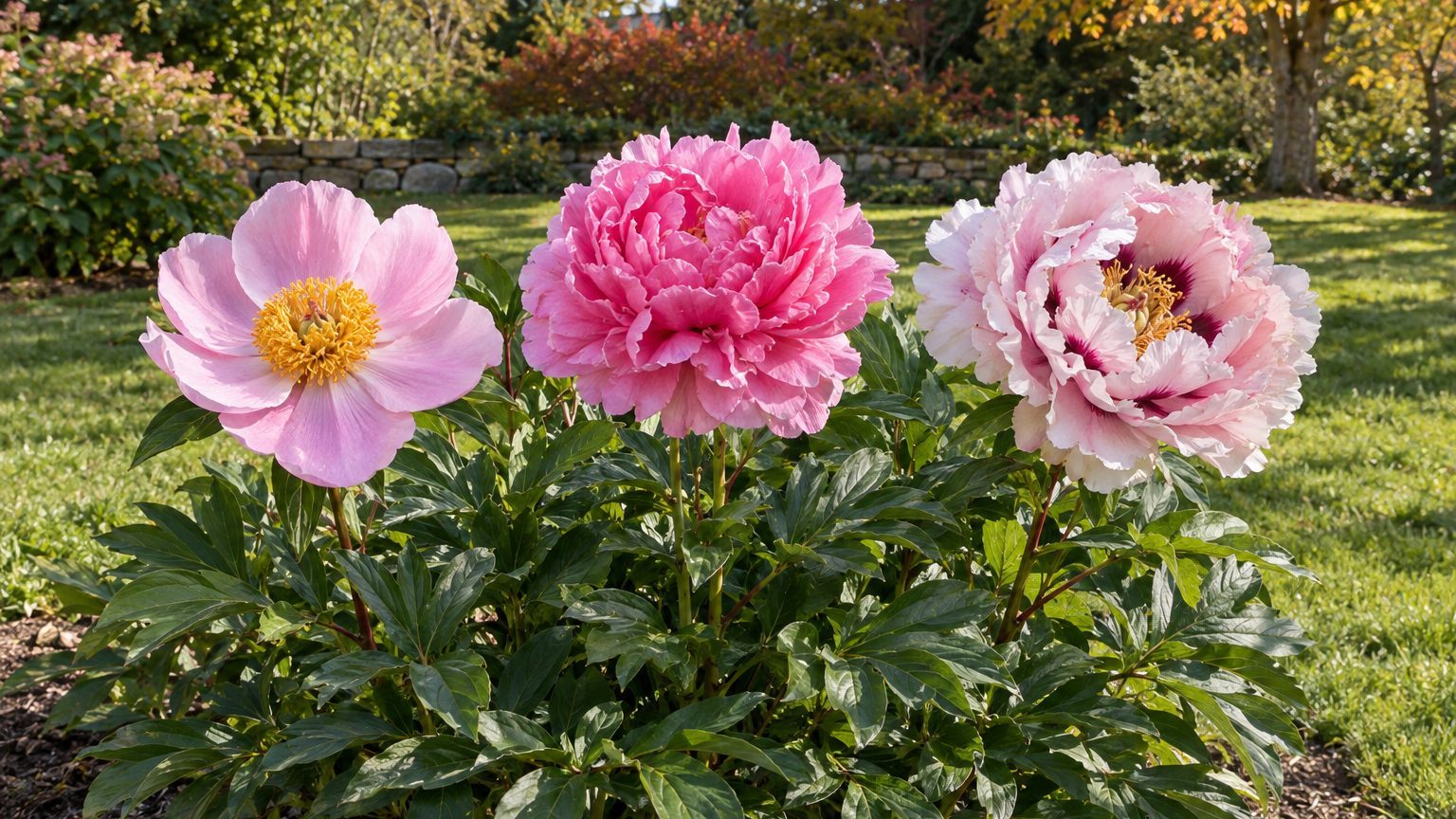
Those fat round buds on peony stems in late spring are a sign of a plant that has had its winter, and New Brunswick gives it a proper one. Herbaceous, tree and intersectional peonies all have a place in a New Brunswick yard, and the woodland peony fits shadier corners. What changes the choice is bloom season, upkeep and how much room you can spare.

Best Peonies to Grow in New Brunswick

Best Peonies for New Brunswick

Garden peonies, tree peonies, intersectional (Itoh) peonies and the woodland peony are the main types to consider, and all need a cold winter rest to flower. The reference city of Moncton sits in Canadian hardiness zone 5a, which is a Canadian rating and does not convert to a USDA zone.

Garden Peony

The garden or herbaceous peony (Paeonia hybrids) is the familiar one, and it fits well into a New Brunswick routine. It flowers in late spring into June and then dies back on its own each year.

Cut the foliage to the ground after it has died back. Plant it with the eyes close to the soil surface, since a peony set too deep may bloom poorly or not come up at all.

Tree Peony

The woody tree peony (including Paeonia suffruticosa) keeps its stems through winter, so it builds a permanent framework instead of vanishing each fall. Its cold requirement is met here like that of any other peony.

Leave the woody stems standing. Only trim out wood that is clearly dead, and never cut the plant back to the ground the way you would a garden peony.

Intersectional Peony

The intersectional peony, also called the Itoh, is a cross between the garden and tree peonies. It flowers in late spring into June, and in a mixed planting it tends to come after the garden types.

It suits a yard where you want a peony that combines traits of garden and tree types, and it needs the same winter cold and shallow planting as the others.

Woodland Peony

The woodland peony (Paeonia japonica) is the white-flowered type, and it opens first in a mixed planting, in late spring. It is the one to look at for a shadier bed.

Like the others, it relies on winter cold to flower, so New Brunswick winters work in its favor.

How to Choose a Peony for a New Brunswick Garden

Start with what you want from the plant: a long season of flowers, a low-fuss shrub, or a classic border perennial. Most of the decision comes down to bloom order and how much cutting back you want to do.

Planting and dividing are best in August and September, and October works as a fallback. Spring planting is possible, but it may delay flowers a year.

Your situation What suits it in New Brunswick Why
Very cold winters Any of the four types Peonies need winter cold to flower, so cold winters help them
Want a long bloom season A mix of woodland, tree, garden and intersectional peonies Each type opens at a different time, from late spring into June
Little time for fall chores Tree peony It keeps its woody stems and is never cut to the ground
Prefer a perennial that resets each year Garden peony It dies back and is cut back after the foliage has gone
Want traits of garden and tree peonies Intersectional peony It is a hybrid of the garden and tree peonies

For this province the planting and cutting months follow the nearest comparable climate, so confirm local timing with a garden centre, a garden society or the provincial gardening groups. A gardener with less time can also wait on a garden peony until early spring, in March or April, instead of cutting it back in November or December.

Which Peonies Suit Different Parts of New Brunswick

The province is not one climate, and the main difference for peonies is how late spring arrives.

  • Moncton and the southeast: At Moncton, the last spring frost averages May 23, but in one year out of two it comes later, so treat that date as the middle of a window. Wait for the frost risk to ease before judging how a young plant has fared.
  • Northern New Brunswick: Districts in the north and uplands run behind the southeast, so spring growth and bloom arrive later. Plant at the start of the August to September window so roots settle before winter.

Across the province, local conditions affect both timing and which peony will thrive in a particular yard.

Peony Buying Mistakes to Avoid in New Brunswick

Planting Too Deep

A peony buried too far down may bloom poorly or not come up. Many a healthy root can sulk in the ground because the soil was piled over it.

Set the eyes near the soil surface when you plant or divide, and check the depth again after the soil settles.

Cutting a Tree Peony to the Ground

A tree peony keeps woody stems that carry next year’s flowers, so a fall cleanup meant for garden peonies can cost it its structure. The herbaceous types are the ones cut back after frost.

Check the label before you pick up the shears, and remove only dead wood from a tree peony.

Planting Outside the Fall Window

A peony put in during late summer or early fall has time to settle before winter, while one planted in spring may delay flowers a year. August and September are the months to aim for, with October as a fallback.

If a spring purchase is unavoidable, plant it as soon as the soil can be worked and be patient about the first blooms.

Where to Get Peony Advice in New Brunswick

Local help comes from a few different places. General federal resources provide background, while local gardeners know the conditions in their area.

  • Agriculture and Agri-Food Canada [link: https://agriculture.canada.ca/en] has broader federal resources for growers, and a visit before you plan a bed is worthwhile.
  • A local garden centre can tell you what has done well nearby, so stop in during late summer before the fall planting window opens.
  • A garden society or local master gardener group can confirm timing in your district, and a call before you dig is the next step.

Common Questions

When Do Peonies Bloom in New Brunswick?

Peonies bloom from May into June, depending on the type. The woodland peony tends to open first, with the garden and intersectional types following in a mixed planting.

When Should You Cut Back Peonies in New Brunswick?

Cut back garden peonies after the foliage has died back, in November or December. You can also wait until March or April and do it in early spring.

Will a New Peony Bloom the First Spring?

A newly planted or transplanted peony may not bloom the first spring. The plant spends that season settling its roots, and flowers usually follow once it has established.

Best Peonies for Nevada

Best Peonies for Nevada

A peony in full bloom depends on a hard winter behind it. In Nevada that makes the choice of site matter as much as the choice of variety, because the cold high country gives peonies what the low desert cannot.

Best Peonies to Grow in Nevada

Best Peonies for Nevada

Herbaceous peonies do best in the cold, high-elevation parts of Nevada, and early-blooming cultivars can open before hot weather arrives. The low desert around Las Vegas may be too mild in winter for reliable flowering. Peonies need a cold winter rest to flower, so in mild-winter spots they may leaf out well and bloom poorly or not at all. Nevada spans USDA hardiness zones 4a to 10a, and that spread is exactly why the location matters.

Early-Blooming Cultivars

Early-Blooming Cultivars — Best Peonies for Nevada

Early bloomers have time to open before hot weather arrives, which matters in a state where summer heat arrives fast. They also tend to be less prone to botrytis blight, the gray mold that follows warm, damp spells. When a label or grower lists bloom time, lean toward the early end.

Sarah Bernhardt

Sarah Bernhardt — Best Peonies for Nevada

Sarah Bernhardt is a popular cut-flower and landscape cultivar. Plant it where winters are properly cold, such as Reno, Carson City or higher ground, and give it a spot with good drainage.

Karl Rosenfeld

A deep crimson double that appears on cut-flower and landscape cultivar lists. It suits the same cold-winter sites as other herbaceous types and pairs well with a pink variety for contrast in a front bed.

Festiva Maxima

A white double with crimson flecks that appears on cut-flower and landscape cultivar lists. Like the others, it rewards a cold winter and a site that does not bake in summer afternoons, so morning sun with some afternoon relief helps in hotter valleys.

Red Charm

Popular as a cut flower, this red is worth considering if you want bold color and plan to bring stems indoors. Peonies handle cold far better than heat, so the usual rule applies: put it in the coolest part of your yard that still gets sun.

How to Choose a Peony for a Nevada Garden

Match the plant to your winter first. A peony with a cold winter rest is more likely to flower, while one without it may bloom poorly. After that, think about summer heat and how much care you want to give.

Peonies are generally thought of as having very few disease problems. They also prefer well-drained, loamy soil but flower well in ordinary garden soil.

Your situation What suits it in Nevada Why
Very cold winter Sarah Bernhardt, Karl Rosenfeld, Festiva Maxima Peonies tolerate cold much more readily than heat
Hot summer Early-blooming cultivars They open before the heat sets in
Humid or damp spells Early-blooming cultivars They are less prone to botrytis blight
Concern about disease Any herbaceous peony in a cold-winter spot Peonies are generally thought to have few disease problems
Need for winter cold High-elevation, cold-region sites Peonies need a cold winter rest to flower

For a small yard, check the mature size on the plant label before you buy.

Which Peonies Suit Different Parts of Nevada

Peonies do best in the high, cold parts of the state, and the choice shifts as you move toward the warm south.

  • Reno and Carson City: Winters here are cold enough for the classic herbaceous cultivars, so this is where Sarah Bernhardt and similar varieties make the most sense.
  • Elko and the high northeast: Elevation brings the cold winters peonies want, while early bloomers may still avoid hot spells.
  • Las Vegas and the low desert: Winters are too mild for most peonies to bloom well, and summer heat is hard on them. Treat peonies as a gamble here, and ask your county extension office what grows better in your yard.

Within each area, choose a cooler spot away from reflected heat.

Peony Buying Mistakes to Avoid in Nevada

Planting in the Low Desert

Buying a peony for a mild-winter yard looks like a bargain at the nursery and turns into a leafy plant with few blooms. Peonies need a cold winter rest to flower, and low desert winters often do not supply it. If you live in the south, ask extension about plants better suited to your climate before you spend.

Choosing Late Bloomers

A late-opening cultivar may meet hot weather before it finishes blooming. Early-blooming cultivars have time to flower before hot weather, and they are less prone to botrytis. Check the bloom time on the label and pick early.

Setting the Plant Too Deep

A peony planted too deep may bloom poorly or not come up. Keep the eyes near the soil surface. Also expect a newly planted peony to skip its first spring, so a bare year is no reason to dig it up.

Where to Get Peony Advice in Nevada

Ask your county extension office for advice that fits your yard. Nearby help is worth using.

  • University of Nevada, Reno Extension offers guides and answers on what grows at your elevation, and it is worth a visit before you order plants.
  • Your county extension office can tell you which peonies have done well nearby, so call or stop in before you buy.

Common Questions

Do Peonies Bloom the First Spring After Planting?

Often not. A newly planted or transplanted peony may skip its first spring, then flower once its roots have settled.

Do You Cut Back Peonies in Nevada?

An herbaceous peony dies back each year, so cut it back after frost. A tree peony keeps its woody stems and is never cut back.

What Soil Do Peonies Need in Nevada?

Peonies prefer well-drained, loamy soil, but they flower well in ordinary garden soil. Avoid spots where water stands, since soggy roots stress the plant.

Best Peonies for Nebraska

Best Peonies for Nebraska

Fat peony buds swell on the stems each spring, and by May into June the flowers open in yards across Nebraska. Cold winters suit the plant, so the choice comes down to type and variety rather than survival. Garden peonies, intersectionals and tree peonies all have a place here, each with its own habits.

Best Peonies to Grow in Nebraska

Best Peonies for Nebraska

Herbaceous garden peonies, intersectional peonies and tree peonies all do well in Nebraska, because peonies need a cold winter rest to flower and Nebraska winters supply it. Where winters are mild, peonies flower poorly. Here the question is which form and flower style you want.

Garden Peonies

Garden Peonies — Best Peonies for Nebraska

Most garden peonies grown in landscapes come from Paeonia lactiflora, a species native to Asia that has been cultivated for centuries. Blooming in late spring to early summer, they produce single, semi-double or fully double flowers in white, pink, red and other colors, depending on the cultivar. They are the dependable starting point.

Intersectional Peonies

Intersectional Peonies — Best Peonies for Nebraska

Also called Itoh peonies, these are hybrids of the garden and tree peonies. They share the easy culture of garden peonies: each fall they die back to the ground, and new growth emerges in the spring. Choose one if you want a different look without a different routine.

Tree Peonies

Tree peonies are woody shrubs that go dormant over winter, then renew their growth each spring on woody stems. They suit a gardener who wants a permanent framework in the bed. Unlike the herbaceous types, they keep their stems through winter, so there is no fall cutting down to the ground.

Shawnee Chief

This red double has been evaluated as a fresh-cut flower. Its red, double flowers give you a strong red for the bed.

Snow Mountain

A white bomb-type, Snow Mountain also grew in cut-flower trial beds alongside Shawnee Chief. Bomb flowers form a rounded, full pouf of petals. Pair it with a red such as Shawnee Chief for a classic white and red planting.

How to Choose a Peony for a Nebraska Garden

Start with what you want from the plant: low effort, cut flowers, or a woody shrub with a lasting shape. Nebraska’s winters already give peonies the rest they need, so your situation matters more than climate worries.

Start with the growth habit you want, then choose the flower shape. The common herbaceous peony comes in single, semi-double, double, Japanese or anemone, and bomb forms.

Your situation What suits it in Nebraska Why
Very cold winters Garden or intersectional peonies They die back to the ground each fall and regrow in spring, and the cold rest helps them flower
Little time to spend Garden or intersectional peonies They are the easiest to grow and share the same culture
Cut flowers for the house Shawnee Chief or Snow Mountain They were grown in cut-flower trial beds
A woody shrub in the bed Tree peonies They keep woody stems through winter and renew growth each spring

Candy Heart, Red Charm, Duchess de Nemours, Madame de Vernville and Henry Bocktoce were also tested for cut flowers, and holding them in floral preservative changed how the blooms aged. Apache and Lovely Rose performed poorly in the vase trial, so skip them if cutting is your goal.

Which Peonies Suit Different Parts of Nebraska

Peonies are hardy across the state, so regional differences affect timing and placement more than the type you buy.

  • Panhandle: Higher ground brings colder winters and a later spring, so blooms may open a little behind those farther east. Plant tree peonies where buildings or fences break the wind.
  • Omaha and Lincoln: Winters are milder here than in the west, though still cold enough for a good rest. Garden and intersectional peonies are easy picks for most beds.
  • Sandhills: Open country means wind, so give tree peonies a sheltered spot, and stick with herbaceous types that die back to the ground in exposed beds.

Across the state, the USDA hardiness range runs from zone 4a to 5b, and conditions vary within that range.

Peony Buying Mistakes to Avoid in Nebraska

Cutting a Tree Peony Down

Garden and intersectional peonies are cut back after frost, but a tree peony keeps its woody stems and is never cut to the ground. Treating it like a garden peony removes the wood that carries next spring’s growth. Check the tag before you pick up the pruners.

Planting Too Deep or Too Late

A peony set too deep may bloom poorly or fail to come up, so keep the eyes near the soil surface. Timing matters too. Plant or divide in September, or October at the latest, so roots have time to settle before winter.

Expecting Flowers the First Spring

A newly planted or transplanted peony may not bloom the first spring, so a bare-root division or a small potted plant should not be judged by that first year. Give a potted peony room to grow, because mature plants fill a bed over time.

Where to Get Peony Advice in Nebraska

Local advice helps when a variety is new to you or a plant sulks. University of Nebraska–Lincoln Extension publishes peony care guidance and answers garden questions.

  • The state extension site has peony care guides, useful before you plan a bed.
  • Ask your county extension office how to document a struggling plant before sending or bringing a sample.
  • Check the planting guidance before ordering, so the plant arrives for the fall window.

Common Questions

When Do Peonies Bloom in Nebraska?

Peonies bloom in May into June.

When Should You Cut Back Peonies?

Cut back herbaceous peonies in October or November, after frost in fall. Early spring, in March or April, is the other window. Cut the stems down to within a couple of inches of the ground.

What Flower Shapes Do Garden Peonies Come In?

The common herbaceous peony is available as single, semi-double, double, Japanese or anemone, and bomb. Pick by the look you like, since all of them share the same care.

Best Peonies for Montana

Best Peonies for Montana

Red shoots pushing up through cold spring soil make a vivid start to the peony season. Peonies need a long cold rest before they will flower, which works in the state’s favor. Herbaceous peonies and tree peonies can suit Montana, with a wide range of flower forms to choose from.

Best Peonies to Grow in Montana

Best Peonies for Montana

Herbaceous peonies and tree peonies suit Montana yards because peonies need a cold winter rest to flower. Peonies tend to flower poorly in mild-winter climates. Cold is an advantage in Montana, so the real choice is the shape, size and site you want.

Herbaceous Peonies

Herbaceous Peonies — Best Peonies for Montana

These are the classic garden peonies. They die back to the ground each year and return in spring with attractive foliage and showy blooms in pink, purple, red and white.

Herbaceous peonies grow better in full sun, so give them an open, bright bed rather than a shady corner.

Tree Peonies

Tree Peonies — Best Peonies for Montana

Despite the name, a tree peony is a deciduous shrub with woody stems that stay put through winter. It tends to bloom earlier than herbaceous peonies, with larger flowers.

Mature tree peonies usually need no staking because their woody branches support the flowers. Choose light shade and a protected location for them.

Single and Double Forms

There are literally hundreds of varieties, and the flower forms run from single and double to bomb and anemone. Colors cover whites, pinks, reds, corals and yellows.

Some are fragrant and some are not, so check the flowers’ scent before you commit to a whole bed.

Early, Mid and Late Bloomers

Varieties differ in blooming date, and that is useful. Varieties differ in bloom timing, with early, mid and late choices.

How to Choose a Peony for a Montana Garden

Start with the spot you have, then match the plant to it. Montana’s cold is not a problem for peonies, so the useful questions are about light, space and how much work you want to do.

Herbaceous peonies are cut back after frost, while tree peonies keep their woody stems.

Your situation What suits it in Montana Why
Very cold winter Herbaceous peony It dies back each year and rests, and the winter chill is what makes it flower
Little time for fall chores Tree peony It keeps its woody stems and is never cut back
Small bed Herbaceous hybrid Plants stay compact
Room for a shrub Tree peony It reaches 3 to 5 feet and needs no staking once mature
Full sun Herbaceous peony It grows better in full sun
Light shade or a sheltered corner Tree peony It prefers light shade and a protected location
Bouquets for the house Varieties recommended for cut flowers Early, mid and late types stretch the harvest

Whichever you pick, expect blooms in June, and blooms can also open in May.

Which Peonies Suit Different Parts of Montana

Montana’s valleys do not all behave alike, and the difference shows up in timing and in how much shelter a plant needs.

  • Billings: One of the milder valleys, with the last spring frost falling between April 29 and May 10. Herbaceous peonies bloom in June and can also bloom in May.
  • Mountain valleys can frost in any month. Tree peonies prefer light shade and a protected location.

Wherever you garden, peonies need a cold winter rest to flower.

Peony Buying Mistakes to Avoid in Montana

Tree Peony in an Open Spot

A tree peony in an exposed bed misses the protected location it prefers. It prefers light shade and a protected location.

Pick a sheltered corner before you buy, not after the shrub is in a pot on the patio.

Landscape Variety for Cut Flowers

Plants sold for general landscaping are not always good for bouquets. If you want stems for vases, look for varieties recommended for cut flower production.

Pot Plant with Unknown Size

A small potted peony hides its adult size. Check the mature size on the tag so the plant has room around it.

A newly planted or transplanted peony may not bloom the first spring, so moving it can delay flowers. Check the mature size on the tag and place it once.

Where to Get Peony Advice in Montana

Local growers know which varieties come through your valley’s winters. A short call or visit before you order can help you choose.

  • Montana State University Extension offers plant guides and gardening answers, handy in winter when you are choosing varieties.
  • Your county extension office can speak to conditions in your own valley, so ask before fall planting time.
  • Take a photo of your planting spot and its light with you, then settle on a herbaceous or tree peony before you buy.

Common Questions

When Should You Plant or Divide Peonies in Montana?

Fall is the time, in September and October, before the ground freezes. Peonies respond best to fall planting, typically as a bare-root plant, which gives the roots time to settle before winter.

When Should You Cut Back Peonies in Montana?

Cut herbaceous peonies back in October and November, after a hard freeze has killed the foliage. Take the stems down to within a couple inches of the ground, and bag the old leaves rather than composting them to limit disease.

How Deep Should You Plant a Peony?

Keep the eyes, the pink buds on the root, near the soil surface. A peony planted too deep may bloom poorly or not come up, so keep the eyes near the soil surface.

Best Peonies for Missouri

Best Peonies for Missouri

Peony clumps come back through the soil each spring in Missouri, pushing up red shoots that turn into May flowers. Herbaceous peonies and intersectionals are the dependable choices across the state, because Missouri winters give them the cold rest they need to bloom. Cultivar, flower form and where you live in the state shape the rest of the decision.

Best Peonies to Grow in Missouri

Best Peonies for Missouri

Herbaceous peonies and intersectionals tend to do best here. Missouri sits in USDA hardiness zones 5b to 7b, cold enough for the winter rest that peonies depend on, and these types die back to the ground each fall and regrow the next spring. Peonies suited to cold winters are a better match here than types that want mild climates.

Herbaceous Peonies

Herbaceous Peonies — Best Peonies for Missouri

Herbaceous peonies are the staple of the garden and the most widely grown type. Each fall the foliage dies back to the ground, and new growth emerges in spring, so there is no woody structure to protect through winter.

Most of them descend from Paeonia lactiflora, a species native to Asia that has been grown for centuries.

Intersectional Peonies

Intersectional Peonies — Best Peonies for Missouri

Intersectionals share the same culture as herbaceous peonies, so the same planting and yearly routine apply. They also die back each fall and return in spring, which makes them a sensible upgrade for a gardener who wants something a little different without learning new care.

Shawnee Chief

Shawnee Chief is a red double that was grown in a commercial-size cut-flower trial in the Midwest. A bed of it makes sense for gardeners who want a classic, full red bloom from a cultivar with a track record in this part of the country.

Snow Mountain

Snow Mountain is a white bomb-type, with a rounded, full center. It was planted alongside Shawnee Chief in the same Midwest research beds, so growing Snow Mountain with Shawnee Chief gives you red and white blooms from cultivars tested in the region.

Red Charm, Candy Heart and Other Cut-Flower Cultivars

Midwest trials of cut flowers also looked at Duchess de Nemours, Red Charm, Madame de Vernville, Henry Bocktoce and Candy Heart. The trial examined how these cultivars aged in a floral preservative after cutting. The other cultivars tested offered a wide range of colors and had acceptable vase lives.

Flower Forms to Pick From

The common herbaceous peony comes as single, semi-double, double, Japanese or anemone, and bomb. Form changes the look more than the care, so choose by the flower you like. Apache and Lovely Rose had vase lives under 5 days in trials, so skip them if you cut stems for the house.

How to Choose a Peony for a Missouri Garden

Your goal narrows the field quickly. Nearly everything above shares the same routine, so the choice usually comes down to how much effort you want to spend and what you plan to do with the flowers.

Planting depth matters whichever you pick. A peony set too deep may bloom poorly or not come up at all, so keep the eyes near the soil surface.

Your situation What suits it in Missouri Why
Cold winters, such as northern Missouri Herbaceous peony It dies back to the ground each fall and regrows in spring, with a winter rest built in
Little time for upkeep Herbaceous or intersectional They are the easiest to grow and share the same culture
Cut flowers for the house Shawnee Chief, Snow Mountain, Red Charm Each was handled as a cut flower in regional trials
A particular flower look Single, semi-double, double, Japanese, or bomb form The common herbaceous peony is sold in all of them
A spot with a real winter chill Herbaceous peony Peonies need winter cold to flower

Gardeners in the milder south can still grow these same peonies, but flowering may be poorer where winter chill is limited. A smaller space simply means fewer plants of the same kind.

Which Peonies Suit Different Parts of Missouri

The plants themselves stay the same across the state, but winter cold and spring timing shift as you move from north to south.

  • Northern Missouri: Winters are colder here, which suits herbaceous peonies well. Plant them with confidence and expect reliable flowering in May.
  • Kansas City area: Spring frost timing varies across the Kansas City area, and downtown may run a little earlier than airport locations. That marks frost risk, not the start of growth, so plan around the planting months rather than the frost date.
  • Southern Missouri and the Ozarks: Winters are milder, so bloom can open from mid-April, earlier than in the north. Favor herbaceous peonies, and remember that flowering may be poorer where winters stay mild.

Wherever you live, May is the main bloom month, with April and June possible on either side.

Peony Buying Mistakes to Avoid in Missouri

Treating a Tree Peony Like a Herbaceous One

A herbaceous peony is cut back after frost, but a tree peony keeps its woody stems and is never cut back. Cutting a tree peony to the ground removes the very wood that carries its flowers. Check the plant tag before you pick up the shears.

Choosing a Variety That Needs More Winter than You Get

Peonies need a cold winter rest to flower, so they may flower poorly in mild-winter climates. In the warmer south of the state, a plant that gets little chill can leave you with leaves and no blooms. Put it in a cooler spot in your yard.

Buying a Potted Plant Without Knowing Its Size

A small pot hides a big plant. A peony grows into a wide clump that can crowd a front bed. Read the tag for mature width, then leave room for it and set the eyes near the soil surface so it blooms.

Where to Get Peony Advice in Missouri

Local advice can be tailored to your soil and winter. University of Missouri Extension [link: https://extension.missouri.edu/] publishes guidance on peonies and can point you to cultivars that suit your area.

  • The extension website has peony guides you can read at any time of year, ahead of the September and October planting months.
  • Your county extension office can answer questions about your soil and winter chill, and a call in late summer gives you time to choose a spot before planting.

Common Questions

When Do Peonies Bloom in Missouri?

May is the main bloom month. In the southern part of the state, flowers can open from mid-April, earlier than in the north, and June is also possible.

When Should You Plant Peonies in Missouri?

September through October is the time to plant or divide peonies. The roots settle in before the ground freezes, and the plant is ready to grow the next spring.

Will a New Peony Bloom the First Spring?

A newly planted or transplanted peony may not bloom the first spring. Give it time to establish.

Best Peonies for Mississippi

Best Peonies for Mississippi

A peony in full bloom in a Mississippi spring is possible, but the plant has to be chosen with the warm winters in mind. Peonies come from cooler country, so variety choice matters in Mississippi. The right pick makes the difference between big blooms and a leafy clump that never flowers.

Best Peonies to Grow in Mississippi

Best Peonies for Mississippi

Early-blooming, single and Japanese peonies are the ones that hold up in Mississippi. Peonies need a cold winter rest to flower, and much of the state sits in USDA zones 7b to 9a, where winters often fall short of that. Peonies often do poorly in the lower South for lack of winter chilling, so the choice of type matters more here than the choice of color.

Early-Blooming Peonies

Early-Blooming Peonies — Best Peonies for Mississippi

Early cultivars open before the heat settles in, which is the whole advantage in a Southern spring. They are also less prone to botrytis blight, the gray mold that ruins buds in damp, warm weather. Look for the word early on the plant tag.

Single Peonies

Single Peonies — Best Peonies for Mississippi

Single-flowered types have an open ring of petals around a golden center. Single and Japanese bloom types usually perform much better in the South than doubles do. Their lighter blooms also tend to cope better with spring rain than heavy, many-petaled flowers.

Japanese Peonies

Japanese types show a tuft of petal-like parts at the center, ringed by wider outer petals. They share the single’s record of doing well in Southern gardens. If you want something fuller than a plain single without a full double’s risk, this is the type to look at.

Kansas Double Peony

Doubles are the harder road, though ‘Kansas’ has earned a place. The cultivar ‘Kansas’ carries large, early double flowers of watermelon red that hold their color through the bloom. Its early timing is what makes it workable.

How to Choose a Peony for a Mississippi Garden

Start with what your yard and your schedule give you. Mild winters and warm, damp springs shape the choice, while yard conditions can also influence it.

Once planted, a peony asks for full sun, good drainage and little attention, so the real decisions are made at the nursery.

Your situation What suits it in Mississippi Why
Mild winters, little chill Single or Japanese cultivars They perform much better in the South than doubles do
Warm, humid spring Early-blooming cultivars They flower before the heat and are less prone to botrytis blight
Want a double ‘Kansas’ Early, large and reliable in Southern gardens
Little time to spare Any herbaceous peony, left in place It wants full sun and drainage and rarely needs division
Need for cold Early singles in full sun with good drainage Early singles may perform better where winters are mild

Which Peonies Suit Different Parts of Mississippi

The state runs from cooler hills in the north to the mild Gulf, and winter chill is what changes with the map.

  • North Mississippi: winters are cooler here than farther south, which may give peonies more of the cold rest they need. Early singles and Japanese types are the safe pick, and a double such as ‘Kansas’ is a fair try.
  • The Delta and central Mississippi: expect marginal results. Stick with early-blooming singles and Japanese types and give them full sun and good drainage.
  • The Gulf Coast: winters are milder here than in the north of the state, so chilling can fall short for peonies. Treat peonies as an experiment and keep expectations modest.

Check your own county before buying, since a yard on higher ground can run cooler than the town nearby.

Peony Buying Mistakes to Avoid in Mississippi

Choosing a Tree Peony

A tree peony looks like a bargain of drama, with big blooms on woody stems. In mild-winter parts of Mississippi, it risks poor flowering. Choose an early herbaceous single or Japanese type instead.

Buying a Variety That Wants More Cold

Full doubles may flower poorly in a mild-winter garden. Here they may leaf out nicely and flower poorly because winter never delivers enough rest. Check that the tag says early-blooming, single or Japanese, or choose a double with a Southern record like ‘Kansas’.

Planting Too Deep and Expecting Instant Flowers

A peony set too deep may bloom poorly or not come up, so keep the eyes, the pinkish buds on the root, near the soil surface. A newly planted or transplanted peony may also skip bloom the first spring, so a bare year is not a sign of failure. Leave the clump in place afterward, because the brittle roots dislike being disturbed and division is rarely needed.

Where to Get Peony Advice in Mississippi

Local advice matters for peonies because the margin between a flowering plant and a disappointing one is narrow here.

  • Mississippi State University Extension at Mississippi State University Extension publishes gardening guidance for the state, worth reading before you order plants.
  • Your county extension office can tell you which cultivars have flowered locally, so call before buying in late summer.
  • Ask a local nursery which early-blooming singles they stock before the September and October planting season.

Common Questions

When Do Peonies Bloom in Mississippi?

Peonies flower in April and May. Early-blooming cultivars can open as early as March, which is part of why they handle Southern heat better.

When Should You Plant a Peony in Mississippi?

Late September or October is the time to plant or divide, giving roots a stretch to settle in before winter.

When Should You Cut Back Peonies in Mississippi?

Herbaceous peonies are cut back to the soil surface in November, after frost has killed the stems. It can also be done in October or December. A tree peony keeps its woody stems and is never cut back.

Best Peonies for Minnesota

Best Peonies for Minnesota

A peony clump in June, heavy with blooms and bending a little under their weight, is one of the great sights of a Minnesota yard. Winters here are cold enough to give peonies the rest they need, so patience is worthwhile. The real choice is between herbaceous, intersectional and tree types.

Best Peonies to Grow in Minnesota

Best Peonies for Minnesota

Herbaceous and intersectional peonies are the ones that hold up best in Minnesota, because they die back to the ground each winter and then push up fresh growth. Tree peonies are less hardy and need more care. Peonies also need a cold winter rest to flower, and Minnesota provides it.

Herbaceous Peonies

Herbaceous Peonies — Best Peonies for Minnesota

This is the classic garden peony, descended from the Chinese peony (Paeonia lactiflora) and the common peony (P. officinalis). Hundreds of cultivars came from those two species, so color and form are easy to match to your taste. Each fall the plant dies back, and new growth emerges in spring.

Herbaceous peonies are among the easiest to grow, which suits a yard where winter does the hard work of resting the plant. Pick one spot and leave it there.

Intersectional Peonies

Intersectional Peonies — Best Peonies for Minnesota

Also called Itoh peonies, these are hybrids of the garden peony and the tree peony. They behave like the herbaceous kind: they die back to the ground each fall and return in spring with the same care.

That makes them a good way to get something a little different without taking on the winter fuss of a woody plant.

Tree Peonies

Tree peonies are woody plants, mostly derived from P. suffruticosa. They keep their stems through winter, so they are never cut back like a herbaceous peony.

They are generally not as hardy as the other types. In Minnesota that means a protected site, such as a spot sheltered from open wind, and a layer of mulch over winter. Treat them as an extra, not the backbone of a peony planting.

How to Choose a Peony for a Minnesota Garden

Minnesota is USDA hardiness zone 3a to 5a, and the zone is based on the average annual extreme minimum temperature. Cold like that suits peonies, so the choice comes down to the type, the soil and how much work you want to do.

Match the plant to your situation below, then pick a spot and a variety.

Your situation What suits it in Minnesota Why
Very cold winter Herbaceous or intersectional peonies They die back to the ground each fall, so the cold does not reach any exposed stems
Hot, humid summer Light, sandy soil and varieties less prone to disease Phytophthora rarely develops in light, sandy soils, and varieties differ in how susceptible they are
Little time Herbaceous or intersectional peonies They share the same simple care: die back in fall, grow again in spring
Need for winter cold Any herbaceous peony Peonies do best where winters are cold and flower poorly in mild-winter climates
Wish to try a woody plant Tree peony in a protected site It is less hardy, so shelter and winter mulch matter

Small spaces are a matter of planning rather than type. Whichever peony you choose, it comes back in the same spot each year, so set it where the full plant will have room.

Which Peonies Suit Different Parts of Minnesota

Winter cold and the length of the growing season shift from the south of the state to the north, and that changes how much risk you can take.

  • Twin Cities: This is the mild south of Minnesota. Herbaceous and intersectional peonies do well, while a tree peony needs shelter or winter mulch.
  • Northern Minnesota: Spring comes later and fall frost arrives sooner. Herbaceous and intersectional peonies die back to the ground, while tree peonies need a protected site or winter mulch here.

Wherever you live, plant early enough in fall for roots to settle before the ground freezes, and take extra care with winter mulch the farther north you go.

Peony Buying Mistakes to Avoid in Minnesota

Choosing a Tree Peony Without Protection

Tree peonies are generally less hardy, and a Minnesota winter can punish one planted in an open, windy spot. The loss is a woody plant that dies back or fails to return.

If you want one, pick a sheltered site and mulch it over winter. For simpler care, choose an herbaceous or intersectional peony.

Ignoring Disease Susceptibility

Varieties differ in how prone they are to disease, and the variety Avalanche is reportedly especially susceptible to Phytophthora. A damp summer can then cost you a clump that looked healthy in spring.

Ask for varieties that are less susceptible, and plant in light, sandy soil where Phytophthora rarely develops.

Planting a Potted Peony Too Deep

Peonies are sold as potted plants in spring and as bare roots in fall. Planted too deep, a peony may bloom poorly or not come up at all. Keep the eyes near the soil surface.

Also, a newly planted or transplanted peony may not bloom the first spring. Choose the final spot before you dig, because moving it costs you bloom.

Where to Get Peony Advice in Minnesota

Local questions about soil, disease and varieties are best answered close to home. Minnesota gardeners can start with local extension help.

  • University of Minnesota Extension publishes research-based guidance on peonies and garden problems, and its pages are worth a look before you buy.
  • Your county extension office can look at your soil and a photo of a troubled plant, so call it when problems first show.

Common Questions

When Do Peonies Bloom in Minnesota?

Bloom runs from early June into early July.

When Should You Plant or Divide Peonies in Minnesota?

September to early October is the time, so the roots settle before the ground freezes. Planting in fall gives the plant a head start, and spring is when potted plants are sold.

When Should You Cut Back Peonies, and What Do You Do with the Stems?

Cut herbaceous peonies down after a hard freeze has killed the foliage, in October or November. Leave a couple inches of stem and bag the debris rather than composting it, which helps prevent disease. Tree peonies are never cut back this way.

Best Peonies for Michigan

Best Peonies for Michigan

A peony that returns each spring brings a quiet pleasure to a Michigan yard, and the winters here are exactly what it asks for. Herbaceous peonies, intersectional (Itoh) peonies and tree peonies all have a place in Michigan gardens, each with its own habits.

Best Peonies to Grow in Michigan

Best Peonies for Michigan

Michigan’s cold winters suit peonies, which need a cold winter rest to flower and may bloom poorly in mild-winter climates. Across the state, USDA hardiness zones run from 4a to 6b. The types that thrive here are herbaceous, intersectional and tree peonies.

Herbaceous Peonies

Herbaceous Peonies — Best Peonies for Michigan

Garden peonies are among the easiest peonies to grow, and they fit Michigan’s cold winters well. It dies back to the ground each fall, then new growth emerges in spring.

Cut the stems back after frost in fall. Plant the eyes near the soil surface, because a peony set too deep may bloom poorly or not come up at all.

Intersectional Peonies

Intersectional Peonies — Best Peonies for Michigan

Intersectional peonies, also known as Itoh peonies, are hybrids of the garden and tree peonies. They share the culture of herbaceous types: they die back each fall and return in spring.

That makes them an easy choice if you want something a little different without learning a new routine. Treat them like a garden peony and cut them back after frost.

Tree Peonies

Tree peonies (including Paeonia suffruticosa) are woody shrubs that go dormant over winter. New growth is renewed each spring on the woody stems.

Never cut a tree peony back to the ground, since the woody stems are the framework of the plant. Give it a spot where its woody structure can stay put.

Woodland Peonies

The woodland peony (Paeonia japonica) is also grown in home landscapes. It offers gardeners a different look.

Plant it in the same fall window as the others, and keep the eyes near the soil surface.

How to Choose a Peony for a Michigan Garden

Start with what your yard and your schedule allow. Michigan gives peonies the cold they need, so the choice comes down to how much upkeep you want and how much structure you want in the bed.

Whatever you pick, plant or divide in September, or October at the latest, so the roots settle before winter. A newly planted or transplanted peony may not bloom the first spring.

Your situation What suits it in Michigan Why
Very cold winter Herbaceous or intersectional peony They die back to the ground each fall and regrow in spring
Little time for upkeep Herbaceous or intersectional peony They are the easiest to grow and share the same culture
Need for winter cold Any peony type Peonies need a cold winter rest to flower, and Michigan supplies it
Want a woody shrub shape Tree peony It keeps its woody stems through winter and renews growth each spring

For a plant that blends garden and tree peony traits, the intersectional Itoh is the one to look at. Woodland peonies offer another look for the garden.

Which Peonies Suit Different Parts of Michigan

Michigan’s USDA hardiness zones run from 4a to 6b, while local growing conditions vary.

  • Upper Peninsula: Follow the statewide planting and bloom calendar. Herbaceous and intersectional types, which die back and regrow each spring, are a natural fit.
  • Lower Peninsula: The last spring frost falls in early to mid May across most of it. The statewide peony calendar applies here.
  • Detroit area: The last spring frost falls around April 30. The statewide peony calendar applies here.

Peonies bloom from May into June across the state.

Peony Buying Mistakes to Avoid in Michigan

Planting Too Deep

A peony planted too deep may bloom poorly or not come up at all. Planting too deep can lead to poor bloom or prevent the peony from coming up.

Set the eyes near the soil surface when you plant, and keep them there.

Expecting Flowers Right Away

A newly planted or transplanted peony may not bloom the first spring. Buying a plant and expecting a show can leave you disappointed and tempted to move it again.

Plant in September, or October at the latest, and give the roots time to settle before winter.

Cutting Back the Wrong Peony

A herbaceous peony is cut back after frost, but a tree peony keeps its woody stems and is never cut back. Mixing them up can cost a tree peony its framework.

Cut herbaceous types back in October or November, after frost. Early spring, in March or April, is the other window. Leave tree peonies alone.

Where to Get Peony Advice in Michigan

For questions about your own yard, local help is close by. MSU Extension serves the whole state, and your county office knows your soil and your local conditions.

  • Its plant care guidance can help you compare choices before you buy.
  • Ask your county extension office about your site before planting in September or October.

Common Questions

When Do Peonies Bloom in Michigan?

Peonies bloom from May into June, depending on the type and variety.

Can You Plant a Peony in Spring in Michigan?

The recommended window for planting or dividing is September, or October at the latest. That gives the roots time to settle before winter.

Do Tree Peonies Need to Be Cut Back?

No. A tree peony keeps its woody stems, and new growth is renewed each spring on them.

Best Peonies for Massachusetts

Best Peonies for Massachusetts

Peony stems pushing out of cold spring ground, then fat buds opening in late spring, are a Massachusetts yard ritual that repeats year after year. Massachusetts winters provide the cold rest peonies need to flower. The choice comes down to which type fits your space, your patience and your winter.

Best Peonies to Grow in Massachusetts

Best Peonies for Massachusetts

Garden peonies, tree peonies and intersectional (Itoh) hybrids suit Massachusetts because they receive the winter cold they need to flower. The USDA hardiness zone range here runs from 5a to 7b and describes average annual extreme winter lows. The woodland peony is also grown in home landscapes.

Garden Peony

Garden Peony — Best Peonies for Massachusetts

The garden, or herbaceous, peony (Paeonia hybrids) is the classic border plant. It dies back every year, so cut the foliage to the ground after it has died back, in November or December. Early spring, in March or April, works as well.

Plant it in late August through September, keeping the eyes near the soil surface. Set too deep, it may bloom poorly or not come up at all.

Tree Peony

Tree Peony — Best Peonies for Massachusetts

The woody tree peony (including Paeonia suffruticosa) keeps its stems through winter, so it is never cut back to the ground. It flowers in late spring, ahead of the garden types.

Give it the same early fall planting window as the others, and expect it to settle in before it blooms well.

Intersectional Peony

The intersectional peony, also called Itoh, is a hybrid of the garden and tree peonies. It tends to close out the peony season, flowering after the herbaceous types have finished.

That June bloom makes it a good partner for an early garden peony.

Woodland Peony

The woodland peony (Paeonia japonica) is a white-flowered type that opens first, ahead of the tree peonies. It suits a gardener who wants the season to start early.

Like every peony, a newly planted or transplanted one may not bloom the first spring, so patience matters here.

How to Choose a Peony for a Massachusetts Garden

Match the plant to your yard and your habits. Bloom across the state falls in May and June, and the type you pick decides where in that stretch your flowers land.

Planting is best in August and September, and it can also be done in October. Spring planting is possible but may delay flowers a year.

Your situation What suits it in Massachusetts Why
Very cold winter Garden peony It dies back each year and returns from buried eyes, and it gets the chill it needs.
Later flowers Intersectional peony It is a hybrid of the garden and tree types and flowers after the herbaceous peonies.
Woody stems through winter Tree peony It keeps its woody stems and is never cut back.
Wanting a long show Woodland, tree, garden and Itoh together Their bloom times follow one another through late spring into June.
Need for winter cold Any listed peony type Peonies need a cold winter rest, and Massachusetts winters generally provide it.

For a small space, start with a tree peony or a garden peony.

Which Peonies Suit Different Parts of Massachusetts

Winter cold and spring timing vary from coast to hills, even though the peony types above can grow across the state.

  • The Berkshires: Winters here are colder and frost lingers later in spring, so garden peonies get their chill easily. Expect buds to open a little later than in the east.
  • Inland suburbs: Frost comes earlier in fall and leaves later in spring than at the coast. Garden and tree peonies can grow here.
  • Boston and the coast: The waterfront is milder than inland areas, with the last spring frost around April 1 to April 8. Peonies still get their cold rest along the coast.

Wherever you garden, the planting months stay the same: late summer into early fall.

Peony Buying Mistakes to Avoid in Massachusetts

Planting Too Deep

A potted peony set too deep may bloom poorly or not come up at all. That can mean waiting for flowers. Keep the eyes near the soil surface when you plant.

Expecting Flowers Right Away

A newly planted or transplanted peony may not bloom the first spring. A peony planted in spring may not flower right away. Plant in late August or September so the roots settle first.

Cutting the Wrong Peony Back

A herbaceous peony is cut back after frost, but a tree peony keeps its woody stems and should never be cut to the ground. Check which type you bought before you pick up the shears. If you grow garden and tree peonies, prune only the garden peony in November or December.

Where to Get Peony Advice in Massachusetts

Local help can settle questions about your soil and your site. Local sources can help.

  • UMass Extension offers plant guides and diagnostic help, which is useful before you choose a type in late summer.
  • Your county extension office can answer site questions, so call it ahead of planting time in August or September.

Common Questions

Can You Divide a Peony in Spring in Massachusetts?

Dividing is best in August and September, and October also works. Spring is possible but may delay flowers a year.

When Do Peonies Bloom in Massachusetts?

Peonies bloom in May and June, with the exact timing depending on the type.

Do Peonies Need to Be Cut Back Every Year?

Only herbaceous peonies do. Cut them back in November or December, or in March or April, and leave tree peonies alone.

Best Peonies for Maryland

Best Peonies for Maryland

Every May, peony buds in Maryland yards swell, split and open into ruffled blooms. Herbaceous garden peonies and intersectionals are dependable choices here, alongside named varieties that are popular in the region. Which one suits your yard depends mostly on how much winter cold it gets.

Best Peonies to Grow in Maryland

Best Peonies for Maryland

Herbaceous peonies and intersectionals do well in much of Maryland, and they die back to the ground each fall before pushing up fresh growth in spring. Peonies need a cold winter rest to flower, so flowering may be weaker in Maryland’s mildest-winter pockets.

Herbaceous Garden Peonies

Herbaceous Garden Peonies — Best Peonies for Maryland

The common garden peony, Paeonia lactiflora, is the standard herbaceous form in most home gardens and comes in many flower forms and colors. Single, Japanese, anemone, semi-double, double and bomb-double blooms all fall under it. Plant it where winters give a real cold rest.

Intersectional Peonies

Intersectional Peonies — Best Peonies for Maryland

Intersectionals share the same culture as herbaceous peonies. Each fall they die back, and new growth emerges in spring. Intersectionals are among the easiest peonies to grow, which makes them a sound choice for a new peony gardener.

Sarah Bernhardt

This cultivar is widely grown for cut peonies, and it accounts for more than half of cut peony production. In the garden it gives you large, fragrant blooms in late spring. It is a natural choice if you want flowers for the vase.

Karl Rosenfeld and Festiva Maxima

Karl Rosenfeld and Festiva Maxima are popular landscape cultivars across this region, alongside Dr. Alexander Fleming. Karl Rosenfeld is a familiar red, and Festiva Maxima is a widely grown classic. Peonies are long-lived perennials that return reliably year after year, so a good choice at planting keeps rewarding you.

Fernleaf Peony

Paeonia tenuifolia is noted for finely cut, fern-like foliage and crimson red flowers. It looks different from a typical peony even before it blooms, which makes it a good accent near a path or at a bed edge.

Woodland Peonies

Paeonia japonica and Paeonia obovata are best suited to shade gardeners. If your yard has tree cover where a standard peony would sulk, these are the species to look at first.

How to Choose a Peony for a Maryland Garden

Start with the winter your yard gets. Peonies do best where winters are cold and may flower poorly in mild-winter climates, so the western mountains and the warmer Eastern Shore call for different choices.

After winter, think about time and light. Peonies that die back and return on their own ask very little of you through the year.

Your situation What suits it in Maryland Why
Very cold winter in the western mountains Herbaceous or intersectional peonies They die back to the ground each fall, and the cold rest helps them flower
Mild winter near the Eastern Shore Herbaceous peonies in the coolest spot you have Peonies may flower poorly where winters are mild
Little time for upkeep Herbaceous or intersectional peonies They are the easiest to grow and share the same culture
Shady yard Woodland peonies Paeonia japonica and Paeonia obovata are best suited to shade
Flowers for cutting Sarah Bernhardt It is the popular cut-flower cultivar, with large, fragrant blooms

Pairing a herbaceous peony with a woodland species lets you use the same family in sunny beds as well as shade.

Which Peonies Suit Different Parts of Maryland

Maryland runs from mountains to tidewater, and the cold peonies need is not spread evenly across it.

  • Garrett and Allegany counties: These mountainous counties run colder and later than the rest of the state, which gives herbaceous peonies and intersectionals the winter rest they want. Expect blooms later in the season.
  • Central Maryland: Herbaceous garden peonies and popular cultivars such as Sarah Bernhardt and Karl Rosenfeld are the usual choices, and bloom lands in May.
  • Eastern Shore: Winters run milder here, so cold-hungry peonies may flower poorly. Bloom can begin from mid-April in the warmer parts of the state, so expect the season to start earlier there.

Wherever you live, check which part of the state’s 5b to 8a range your yard sits in before you buy.

Peony Buying Mistakes to Avoid in Maryland

Expecting Bloom in a Mild Spot

A peony that does not get enough winter cold may produce plenty of foliage but flower poorly. In warmer parts of the state, remember that flowering may be weaker when winters are mild.

Planting Too Deep

A peony planted too deep may bloom poorly or not come up at all. Keep the eyes near the soil surface when you set the root from September through October.

Expecting Flowers the First Spring

A newly planted or transplanted peony may not bloom the first spring, and buyers often take that as a failed plant. Give the roots time to settle. Peonies are long-lived, so patience is worthwhile.

Where to Get Peony Advice in Maryland

University of Maryland Extension answers plant questions for home gardeners across the state, and your county office can speak to local soil and conditions.

  • The extension website has plant guides you can read before you shop, ideally in late summer ahead of fall planting.
  • Your county extension office can answer questions about your yard, so call or visit before September.

Common Questions

When Should You Plant Peonies in Maryland?

September through October is the window for planting or dividing peonies. That gives the roots time to settle before winter.

When Do Peonies Bloom in Maryland?

May is the main bloom month. In the warmer parts of the state, flowers can open from mid-April, and June is also possible.

When Should You Cut Back Peonies in Maryland?

Cut herbaceous peonies back in November or December, after the foliage has died back. Early spring, March or April, also works. A tree peony keeps its woody stems and is never cut back.

The almanac, state by state. Every date on this site comes from a state’s own frost facts and its extension service’s calendar — and says where it comes from.