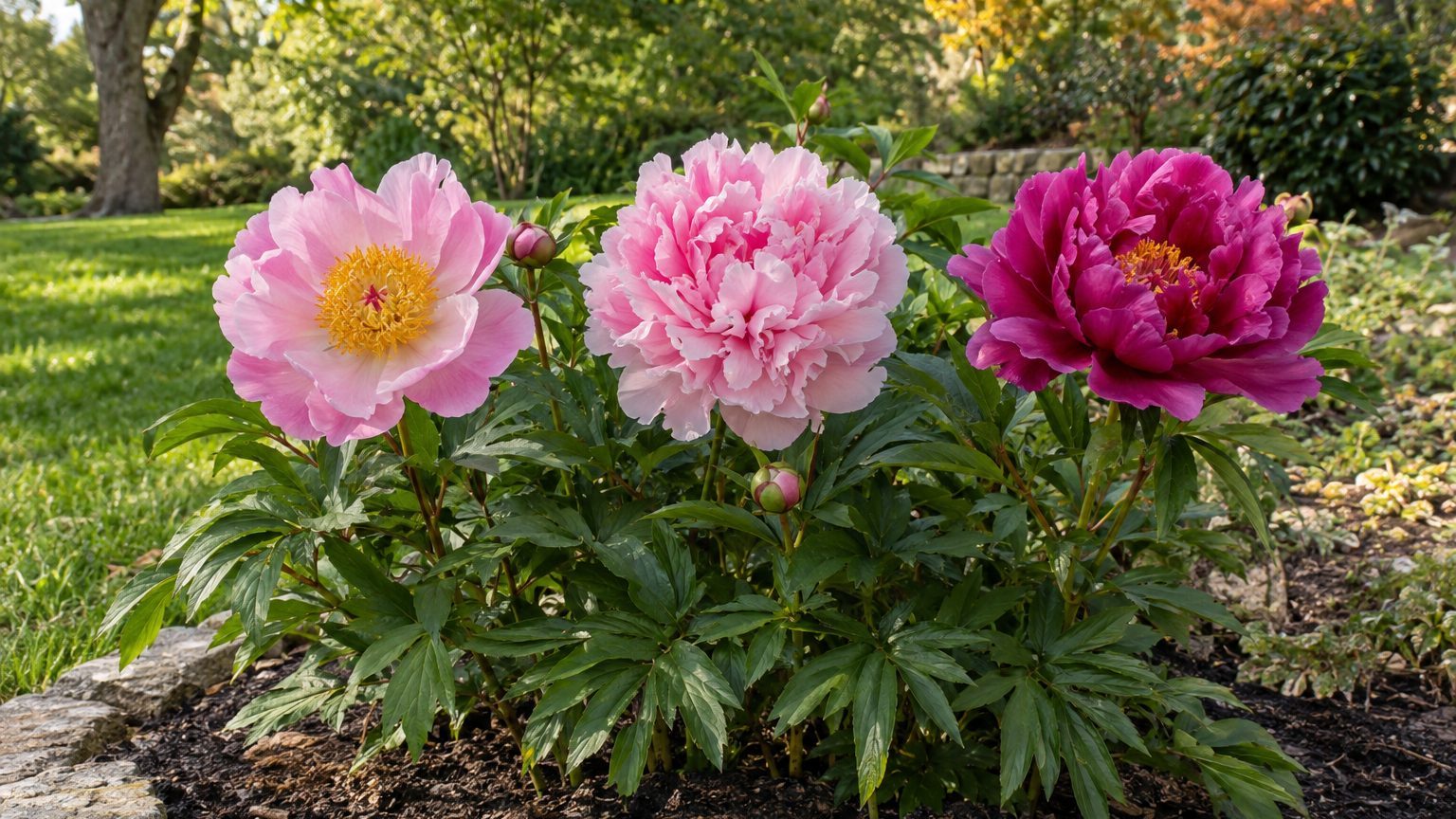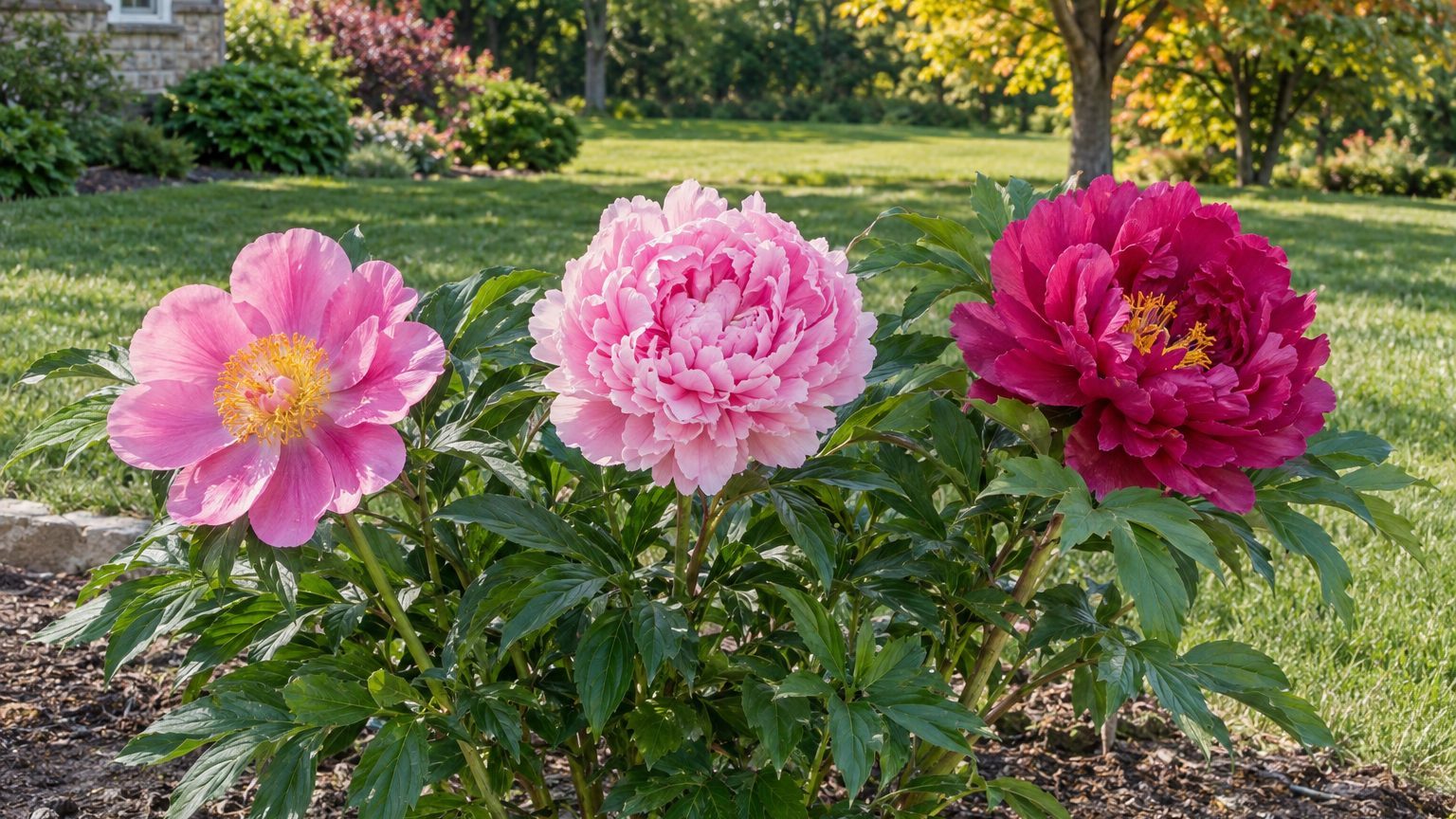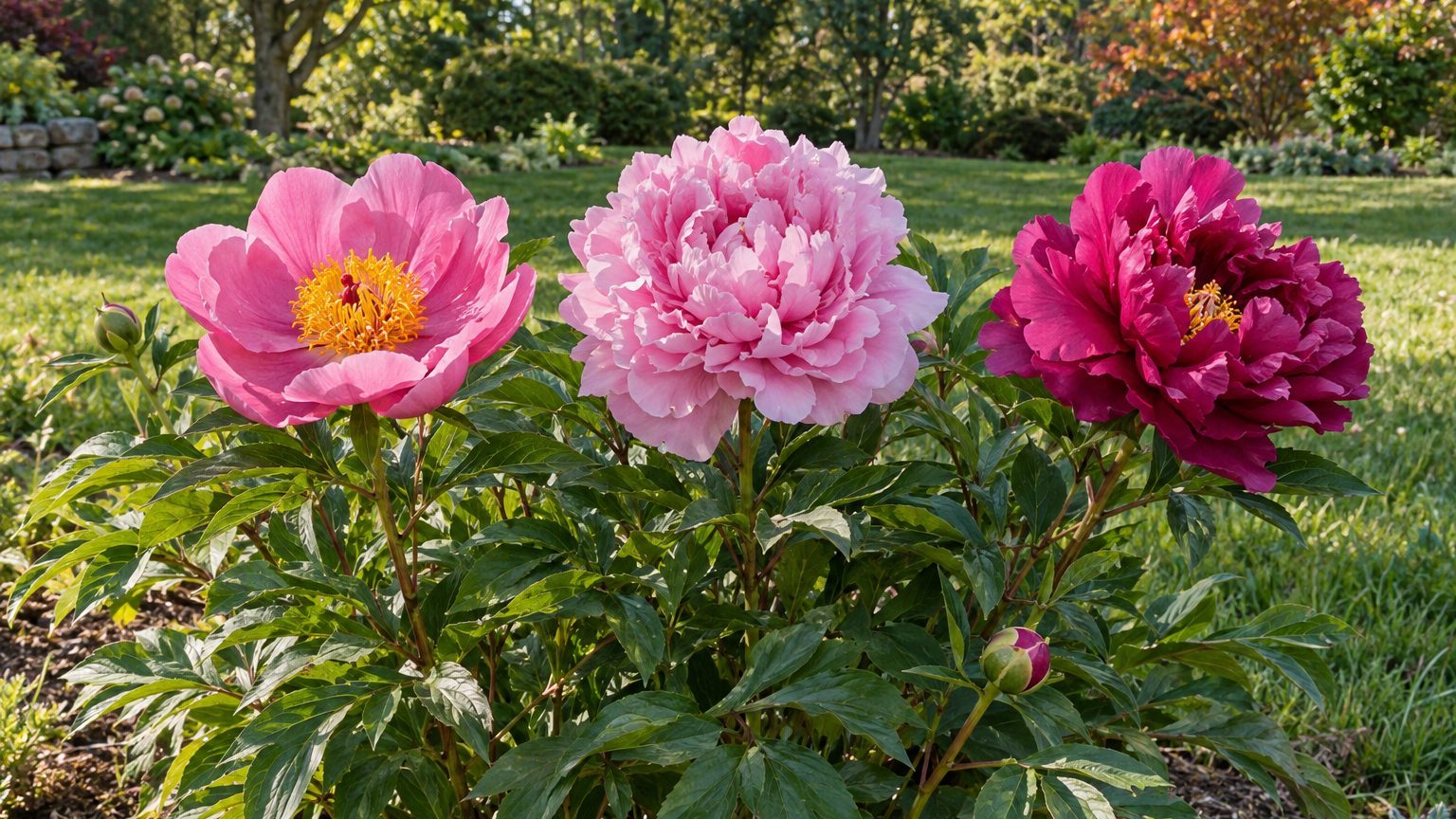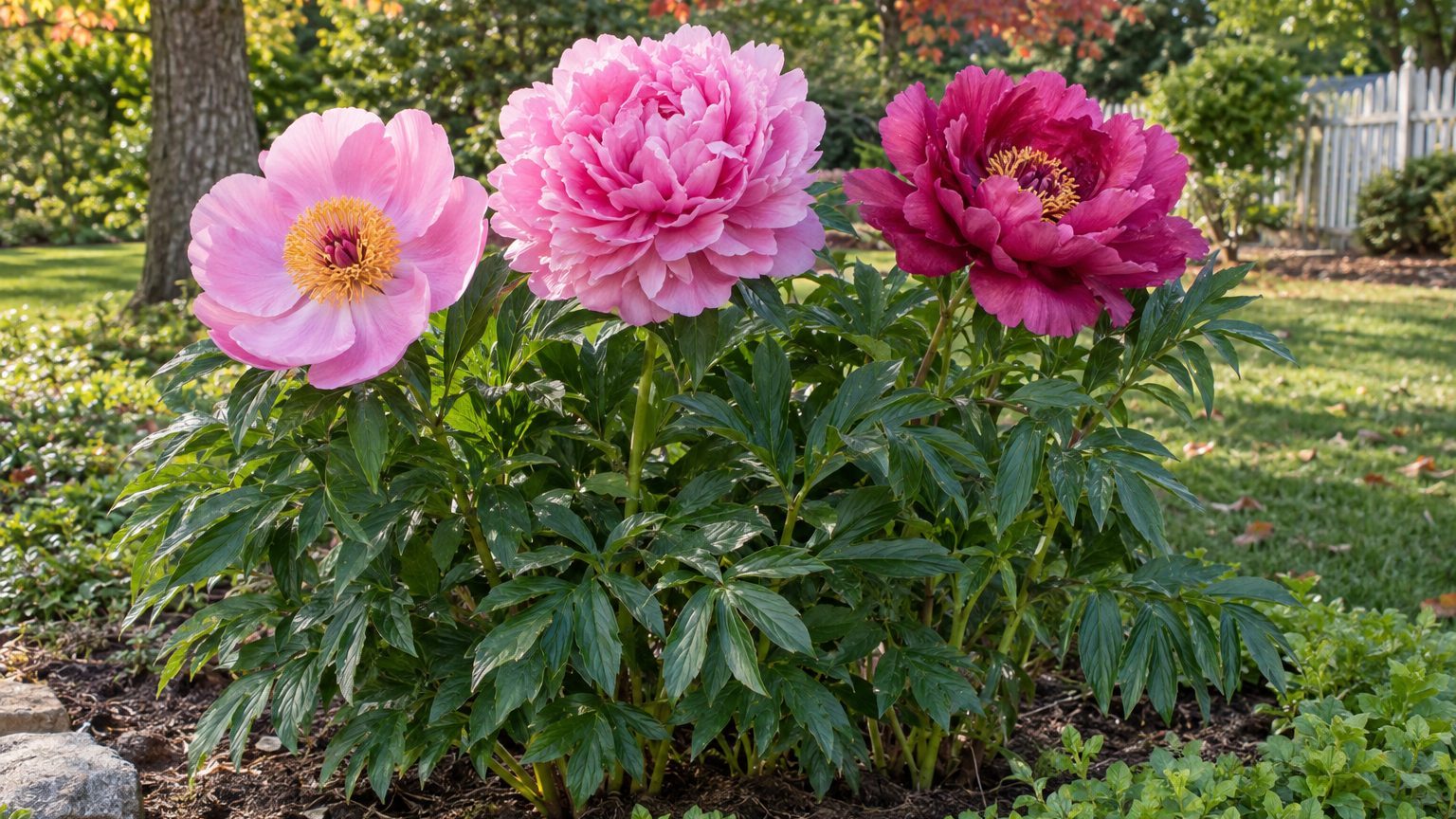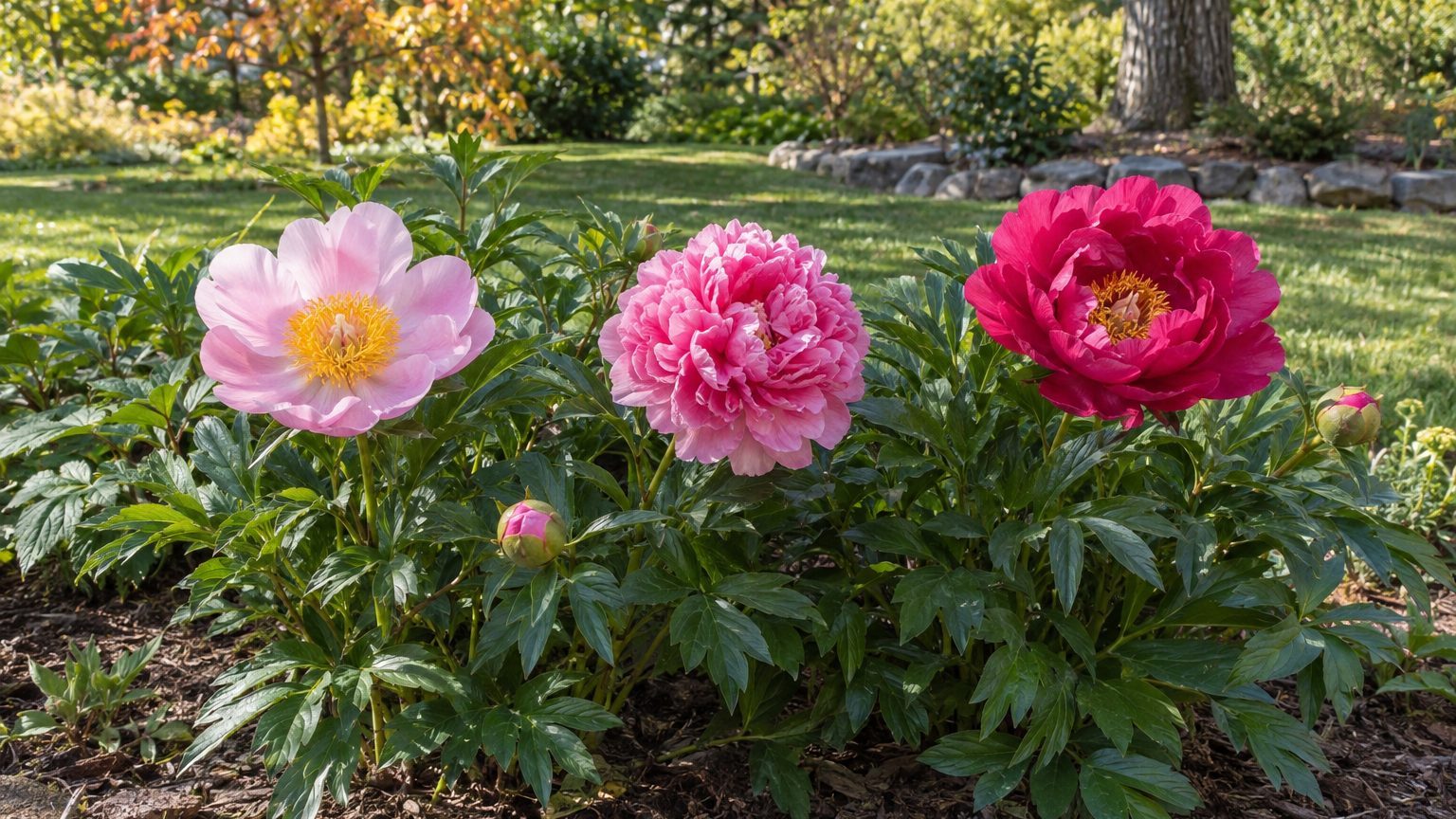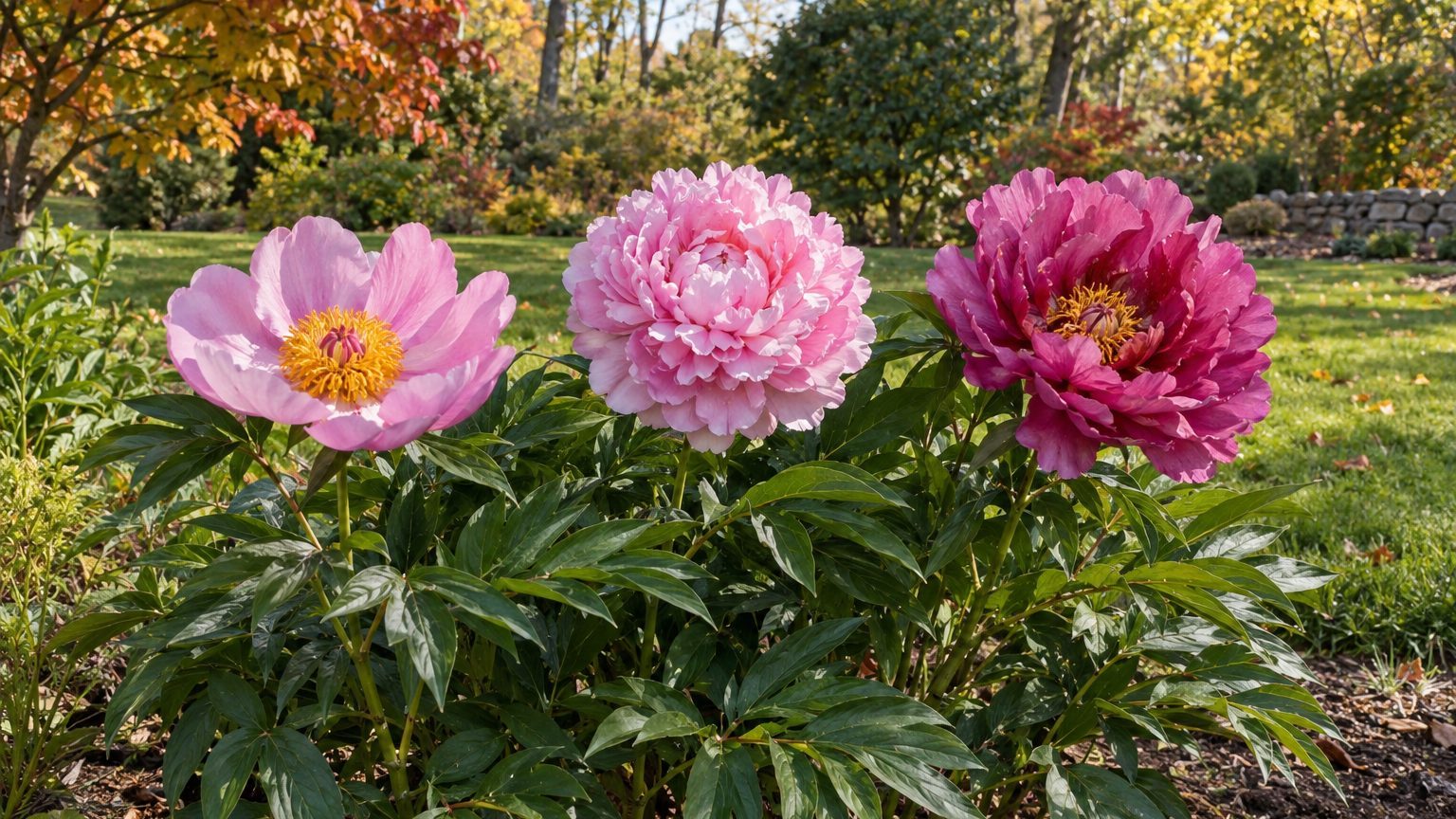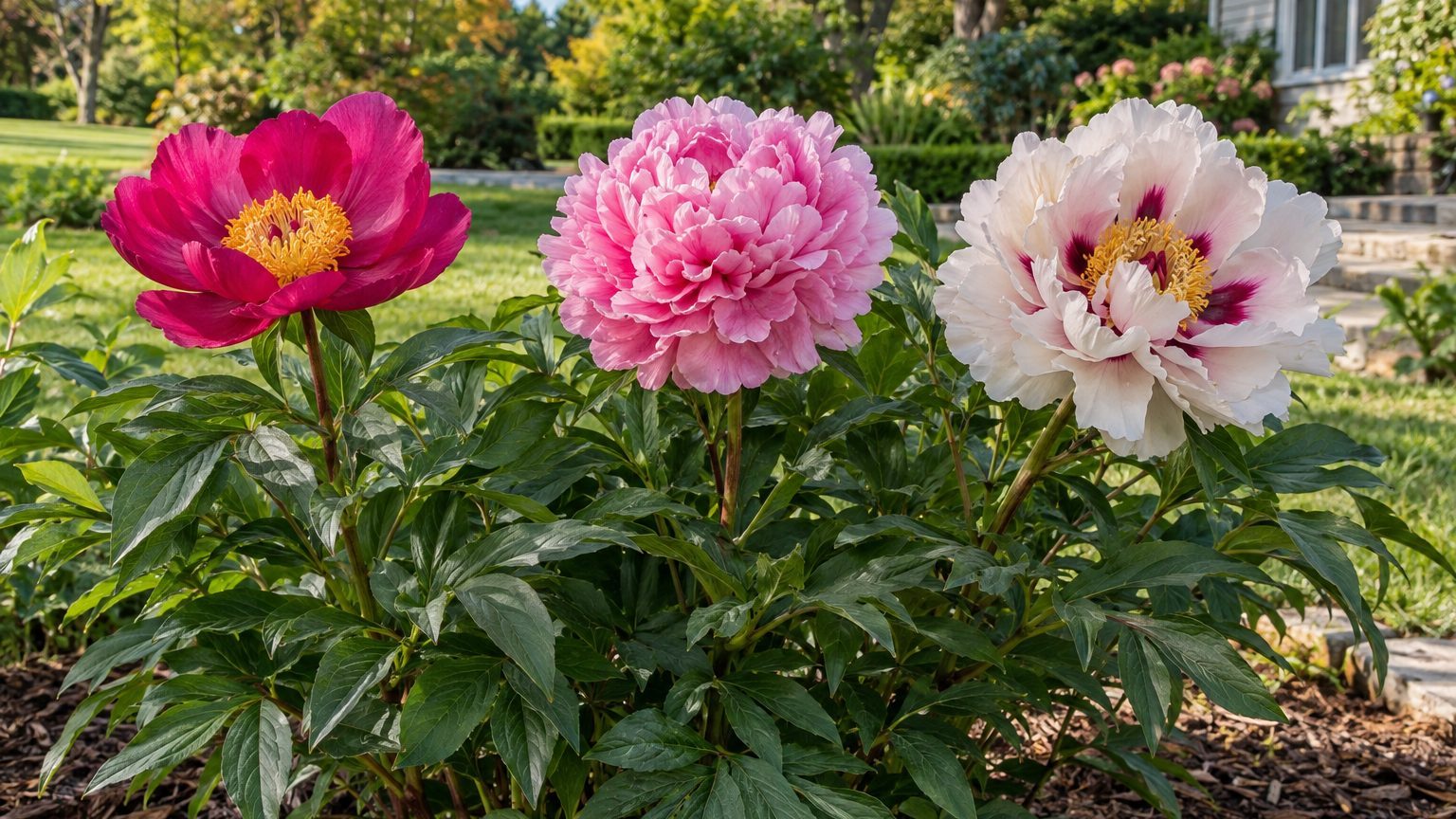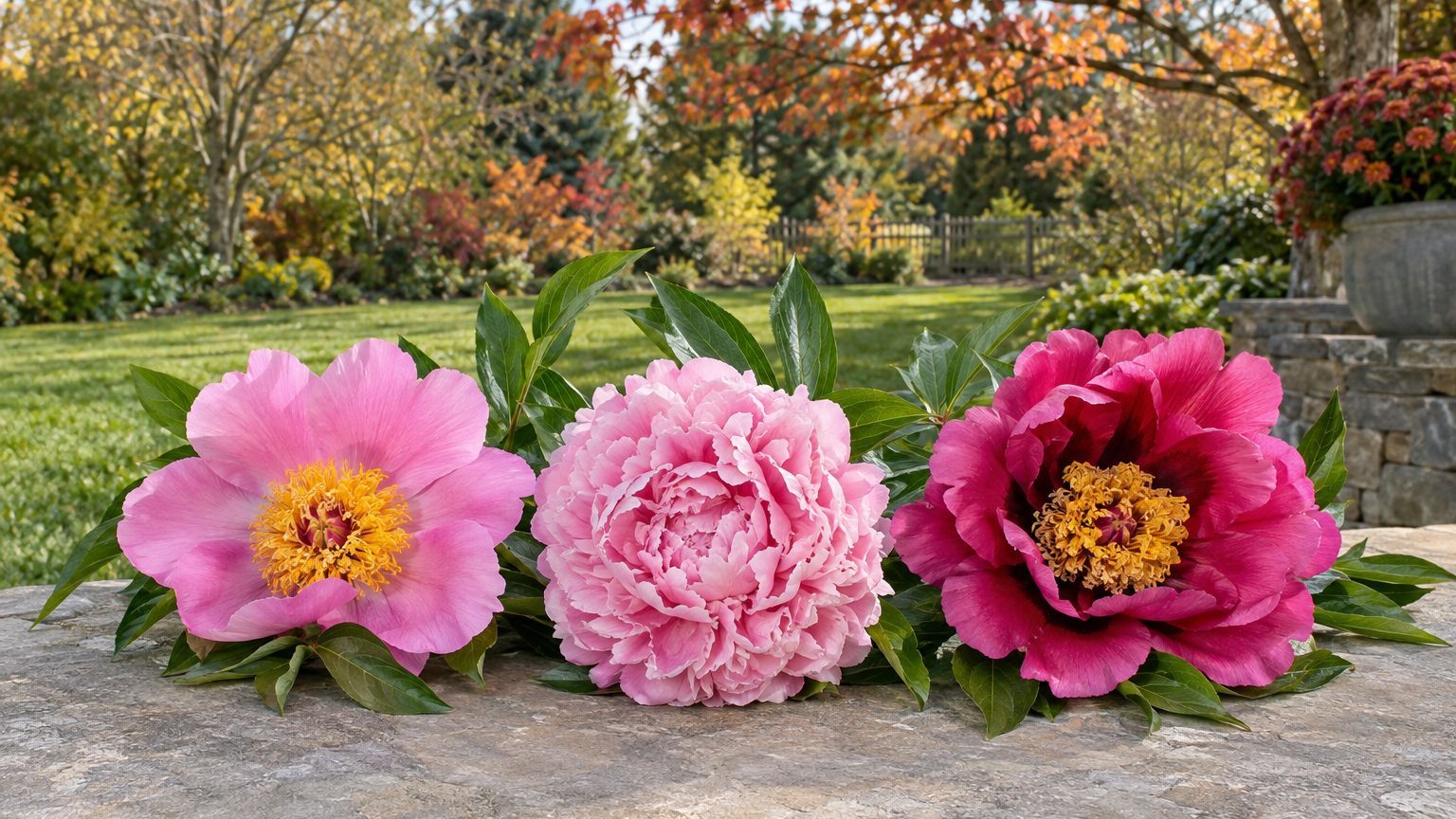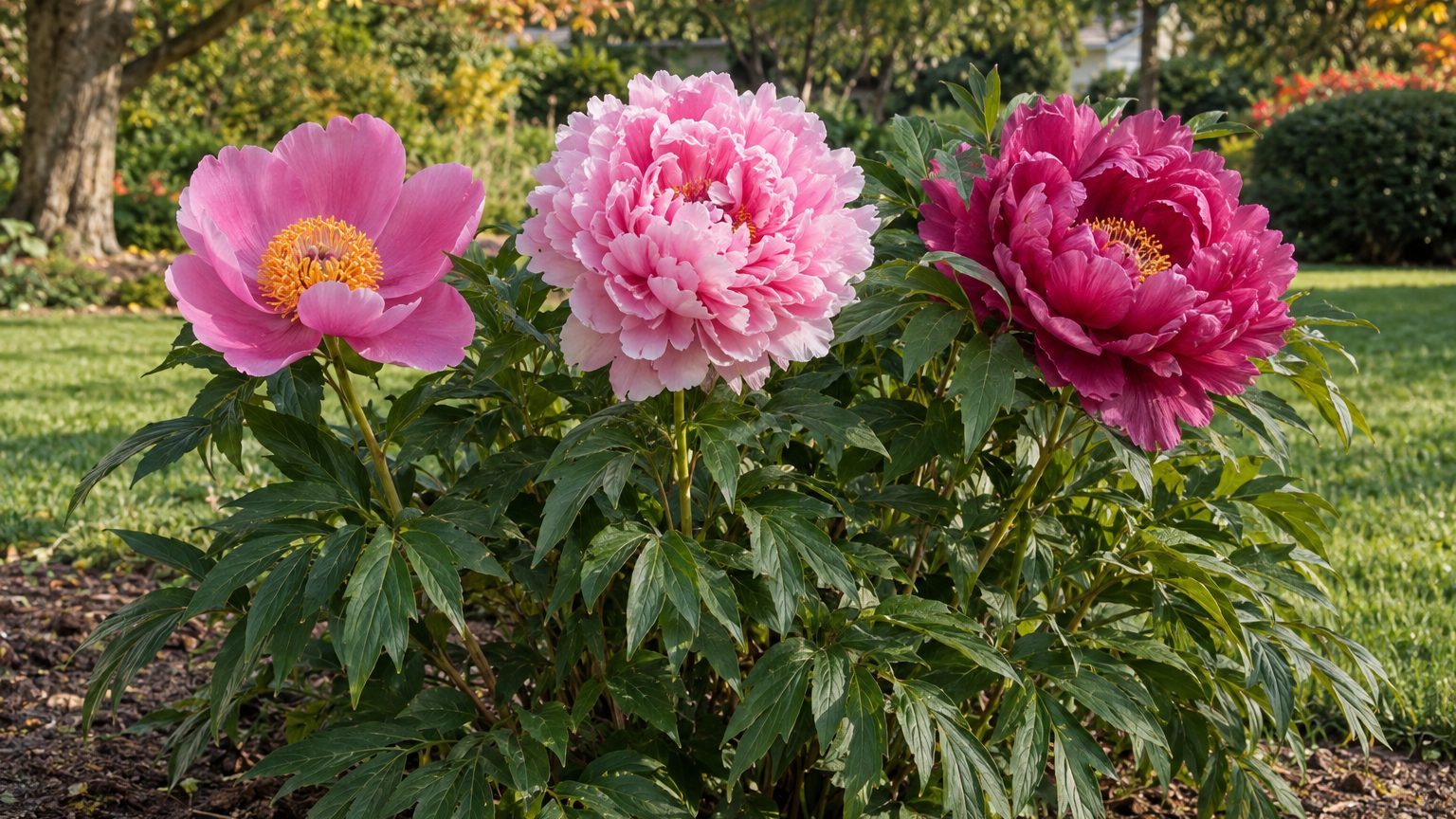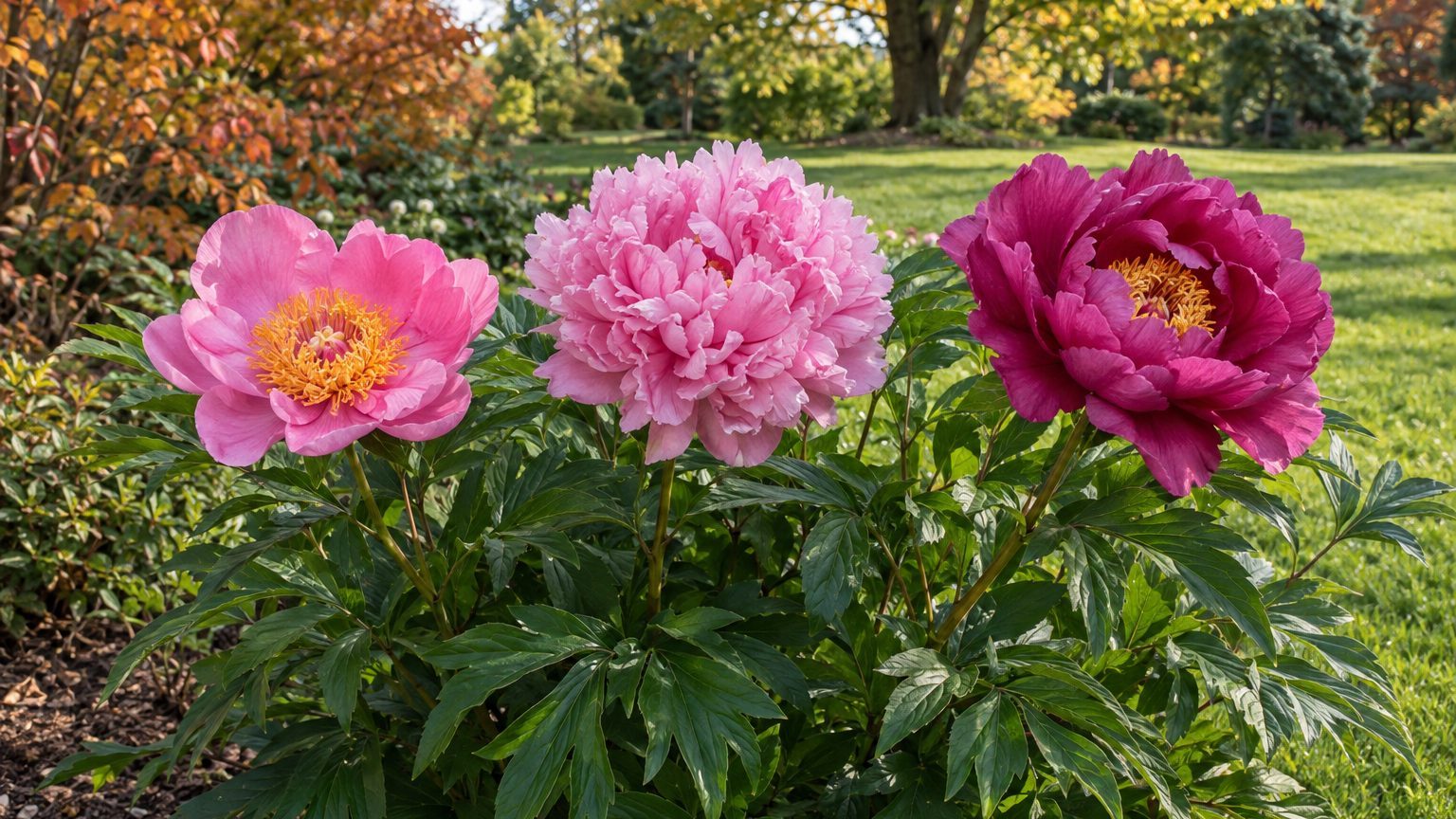
Peony stems pushing up red through cold spring soil are a familiar sign that a Manitoba winter has done its job. Herbaceous and intersectional peonies handle that winter best, while tree peonies need shelter.
Best Peonies to Grow in Manitoba

Herbaceous peonies and intersectional (Itoh) peonies are the dependable choices here, because both die back to the ground each fall and send up new growth in spring. Peonies also need a cold winter rest to flower, and Manitoba supplies it. The Canadian hardiness zone for Winnipeg is 3b, a system that does not convert to a USDA zone. Tree peonies can be grown too, but only with protection.
Herbaceous Peonies

Garden peonies are the classic choice. They disappear below ground each winter, so there are no woody stems to freeze, and they are among the easiest peonies to grow.
Plant them in September to early October so the roots settle before the ground freezes. Keep the eyes near the soil surface, since a peony planted too deep may bloom poorly or not come up.
Intersectional Peonies

Often sold as Itoh peonies, these are hybrids of the garden and tree peonies. Their culture matches the herbaceous kind: they die back each fall and regrow in spring.
That makes them a good pick if you like the look of a tree peony but want the winter reliability of a garden peony. Cut them back in fall after a hard freeze has killed the foliage.
Tree Peonies
Tree peonies are generally not as hardy, so they need a protected site or a mulch over the winter. In Manitoba, that means a spot sheltered from open wind rather than the middle of a bare lawn.
Unlike the other types, a tree peony keeps its woody stems and is never cut back to the ground.
Woodland Peonies
The woodland peony (Paeonia japonica) is the fourth type grown in home landscapes. It is a shade-leaning specialty plant rather than a border workhorse, so treat it as a curiosity to try after the easier types are established.
How to Choose a Peony for a Manitoba Garden
Start with the problem your yard presents. Winter conditions vary across Manitoba, while time, space and how you garden also point to different peonies.
Whichever you choose, a newly planted or transplanted peony may not bloom the first spring. Bloom typically runs from early June into early July.
| Your situation | What suits it in Manitoba | Why |
|---|---|---|
| Very cold winter | Herbaceous or intersectional peony | They die back to the ground each fall, so no woody stems face the cold. |
| Need for winter chill | Any herbaceous peony | Peonies need a cold winter rest to flower, and Manitoba provides it. |
| Little time for care | Herbaceous or intersectional peony | Both share the same simple culture: cut back after frost, and new growth returns in spring. |
| Wanting a tree peony look | Intersectional (Itoh) peony | It is a hybrid of garden and tree peonies without the tree type’s winter fragility. |
| Sheltered corner available | Tree peony with winter mulch | Tree peonies are less hardy and need a protected site or mulch over winter. |
Gardeners who want straightforward care can lean on herbaceous types, which die back after frost and return in spring. A sheltered corner may suit a tree peony, while the rest of the bed can go to the easier types.
Which Peonies Suit Different Parts of Manitoba
Manitoba is not one climate, and the spring frost date at Winnipeg, on average May 23, is only the midpoint of a window, since frost falls later than that in one year out of two. Choices shift a little with where you garden.
- Winnipeg and the Red River Valley: herbaceous and intersectional peonies are the safe core of the bed. A tree peony can work here if it gets a sheltered site and winter mulch.
- Northern Manitoba: districts run weeks behind Winnipeg, so rely on herbaceous peonies and give any tree peony a protected site.
- Upland and western districts: treat the tree peony as an experiment that needs a protected spot, and rely on herbaceous types for the main show.
No local extension page covers peony timing here, so these dates follow the nearest comparable climate and should be confirmed with a nearby garden centre or garden society.
Peony Buying Mistakes to Avoid in Manitoba
Planting a Tree Peony in the Open
A tree peony set in an exposed bed keeps its woody stems above ground all winter, and those stems are the part that suffers. An exposed site does not give a less-hardy tree peony the protection it needs.
Choose a protected site and mulch it over winter, or pick an intersectional peony instead.
Choosing a Variety for Mild Winters
Peonies need a cold winter rest to flower, and they may flower poorly in mild-winter climates. Choose a herbaceous or intersectional peony for easier care, and give a tree peony a protected site.
Ask a local garden centre which peony types have performed well in your district.
Buying in a Pot Without Knowing the Size
Peonies are sold in spring as potted plants and in fall as bare root plants, and a small pot hides a clump that will grow large. Ask for the adult height and spread before you buy.
Give the plant room from the start, because a peony moved later may skip a year of bloom.
Where to Get Peony Advice in Manitoba
The province’s agriculture ministry and local gardening groups are useful places to ask for advice.
- Manitoba Agriculture is the place to look for provincial growing guidance before you plan a bed.
- A local garden society or master gardener group can tell you which peonies have performed in your district, and spring meetings are a good time to ask.
- A neighborhood garden centre can confirm planting timing in September to early October, so call before you buy roots.
Common Questions
When Do Peonies Bloom in Manitoba?
Bloom runs from early June into early July, with the exact week depending on the variety and the spring.
When Should You Cut Back Peonies in Manitoba?
Cut herbaceous peonies back in October or November, after a hard freeze has killed the foliage. Remove the old leaves and throw them out rather than composting them, which helps prevent disease.
Why Did a New Peony Not Bloom?
A newly planted peony may not bloom the first spring. If an established plant still will not bloom, check whether the eyes sit near the soil surface, since deep planting is a common cause.