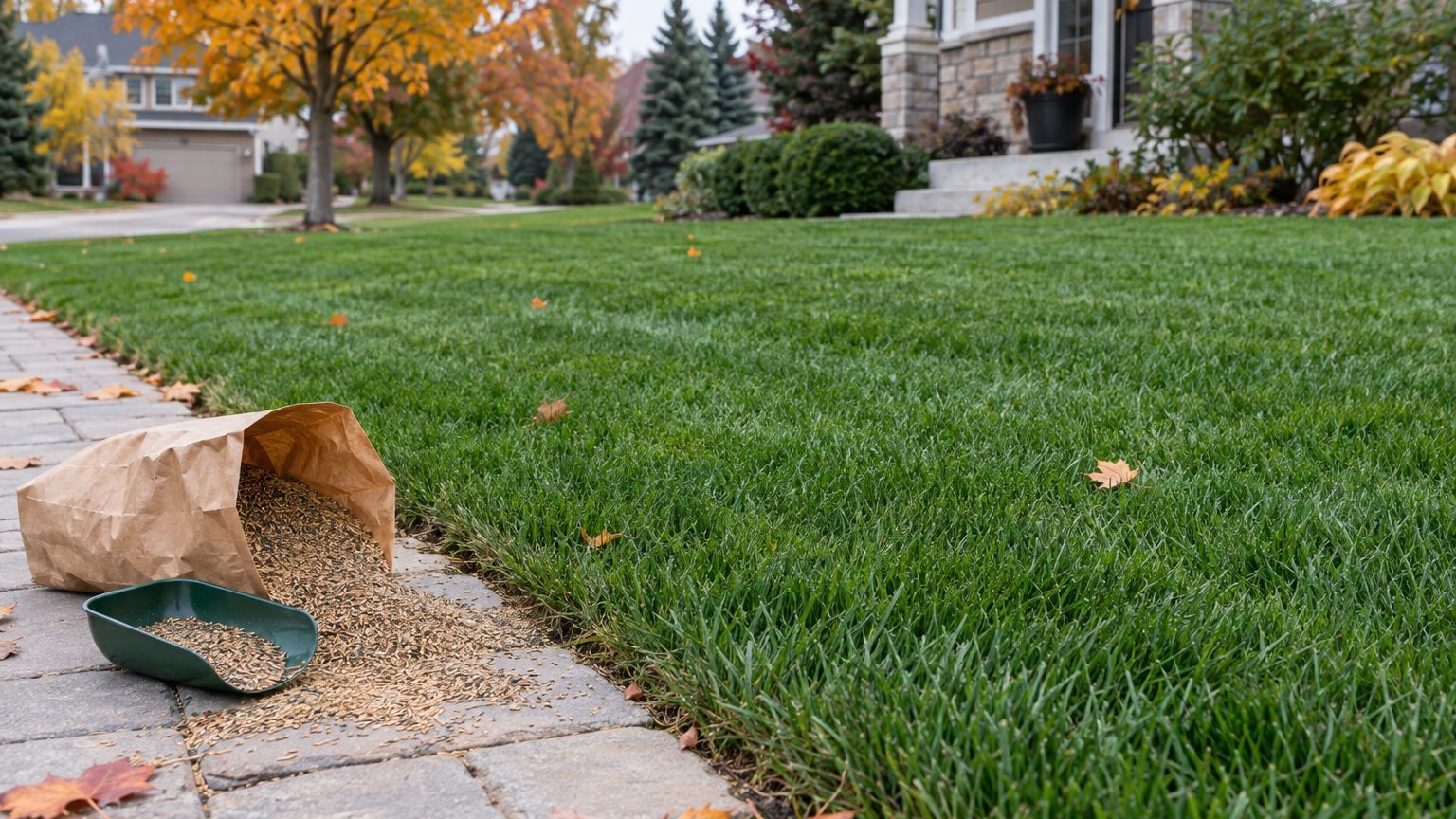
Seed sown in August or September gets warm soil and cooling weather to start rooting before a Manitoba winter. Suitable grass seed for Manitoba comes from cool-season species, including Kentucky bluegrass, the fine fescues, and perennial ryegrass in smaller amounts. Which one fits depends on your light, your traffic, and how much mowing you want.
Which Grass Grows Best in Manitoba?
Cool-season grasses are the answer, because they grow in spring and fall and sit through a very cold winter. Warm-season grasses cannot take Winnipeg winters, while the cool-season types below are suited to Manitoba lawns.
Kentucky Bluegrass
This is the backbone of Prairie lawns. It handles deep winter cold, and it spreads by underground stems, so thin spots fill in over time. It wants full sun and regular water in summer.
Fine Fescues
Creeping red, chewings, and hard fescue are the group to reach for in shade, under spruce and maples, or on dry soil. They need less fertilizer and less water than bluegrass, and they keep their color in the cold. Many yards do well with fescue blended into bluegrass.
Perennial Ryegrass

Ryegrass sprouts fast, which makes it handy as a quick cover on a bare patch. The catch is that it can be short-lived in the coldest winters, so treat it as a minor partner in a mix rather than the whole lawn.
Manitoba — the year and the numbers
- State
- Manitoba
- Hardiness zones
- 3b
- Last spring frost
- May 23
- First fall frost
- September 22
- Annual rain
- 21 in
- Lawn type
- cool-season
- Source
- Environment and Climate Change Canada — Canadian Climate Normals 1981-2010, station WINNIPEG RICHARDSON INT'L A · Winnipeg
How to Choose Grass Seed for a Manitoba Yard
Start with what your yard actually does. Look at how many hours of sun reach the grass, whether kids and dogs run across it, and whether you will water in dry spells. Then pick the species that matches the hardest condition.
A mixed seed blend can be more resilient than a single species because each grass covers another’s weak spot. Read the label for the species names rather than a catchy mix title.
| Your yard | Grass | Why |
|---|---|---|
| Full sun, regular watering | Kentucky bluegrass | Dense, hardy, repairs itself |
| Shade or tree roots | Fine fescues | Tolerate low light and thin soil |
| Dry, low-input lawn | Fine fescues | Need less water and feeding, mow less often |
| Heavy play or fast patching | Bluegrass with some perennial ryegrass | Ryegrass sprouts quickly, bluegrass fills in |
If you want to mow less, lean toward fine fescues, which grow slowly and look tidy with fewer cuts. If you like a thick, carpet-like lawn and will water it, bluegrass rewards the effort.
Which Grasses Grow Where in Manitoba
Manitoba is not one climate, and the same seed behaves a little differently from one district to the next.
- Red River Valley: Around Winnipeg, the heavy clay soils and open sun suit Kentucky bluegrass. Frost on average arrives around September 22, so seed sown in August and September has time to root first.
- Westman and the Parkland: Drier, more exposed ground rewards the fine fescues, which cope better with dry spells and thinner soil.
- Interlake and the north: Cooler, shorter seasons mean seed should go down early in the recommended window. Ryegrass is the weakest bet here because winters are harsher.
Treat any frost date as the middle of a range, since frost can come earlier or later, and districts to the north run weeks behind Winnipeg.
Grass Seed Mistakes to Avoid in Manitoba
Picking a Grass That Cannot Take the Winter
Seed sold for warmer places can look fine in summer and be gone by spring. Check the label for Kentucky bluegrass, fine fescues, or perennial ryegrass, and skip anything built for heat.
Seeding at the Wrong Time
August and September are the months to seed, when warm soil and cooler air help seedlings root. May also works if you missed fall. For a late start, November seeding on cold soil lets the seed wait and sprout in spring, and October still works as a fallback.
Burying the Seed Too Deep
Grass seed is tiny and needs firm contact with the soil. Cover it no more than 6 mm (0.25 inch), then keep the top of the soil damp. Spreading too thickly causes crowded, weak seedlings, while a sparse hand leaves room for weeds, so follow the rate on the bag.
Where to Get Lawn Advice in Manitoba
Canada has no county extension offices, so local help comes through the province, master gardeners, and nearby garden centres. Soil and weather vary a lot across Manitoba, so local advice helps most when you are choosing a mix.
- Manitoba Agriculture offers provincial guidance on turf and soil, useful before you buy seed.
- A local master gardener group can answer questions about your district, and spring or summer is a good time to ask.
- A garden centre can show you seed labels and species, so visit before August seeding begins.
Common Questions
Can You Plant Grass Seed in Spring in Manitoba?
Yes, May works. Spring seedlings must face summer heat and weeds, so water them regularly and expect to nurse them along more than fall seedlings.
Should You Fertilize When Seeding a Manitoba Lawn?
May and September are the fertilizing months, and September fits well with fall seeding. Feeding supports young grass as it fills in before winter.
Do You Need to Aerate Before Seeding?
Core aeration in August or September helps seed reach the soil on compacted lawns. Dethatching happens in the same months, so you can prepare the ground and seed in one stretch.