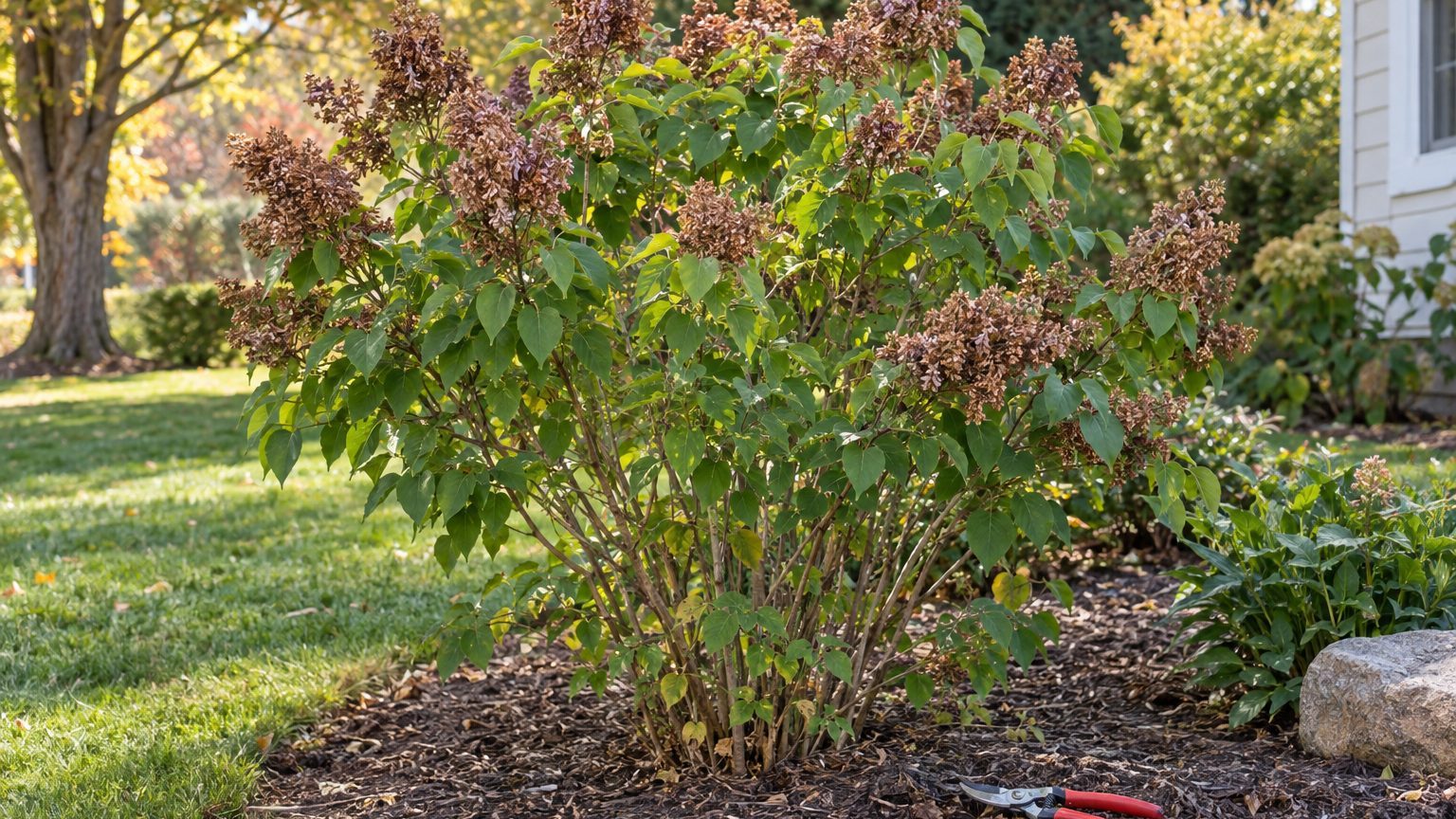
A lilac in a Mississippi yard has a short window to shine, and the pruning saw belongs in your hands only once the last flower clusters have faded. Cut then and next spring’s blooms stay intact. Lilacs also live at the edge of their comfort zone here, which shapes how you prune and what you plant.
When to Prune Lilacs in Mississippi

Prune right after the flowers fade. The bloom follows the local spring, so the date moves from year to year and yard to yard, and the faded flower clusters are a better guide than the calendar.
A lilac flowers on last year’s wood and sets next year’s buds in summer, soon after it blooms. Lilacs also need a cold winter rest to mature those buds, and Mississippi gardens span USDA zones 7b to 9a, so flowering can be thin even in a well-pruned shrub.
| Type of pruning | When in Mississippi | Why |
|---|---|---|
| Routine shaping and removal of spent flowers | Right after the last flowers fade | The new buds have not formed yet, so nothing is lost |
| Cutting in late summer, fall or winter | Avoid | It removes the buds that would open the following spring |
Prune reblooming lilacs in spring, and get local advice before thinning an overgrown shrub. Use the after-bloom rule only for routine pruning of lilacs that do not rebloom.
Mississippi — the year and the numbers
- State
- Mississippi
- USDA zones
- 7b-9a
- Last spring frost
- March 6 to March 22
- First fall frost
- November 7 to November 22
- Annual rain
- 57 in
- Lawn zone
- warm-season
- Source
- NOAA NCEI 1991-2020 Climate Normals, 32F freeze probabilities · Jackson
How to Tell When Your Lilacs Are Ready to Prune
The plant tells you when to start, and signs in the shrub itself are more reliable than a date on the wall.
- The flower clusters have turned brown and papery, which means the show is over and the cut will not cost you any bloom.
- Petals have dropped and the stems are left with dried clusters, so you can remove the spent flowers without hunting for live ones.
- Fresh green growth is pushing out below the old clusters, a sign that the shrub is already working on the wood that will carry next year’s flowers.
- Crossing or crowded stems stand out among the open leaves, helping you choose what to cut.
- Summer heat has settled in and the new buds are forming, which tells you to put the saw away until the next bloom ends.
If you are unsure whether the moment has passed, leave the shrub alone until its flowers fade again. A skipped year is better than a lost bloom.
Should You Prune Lilacs in Fall or Winter in Mississippi?
No. Cutting in fall or winter removes buds that are already waiting for spring and reduces the next bloom. This is true whether the cut is a light trim or a heavy one.
Gardeners often want to reshape a leggy lilac in late winter, when the bare branches are easy to see. Late-winter reshaping sacrifices that spring’s flowers, so treat it as a trade: you gain shape and give up the bloom.
If a shrub badly needs correcting, accept the lost bloom for now rather than cutting at random. Afterward, go back to pruning right after flowering so the shrub can set buds again.
How Lilac Pruning Time Shifts Across Mississippi
The sign stays the same everywhere in the state, but the climate differs, and with it how well a lilac does. USDA zones run from 7b to 9a, so winter cold changes a good deal from north to south.
- North Mississippi hills: this is the cooler end of the state, and winters give lilacs more of the cold rest they need. Bloom comes a little later than on the coast, and so does pruning.
- Gulf Coast: Mild winters and hot, humid summers make it difficult for a common lilac to mature flower buds. Flowering may be sparse, and pruning follows an early bloom, when it comes at all.
Your own yard may sit warmer or cooler than the regional picture, so go by the shrub, not by what a neighbor in another town is doing.
Where to Get Lilac Advice in Mississippi
Local knowledge counts for a lot with a plant that sits at the edge of its range here. Mississippi State University Extension and your county office can tell you what is working in nearby yards.
- The extension website carries plant care guidance, and it is a good place to start before you buy a lilac or when a shrub looks unhealthy.
- Your county extension office can answer questions about your own soil and conditions, so call after the bloom ends if you are unsure which stems to cut.
Common Questions
Which Lilacs Suit Mississippi Gardens?
Look for early-blooming types labeled Southern lilacs or lilacs for the South. These types usually grow and bloom in warmer places, though they are less fragrant than the lilacs people remember from colder climates. Descanso hybrids such as Angel White, Blue Boy and California Rose are worth trying in mild-winter gardens.
Why Is a Healthy Lilac Not Flowering?
Check when the shrub was last cut and how mild the winter was. A lilac that was trimmed in late summer, fall or winter, and that also went through a mild season, has lost its buds or never matured them, and the leaves can still look perfectly healthy.
Do Hot, Humid Summers Cause Problems for Lilacs?
They can. Common lilacs struggle through periods of high heat and humidity, which can lead to powdery mildew. A white, dusty coating on the leaves, especially in a crowded, poorly ventilated spot, points to that, so thin the crowded stems after bloom to let air move through.