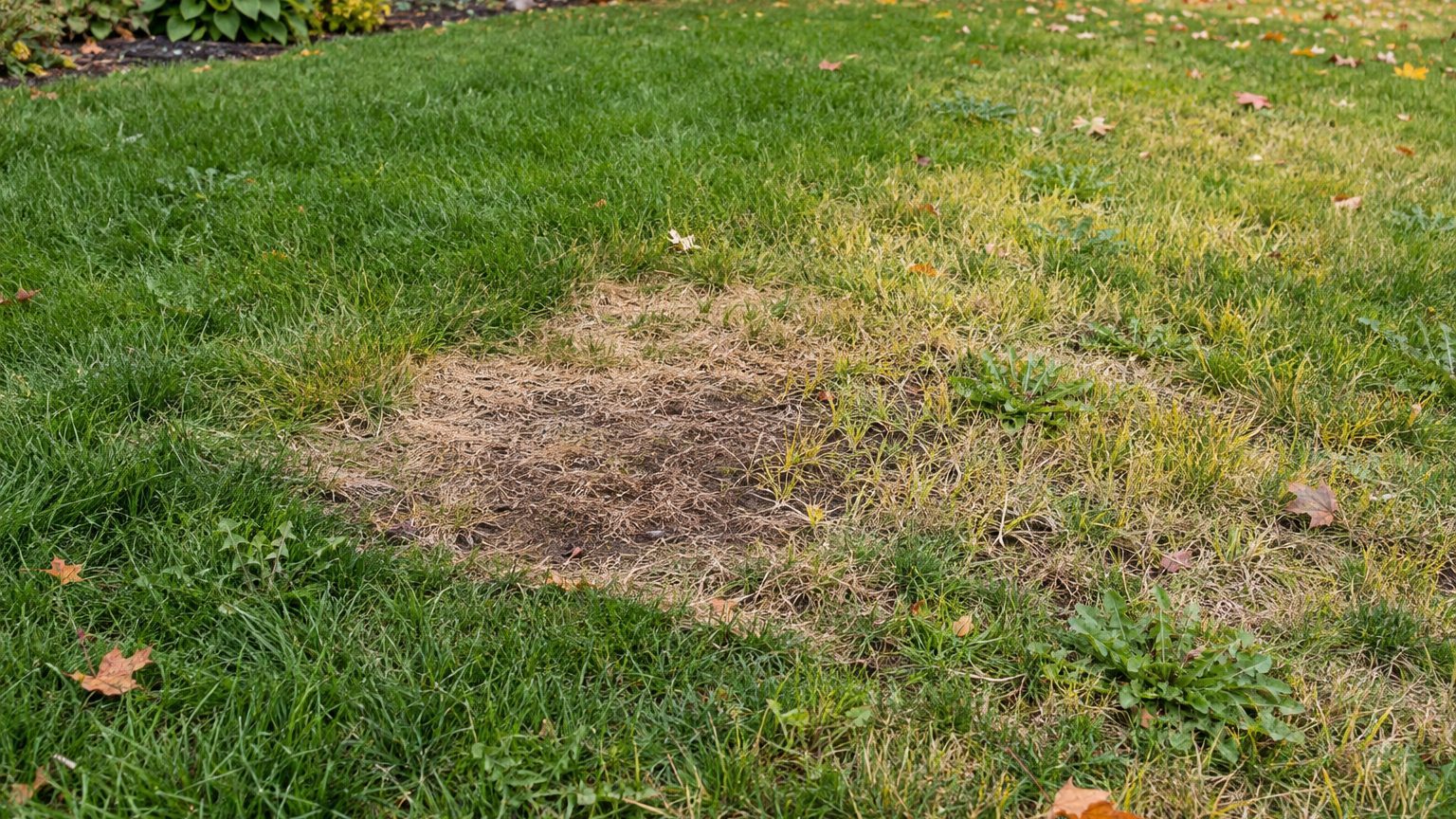
Pale, matted patches when the snow leaves, dandelions as the weather warms, and straw-colored grass by August: a Manitoba lawn tells its problems on a seasonal schedule. Most trace back to a short growing season, cold winters, heavy soil and a few habits that are easy to change. Knowing which sign belongs to which cause saves a lot of guessing.
Lawn Pests and Diseases in Manitoba

Snow Mold After the Melt

As the snow pulls back you may find circular patches of matted, grayish or pinkish grass. Snow mold forms under long-lasting snow cover, and it is common in Manitoba. Most patches recover on their own. Rake them gently to lift the blades and let air in, and reseed only where the crowns stayed dead.
Dandelions and Broadleaf Weeds

Dandelions, plantain and clover move into thin turf as the soil warms. A dense lawn crowds them out, so mowing regularly and overseeding bare spots does most of the work. Pull dandelions after rain with the taproot intact, because a broken root regrows.
Crabgrass in Warm Spells
Crabgrass is a pale green, sprawling annual that spreads in a flat rosette and turns purple-brown at the first fall cold. It sprouts in bare, sun-baked gaps, and the window to stop it with a preventer is May. Pull the plants you see before they set seed.
Dollar Spot in Summer
Dollar spot shows up as small, straw-colored spots about the size of a silver dollar, often merging into larger blotches. It favors lawns that are dry at the roots, low in nitrogen and wet with dew each morning. Deep watering in the morning and feeding in May or September can help the grass recover.
White Grubs in Late Summer
Grubs are fat, C-shaped, cream-colored larvae that chew grass roots. The lawn turns brown and the sod peels back like a carpet, with nothing holding it down. Skunks and birds tearing at the turf often give them away. Dig a small square of sod and look before you treat anything.
Manitoba — the year and the numbers
- State
- Manitoba
- Hardiness zones
- 3b
- Last spring frost
- May 23
- First fall frost
- September 22
- Annual rain
- 21 in
- Lawn type
- cool-season
- Source
- Environment and Climate Change Canada — Canadian Climate Normals 1981-2010, station WINNIPEG RICHARDSON INT'L A · Winnipeg
How to Tell Which Lawn Problem You Have
Start with the shape of the patch and the time of year, then tug on the grass. Sod that lifts with no roots points to insects, while grass that stays firm and merely looks tired points to disease, drought or shade.
| What you see | When | Likely cause |
|---|---|---|
| Matted gray or pink rings | Right after snowmelt | Snow mold |
| Yellow flowers, thick taproots | Spring into summer | Dandelions |
| Flat, sprawling pale clumps in bare spots | Midsummer | Crabgrass |
| Small straw-colored spots that merge | Summer | Dollar spot |
| Sod peels back, no roots | Late summer | White grubs |
| Thin grass, moss, bare soil | Any season | Shade or compaction |
Spongy turf that feels bouncy underfoot suggests thatch; a layer above 1.3 cm (1/2 inch) calls for dethatching or core aeration in August or September. Watch the sun, too: a patch that only appears in the shade of a spruce is rarely a disease.
Where Lawn Problems Are Worst in Manitoba
Manitoba is one province with several lawn climates, and the troubles shift with soil, wind and how quickly spring arrives.
- Red River Valley: Heavy clay soil on flat ground holds water in spring and packs down under foot traffic, so snow mold, compaction and thatch show up more often. Core aeration helps relieve compaction here.
- Westman and Brandon: Drier, windier conditions stress the turf in midsummer, which favors dollar spot and brown, dormant-looking grass. Deep watering matters more than extra fertilizer.
- Interlake and the lake shores: Cool air off the big lakes slows spring, so grass wakes later and snow mold lingers on shaded lawns.
- Thompson and The Pas: Winters are longer and the growing season shorter. Frost dates in Winnipeg run weeks ahead of these northern districts, so spring work starts later and fall work finishes sooner.
A garden centre in your own town will know which of these patterns your neighborhood follows.
Lawn Care Mistakes That Invite Problems in Manitoba
Mowing Too Short
Cutting low weakens roots and opens space for crabgrass and dandelions to take hold. Mowing runs from May through October, and a taller setting shades the soil and keeps the roots deeper. Leave the clippings on the lawn so they feed it.
Watering a Little at a Time
Brief sprinkling keeps roots shallow and the surface damp, which suits dollar spot. Water from May through September, and soak the lawn deeply so water reaches well below the surface, then let it dry out before the next round. Water in the morning so the blades can dry in the sun.
Feeding at the Wrong Moment
A heavy dose of fertilizer in summer heat pushes soft growth that burns and invites disease. Feed Manitoba lawns in May and September, but the province bans lawn fertilizer with more than 1 percent phosphorus unless the lawn is new or a soil test shows a need. Wait until the grass is actively growing rather than treating Winnipeg’s average spring frost date of May 23 as a signal to feed.
Where to Get Lawn Advice in Manitoba
Manitoba has no county extension offices. Provincial agriculture staff, local gardeners and nurseries fill that role, and each answers a different kind of question.
- Manitoba Agriculture publishes plant and pest guidance, and it is the place to start when a problem looks unusual or keeps returning.
- A local master gardener group can look at photos or visit a sample patch in spring and summer, when symptoms are showing.
- A garden centre can identify weeds and suggest seed that suits your soil, so bring a small clipping in a bag.
Common Questions
When Should You Seed a Lawn in Manitoba?
Seed in August or September, when warm soil and cooler air help seedlings root before winter. May also works for patching bare spots if late-summer seeding is not practical.
Is Dormant Seeding Worth Trying in Manitoba?
Yes, for bare areas. Seed spread in November on cold soil waits through winter and sprouts in spring. October can work too, once the soil is cold enough to keep seed dormant but before the ground freezes.
What Hardiness Zone Is Winnipeg?
Winnipeg sits in Canadian zone 3b. That system uses seven climate variables and does not convert to a USDA zone, so do not compare it directly with American maps.