Growing Hydrangeas in Delaware: Dates and Varieties

Growing Hydrangeas in Delaware: Dates and Varieties

Yes, hydrangeas grow well in Delaware, and most of the state sits comfortably in USDA zones 7a to 8a. Panicle and smooth types thrive with almost no fuss. Bigleaf hydrangeas work too, but a late-spring frost around Wilmington can nip buds already swelling, so timing matters more here than the zone number alone suggests.

Hydrangeas Care Calendar for Delaware

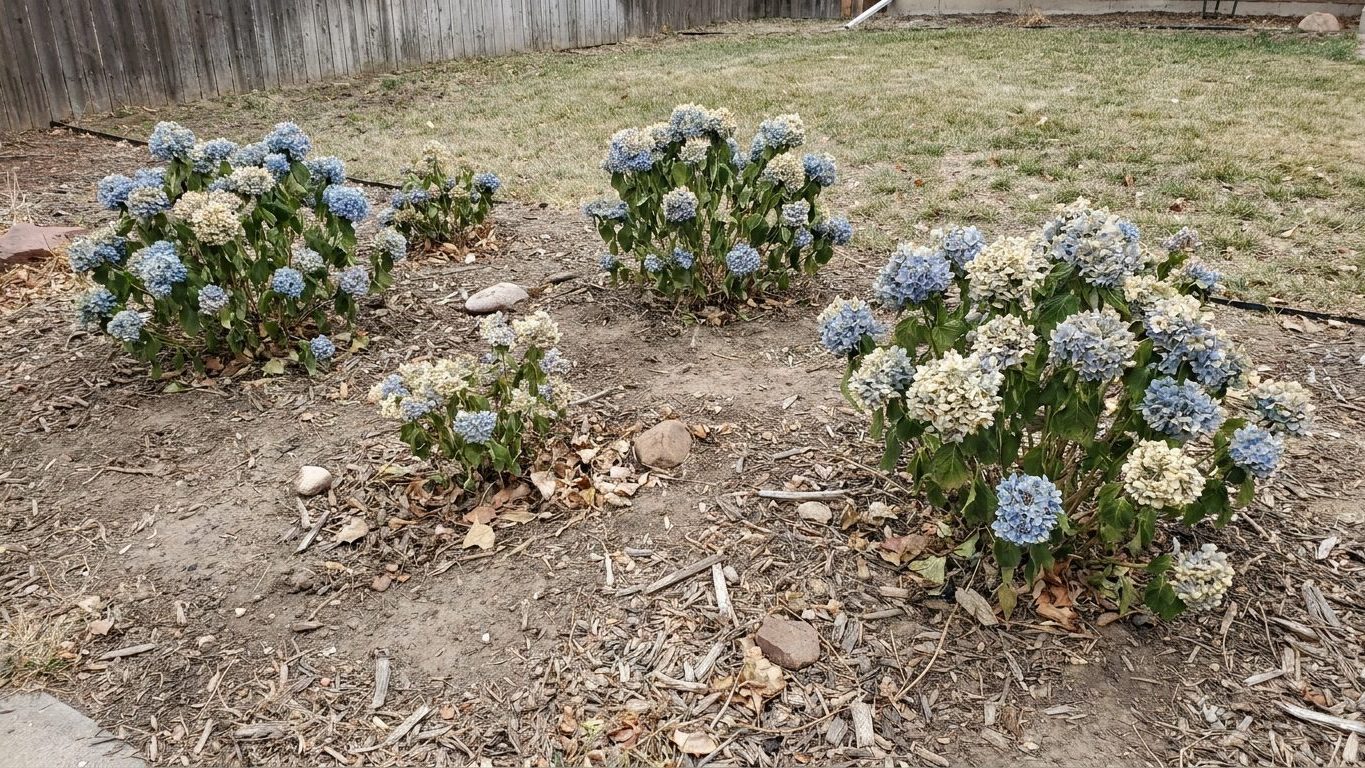
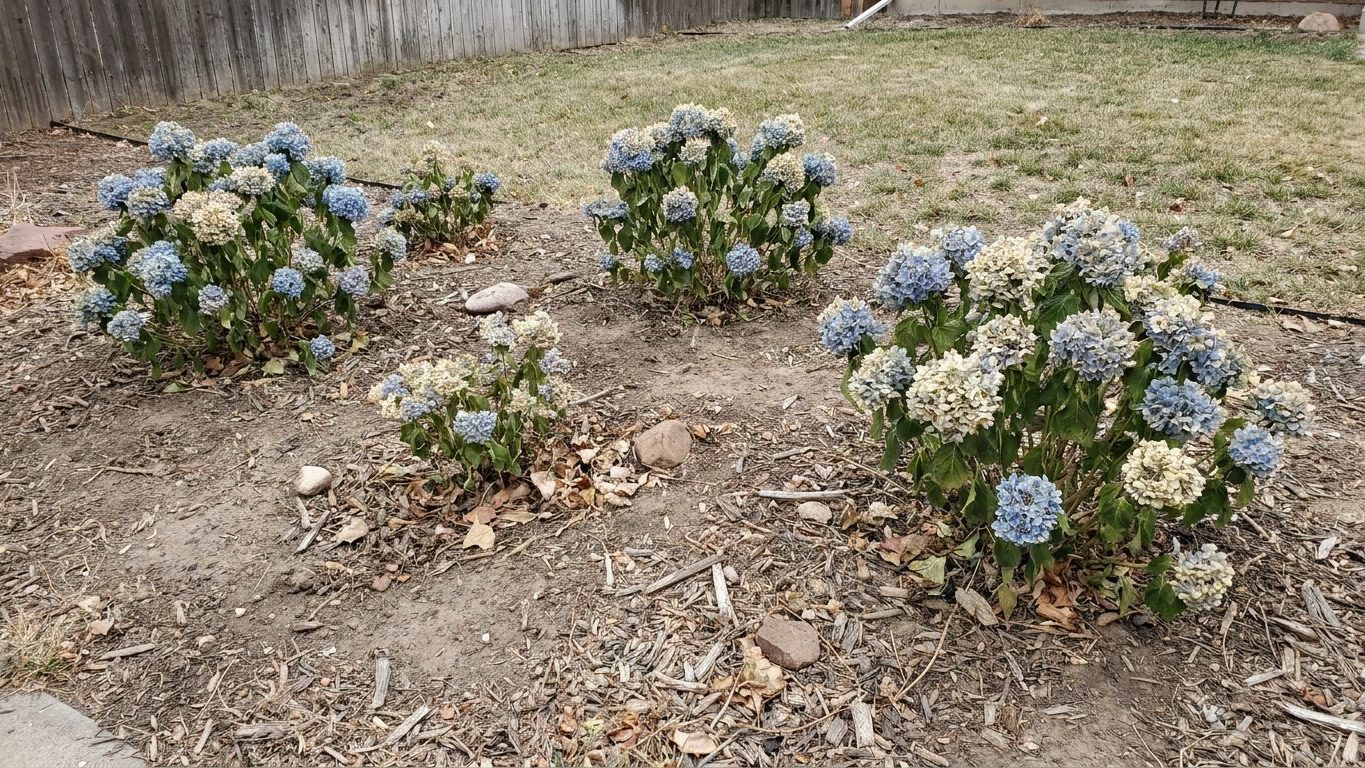
Hydrangeas in a Delaware home landscape

NOAA NCEI’s 1991-2020 Climate Normals put Wilmington’s last spring frost between April 3 and April 14, and the first fall frost between October 26 and November 7, with the state spanning USDA zones 7a to 8a.

  • Dormancy: the safest window to move a plant runs from the first fall frost through late winter, before new growth starts.
  • Planting: get roots into the ground two to three weeks after the last spring frost, once mid-April soil has warmed, or wait for fall.
  • Bud break watch: bigleaf buds swell in early April, right as Wilmington’s frost risk is still open, so keep row cover handy through mid-April.
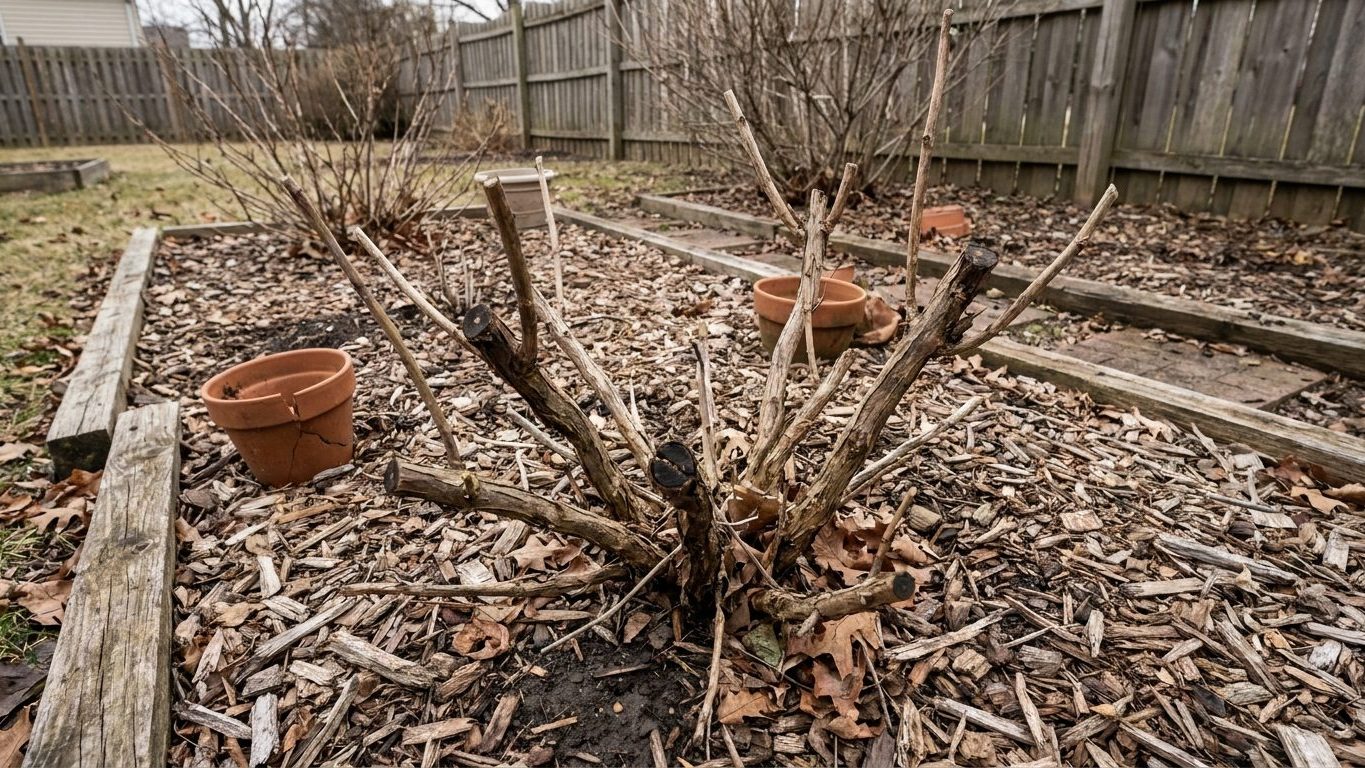
  • Pruning: cut old-wood bloomers right after their flowers fade in midsummer, and cut new-wood types back hard in late winter.
  • Feeding: feed lightly three to four weeks after the last spring frost, once new leaves have unfurled, and skip a second round after midsummer.
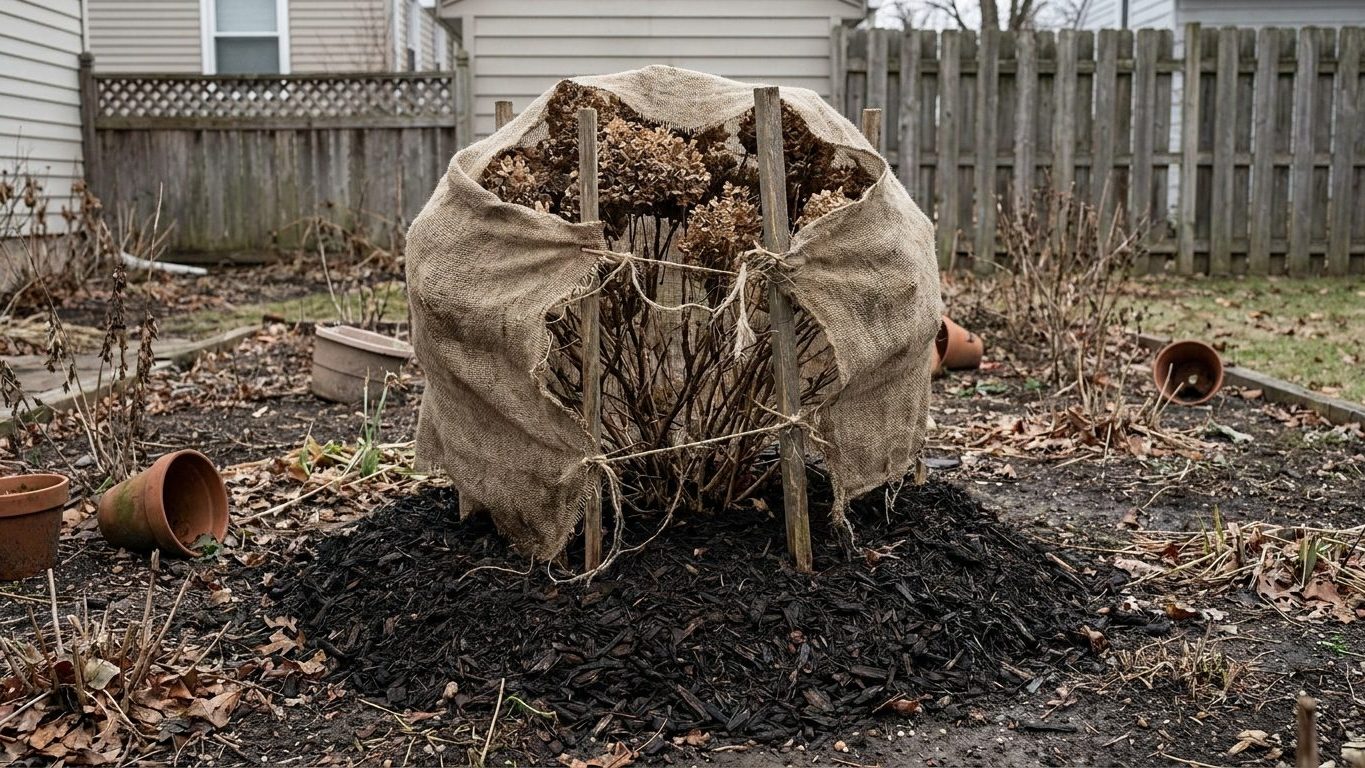
  • Fall prep: mulch four inches deep as nights cool toward the first fall frost window, to buffer roots through winter.
  • Winter watch: check exposed buds after any hard freeze that follows a warm stretch, since that swing is what actually kills flowers here.

Every one of those windows shifts by a week or more once you leave Wilmington’s airport gauge, so treat this list as a starting line, not a guarantee for your own yard.

Best Hydrangeas for Delaware

Not every hydrangea shrugs off a Delaware winter the same way. NC State Extension Gardener Plant Toolbox lists garden types spread roughly across zones 3 to 9, and that range hides real differences once a late frost hits swelling buds in Wilmington’s 7a to 8a stretch.

Panicle and smooth types bloom on new wood, so cold damage to last year’s growth costs nothing. Bigleaf and oakleaf set their buds the summer before, which is exactly where Delaware’s spring frost swings do the most harm.

Kind Verdict here Why
Panicle Reliable Blooms on new wood, shrugs off a late frost
Smooth Reliable Also new-wood, tough through Delaware winters
Bigleaf Good, watch timing Old-wood buds vulnerable to April frost swings
Oakleaf Good with shelter Old wood too, but hardier stems than bigleaf
Climbing Slow but workable Needs a sturdy wall and a few patient years

Climbing hydrangea earns its spot given a sturdy structure and patience for that first bloom. The other kinds, like mountain hydrangea, are on their own page for readers hunting something less common.

When to Plant, Prune and Feed Hydrangeas in Delaware

Every hydrangea task in Delaware counts forward or back from frost, not from a fixed date on a wall calendar. NOAA NCEI’s 1991-2020 Climate Normals set Wilmington’s last spring frost between April 3 and April 14, the anchor for everything below.

Old-wood bloomers need their cut timed to when flowering ends, not to a fixed season, or next year’s buds go with the clippings. New-wood types forgive a harder late-winter cut.

Task Window here Counted from
Planting Two to three weeks after last frost, or roughly six weeks before first fall frost April 3 to 14 last frost, Oct 26 to Nov 7 first frost
Pruning old wood Right after bloom fades, midsummer Bloom time, not frost
Feeding Three to four weeks after last frost April 3 to 14 last frost

Skip fall feeding altogether. Fresh growth pushed in the six to eight weeks before the first frost rarely hardens off in time and dies back anyway.

Hydrangeas Problems in Delaware and What Causes Them

No flowers on an otherwise healthy shrub

Dense, uniformly green shrub with glossy, undamaged leaves and vigorous new shoots, but bare stems where flower buds should be — smooth green or brown

This usually traces to timing. NOAA NCEI’s 1991-2020 Climate Normals show Wilmington’s last spring frost can land as late as April 14, and bigleaf buds already swelling that week take the hit while the rest of the plant looks fine.

Leaves scorched by midsummer

Leaf margins and tips turned brown to tan, dry, and papery, often with a crisp, curled edge; the browned tissue is brittle and may crackle when touche

Full afternoon sun plus a dry stretch burns leaf edges fastest, since Delaware’s humid summers don’t forgive a bigleaf planted without afternoon shade. Move it, or run a soaker hose through August.

Buds killed after a warm spell

Small, shrivelled buds turned brown or blackish, dry and shrunken instead of plump and green; the outer scales look dull, papery, and loose, and the b

A run of warm March days followed by a return freeze inside the April 3 to April 14 window kills swelling buds before they open, a pattern more common in low, frost-pocket sites than on a slope.

Delaware North to South: How the Dates Shift

Delaware runs barely 100 miles top to bottom, but the coast and the Piedmont edge up north don’t share a calendar.

  • Northern Delaware (New Castle County, near the Piedmont hills): frost tends to linger a few extra days into spring, so I’d hold off planting a week past the Wilmington window.
  • Central Delaware (Kent County, around Dover): flat farmland warms faster once spring arrives, often nudging the safe planting date earlier.
  • Coastal Sussex County (Rehoboth and the bay side): the ocean moderates swings, usually pushing the first fall frost later and softening winter lows.

Whichever county you garden in, treat Wilmington’s dates as a starting point and nudge the calendar in the direction your own frost history points.

Delaware Extension Offices and County Contacts

Delaware’s 7a to 8a range covers a small state, but a county agent still knows your soil and your yard’s microclimate better than any statewide chart.

  • University of Delaware Cooperative Extension: find your county office and ask about local frost pockets before you plant.
  • Delaware’s month-by-month calendar: the full year mapped week by week for every task above.
  • Which hydrangeas hold up here: a deeper look at kinds beyond the five compared above.

Whatever month you’re reading this, call your county office before you break ground on a new bed, and let them confirm this season’s frost outlook.

Common questions

Can I grow bigleaf hydrangeas in Delaware? Yes, across the state’s 7a to 8a range, but plant them where late frost can’t reach swelling buds, and expect an off year now and then near Wilmington’s April 3 to 14 frost window.

When is the best time to plant hydrangeas in Delaware? Two to three weeks after the last spring frost, once soil has warmed, or in fall a good six weeks before the first frost arrives.

Why didn’t my hydrangea bloom this year in Delaware? Check first whether it flowers on old wood, since a mistimed prune or a late frost on already-swollen buds are the two most common culprits here.
Growing Hydrangeas in Connecticut: Dates and Varieties

Growing Hydrangeas in Connecticut: Dates and Varieties

Connecticut’s frost dates and its split hardiness zone decide almost everything about growing hydrangeas here, from which kind sets buds that survive winter to the week you’re safe to plant. The short answer: pick a new-wood bloomer if you’re inland, plant two to three weeks after your local last frost, and mulch the base before the ground freezes in fall.

Hydrangeas Care Calendar for Connecticut

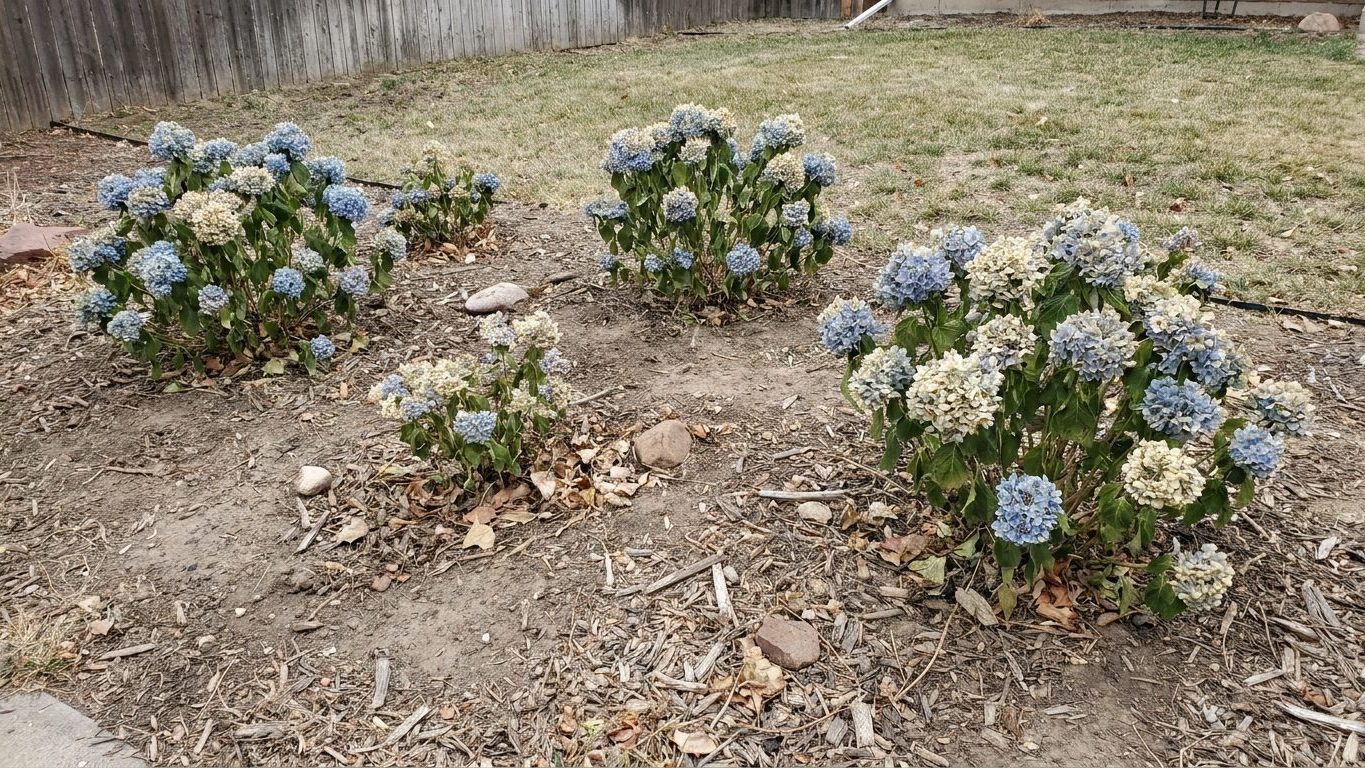
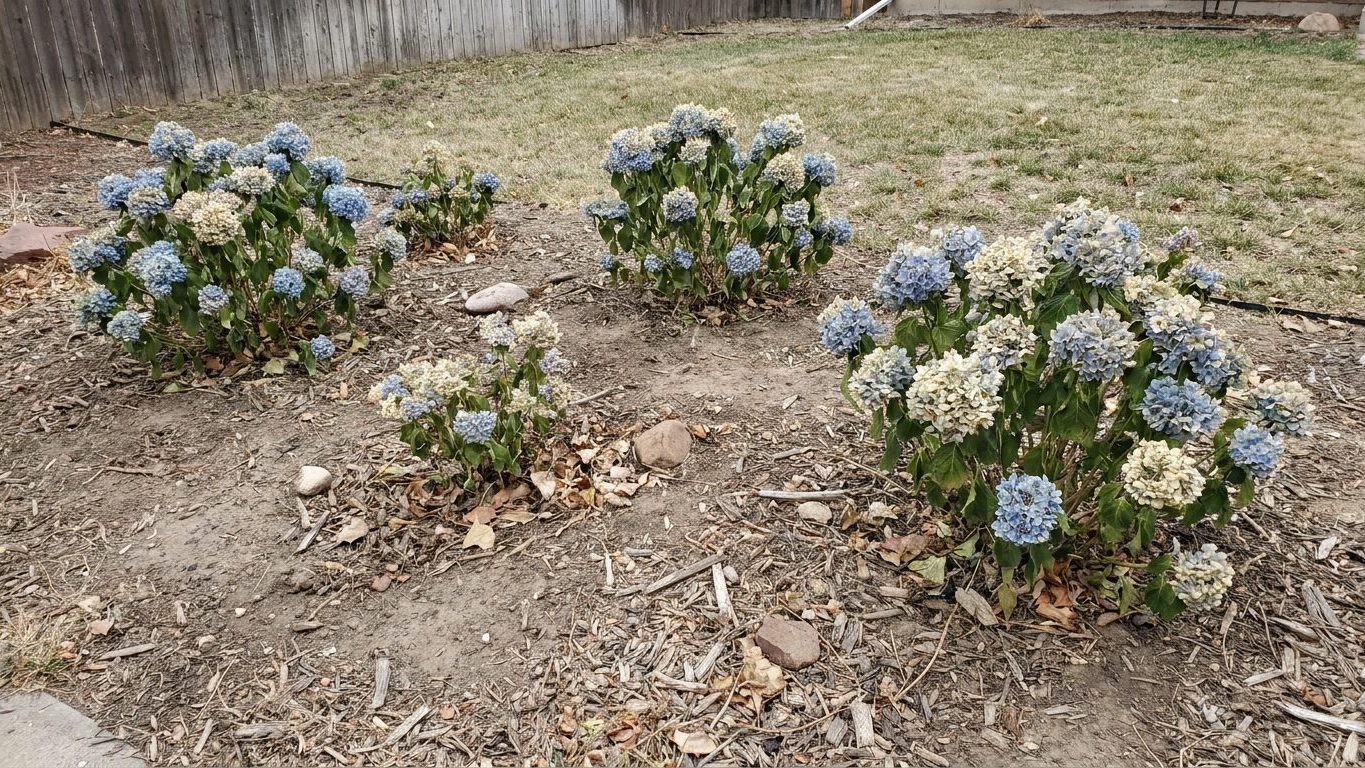
Hydrangeas in a Connecticut home landscape

My gardening year in Connecticut starts and ends with two numbers: NOAA NCEI’s 1991-2020 Climate Normals put the last spring frost at Bridgeport between April 2 and April 12, and the first fall frost between October 28 and November 10, with the whole state spanning USDA zones 6a to 7b.

  • Dormancy: the one safe window to move a plant, roots undisturbed, runs from leaf drop in fall through late winter before buds swell.
  • Planting: settle a new hydrangea into the ground two to three weeks after the last spring frost, so late April into early May near Bridgeport and later inland.
  • Bud break: watch for the first leaves within a week or two of that same frost date, a sign the roots have woken up.
  • Pruning: cut back only the kinds that bloom on new wood right after bud break, and leave old-wood bloomers alone until you see which stems made it through winter.
  • Feeding: apply a balanced fertilizer once new growth is a few inches long, generally three to four weeks after the last frost.
  • Mulch and wrap: pile mulch over the root zone, and wrap tender stems, before the first fall frost arrives between October 28 and November 10.

Every one of those dates moves with the calendar this site keeps for Connecticut, not with the day on your kitchen wall.

Best Hydrangeas for Connecticut

Not every hydrangea shrugs off a Connecticut winter the same way. The USDA Plant Hardiness Zone Map puts the state at 6a to 7b, and that split decides which kinds set flower buds that actually survive to open.

Kinds that flower on new wood grow past a hard freeze because the stems that carry the blooms haven’t even formed until spring. Old-wood bloomers depend on last year’s stems, so a cold winter can erase the whole flower show.

Kind Flowers on Verdict here Why
Bigleaf Old wood, mostly Marginal Buds often die in the colder inland half of the zone range
Panicle New wood Reliable New stems carry the flowers, so winter cold can’t erase the bloom
Smooth New wood Reliable Native to the eastern US and tolerant of the full 6a to 7b range
Oakleaf Old wood Marginal to good Holds up better on the milder coastal strip than inland

Panicle and smooth types make the easiest choice for most Connecticut yards, since a late frost can’t erase a flower bud that hasn’t formed yet. Bigleaf and oakleaf still work well close to the coast, and climbing hydrangea and other lesser-grown kinds have their own page for which ones hold up here.

When to Plant, Prune and Feed Hydrangeas in Connecticut

NOAA NCEI’s 1991-2020 Climate Normals put Bridgeport’s last spring frost between April 2 and April 12, and that date anchors every task below.

The first fall frost, October 28 to November 10, sets the outer edge for the opposite end of the season, especially for pruning old-wood bloomers before the plant goes dormant.

Task Window here Counted from
Planting Late April to mid-May near the coast, later inland Two to three weeks after the last spring frost
Pruning, new wood Within two weeks of bud break Right after the last frost date passes
Pruning, old wood Immediately after flowers fade, by late summer Well ahead of the first fall frost, October 28 to November 10
Feeding Early spring into early summer Three to four weeks after the last frost through midsummer

The month by month version of this same calendar lives on the state’s dated page, with the twelve-month ribbon above showing exactly where today sits.

Hydrangeas Problems in Connecticut and What Causes Them

The USDA Plant Hardiness Zone Map puts the cold end of the state at zone 6a, and that’s where most of the trouble below starts.

No flowers on an otherwise healthy shrub

A shrub with full, dense green foliage and normal branch structure, no signs of wilting, yellowing, or pest damage, but completely bare of buds or blo

Old-wood bloomers like bigleaf and oakleaf set next year’s buds in late summer, and a hard winter at the 6a end of the range kills them before spring. Choose a new-wood bloomer instead, or check the which-ones page for a variety bred to rebloom.

New leaves blackened after a spring cold snap

A frost arriving after the April 2 to April 12 window can still nip tender new growth that broke early. Cover plants with a sheet whenever frost threatens past that date, and expect the damaged leaves to be replaced within weeks.

Stems dying back to the ground each winter

This is ordinary at the cold end of the state’s 6a to 7b range, especially for bigleaf hydrangea planted inland or in a low, wind-exposed spot. Mound extra mulch over the crown before the first fall frost, and the roots will usually push new stems in spring.

Connecticut North to South: How the Dates Shift

The frost dates above come from one coastal station, and the rest of Connecticut doesn’t keep the same calendar.

  • Long Island Sound coast (Bridgeport, New Haven, Stamford): the mildest part of the state, closest to the frost dates and zone printed above, and the safest place for bigleaf and oakleaf.
  • The Connecticut River Valley (Hartford, Middletown): a few days behind the coast in spring and a few days ahead of it in fall.
  • The Litchfield Hills and northwest corner (Norfolk, Canaan): the coldest part of the state, where the last frost lands later and the first frost arrives earlier, favoring panicle and smooth types.
  • The eastern uplands (Willimantic, Putnam): a lag similar to the northwest, though milder than the highest elevations.

Check the frost dates for the town nearest you before trusting the coastal window above for a planting or pruning date.

Connecticut Extension Offices and County Contacts

The zone 6a to 7b range above is a starting point, not a guarantee for your particular yard, so a local check helps before you plant.

  • UConn Extension: extension.uconn.edu connects you to the office serving your county and its current seasonal advice.
  • Your county office: ask about soil pH before you plant, since it shapes bloom color on bigleaf hydrangeas as much as any frost date does.
  • This month’s task: match your next move, planting, pruning, or feeding, to where today falls between the last and first frost on the calendar above.

Common questions

Can I grow bigleaf hydrangea anywhere in Connecticut?

It survives best near the coast, where winter lows are milder. Inland and in the Litchfield Hills, at the colder end of the state’s 6a to 7b range, its flower buds are more likely to die over winter.

When is it too late to plant a hydrangea in fall?

Give the roots at least six weeks to settle before the ground freezes, which points to planting no later than mid-September in most of the state, well ahead of the October 28 to November 10 first frost window.

Do I need to cover hydrangeas for a late spring frost?

Only if new growth has already broken. A sheet or frost cloth over the plant on a night when temperatures dip after your local last-frost date usually protects the tender leaves and any early buds.

Growing Hydrangeas in Alberta: Dates and Varieties

Growing Hydrangeas in Alberta: Dates and Varieties

Hydrangeas in Alberta survive on a short leash. Natural Resources Canada rates the province’s reference city at Canadian zone 4a, and the frost-free stretch runs roughly from May 21 to September 16, barely four months. Panicle and smooth types, which bloom on new wood, come back reliably. Bigleaf and oakleaf, tied to old wood, rarely make it through winter unprotected.

Hydrangeas Care Calendar for Alberta

Hydrangeas in a Alberta home landscape

Environment and Climate Change Canada’s Canadian Climate Normals sets Calgary’s average last spring frost at May 21 and the average first fall frost at September 16, a four-month season that Natural Resources Canada rates Canadian zone 4a, colder than most of the continental United States.

  • Dormancy: dig, divide, or move a hydrangea only while it sleeps, after leaf drop in fall or before buds swell in spring.
  • Planting: set new plants two to three weeks after May 21, once the soil has actually warmed through.
  • Mulch-up: pile mulch over the crown once the ground starts to freeze, usually weeks after September 16.
  • Spring pruning: cut new-wood bloomers back hard two to three weeks before the average last frost, while still dormant.
  • Feeding: apply the first feed once new growth is visible, roughly a month after last frost.
  • Bloom watch: expect color through the short run between June and early September, ahead of the average frost.
  • Fall shutdown: stop feeding and watering back two to three weeks before September 16 so growth hardens off.

None of these dates are promises, since frost lands later than May 21 in one year out of two.

Best Hydrangeas for Alberta

Zone 4a rules out most of the hydrangea aisle here. Old-wood bloomers set their buds the year before, and Alberta’s winter kills those buds most years, leaving healthy plants that never flower.

New-wood types are the safer bet, since they build their flower buds each spring after the last frost has already passed, whenever that turns out to be.

Kind Flowers on Verdict in zone 4a Sun
Panicle (Hydrangea paniculata) New wood Reliable, dies back hard some winters but rebuilds Full sun to part shade
Smooth (Hydrangea arborescens) New wood Reliable, similar to panicle Part shade
Bigleaf (Hydrangea macrophylla) Old wood, mostly Rarely survives outdoors, better as a container plant Part shade
Oakleaf (Hydrangea quercifolia) Old wood Marginal even with heavy winter protection Part shade

Climbing hydrangea and other niche types are on their own pages, since almost none of them handle a Calgary winter without a heated wall to lean on. Gardeners in similarly cold ground, like hydrangeas in Alaska, lean on the same two genera for the same reason.

When to Plant, Prune and Feed Hydrangeas in Alberta

Three windows matter more than any date on a seed packet: planting, pruning, and the last feed of the season, each counted from Calgary’s average frost dates rather than from the month alone.

Push every one of them later at higher elevation or further north, since the reference dates come from a single station at Calgary’s airport.

Task Window here Counted from
Planting Early to mid-June Two to three weeks after the May 21 average last frost
Pruning (new-wood types) Late April, before bud break Two to three weeks before the May 21 average last frost
Feeding Early June through mid-August Starts a month after last frost, stops four to five weeks before the September 16 average first frost

Bigleaf and oakleaf need a different clock entirely, since pruning them wrong is the single most common reason they skip a bloom, and that timing lives on the province’s own planting and pruning calendar.

Hydrangeas Problems in Alberta and What Causes Them

No flowers on a healthy shrub

Dense green foliage with normal shape and size, but no buds, petals, or spent blooms anywhere on the stems — a uniformly leafy plant lacking any colou

This is almost always winter cold, not disease. Bigleaf and oakleaf hydrangeas set next year’s buds on this year’s wood, and a zone 4a winter routinely kills those buds even when the plant itself survives. Switch to a new-wood type or grow bigleaf in a pot that overwinters in an unheated garage.

Leaves scorched on the sunny, windy side

Leaf edges and tips turned brown and crispy, with a dry, papery texture; browning is uneven, heaviest on the side facing sun and wind, while the shade

Prairie sun paired with dry Chinook wind pulls moisture out of leaves faster than roots can replace it, especially on a west-facing wall. Deep, infrequent watering and a site with afternoon shade solve most of it. Bigleaf shows this first, since its leaves are thinnest.

Stems dead to the ground every winter

Blackened or grey-brown stems, brittle and dry, collapsed or snapped near soil level, with no green tissue visible; new green shoots may be emerging f

Zone 4a cold routinely kills stems back to the snowline or the soil line on anything except panicle and smooth types, which are built to regrow from the root each spring anyway. Treat that dieback as normal pruning, and mulch heavily in fall to protect the crown.

Alberta North to South: How the Dates Shift

Alberta is not one climate, and the reference dates above describe Calgary, not the whole province.

  • Southern Alberta (Lethbridge, Medicine Hat): Chinook winds push winters milder and springs earlier than Calgary’s average.
  • Central Alberta (Calgary, Red Deer): the reference dates in this piece line up closest here.
  • Northern Alberta (Edmonton, Peace River, Grande Prairie): frost lingers later in spring and returns earlier in fall, shrinking the season further.
  • Foothills and higher ground (Canmore, Cochrane): elevation adds cold on top of latitude, so push every date later still.

Check the Alberta hub for the rest of what grows here before picking a spot for anything with a hydrangea tag.

Alberta Extension Offices and County Contacts

Alberta Agriculture and Irrigation is the extension service to call before planting anything permanent, and your county or municipal district office is the local branch for soil tests, pest alerts, and hardy variety trials.

  • Alberta Agriculture and Irrigation: the province’s extension service for soil and climate questions specific to your district.
  • The full hydrangea guide: see how the site covers hydrangeas across every zone it grows in.
  • Your county office: the local contact for soil testing and the pest alerts a province-wide page can’t cover.

With the average first frost already behind this date on the calendar, the gesture that matters now is mulch, not fertilizer.

Common questions

Can bigleaf hydrangeas survive winter in Alberta?

Rarely outdoors. Zone 4a cold kills the old wood carrying next year’s buds most winters, so gardeners here either grow bigleaf in a container that overwinters indoors or skip it for a new-wood type.

What is the actual last frost date for Alberta?

There isn’t one for the whole province, only for the station it’s measured at. Calgary’s average last spring frost is May 21, but frost arrives later than that in half of all years, and further north or at higher elevation it runs later still.

Which hydrangea is easiest to grow in Alberta?

Panicle and smooth hydrangeas are the two safest choices, since they bloom on new wood built fresh each spring and can be cut back hard every year without losing a season’s flowers.

Growing Hydrangeas in Alaska: Dates and Varieties

Growing Hydrangeas in Alaska: Dates and Varieties

Hydrangeas grow in Alaska mostly as a coastal experiment, not a statewide habit. The mildest ground, centered on Anchorage, gives a shrub about 143 frost-free days, and only the kinds that bloom on new wood have a real shot at flowering before the season closes.

Hydrangeas Care Calendar for Alaska

Hydrangeas in a Alaska home landscape

Anchorage’s last spring freeze runs May 3 to May 12, and NOAA NCEI 1991-2020 Climate Normals sets the first fall freeze at September 22 to October 1, for about 143 frost-free days, the mildest window Alaska offers and still short enough to decide every date here.

  • Dormancy: late April, before growth starts, is the one stretch to move or divide a shrub without disturbing new roots.
  • Planting: wait until the freeze risk clears, two to three weeks after the last spring freeze near Anchorage.
  • Establishment: water deeply through June and July, the plant’s main stretch of daylight and warmth to build roots.
  • Bloom watch: expect color by mid to late July on kinds that flower on new wood, the only bloom timing that fits this season.
  • Fall prep: stop feeding by late August, roughly six weeks ahead of the first fall freeze, so growth can harden off.
  • Winter protection: mound mulch over the crown once the first fall freeze passes, September 22 to October 1 near Anchorage.

Skip the mulch step and a shrub that made it through summer can still lose its crown to the first hard freeze of fall.

Best Hydrangeas for Alaska

USDA Plant Hardiness Zone Map sets Alaska’s range at zone 1a to 8a, and Anchorage sits near the milder end of that span, the only realistic ground for a shrub bred for longer, warmer summers.

What matters more than the zone number is where a hydrangea sets its flower buds. A shrub that blooms on new wood can lose its top growth to winter and still flower the same summer.

Kind Verdict here Why
Panicle hydrangea Best bet Blooms on new wood, so a hard winter does not erase the season’s flowers
Smooth hydrangea Good bet Also flowers on new wood and tolerates a cold, short-season winter
Bigleaf hydrangea Rarely blooms Sets buds on old wood, which an Anchorage winter typically kills before flowering
Oakleaf hydrangea Marginal, sheltered spots only Needs milder winters than this state’s outdoor zones reliably give

Climbing hydrangea is on its own page, where the longer season it needs to establish gets more room than a state-level page allows.

When to Plant, Prune and Feed Hydrangeas in Alaska

Every hydrangea date in Alaska counts from one of two markers, the last spring freeze, May 3 to May 12 near Anchorage, or the first fall freeze, September 22 to October 1.

Planting, pruning and feeding each get measured backward or forward from those two dates, since the gap between them leaves little room for guessing.

Task Window here Counted from
Planting Mid to late May Two to three weeks after the last spring freeze
Pruning Before growth starts, late April Ahead of the last spring freeze
Feeding June through early August Stops about six weeks before the first fall freeze

The stretch between the two freezes runs about 143 frost-free days, so each task gets counted in weeks, not months. Prune in June instead of April, and the plant loses one of its only long enough windows to recover.

Hydrangeas Problems in Alaska and What Causes Them

No flowers on a healthy shrub

A lush, vigorous shrub with dense green foliage and healthy new growth, but entirely lacking blooms or even flower buds anywhere on its branches.

This usually points to a bigleaf hydrangea, which sets buds on last year’s wood. Anchorage’s winter kills those buds before they open, so the fix is choosing a new-wood bloomer instead, covered on the varieties page above.

Stems dead to the ground each spring

Blackened or dark brown, dry, brittle stems collapsed at soil level, shrivelled and woody, often surrounded by fresh green shoots emerging from the ba

Cold below what the shrub can take kills the top growth outright. Mulching the crown right after the first fall freeze, September 22 to October 1, protects the roots even when the stems above ground do not survive.

Leaves and buds nipped in late spring

Leaf edges and tips turned blackish-brown and shrivelled, buds browned and limp or collapsed, with a scorched, water-soaked look against otherwise hea

This happens when a plant leafs out before the last spring freeze clears, May 3 to May 12 near Anchorage. Holding off on feeding and pruning until that window closes avoids most of the damage.

Alaska North to South: How the Dates Shift

The reference dates on this page describe Anchorage, and the rest of the state shifts in one direction or another from there.

  • Southcentral and the coast (Anchorage, the Kenai Peninsula, the Mat-Su Valley): the mildest ground in the state, closest to the dates used here.
  • Southeast (Juneau, Sitka, Ketchikan): coastal and wetter, generally a longer frost-free stretch than Anchorage but more rain to manage around a shrub’s roots.
  • The Interior (Fairbanks, Delta Junction): colder winters and a shorter season than Anchorage, which narrows every window described above.
  • The North and West (Nome, Utqiagvik, the North Slope): outdoor hydrangeas are not a realistic option, since the season closes before a shrub can establish.

The state page above still holds for Southcentral gardens, but anyone farther north or west should treat these dates as a starting point, not a guarantee.

Alaska Extension Offices and County Contacts

Alaska’s zone range, 1a to 8a, covers ground from Anchorage to the North Slope, so a local answer beats any statewide one for a specific yard.

  • Your state page: the frost dates and hardiness range for Alaska gathered in one place.
  • Which ones hold up here: panicle, smooth, and why bigleaf struggles this far north.
  • What goes wrong here: winter kill, missed bud set, and the fix for each one.

The University of Alaska Fairbanks Cooperative Extension Service can connect a gardener to the district office nearest their yard. Call before the ground freezes, and ask what other gardeners nearby are actually growing.

Common questions

Can hydrangeas survive winter outdoors in Alaska?

Only in the mildest parts of the state, mainly around Anchorage, and only kinds that bloom on new wood, since a hard winter killing the top growth still leaves next summer’s flowers intact.

What is the best hydrangea for Alaska?

Panicle hydrangea is the strongest bet here, followed by smooth hydrangea, both of which set their flower buds on the current season’s growth rather than on stems that have to survive winter.

When should I plant hydrangeas in Alaska?

Mid to late May near Anchorage, roughly two to three weeks after the last spring freeze, gives a shrub the longest stretch of the frost-free season to establish before fall.

Growing Hydrangeas in Alabama: Dates and Varieties

Growing Hydrangeas in Alabama: Dates and Varieties

Yes, hydrangeas grow well across Alabama, from Huntsville to Mobile, as long as the type matches the local heat and frost pattern. The state spans USDA zones 7a to 9a, mild enough for bigleaf, oakleaf, panicle and smooth hydrangeas to thrive. What changes town to town is the planting window and how much afternoon sun a shrub can take before it scorches.

Hydrangeas Care Calendar for Alabama

Hydrangeas in a Alabama home landscape

In Birmingham, NOAA NCEI 1991-2020 Climate Normals put the last spring frost between March 19 and April 3 and the first fall frost between November 2 and November 16, and the USDA Plant Hardiness Zone Map places the state at zone 7a to 9a, the freeze-free stretch that decides every hydrangea task on this page.

  • Dormancy: from late fall through late winter is the safe window to move a hydrangea, roots undisturbed by frozen ground.
  • Planting: two to three weeks after the last frost, once the soil has warmed, is the safest time to set a new shrub.
  • Spring feeding: four to six weeks after the last frost, as new growth pushes, is when the first feeding goes down.
  • Bud watch: a warm spell followed by a freeze inside that same window can strip buds on old-wood types like bigleaf and oakleaf.
  • Peak bloom: early summer brings the main flush, with mophead and lacecap types color-shifting depending on soil pH.
  • Fall taper: six to eight weeks before the first fall frost, feeding stops and mulch goes down for winter.
  • Frost protection: as the first fall frost nears, a thick layer of mulch over the root zone matters more than covering the leaves.

That rhythm holds for Birmingham. A garden in the hills of northeast Alabama runs behind it by a week or two.

Best Hydrangeas for Alabama

The USDA Plant Hardiness Zone Map puts Alabama at zone 7a to 9a, and that heat paired with long, humid summers favors hydrangeas that bloom on new wood, since a late freeze can’t erase a season that hasn’t started building buds yet.

Bigleaf and oakleaf still work here, but they need a sheltered spot out of the harshest afternoon sun. Climbing hydrangea works too, though slowly, and it wants years before it covers a wall.

Kind Verdict here Why
Bigleaf Good, with a sheltered spot Blooms on old wood, a late freeze after a warm spell can strip the buds
Oakleaf Reliable Native to the Southeast, handles heat and part shade well
Panicle Best all-around Blooms on new wood, unaffected by spring bud loss
Smooth Solid Also blooms on new wood, cut back hard each year
Climbing Slow but sound Takes years to cover a structure, tolerates shade

Lacecap and mountain hydrangea are close relatives of bigleaf and are covered on their own pages, along with the specifics of soil pH and color change.

When to Plant, Prune and Feed Hydrangeas in Alabama

Three windows matter more than the rest of the calendar, and NOAA NCEI 1991-2020 Climate Normals put Birmingham’s last frost at March 19 to April 3 and its first fall frost at November 2 to November 16.

Miss the spring window and a new hydrangea spends its first summer struggling to root instead of settling in.

Task Window here Counted from
Planting Two to three weeks after the last frost, or six to eight weeks before the first frost Last frost March 19 to April 3, first frost November 2 to 16
Feeding Stops six to eight weeks before the first frost First frost November 2 to 16
Pruning new-wood types Four to six weeks before the last frost, while still dormant Last frost March 19 to April 3

Old-wood types like bigleaf and oakleaf skip that pruning window entirely. They get cut right after the flowers fade instead, a detail covered on the month-by-month calendar page for this state.

Hydrangeas Problems in Alabama and What Causes Them

No flowers after a late freeze

Flower buds appear shriveled, brown, and papery, sometimes blackened or mushy at the base, collapsed inward against bare green stems that show no open

Bigleaf and oakleaf set their buds the previous fall, so when a warm stretch tricks them into growth and a freeze follows inside the March 19 to April 3 window that NOAA NCEI Climate Normals set for Birmingham, those buds die before they open. A panicle or smooth type nearby as backup, or a look at the varieties page, solves the repeat problem.

Leaves scorched on the sunny side

Leaf edges and tips on the light-facing side turn crisp tan or brown with a dry, papery texture and brittle curl, often bordered by a reddish-brown ma

Alabama’s summer heat, paired with full afternoon sun, burns the edges of bigleaf leaves brown by August. Part shade after midday and a thick mulch layer keep roots cool, and the problems page covers the pest side of the same stress.

Wilting despite damp soil

Leaves and stems hang limp and drooping, foliage dulled and slightly yellowed with edges curling inward, losing their normal glossy stiffness even tho

Heavy clay and high humidity common across central Alabama hold water around the roots, so a hydrangea that wilts even after rain is usually suffocating, not thirsty. Raised beds or amended drainage fix it, with more on root rot on the dedicated problems page.

Alabama North to South: How the Dates Shift

Alabama stretches from the Tennessee line to the Gulf Coast, and that distance shifts frost dates away from the Birmingham reference above.

  • North Alabama and the Tennessee Valley (Huntsville, Scottsboro, Florence): sits closer to zone 7a, with frost lingering later in spring and arriving earlier in fall than the Birmingham dates above.
  • Central Alabama (Birmingham, Tuscaloosa, Montgomery): tracks the reference window most closely, the transition zone between the two extremes.
  • South Alabama and the Gulf Coast (Mobile, Dothan): leans toward zone 9a, with frost arriving later and leaving earlier, stretching the bloom season for heat-tolerant types.

Check the month-by-month calendar page for the dates closest to your county.

Alabama Extension Offices and County Contacts

The Alabama Cooperative Extension System, at aces.edu, is the starting point for anything specific to your soil, your county, and this week’s forecast.

  • Your county extension office: local advice tuned to your soil and microclimate, found through the ACES directory.
  • Which hydrangeas hold up here: a deeper look at variety choice for Alabama gardens.
  • What goes wrong here: pests and problems specific to Alabama’s heat and humidity.

With mid-September underway, this is the month to ease off feeding and start planning where the mulch goes before frost reaches Birmingham in early November.

Common questions

Can I grow bigleaf hydrangeas anywhere in Alabama?

Mostly yes across zones 7a to 9a, but a sheltered spot out of afternoon sun and away from late-freeze pockets matters more in the north of the state than near the coast.

When is the best time to plant hydrangeas in Alabama?

Two to three weeks after the last frost in spring, or six to eight weeks before the first fall frost, whichever fits the nursery stock available.

Do hydrangeas need full sun in Alabama?

No, part shade suits most types here better, especially bigleaf and oakleaf, since Alabama’s summer sun scorches leaves faster than it does in cooler states.

Protecting Hydrangeas in Winter, Zone by Zone

Protecting Hydrangeas in Winter, Zone by Zone

Winter protection for hydrangeas depends less on your zip code than on which type is growing in your yard. Bigleaf and mountain hydrangeas need real cover, since NC State Extension Gardener Plant Toolbox rates them borderline hardy in the colder pockets of their range.

Panicle and smooth hydrangeas in that same bed often need nothing at all. Match the type to the zone first, and the rest of the decision gets much simpler.

Winter Protection for Hydrangeas: The Short Answer

NC State Extension Gardener Plant Toolbox puts the hydrangea genus at USDA zones 3a through 9b, but that range covers six very different plants. Bigleaf and mountain hydrangeas bloom on last year’s wood and need real winter protection where the source rates them borderline hardy.

Panicle and smooth hydrangeas bloom on new wood and shrug off cold that would wreck a bigleaf’s flower buds. Oakleaf and climbing hydrangeas sit in between, hardy in the trunk but touchy in the bud.

The state selector below sorts this by your zip code, not by guesswork. It opens the page built for your state, with the frost window and pruning date that apply where you live.

What decides your approach is simple: type first, zone second. Get the type wrong and even careful mulching won’t save a spring’s worth of flowers.

Winter Protection for Hydrangeas, Step by Step

Protecting Hydrangeas in Winter, Zone by Zone

Winter protection follows an order, and doing a later step before an earlier one usually costs a season of flowers on the types that bloom on old wood.

  1. Confirm which wood carries the flowers: NC State Extension Gardener Plant Toolbox rates bigleaf an old-wood bloomer hardy from 6a to 11b, while panicle blooms on new wood and survives down to 3a, so the same winter treats them in opposite ways.
  2. Stop feeding by late summer: high-phosphorus fertilizer ties up aluminum in the soil and pushes out new growth that won’t have time to ripen before frost.
  3. Mulch the root zone before the ground locks up: bigleaf and panicle hydrangeas are both shallow-rooted, and a layer put down while soil is still workable protects roots through repeated winter thaws.
  4. Leave old flower heads and hollow stems standing: native bees nest inside those dead stems over winter, so cutting them back to 12 to 24 inches waits until spring, not fall.
  5. Screen bigleaf buds from wind and afternoon sun: a burlap wrap or a simple fabric screen keeps buds formed the previous summer from drying out on an exposed site.
  6. Hold pruning until new growth shows: cutting an old-wood bloomer back in winter removes next year’s flowers outright, since those buds already formed last summer, while panicle types tolerate a hard cut because they bloom on wood that hasn’t grown yet.

None of these six steps needs a calendar date at the national level, and forcing one here would be wrong for someone. Zone and type set the actual timing, and that’s exactly what the state pages spell out one county at a time.

Winter Protection for Hydrangeas by Hydrangea Type

NC State Extension Gardener Plant Toolbox rates bigleaf and mountain hydrangeas as old-wood bloomers, meaning the flower buds already exist by the time frost arrives. Panicle and smooth hydrangeas bloom on new wood, so a hard freeze that kills the top growth doesn’t touch next summer’s flowers.

Bigleaf tops out at 3 to 6 feet and prefers dappled or partial shade, shielded from afternoon sun. Panicle grows anywhere from 8 to 25 feet and is the only type in the genus that takes full sun well.

Kind Flowers on USDA zones Sun
Bigleaf Last year’s wood 6a–11b Dappled or part shade, protect from afternoon sun
Panicle Current season’s growth 3a–8b Full sun

Smooth, oakleaf, mountain and climbing hydrangeas are on their own pages, where zone and pruning specifics get an entry each. Only bigleaf and mountain flowers shift color with soil pH. Panicle stays white, cream, pink or green as it ages, regardless of soil.

Winter Protection for Hydrangeas: Mistakes That Cost a Season

No flowers after a fall prune

No flowers after a fall prune — Protecting Hydrangeas in Winter, Zone by Zone

Bigleaf hydrangeas set flower buds the summer before, so cutting them back in fall or early spring removes next year’s show. NC State Extension Gardener Plant Toolbox puts the safe pruning cutoff at before August 1. Prune right after the flowers fade instead, and check the by-type section above for which types this rule even applies to.

Roots left bare going into freeze

Roots left bare going into freeze — Protecting Hydrangeas in Winter, Zone by Zone

Bigleaf and panicle hydrangeas are both shallow-rooted, and skipping mulch before the ground locks up leaves those roots exposed to repeated winter thaws. Laying mulch once in fall, before freeze-up, protects the whole root system. Do it early, not mid-winter when the ground is already frozen solid.

Coffee grounds instead of aluminum sulfate

Coffee grounds instead of aluminum sulfate — Protecting Hydrangeas in Winter, Zone by Zone

Coffee grounds and citrus peel are the home remedy for blue flowers, but the pH shift they cause is too small to matter. What moves color is available aluminum, which acid soil releases, and only bigleaf and mountain types respond to it. High-phosphorus fertilizer locks that aluminum up and pushes blue toward pink instead.

Winter Protection for Hydrangeas in Your State

This page covers the whole country, but neither the zone map nor the type alone tells you when to act where you live. The state page combines both for your county.

  • Your state page: the frost dates and the pruning window where you live.
  • Which types hold up here: the varieties that survive your winters without wrapping.
  • Your local extension office: county-level advice for soil, pests and site conditions the national page can’t cover.

Common questions

Do all hydrangeas need winter protection?

No. Panicle and smooth hydrangeas bloom on new wood and tolerate a hard cut back in late winter without losing next year’s flowers, per NC State Extension Gardener Plant Toolbox. Bigleaf and mountain types need protection because their buds already exist going into winter.

Can coffee grounds turn a hydrangea blue?

Not reliably. The pH shift from coffee grounds is too small to matter. Aluminum sulfate acidifies soil enough to release the aluminum that turns bigleaf and mountain flowers blue, and only those two types respond to soil pH at all.

Are hydrangeas toxic to pets?

Only bigleaf hydrangea is documented toxic, and only if eaten in quantity, causing nausea, stomach pain, vomiting and sweating in cats, dogs and horses. The other types in the genus aren’t listed as toxic by the source.

When to Prune Hydrangeas, by Type and by State

When to Prune Hydrangeas, by Type and by State

Bigleaf, oakleaf, mountain and climbing hydrangeas set next year’s buds on this year’s wood, so I prune them right after the flowers fade, never in spring. Panicle and smooth types bloom on new growth, so late winter or early spring works, even a hard cutback. Zone shifts the calendar by weeks.

Pruning Hydrangeas: The Short Answer

NC State Extension Gardener Plant Toolbox lists the hydrangea genus at USDA zones 3a through 9b, but that number means little on its own. Hardiness, bloom timing and the right month to cut all depend on which type is growing in the yard.

Old-wood bloomers, bigleaf, oakleaf, mountain and climbing, set their buds the summer before, so I cut them within a few weeks of the last flower. New-wood bloomers, panicle and smooth, wait until the plant is still dormant, in late winter or very early spring.

Zone pushes those windows earlier or later. A gardener in coastal South Carolina and a gardener in inland Vermont are not pruning in the same month, even with the identical shrub.

The state-by-state table just below sorts out those weeks for wherever you garden, one state per plate, with its own zone and its own months.

Pruning Hydrangeas, Step by Step

When to Prune Hydrangeas, by Type and by State

The cuts are the same tools and the same clean blade for every hydrangea, but the order below keeps you from cutting off next year’s flowers.

  1. Identify the type before you touch the pruners: bigleaf, oakleaf, mountain and climbing hydrangeas set buds on last year’s wood, while panicle and smooth types flower on the current season’s growth, and the two groups get pruned in opposite seasons.
  2. Time old-wood types to the bloom, not the calendar: NC State Extension Gardener Plant Toolbox sets the bigleaf deadline before August 1, once the flowers have faded, so new buds get the rest of summer to form.
  3. Time new-wood types to dormancy: wait for late winter or very early spring on panicle and smooth types, when the plant shows no green, and cut hard if the shrub has grown leggy.
  4. Cut just above a healthy bud: angle the cut about a quarter inch above a plump bud facing outward, so new growth heads away from the center of the shrub.
  5. Thin the oldest stems at the base: remove no more than a third of the oldest wood in a single season, so the shrub keeps blooming while it renews itself.
  6. Leave some hollow stems standing at 12 to 24 inches: native bees nest inside them over winter, so let that stubble stay until it disintegrates on its own.

Mulch afterward. Both bigleaf and panicle hydrangeas are shallow-rooted, and a layer of mulch over the root zone protects the roots that did the work of forming next year’s buds.

Pruning Hydrangeas by Hydrangea Type

NC State Extension Gardener Plant Toolbox puts bigleaf hydrangea at USDA 6a to 11b, flowering on last year’s wood, while panicle hydrangea covers a wider 3a to 8b and flowers on the current season’s growth instead.

That single difference decides everything else: panicle can be cut back hard in late winter, and it is the only hydrangea in the group that takes full sun well, standing in for bigleaf where that species isn’t winter hardy.

Kind Flowers on USDA zones Sun
Bigleaf Last year’s wood 6a-11b Dappled to deep shade
Panicle Current season’s growth 3a-8b Full sun

The other kinds are on their own pages. Oakleaf keeps old-wood buds and turns wine-red in autumn, at about 5 feet tall, and smooth is the hardiest of the genus, blooming on new wood.

Mountain’s buds take a late frost better than bigleaf’s, and climbing hydrangea can reach 15 feet and more before it starts flowering at all.

Pruning Hydrangeas: Mistakes That Cost a Season

Pruning bigleaf in spring

Pruning bigleaf in spring — When to Prune Hydrangeas, by Type and by State

Bigleaf hydrangea sets its buds on last year’s wood, so a spring cut removes flowers that already exist inside the stem. The fix is to prune within a few weeks after the blooms fade, never later than the type and zone allow. See the state page for the exact window.

Feeding for blue, getting pink

Feeding for blue, getting pink — When to Prune Hydrangeas, by Type and by State

High-phosphorus fertilizer locks aluminum in the soil, and without available aluminum a bigleaf hydrangea cannot hold blue. Flowers drift toward pink no matter how acid the soil tests. Feed with a balanced formula instead, and adjust color through soil pH, not through the feeding schedule.

Clearing every stem each fall

Clearing every stem each fall — When to Prune Hydrangeas, by Type and by State

NC State Extension Gardener Plant Toolbox notes that native bees nest inside the hollow stems over winter, so a tidy fall cleanup removes their shelter. Cut spent stalks back to 12 to 24 inches instead, and leave that stubble standing until it disintegrates on its own.

Pruning Hydrangeas in Your State

Nothing here replaces the frost dates and zone where you actually garden. The national rule sets the type and the order, but the month still depends on your state and your local extension office.

  • Your state page: the frost dates and the pruning window mapped for the type you’re growing.
  • Which types hold up here: a zone check before you plant another bigleaf hydrangea in a spot too cold for it.
  • Your county extension office: a call or a visit for a soil test and a local answer when the calendar isn’t enough.

Match the two, type and zone, before the first cut.

Common questions

Why didn’t my hydrangea bloom this year?

The most common cause is a spring cut on an old-wood type like bigleaf, oakleaf, mountain or climbing hydrangea, which removes buds already formed the summer before. A late frost after the buds have broken can do the same damage without any pruning at all.

Can I change hydrangea flower color by pruning?

No. Pruning has nothing to do with it. Only bigleaf and mountain hydrangeas shift color with soil pH, blue below about pH 5.5 and pink above about pH 6.5, and panicle, smooth, oakleaf and climbing types stay whatever color they were bred to be.

Are hydrangeas toxic to pets?

Only bigleaf hydrangea is documented toxic, and only in large quantities, causing nausea, stomach pain and vomiting in people as well as cats, dogs and horses. The bark, flowers, leaves and stems all carry the compound.

Hydrangea Problems: Brown Leaves, Wilting and No Blooms

Hydrangea Problems: Brown Leaves, Wilting and No Blooms

Most hydrangea complaints trace back to the same three culprits: a prune at the wrong time for that particular type, too much direct sun for a shade-loving variety, or a soil chemistry issue that shows up as a color problem instead of a feeding problem. The right fix depends entirely on which of the six hydrangea types you’re growing, not on the genus as a whole.

Hydrangea problems: The Short Answer

NC State Extension Gardener Plant Toolbox places the hydrangea genus across USDA zones 3a through 9b, but that range covers six very different plants. What decides your outcome is the type in your yard, not the genus number on the tag.

Bigleaf hydrangeas set their flower buds the previous summer, so a late frost or a spring cut removes them before they open. Panicle hydrangeas bloom on wood grown this same year, so a hard cut in late winter still leaves a full show.

Flower color follows soil chemistry only on bigleaf and mountain hydrangeas, running blue below about pH 5.5 and pink above about pH 6.5. Panicle, smooth, oakleaf and climbing hydrangeas stay white, cream or green no matter what the soil pH is.

The state selector just below this section opens the page built for your zone, your frost dates and your pruning window. Check it before you cut anything back on a bigleaf, oakleaf or mountain hydrangea.

Hydrangea problems, Step by Step

Hydrangea Problems: Brown Leaves, Wilting and No Blooms

Work through a struggling hydrangea in the order a real diagnosis happens, starting at the stem and ending at the flower.

  1. Check the wood before you blame anything else: scratch a stem near the base, and if a bigleaf or oakleaf hydrangea that never bloomed still shows green underneath, the buds were most likely pruned off, since NC State Extension Gardener Plant Toolbox notes both types flower on wood formed the previous summer.
  2. Read where the scorch shows up: leaf browning only on the side facing afternoon sun points to too much light, since the source lists dappled sun through deep shade as the range for bigleaf and warns against afternoon exposure.
  3. Test the soil before treating color: on bigleaf or mountain hydrangeas, blue runs below about pH 5.5 and pink above about pH 6.5, so a soil test tells you which direction to push before adding anything.
  4. Rule out a phosphorus feed: a high-phosphorus fertilizer locks aluminum in the soil, and that shift alone can push a blue hydrangea toward pink even when the pH itself hasn’t changed.
  5. Look for the named pests before assuming disease: aphids, scales, nematodes and mites appear on the source’s list but are rarely a problem, while deer are a documented damage agent on this plant.
  6. Match any pruning to the type: cutting a panicle hydrangea back hard in late winter is fine because it flowers on current-season growth, but the same cut on a bigleaf removes the whole season’s flowers.

None of this replaces a soil test or your own state’s frost dates, but it separates a pruning mistake from a light problem from a feeding problem, which covers most of what goes wrong with this genus.

Hydrangea problems by Hydrangea Type

Two of the six hydrangea types carry both a hardiness range and a sun requirement, which is why they generate most of the questions about bloom failure.

NC State Extension Gardener Plant Toolbox puts bigleaf hydrangea at USDA zones 6a to 11b and panicle hydrangea at 3a to 8b, and panicle is the only one of the two that takes full sun well.

Kind Flowers on USDA zones Sun
Bigleaf Last year’s wood 6a-11b Dappled to deep shade, avoid afternoon sun
Panicle Current season’s growth 3a-8b Full sun

Smooth hydrangea, the Annabelle type, flowers on new wood and is described as the hardiest of the genus. Oakleaf, mountain and climbing hydrangeas all flower on old wood, but the other kinds are on their own pages.

Hydrangea problems: Mistakes That Cost a Season

No blooms after a hard prune

No blooms after a hard prune — Hydrangea Problems: Brown Leaves, Wilting and No Blooms

Cutting a bigleaf, oakleaf, mountain or climbing hydrangea back in fall or early spring removes buds already formed on last year’s wood, so the plant grows all season with nothing to show. Prune only right after the flowers fade, and confirm the exact window on your state page before the shears come out.

Leaves scorched on the sunny side

Leaves scorched on the sunny side — Hydrangea Problems: Brown Leaves, Wilting and No Blooms

Afternoon sun on a bigleaf hydrangea, which does best in dappled sun to deep shade, dries and browns the leaf edges facing that light by midsummer. Move the plant to a shadier spot or add afternoon shade rather than watering more, since scorch is a light problem, not a drought problem.

Blue flowers drifting toward pink

A high-phosphorus fertilizer locks aluminum in the soil, and that alone can push a blue bigleaf or mountain hydrangea toward pink even when nothing else in the yard has changed. Switch to a lower-phosphorus feed and test the soil before adding aluminum sulfate, since color follows available aluminum, not the fertilizer bag’s claims.

Hydrangea problems in Your State

The ranges above don’t set a pruning date or a mounding depth for your yard, since both depend on your zone and your frost dates.

  • Your state page: the frost dates and the pruning window for your zone, sorted by type.
  • Which types hold up here: whether bigleaf survives your winter outdoors or needs mounding for protection.
  • Your local extension office: a soil test and a second opinion on a pest or disease you can’t identify.

Common questions

Why didn’t my hydrangea bloom this year?

Most likely a spring or fall prune removed buds already set on last year’s wood, if it’s a bigleaf, oakleaf, mountain or climbing type. Panicle and smooth hydrangeas flower on the current season’s growth, so a badly timed cut affects them far less.

How do I turn my hydrangea blue?

Color change only works on bigleaf and mountain hydrangeas, and it runs on soil acidity, not on coffee grounds or citrus peel, whose effect on pH is very small. Flowers run blue below about pH 5.5 and pink above about pH 6.5, and aluminum sulfate is what actually moves the needle.

Are hydrangeas toxic to pets?

Only H. macrophylla, the bigleaf hydrangea, is documented as toxic, and only if eaten in large quantities. Symptoms include nausea, stomach pain, vomiting and sweating in people, and the same risk applies to cats, dogs and horses, since the toxic compounds sit in the bark, flowers, leaves and stems.

When to Move a Hydrangea, and How to Transplant It

When to Move a Hydrangea, and How to Transplant It

Move a hydrangea in the dormant season, roughly from leaf drop in fall through before bud swell in late winter, and dig a root ball as wide as the branch spread. The exact week depends on your USDA zone and which hydrangea you’re moving, since bigleaf, panicle, oakleaf and smooth types set their flower buds on different schedules.

Transplanting Hydrangeas: The Short Answer

The safest window for transplanting hydrangeas sits in the dormant season. That means after leaves drop in fall or before new buds swell in late winter, when the shrub isn’t feeding flowers or foliage.

NC State Extension Gardener Plant Toolbox puts the genus at USDA zones 3a through 9b. That figure depends entirely on which type you’re moving, since bigleaf, panicle and smooth hydrangeas keep different clocks.

A bigleaf shrub in a warm coastal zone and a panicle shrub in a cold inland zone don’t share a transplant calendar. Neither one shares it with a mountain hydrangea planted between them.

The state selector below this section leads straight to the planting and pruning window for your own zone. It replaces guesswork with a date range built for where you garden.

Match the move to the hydrangea’s type first, then let your zone narrow the week. That order rarely fails.

Transplanting Hydrangeas, Step by Step

When to Move a Hydrangea, and How to Transplant It

The digging and resetting stay the same everywhere, only the calendar around them shifts state by state.

  1. Water the day before: soak the root zone deeply so the shrub goes into the move hydrated instead of stressed.
  2. Dig twice the width of the root ball: NC State Extension Gardener Plant Toolbox notes that macrophylla and paniculata are both shallow rooted, so width matters more than depth here.
  3. Lift with the root ball intact: keep the native soil clumped around the roots to limit transplant shock during the trip to the new hole.
  4. Reset at the same depth: setting the crown lower invites rot, since these shallow-rooted shrubs were never built to be buried.
  5. Water in, then mulch: a mulch ring around the base holds moisture over the shallow roots while they reestablish.
  6. Hold off on fertilizer: a high-phosphorus feed locks up the aluminium a bigleaf hydrangea needs for blue flowers, so let a newly moved shrub settle a season before feeding it.

A newly moved hydrangea needs steady water through its first year, especially the shallow-rooted macrophylla and paniculata types, until new roots push out past the original hole.

Transplanting Hydrangeas by Hydrangea Type

Every hydrangea sets its flower buds on a schedule tied to its type, and that schedule decides how forgiving a transplant or a hard prune really is. Move an old-wood bloomer at the wrong moment and the buds for next year go with it.

NC State Extension Gardener Plant Toolbox lists bigleaf hydrangea at USDA zones 6a to 11b, flowering on last year’s wood. Panicle hydrangea sits at zones 3a to 8b instead, flowering on the current season’s growth, which forgives a harder cut.

Kind Flowers on USDA zones Sun
Bigleaf Last year’s wood 6a to 11b Part shade, protect from afternoon sun
Panicle Current season’s growth 3a to 8b Full sun

Smooth hydrangea blooms on new wood like panicle does, while oakleaf, mountain and climbing hydrangeas all bloom on wood set the previous summer like bigleaf. The other kinds are on their own pages, since the source gives them a bloom habit but not the zone or sun figures used in this table.

Transplanting Hydrangeas: Mistakes That Cost a Season

No flowers on a healthy shrub

No flowers on a healthy shrub — When to Move a Hydrangea, and How to Transplant It

Cutting a bigleaf, oakleaf or mountain hydrangea at the wrong time removes buds set the previous summer, since those types flower on last year’s wood. Check which wood your hydrangea blooms on before any pruning cut, not after the flowers fail to show.

Shrub wilts for weeks after the move

Shrub wilts for weeks after the move — When to Move a Hydrangea, and How to Transplant It

Digging a root ball too small for a shallow-rooted macrophylla or paniculata hydrangea leaves too few feeder roots to support the leaves above. Dig wide rather than deep, water the day before, and move the shrub while it’s dormant rather than in leaf.

Blue flowers won’t turn no matter what

Blue flowers won't turn no matter what — When to Move a Hydrangea, and How to Transplant It

Coffee grounds and citrus peel barely shift soil pH, and they never work on a panicle, oakleaf or climbing hydrangea that stays white or green regardless of pH. Aluminium sulfate lowers pH below about 5.5 for blue on bigleaf and mountain types, and a high-phosphorus fertilizer works against that by locking the aluminium up.

Transplanting Hydrangeas in Your State

The general rule above stops short of a date, because frost timing and zone boundaries change from state to state. Your state page and your local extension office narrow that window down to the weeks that actually work where you garden.

  • Your state page: the frost dates and the transplant window built for your zone.
  • Which types hold up here: the hydrangea types matched to your local winters and summers.
  • Your local extension office: soil test results and pH readings specific to your own yard.

Common questions

Can I transplant a hydrangea in full bloom?

Better to wait for dormancy. Moving a shrub while it’s in leaf or flower stresses its shallow roots, and it often drops both blooms and leaves within days of the move.

Will a transplanted hydrangea bloom the same year?

Old-wood types like bigleaf, oakleaf and mountain often skip a bloom cycle if buds were disturbed or pruned during the move. New-wood types like panicle and smooth tend to flower again the same season, since they build buds on fresh growth.

Does soil pH matter for anything besides flower color?

The color shift applies only to bigleaf and mountain hydrangeas, blue below about pH 5.5 and pink above about pH 6.5, purple in between. Panicle, smooth, oakleaf and climbing types keep their own color regardless of the pH in the new hole.

Where to Plant Hydrangeas: Sun, Soil, Spacing and pH

Where to Plant Hydrangeas: Sun, Soil, Spacing and pH

Hydrangeas want a spot with morning sun and afternoon shade, soil that drains without staying soggy, and enough room for the mature shrub rather than the one in the nursery pot. The exact answer shifts with your USDA zone and the type you’re planting, which is why a bigleaf and a panicle rarely belong in the same corner of the yard.

Where to Plant Hydrangeas: The Short Answer

Most hydrangeas want morning sun and afternoon shade, in soil that drains but doesn’t dry out completely. That rule holds across the genus, but not every hydrangea reads it the same way.

NC State Extension Gardener Plant Toolbox lists genus hardiness at USDA zones 3a through 9b, though it depends entirely on the type. A panicle hydrangea takes full sun and cold down to 3a, while a bigleaf needs zone 6a and dappled shade.

Spacing follows the same split. Panicle types can reach 25 feet and want room, while an oakleaf tops out near 5 feet.

Region plays a part too: the source calls panicle hydrangeas a good substitute for the mop-head where bigleaf isn’t winter hardy, which is why the shrub sold in Minneapolis often isn’t the one sold in Charleston.

Type decides sun, size and bloom timing all at once, so naming your hydrangea comes before picking the spot. The state selector below matches your zone to your state’s own planting page.

Where to Plant Hydrangeas, Step by Step

Where to Plant Hydrangeas: Sun, Soil, Spacing and pH

Planting a hydrangea in the right spot is a sequence, not a single decision, and skipping a step shows up later as a shrub that survives but never really performs.

  1. Match zone to type: check your USDA zone against the type you want, since NC State Extension Gardener Plant Toolbox puts bigleaf at 6a through 11b, panicle at 3a through 8b, and the whole genus at 3a through 9b.
  2. Read the light: only panicle hydrangeas take full sun well, while bigleaf, oakleaf, mountain and climbing types want dappled or partial shade with the afternoon sun blocked.
  3. Test drainage and pH: hydrangeas grow in clay, loam or sand as long as the site drains, and on bigleaf and mountain types flower colour runs blue below about pH 5.5, pink above about pH 6.5, and purple in between.
  4. Space for the mature size: panicle types can spread 8 to 25 feet, bigleaf and mountain settle at 3 to 6 feet, and oakleaf holds near 5 feet, so measure the shrub it will become.
  5. Dig twice the width of the root ball: set the plant at the depth it grew in the nursery, then mulch, since both bigleaf and panicle roots stay shallow and dry out fast without cover.
  6. Water in deeply and step back: growth runs medium for the genus and rapid for bigleaf and panicle, and maintenance stays low once the roots take hold.

None of these steps needs a calendar date. The when belongs to your zone and your type, which is exactly what the state pages sort out.

Where to Plant Hydrangeas by Hydrangea Type

Every planting decision above bends around one fact: whether the shrub sets its buds on last year’s wood or on this year’s growth. Get that backwards and a late frost or a spring prune can remove an entire season of flowers.

NC State Extension Gardener Plant Toolbox spells this out clearest for the two most planted types. Bigleaf blooms on last year’s wood and needs shade from afternoon sun, while panicle blooms on new wood and is the only hydrangea that takes full sun well.

Kind Flowers on USDA zones Sun
Bigleaf (mop-head, lacecap) Last year’s wood 6a–11b Dappled or partial shade
Panicle (peegee) Current season’s growth 3a–8b Full sun

Smooth, oakleaf, mountain and climbing hydrangeas each carry their own bloom timing and root habits, from the wine-red autumn leaves of the oakleaf to the aerial rootlets a climbing hydrangea uses to grip a wall. The other kinds are on their own pages rather than a shared table.

Where to Plant Hydrangeas: Mistakes That Cost a Season

Full sun for a bigleaf hydrangea

Full sun for a bigleaf hydrangea — Where to Plant Hydrangeas: Sun, Soil, Spacing and pH

Afternoon sun scorches the leaves and stresses a shrub built for dappled or partial shade, since only the panicle type tolerates full sun well. Move new plantings to the morning side of the house or under filtered shade, and check the type pages before choosing a spot.

Pruning after the buds are set

Pruning after the buds are set — Where to Plant Hydrangeas: Sun, Soil, Spacing and pH

Bigleaf, oakleaf, mountain and climbing hydrangeas set their buds on last year’s wood, so a late prune removes next year’s flowers along with the cut stems. Panicle and smooth types forgive this because they bloom on new growth, which is why the safe pruning date depends on which type is in the ground.

Chasing blue with coffee grounds

Chasing blue with coffee grounds — Where to Plant Hydrangeas: Sun, Soil, Spacing and pH

Coffee grounds and citrus peel shift soil pH only slightly, and colour change needs available aluminium, which acidity releases, not a kitchen scrap. High-phosphorus fertiliser locks that aluminium up and pushes blue flowers toward pink anyway, and the trick only works on bigleaf and mountain types in the first place.

Where to Plant Hydrangeas in Your State

The national rule stops short of a calendar, since frost dates, pruning windows and winter protection depend on where you garden. Your state page fills in the dates this one leaves out.

  • Your state page: the frost dates and pruning window for your zone, matched to the type you’re planting.
  • Which types hold up here: a shortlist of bigleaf, panicle, oakleaf, smooth, mountain or climbing hydrangeas suited to your winters.
  • Your local extension office: a soil test for pH before you decide whether a bigleaf will run blue or pink.

Common questions

Can I plant a hydrangea in full sun?

Only the panicle type takes full sun well, according to NC State Extension Gardener Plant Toolbox. Bigleaf, oakleaf, mountain and climbing types need dappled or partial shade with afternoon sun blocked.

Will coffee grounds turn my hydrangea blue?

Only slightly, and only on bigleaf and mountain types, since the colour shift needs available aluminium in acid soil, not the small pH nudge grounds give. High-phosphorus fertiliser can push the same flowers back toward pink.

How far apart should I space hydrangeas?

Match the gap to the mature size: panicle types can reach 25 feet, bigleaf and mountain settle at 3 to 6 feet, and oakleaf holds near 5 feet. Measure the shrub it becomes, not the one in the nursery pot.