Growing Hydrangeas in Arizona: Dates and Varieties

Growing Hydrangeas in Arizona: Dates and Varieties

Hydrangeas can grow in Arizona, but only where shade and elevation soften the state’s real limiting factor: heat, not frost. In the low desert around Phoenix, freezing weather barely registers, so the growing calendar answers to summer highs rather than spring thaw. Higher ground near Flagstaff behaves like a true four-season garden instead.

Hydrangeas Care Calendar for Arizona

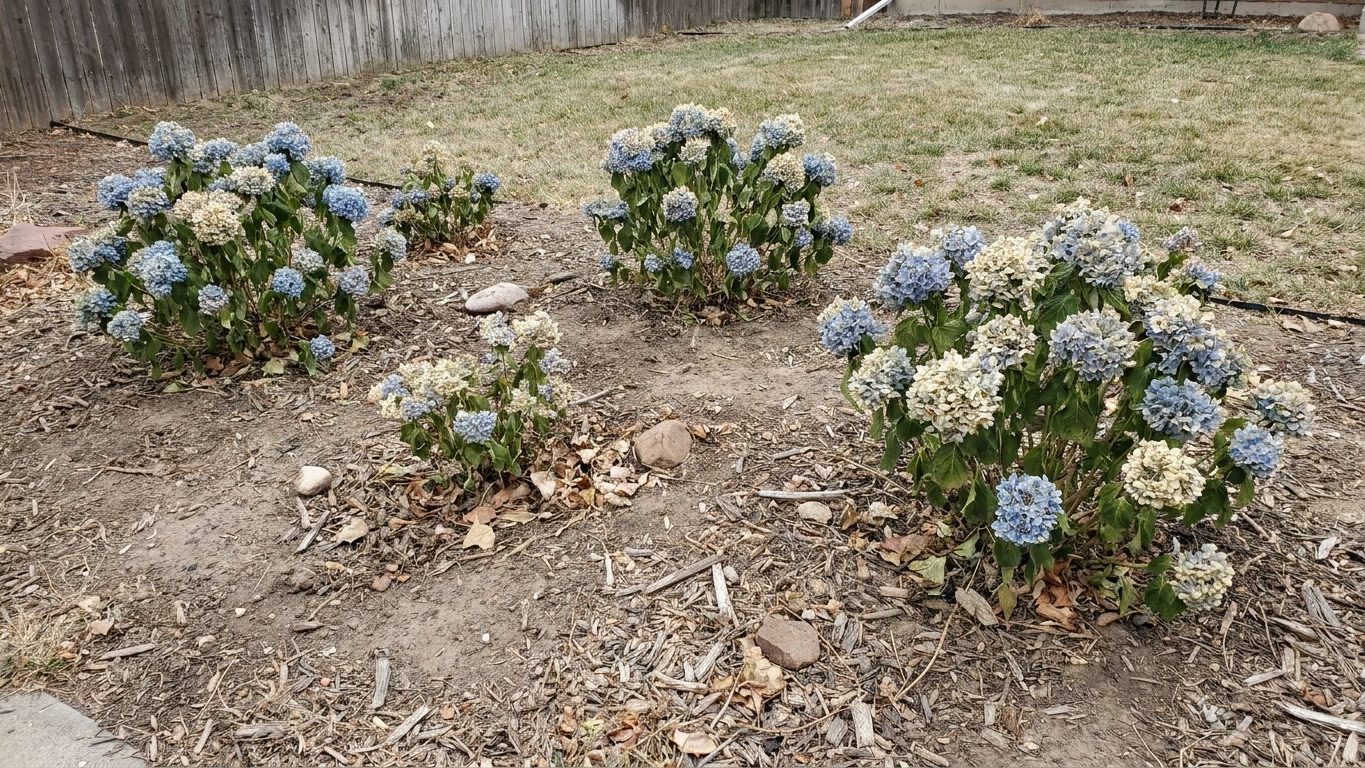
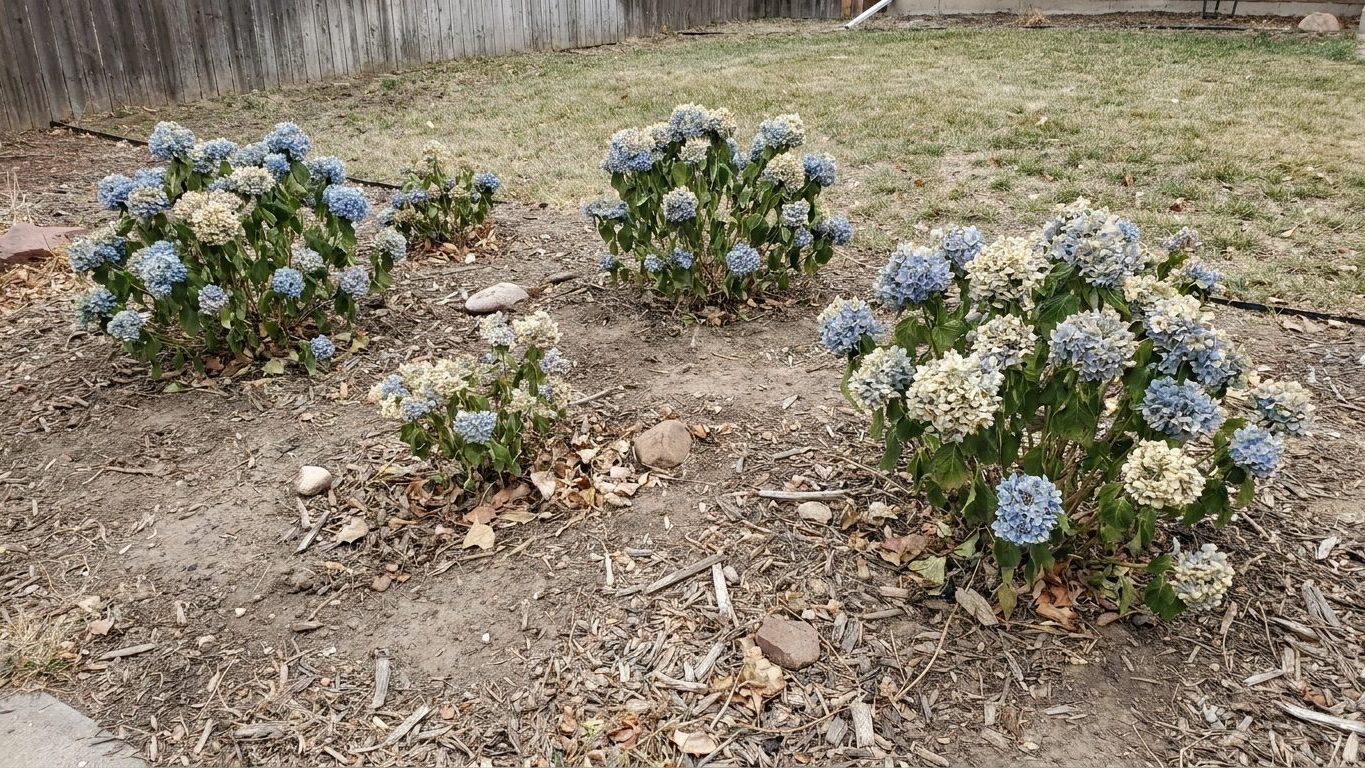
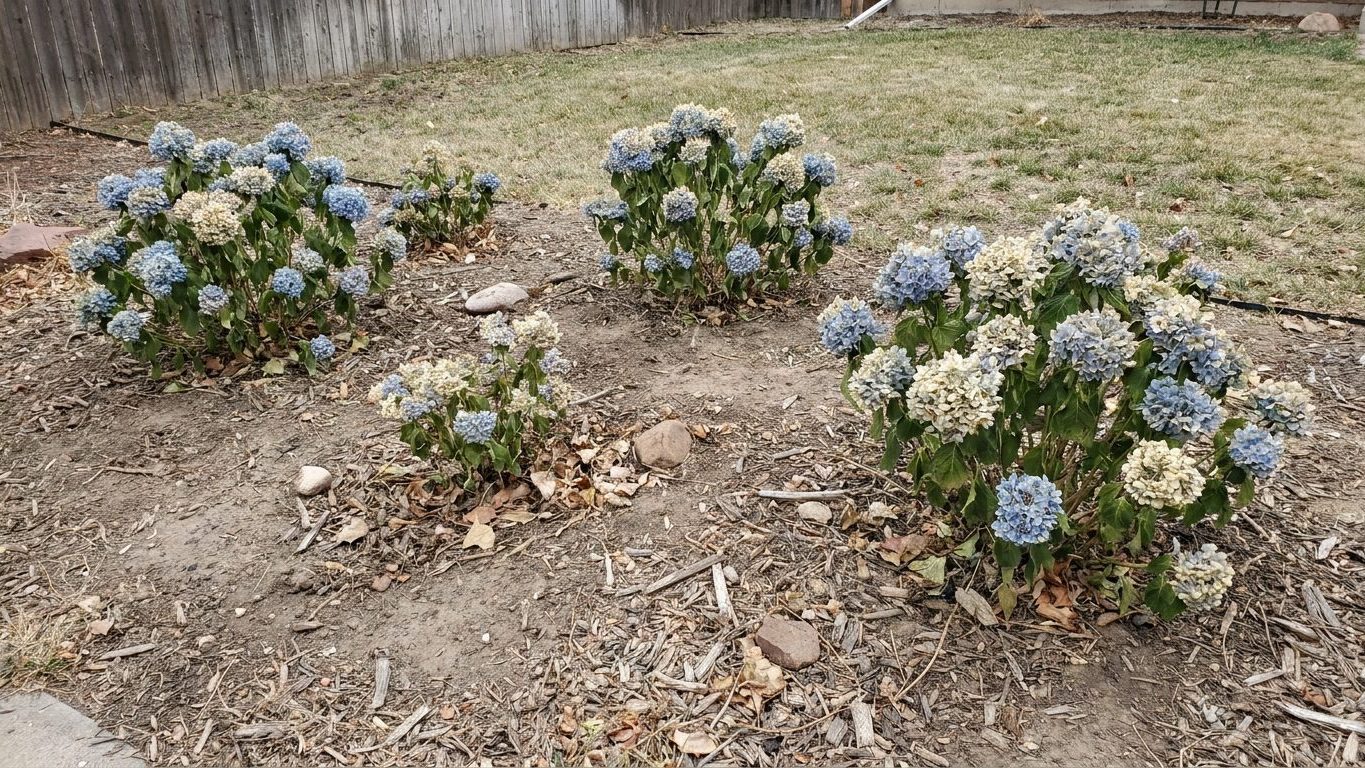
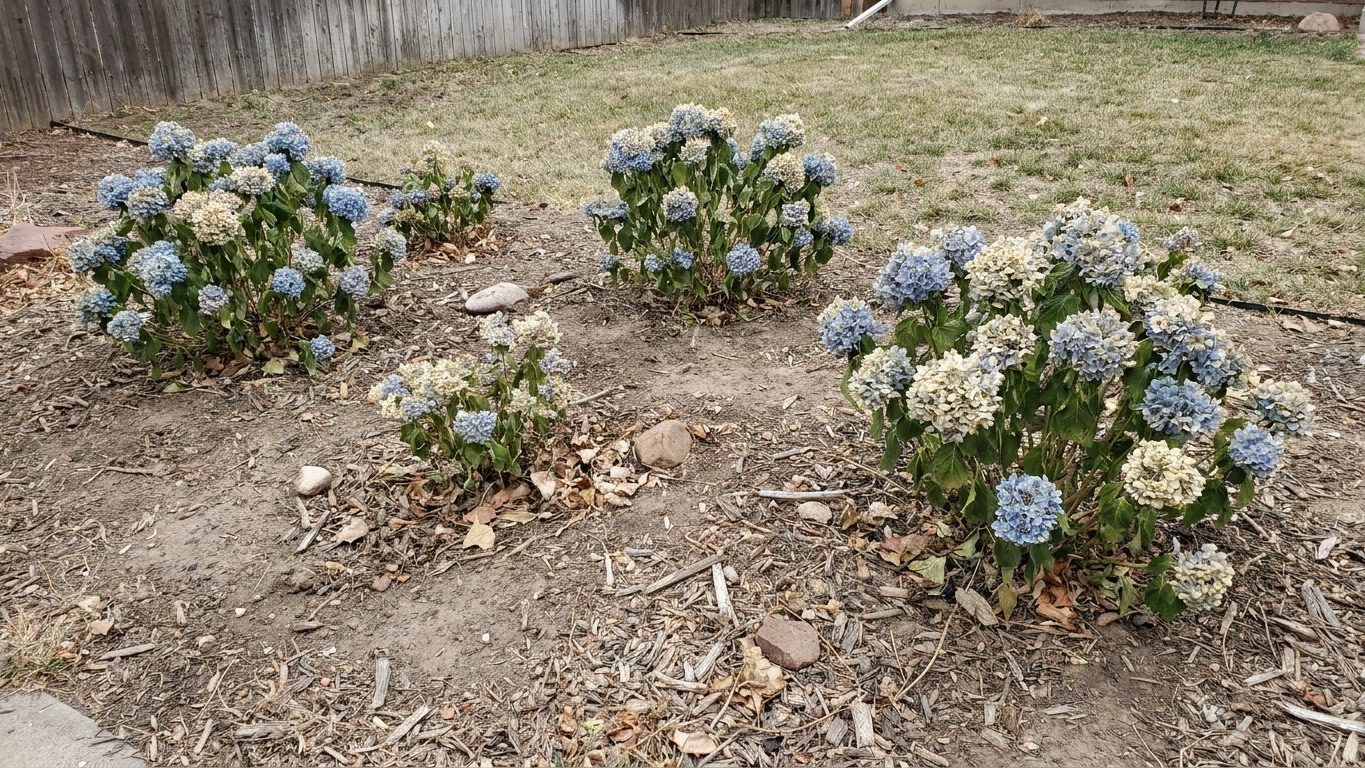
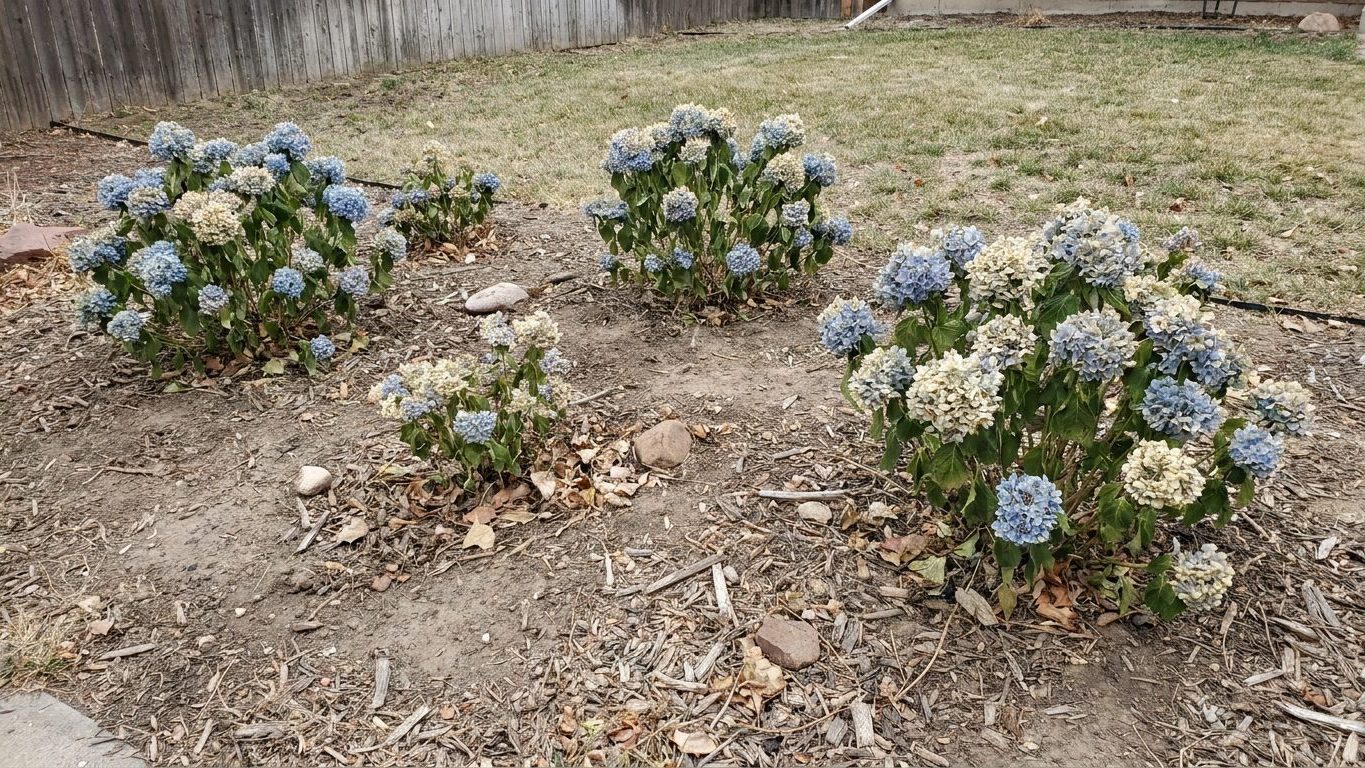
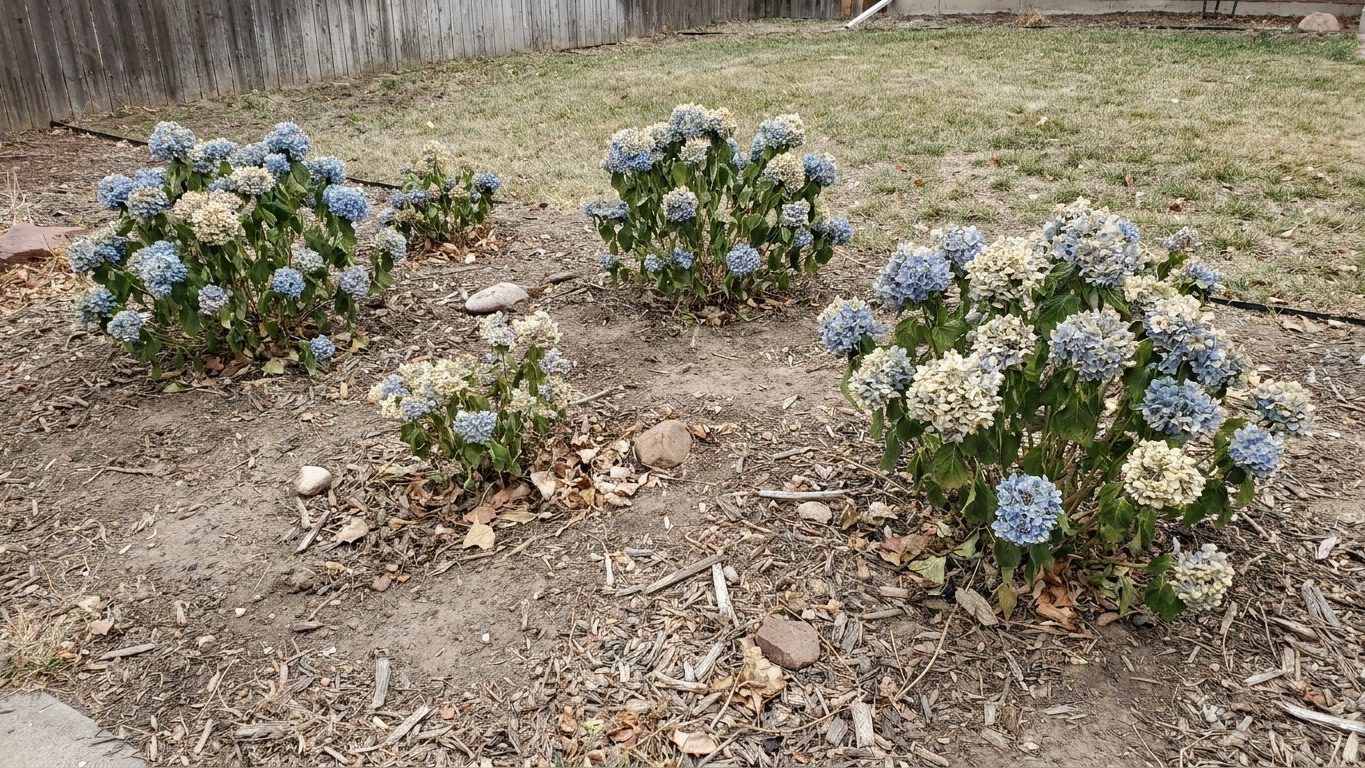
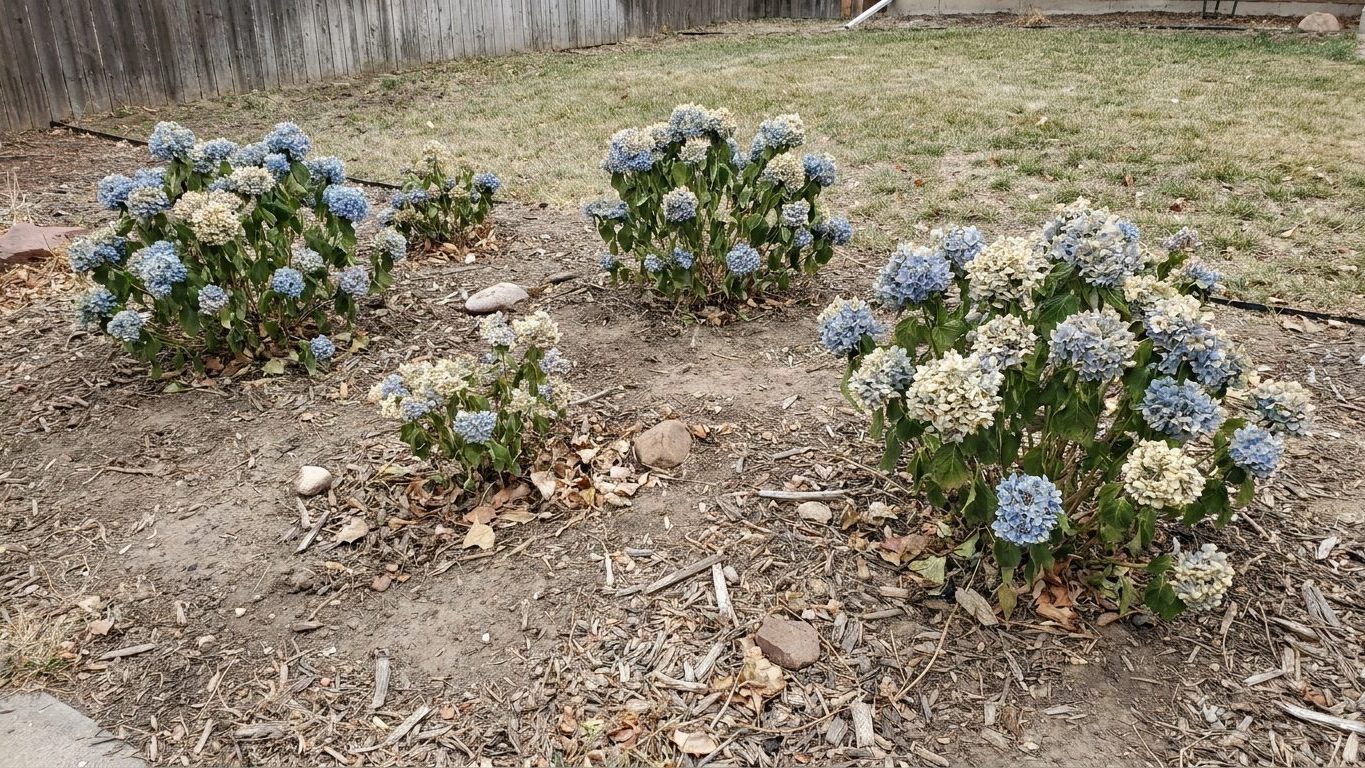
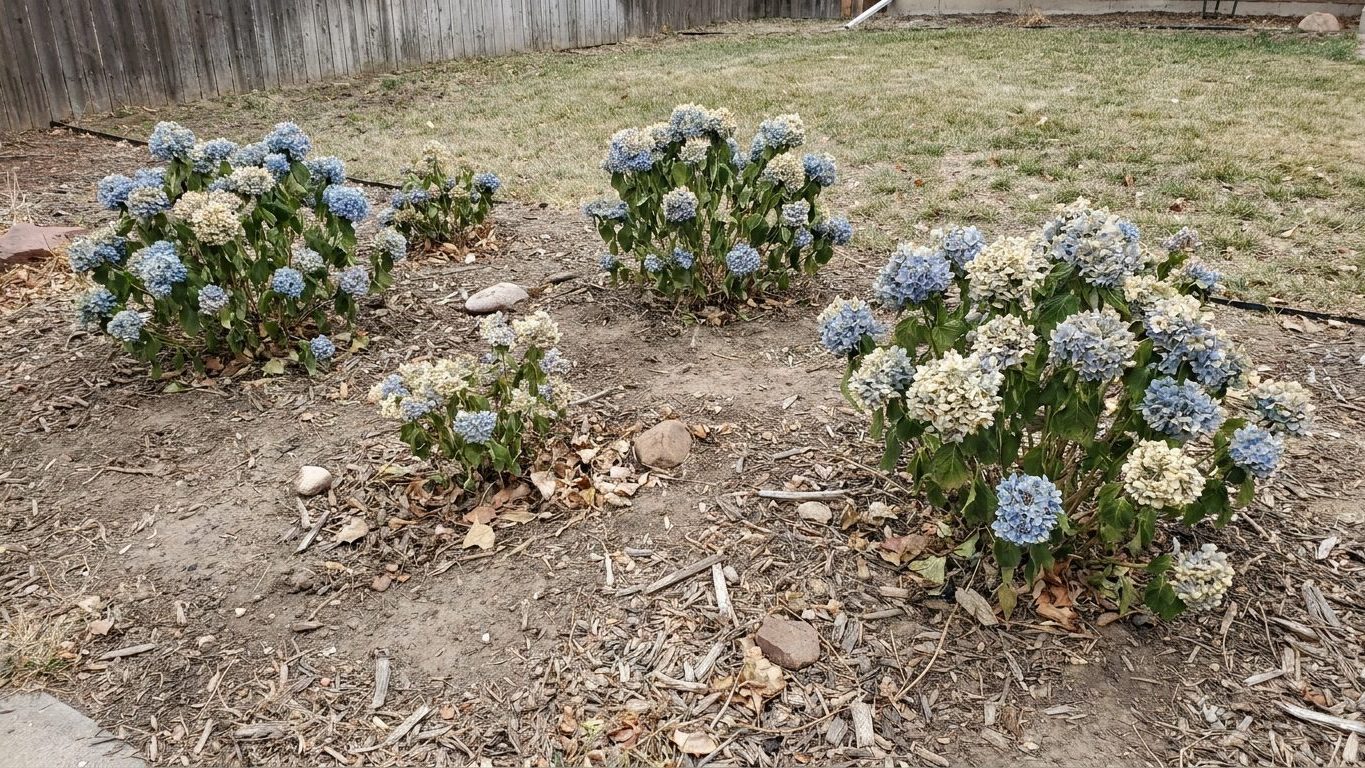
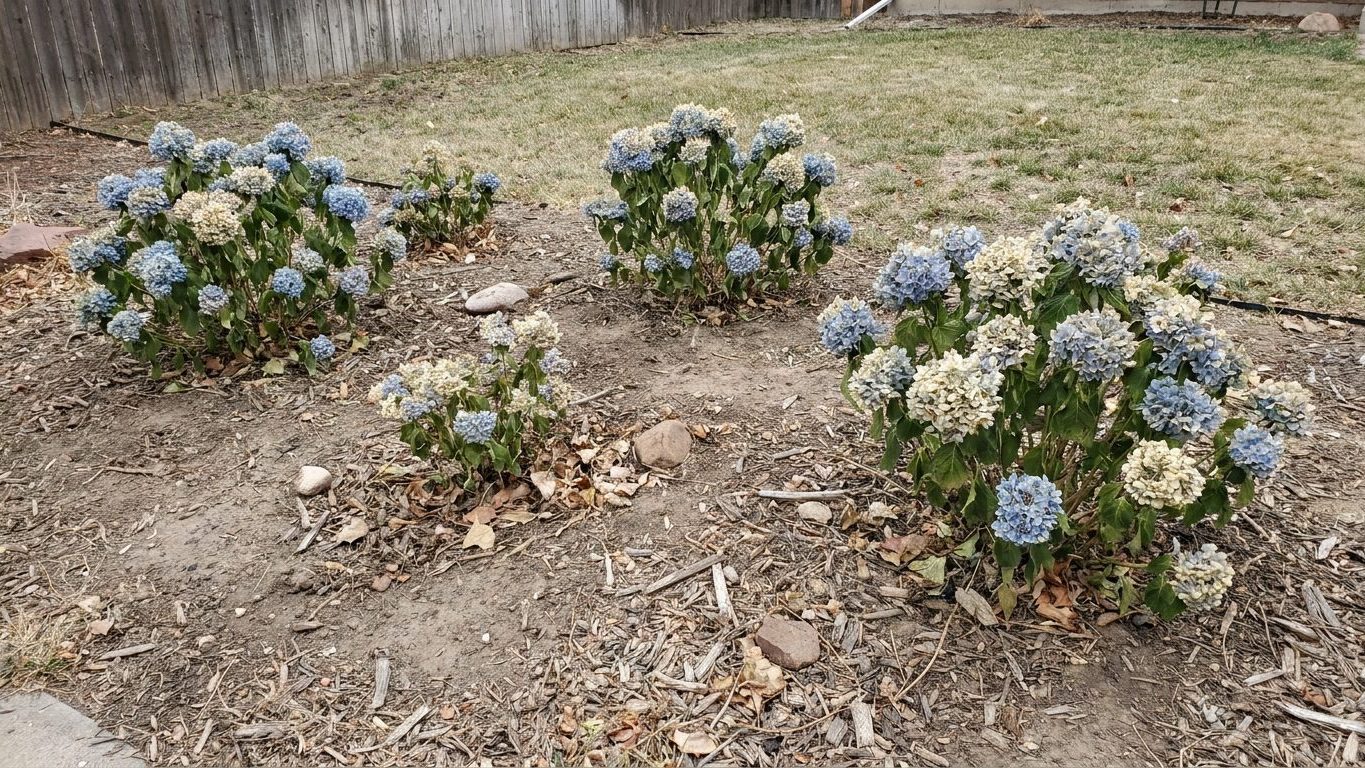
Hydrangeas in a Arizona home landscape

NOAA’s 1991-2020 climate normals for Phoenix show a 32-degree freeze in only 6 of the last 30 springs, always in the late-December-to-mid-January window, with a frost-free season listed at 365 days, inside the USDA Plant Hardiness Zone Map’s statewide range of 4b to 10b, so summer heat runs this calendar, not frost.

  • Root check: with no true dormancy to force, buy and move plants in nearly any month once shade and water are ready.
  • Planting: set new hydrangeas out once the late-December-to-mid-January cold-snap window has passed for good.
  • Shade rig: build permanent afternoon shade before the year’s hottest stretch arrives, the single decision that keeps leaves from scorching.
  • Peak heat: water deeply each morning through the hottest months and expect wilting by early afternoon regardless.
  • Fall reset: once triple-digit days fade, resume feeding and trim stems that flowered on new wood.
  • Winter coast: through the late-December-to-mid-January snap, hold off on fertilizer and let roots rest.

None of these steps chase a frost date, because in the low desert there is barely one to chase, so shade decides more than any date on the calendar for a hydrangea in Arizona.

Best Hydrangeas for Arizona

Not every hydrangea sold at a nursery belongs in this state. The USDA Plant Hardiness Zone Map puts Arizona’s range at 4b to 10b, and Phoenix sits at the hot end, which rules out kinds bred for cooler, wetter summers.

Panicle and smooth types shrug off heat better than bigleaf ever will, since they bloom on new wood and can be cut back hard without losing a season. Bigleaf and oakleaf need real shade and steady moisture to survive past June.

Kind Flowers on Verdict in Arizona Why
Panicle New wood Best statewide fit Tolerates heat, reblooms even after dieback
Smooth New wood Workable in shaded low desert Forgives hard pruning and stress
Bigleaf Last year’s wood High country or deep shade only Struggles at the zone’s hot end near Phoenix
Oakleaf Last year’s wood Milder microclimates only Wants part shade the low desert rarely offers

Climbing and mountain hydrangeas exist too, but the other kinds are on their own pages, since this state’s heat leaves little room for the ones that need cool, humid summers to set buds.

When to Plant, Prune and Feed Hydrangeas in Arizona

Three windows matter more than the other nine months combined. Each one counts from the same fact: Phoenix’s frost season is functionally absent, while the high country still freezes hard.

Planting waits for the cold-snap window to clear, pruning depends on whether a kind blooms on old or new wood, and feeding stops once summer heat shuts growth down.

Task Window here Counted from
Plant Once nights hold above freezing for good After the late-December-to-mid-January cold-snap window
Prune new-wood kinds Late winter, before spring growth starts Weeks before the cold-snap window closes
Feed Resume once the hottest stretch breaks Counted from the fall easing of summer heat

Old-wood kinds like bigleaf and oakleaf get pruned right after their flowers fade instead, never in late winter, or next year’s buds go with the cut.

Hydrangeas Problems in Arizona and What Causes Them

Leaves scorched on the sunny side

The leaf blade shows a pale tan to brown, papery patch concentrated on the side that faced the sun, often starting at the leaf margin or tip and sprea

The desert sun, not drought, causes crisped, papery leaf edges, since these plants evolved for filtered light and humidity Arizona rarely offers. Move containers to morning-only sun or build shade cloth over in-ground plants. See the state’s what-goes-wrong page for pest-driven damage that looks similar.

Buds lost to a rare cold snap

The buds appear shriveled, blackened, or dull brown at their tips, turning mushy or papery-dry as they die back; they may look water-soaked and transl

When the late-December-to-mid-January window does bring a 32-degree night, unprotected buds on old-wood kinds can blacken overnight. Cover plants with frost cloth on the nights a freeze is forecast. High country gardens face this far more often than the low desert does.

No flowers despite healthy leaves

There is no visible symptom here—the plant simply shows lush, green, unblemished foliage with a complete absence of flower buds or blooms anywhere on

Old-wood kinds pruned in late winter or fall lose the buds they already set, leaving a green, flowerless shrub by summer. Prune bigleaf and oakleaf right after bloom instead. New-wood kinds like panicle rarely run into this problem.

Arizona North to South: How the Dates Shift

Elevation moves the calendar here more than latitude does, since climbing out of the low desert changes the climate more than driving from the southern border to the Utah line ever would.

  • The low desert (Phoenix, Tucson, Yuma): the state’s hottest, driest stretch, where shade and heat rule every decision and frost barely enters the picture.
  • The high country (Flagstaff, the White Mountains): real winters and real dormancy, closer to the climate hydrangeas actually evolved for.
  • The central highlands (Prescott, Sedona, Payson): a milder middle ground, cooler nights than Phoenix but nowhere near the freezes up north.

Check the state’s monthly calendar page for the dates that match your part of Arizona instead of relying on a statewide average.

Arizona Extension Offices and County Contacts

Arizona’s zone range of 4b to 10b is a starting point, not a verdict on your yard, and the University of Arizona Cooperative Extension, listed in USDA NIFA’s land-grant directory, is where a local county office can confirm what works next door.

  • The monthly calendar: month-by-month planting, pruning and feeding windows for your part of the state.
  • Which ones hold up here: the deeper case for and against each kind of hydrangea in Arizona’s heat.
  • What goes wrong here: pests and disease pressure specific to desert and high-country gardens.

Call before you dig. County staff know this month’s heat better than any almanac does.

Common questions

Can hydrangeas survive Phoenix summers?

Only with heavy afternoon shade and daily watering, since Phoenix’s frost-free season runs nearly all year and NOAA’s climate normals for the city point to heat, not cold, as the real threat.

Do hydrangeas need a freeze to bloom in Arizona?

No. Old-wood kinds set their buds the previous season regardless of a hard freeze, and most of the state, aside from the high country, sees a freeze in only a handful of winters.

What’s the easiest hydrangea for a desert yard?

Panicle hydrangeas tend to handle Arizona’s low-desert heat and alkaline soil better than bigleaf or oakleaf types, since they bloom on new wood and tolerate a harder cutback each year.
Growing Hydrangeas in Mississippi: Dates and Varieties

Growing Hydrangeas in Mississippi: Dates and Varieties

Hydrangeas grow well across Mississippi, where mild winters and long, humid summers favor panicle, oakleaf and smooth types over the trickier old-wood bigleaf mopheads. The state’s frost dates set the planting and pruning windows, and summer heat, not winter cold, decides which varieties actually bloom for you.

Hydrangeas Care Calendar for Mississippi

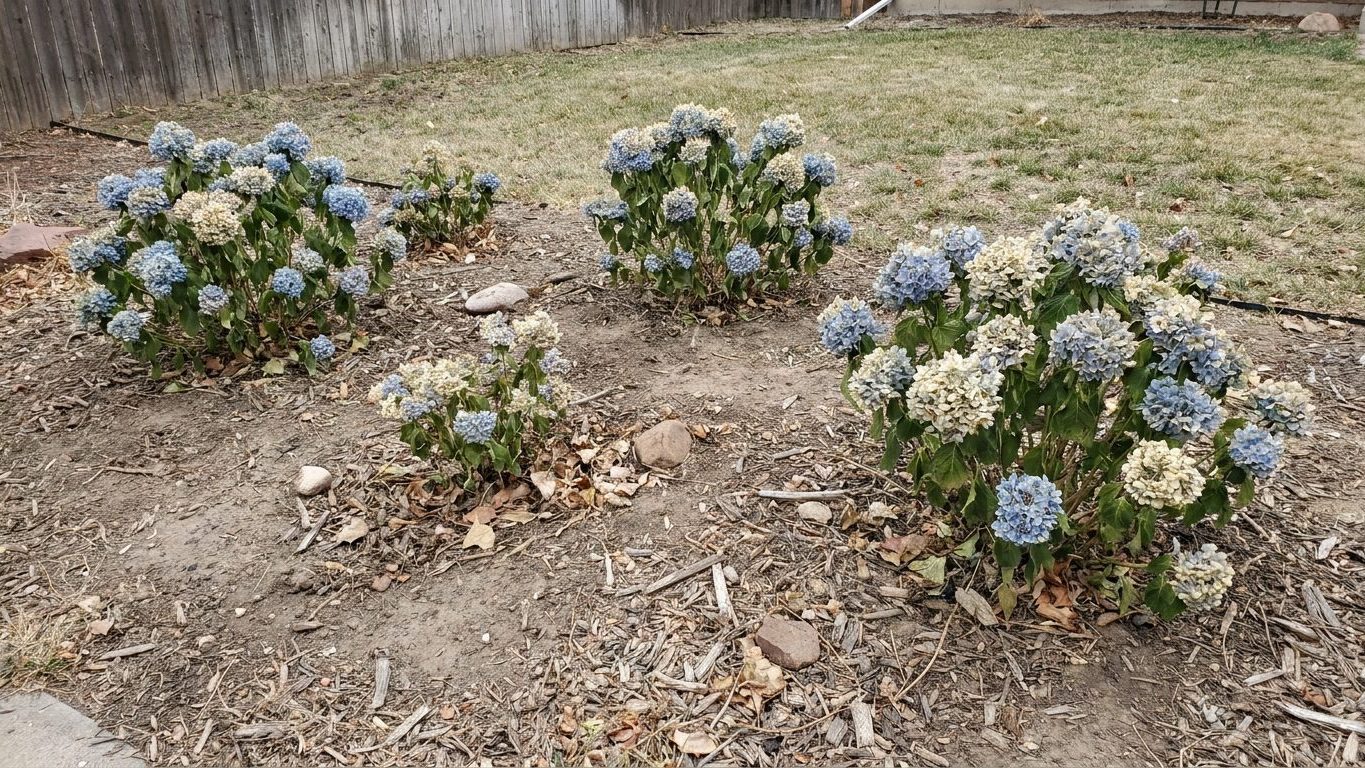
Hydrangeas in a Mississippi home landscape

NOAA NCEI 1991-2020 Climate Normals puts Jackson’s last spring frost between March 6 and March 22, with the first fall frost landing November 7 to November 22. Mississippi sits in USDA Plant Hardiness Zone Map zones 7b to 9a, mild enough that most hydrangeas here rarely see true winter dieback.

Those two frost windows, not the month on a wall calendar, are what actually run the hydrangea year in Mississippi.

  • Dormancy: from leaf drop into early March, before the last spring frost window opens, is the one safe stretch to move or divide a hydrangea with its roots undisturbed.
  • Planting: set new shrubs in the ground either in the weeks right after the last spring frost window closes or once the first fall frost window has passed, so roots settle without summer heat stress.
  • Leaf-out: expect new growth within two to three weeks after the last spring frost window passes, once soil warms past that March 6 to March 22 mark.
  • Bud set and bloom: flower buds swell through late spring and open by early summer, roughly six to eight weeks past the last frost window.
  • Pruning: cut spent blooms right after flowering fades, well ahead of the November frost window, so next year’s buds have time to form and harden.
  • Feeding: stop fertilizing about eight weeks ahead of the first fall frost window, so soft new growth doesn’t get caught by cold.
  • Winter mulch: pile mulch over the root zone once the first fall frost window has passed, then pull it back as the last spring frost window nears.

Jackson’s dates can shift a week or two either way, so treat these as a starting point, not a fixed schedule.

Best Hydrangeas for Mississippi

Mississippi’s mild winters, sitting in USDA Plant Hardiness Zone Map zones 7b to 9a, matter less for hydrangeas than the state’s long, humid summer heat. Heat and humidity, not cold, sort out which kinds sail through the season and which sulk.

Old-wood bloomers carry the most risk here, since a warm February followed by a hard March freeze can strip next year’s flowers before they even open. New-wood bloomers and native species built for southeastern heat tend to shrug that off.

Kind Verdict here Why
Bigleaf (mophead, lacecap) Grows well but flowering can be unreliable Blooms on old wood, so a late freeze after a warm spell can wipe out the buds
Panicle Thrives, one of the more reliable choices Blooms on new wood and tolerates full sun and summer heat
Oakleaf Thrives, a native of the Southeast Evolved for this region’s heat and humidity, tolerates part shade to sun
Smooth Does well Blooms on new wood, forgiving of hard pruning and Mississippi’s heat
Climbing Struggles in most of the state Prefers cooler, less humid climates than the Deep South offers

Mountain hydrangea and the newer reblooming bigleaf cultivars are worth a look too, but the other kinds are on their own pages.

When to Plant, Prune and Feed Hydrangeas in Mississippi

Three windows matter more than any other date on the hydrangea calendar here, and each one is set by counting backward or forward from Jackson’s frost dates.

Miss the feeding cutoff or prune an old-wood type too late, and you’re trading this year’s convenience for next year’s flowers.

Task Window here Counted from
Planting Weeks right after the last spring frost, or once the first fall frost has passed March 6 to March 22 last frost, or after the November 7 to November 22 first frost
Pruning (old wood) Right after bloom fades, by late summer Well ahead of the November 7 to November 22 first fall frost window
Feeding cutoff Roughly eight weeks before first frost Counting back from November 7, the earliest date in the fall frost window

The feeding cutoff is the one gardeners miss most, since a late September fertilizer push often pushes out soft growth that frost damages within weeks.

Hydrangeas Problems in Mississippi and What Causes Them

No blooms on an otherwise healthy shrub

Dense green shrub with full, uniform foliage and vigorous leafy shoots, but stems bare of any flower buds or petals — no color spots, just unbroken gr

NOAA NCEI 1991-2020 Climate Normals shows Jackson’s last spring frost can land as late as March 22, well after a mild February tricks bigleaf buds into swelling early. Wait to prune until you see which wood is actually alive, and check the state’s variety page before assuming the shrub is done.

Leaves scorched on the sunny side

Leaves with brown, crispy, papery patches along their edges and tips on the side facing the sun, while the shaded side stays green; scorched areas loo

Mississippi’s long, intense summer sun burns the edges of hydrangea leaves fastest on shrubs planted in full afternoon exposure. Move new plantings to morning sun with afternoon shade, and mulch to keep roots cooler through July and August.

Wilting despite damp soil

Leaves and stems drooping and limp, hanging downward or folding inward, with a dull, slightly faded green color instead of glossy turgid green, even t

Heavy clay and high summer humidity together can suffocate hydrangea roots even when the surface looks dry. Work in compost at planting time and skip daily shallow watering in favor of a deeper soak twice a week.

Mississippi North to South: How the Dates Shift

Mississippi runs nearly 350 miles top to bottom, and frost timing loosens the further south and closer to the Gulf you go.

  • North Mississippi (around Tupelo and Oxford): frost lingers later into spring and arrives earlier in fall, so plant and prune a little later than the Jackson dates suggest.
  • Central Mississippi (around Jackson and Meridian): this is the reference zone the frost windows above are built on.
  • South Mississippi and the Gulf Coast (around Hattiesburg and Biloxi): milder winters push the last frost earlier and the first fall frost later, stretching the growing season on both ends.

Check the state’s own calendar page for the month by month breakdown once you know which end of Mississippi you’re gardening in.

Mississippi Extension Offices and County Contacts

The 7b to 9a range covers a lot of ground, so the fastest way to pin down your own frost dates and soil is a call to your county’s extension office. Mississippi State University Extension keeps a directory of every county office in the state.

  • Your county extension office: soil test results and local frost timing for your exact address.
  • The state’s hydrangea calendar: the full month by month rundown for planting, pruning and feeding.
  • Which hydrangeas hold up here: a deeper look at bloom color, sun needs and disease resistance by variety.

This month, that means checking whether you’ve already stopped feeding, since the cutoff eight weeks ahead of the first fall frost window falls right around now.

Common questions

When should I prune hydrangeas in Mississippi?
Prune old-wood types like bigleaf right after the blooms fade, well before the November frost window, so next year’s buds have time to set. New-wood types like panicle and smooth are more forgiving and can be cut back in late winter instead.

Can hydrangeas survive Mississippi summers without afternoon shade?
Some can, but most do better with morning sun and afternoon shade, since full sun through a Mississippi July and August scorches leaf edges on many varieties. Panicle hydrangeas tolerate the most direct sun of the common types.

Do I need to protect hydrangeas from frost in Mississippi?
Established hydrangeas rarely need frost protection in most of the state, since winters here are mild. The real risk is a late freeze after an early warm spell damaging buds that have already started to swell, which affects flowering more than plant survival.

Growing Hydrangeas in Massachusetts: Dates and Varieties

Growing Hydrangeas in Massachusetts: Dates and Varieties

Plant after Boston’s last spring frost clears in early April, lean on panicle or smooth hydrangeas if you garden inland or in the Berkshires, and save bigleaf mopheads for the milder coastal stretch near the harbor. The state’s 5a to 7b hardiness spread means the same shrub can thrive in one town and sulk thirty miles away.

Hydrangeas Care Calendar for Massachusetts

Hydrangeas in a Massachusetts home landscape

Boston’s last spring frost falls April 1 to April 8 and its first fall frost lands November 3 to November 14, per NOAA NCEI’s 1991-2020 Climate Normals, and that gap decides when a hydrangea can go in the ground, against the state’s 5a to 7b hardiness range on the USDA map.

  • Dormancy: the safe window to move or divide a shrub, anytime between the first fall frost and the last spring frost.
  • Late-winter pruning: cut back panicle and smooth types in the weeks before the last spring frost, April 1 to April 8 in Boston.
  • Spring planting: set new shrubs two to three weeks after the last spring frost, once the soil has warmed.
  • First feeding: feed as new leaves unfurl, roughly a month after the last spring frost.
  • Summer watering: give two deep soaks a week through the hottest stretch so bigleaf types don’t wilt by afternoon.
  • Fall mulch: pile four inches over the root zone within two weeks of the first fall frost, November 3 to November 14 in Boston.
  • Bud protection: wrap or cage bigleaf stems before the ground freezes solid, since next year’s flower buds are already set on this year’s wood.

Follow this order and a hydrangea planted this spring should carry its first full bloom by the second summer, whether it flowers on old wood or new.

Best Hydrangeas for Massachusetts

Not every hydrangea takes Massachusetts winters the same way. The state’s spread runs from the mild waterfront around Boston to cold inland valleys and the Berkshires, and that range decides which shrub blooms reliably and which one dies back most winters.

The USDA Plant Hardiness Zone Map’s 2023 update, built on the 1991-2020 normals, sets the state at 5a to 7b, with the Boston waterfront holding the mild end and the Berkshires anchoring the cold one, and that split separates the shrubs that shrug off winter from the ones that need coddling.

Kind Flowers on Zone fit here Sun
Bigleaf (mophead) Last year’s wood Best at the mild, coastal end Part shade
Panicle New wood Handles the full range Full sun
Smooth (‘Annabelle’ type) New wood Handles the full range Full sun to part shade
Oakleaf Last year’s wood Struggles at the cold, inland end Part shade

Climbing and mountain hydrangeas show up in Massachusetts gardens too, but the finer split on which selections hold up here belongs on the dedicated which ones page for the state.

When to Plant, Prune and Feed Hydrangeas in Massachusetts

NOAA NCEI’s 1991-2020 Climate Normals put Boston’s last spring frost at April 1 to April 8 and the first fall frost at November 3 to November 14, and every hydrangea task in the state counts forward or back from those two dates.

Planting and feeding both track the spring date, pruning happens just before it, and winter protection follows the fall one, so a single pair of dates covers the whole task list.

Task Window here Counted from
Plant Two to three weeks after last frost Last spring frost, April 1 to April 8
Prune new-wood types Weeks just before last frost Last spring frost, April 1 to April 8
Feed About a month after last frost Last spring frost, April 1 to April 8
Mulch and protect Within two weeks of first fall frost First fall frost, November 3 to 14

Bigleaf owners should skip the pruning line entirely, since last year’s wood already carries this year’s buds, and any cut there removes the coming bloom.

Hydrangeas Problems in Massachusetts and What Causes Them

No flowers despite a healthy shrub

Shrub appears lush and green with abundant foliage, but stems terminate in bare tips or small leaf clusters where flower buds should be; no colour, no

Bigleaf hydrangeas set next year’s flowers on old wood, and a cold pocket in the Berkshires or a pruning cut at the wrong time removes them before they open. Skip fall or spring pruning on this type and see the what goes wrong page for pest causes too.

Stems dead to the ground each spring

Woody stems are brown to grey-black, dry, and brittle, often shrunken or split along their length, standing leafless above a base of fresh green shoot

Inland and Berkshire winters sit at the cold end of the state’s 5a to 7b range, and bigleaf or oakleaf stems die back to the roots there even in a mild year. Panicle and smooth types sidestep this entirely since they rebuild from new wood anyway.

Buds browned by a late frost

Buds are shriveled and discoloured from pale tan to dark brown or black, with a soft, water-soaked or papery collapsed texture, sometimes edged in a d

A warm stretch can push buds open before the last spring frost window closes, and a snap freeze after that browns them overnight. Hold winter wrap in place until the date has safely passed rather than pulling it at the first mild afternoon.

Massachusetts North to South: How the Dates Shift

The frost dates above are Boston’s, and nowhere else in Massachusetts frosts on quite the same schedule.

  • Coastal Boston and the South Shore (mild end of the zone range): frost arrives latest in fall and leaves earliest in spring, giving bigleaf hydrangeas their best shot at keeping old-wood buds alive.
  • The Berkshires and the far inland west (cold end of the range): frost comes weeks earlier in fall and lingers later in spring, favoring panicle and smooth types that don’t depend on old wood.
  • The Connecticut River Valley (mid-range, low-lying): a corridor that drains cold air at night, so plantings there should track the later end of any window, not the earlier one.
  • The North Shore and Merrimack Valley (near-coastal but wind-exposed): close enough to water to soften frost dates, but open enough that winter wind, not cold alone, burns bigleaf buds.

Check the state calendar page for the dates that match your own town more closely than a single airport station can.

Massachusetts Extension Offices and County Contacts

Massachusetts’ 5a to 7b range is a starting point, not a forecast for your own yard, and UMass Extension tracks the local frost pockets and soil the state map can’t capture.

  • Your state page: the frost dates and pruning window for Massachusetts.
  • Which ones hold up here: the fuller rundown of bigleaf, panicle, smooth, oakleaf and climbing hydrangeas in the state.
  • What goes wrong here: pests and disease on Massachusetts hydrangeas, deeper than the cold-driven issues covered above.

This month, hold off on feeding and let new growth harden before the first fall frost reaches Boston in early November.

Common questions

Do hydrangeas need winter protection in Massachusetts?

Bigleaf types generally do, especially inland and in the Berkshires where the zone range dips toward 5a. Panicle and smooth types usually get through winter without any wrap.

When is it safe to plant hydrangeas in Massachusetts?

Wait two to three weeks past Boston’s last spring frost, April 1 to April 8, and push that later if you garden inland or in the hills where frost lingers longer.

Can hydrangeas survive a Massachusetts winter without mulch?

Panicle and smooth types usually can. Bigleaf and oakleaf risk stem dieback without a mulch mound over the crown, especially where winters bottom out near the cold end of the state’s range.

Growing Hydrangeas in Maryland: Dates and Varieties

Growing Hydrangeas in Maryland: Dates and Varieties

Hydrangeas grow well across most of Maryland, though the state’s frost dates split into distinct windows depending on where you garden. USDA hardiness zone runs 5b to 8a, spring frost lifts between April 3 and April 16 near Baltimore, and fall frost returns October 26 to November 5. Panicle and smooth types tolerate the whole range easily. Bigleaf types need the mildest pockets, mainly near the coast.

Hydrangeas Care Calendar for Maryland

Hydrangeas in a Maryland home landscape

The gardening year in Maryland runs on that frost bracket, not the calendar month, and NOAA NCEI 1991-2020 Climate Normals puts the last spring frost near Baltimore between April 3 and April 16, with the first fall frost returning October 26 to November 5.

  • Dormancy: from January through early March, roots move safely while the plant sleeps.
  • Planting: set new shrubs two to three weeks after the last frost near Baltimore, once soil has warmed.
  • Spring flush: new leaves push out through April and May as frost risk fades.
  • Bud set: mophead and lacecap types form next year’s flower buds on the current season’s wood by late summer.
  • Peak bloom: panicle and smooth types flower through July and August in the Maryland heat.
  • Frost prep: mulch heavier as the October 26 to November 5 window near Baltimore approaches.
  • Winter rest: leave stems standing through the cold months for extra bud protection.

Every step above reads off that same frost bracket, no matter which county you garden in.

Best Hydrangeas for Maryland

The USDA Plant Hardiness Zone Map lists Maryland at 5b to 8a, a spread wide enough that a shrub thriving on the Eastern Shore can struggle in Garrett County’s colder pockets.

Panicle and smooth hydrangeas flower on new wood, so a late frost near Baltimore, April 3 to April 16, rarely costs them a season. Bigleaf and oakleaf set buds on old wood and lose flowers when a hard freeze catches them after they’ve swelled.

Kind Flowers on Verdict here Why
Panicle New wood Reliable statewide Blooms after the frost risk near Baltimore has passed
Smooth New wood Reliable statewide Same new-wood habit, shrugs off a late freeze
Bigleaf Old wood Best near Baltimore and the Eastern Shore Buds swell early, a hard freeze after April 3 can wipe out the flower crop
Oakleaf Old wood Holds up in most counties Sturdier buds than bigleaf but still exposed in a late snap

Reblooming bigleaf varieties push a second flush from new wood if the first buds freeze, which softens the risk near Baltimore but not in Garrett County’s colder valleys. The other kinds are on their own pages.

When to Plant, Prune and Feed Hydrangeas in Maryland

Three dates decide most of the hydrangea year in Maryland: when to plant, when to prune, and when to feed. All three count backward or forward from the same frost bracket.

NOAA NCEI 1991-2020 Climate Normals sets the last spring frost near Baltimore at April 3 to April 16, so planting and feeding both wait until that risk has passed. Pruning timing depends on whether a shrub blooms on old or new wood.

Task Window here Counted from
Plant Two to three weeks after last frost, so mid to late April near Baltimore Last spring frost, April 3 to April 16
Feed Once new growth is a few inches long, into May Same spring frost window
Prune, new-wood types While dormant, January through early March Ahead of spring growth
Prune, old-wood types Right after bloom fades, before early fall Ahead of the October 26 to November 5 fall frost

Stop feeding by midsummer so new growth has time to harden off before the October 26 to November 5 fall frost near Baltimore reaches the shrub. The month-by-month calendar page walks through each of these tasks in order.

Hydrangeas Problems in Maryland and What Causes Them

Buds killed by a late spring freeze

Small rounded buds turned brown to black, shriveled and dry, papery or mushy-soft depending on freeze severity, often blackened at the tips first, may

Bigleaf and oakleaf hydrangeas swell their old-wood buds early, and NOAA NCEI 1991-2020 Climate Normals puts the last spring freeze near Baltimore at April 3 to April 16, a window that can still kill those buds. Cover exposed shrubs on a forecast freeze night, and see the problems page for reblooming options.

Leaf scorch through midsummer

Leaf edges and tips turning tan to brown and crispy, with a yellow halo between the dead margin and the still-green center, texture dry and papery, so

Maryland summers push hydrangea leaves into wilt and brown edges when afternoon sun and dry soil combine, especially on bigleaf types planted in full exposure. Move new plantings to part shade and mulch deep, and check the county extension office for local watering guidance.

No bloom on an otherwise healthy shrub

Full, glossy green foliage covering the shrub with no flower clusters anywhere, stems and leaves plump and vigorous-looking, but bare where flower hea

A hard pruning at the wrong time, or a freeze after buds have set, removes the wood that would have flowered that year on old-wood types. Prune old-wood hydrangeas right after bloom, never in fall or winter, to protect next year’s flowers.

Maryland North to South: How the Dates Shift

Maryland’s frost dates and hardiness zone don’t apply evenly from Garrett County to the tide flats of the Eastern Shore, and that gap matters more for bigleaf hydrangeas than for panicle or smooth types.

  • Western Maryland (Garrett, Allegany): mountain elevation pushes the last frost weeks later than the Baltimore date and shortens the bloom season for old-wood types.
  • Central Maryland and the Piedmont (Baltimore, Frederick, Howard): this is the zone the state’s frost dates and the 5b to 8a range from the USDA Plant Hardiness Zone Map are built around.
  • Southern Maryland and the Eastern Shore (Calvert, St. Mary’s, Talbot): milder winters and a longer frost-free stretch favor bigleaf and reblooming types.

None of these swaps a hard date for another, they only shift which end of the state’s range applies, so check the state page above before setting a Western Maryland planting date by a Baltimore calendar.

Maryland Extension Offices and County Contacts

University of Maryland Extension, the state’s land-grant service, is the fastest way to confirm frost dates and bud damage for your exact county before you plant or prune.

  • Your state page: the frost dates and the pruning window where you live.
  • Which ones hold up here: the deeper variety guide for Maryland conditions.
  • University of Maryland Extension: county office contacts and current pest and freeze alerts.

Common questions

Can I plant hydrangeas in Maryland right now?

It depends on the season. Outside the two to three weeks after the last frost near Baltimore, hold off and wait for that window, since a newly planted shrub has little cold tolerance until its roots settle in.

Why didn’t my bigleaf hydrangea bloom this year?

A late freeze inside the April 3 to April 16 window near Baltimore likely killed the old-wood buds before they opened, or a fall or winter pruning removed the wood that would have flowered.

Do hydrangeas survive winter in Western Maryland?

Panicle and smooth types generally do, since they rebuild their flowering wood each spring. Bigleaf types face more risk in Garrett and Allegany counties, where the frost season runs longer than near Baltimore.

Growing Hydrangeas in Manitoba: Dates and Varieties

Growing Hydrangeas in Manitoba: Dates and Varieties

Manitoba tests any hydrangea. Winnipeg’s growing season runs from a mean last frost on May 23 to a mean first frost on September 22, a four-month stretch that sits inside Canadian hardiness zone 3b. That rules out the shrubs sold as sure bloomers everywhere else. Panicle and smooth types manage here. Bigleaf mostly does not, unless buried for winter.

Hydrangeas Care Calendar for Manitoba

Hydrangeas in a Manitoba home landscape

Winnipeg’s growing season, the reference for southern Manitoba, runs from a mean last spring frost on May 23 to a mean first fall frost on September 22, per Environment and Climate Change Canada, a four-month window inside Canadian hardiness zone 3b that decides which hydrangea wood can ripen before cold returns.

  • Dormancy: the one safe window to lift or divide a hydrangea, from snowmelt until the buds swell, roots undisturbed.
  • Planting: wait two to three weeks past the mean last frost so the soil has warmed before roots go in.
  • Pruning: cut panicle and smooth types back hard while still dormant, before new growth pushes in spring.
  • Feeding: a first light feed once new leaves unfold, a few weeks after the last frost has passed.
  • Watching for buds: through midsummer, checking that new wood is setting flower heads on schedule.
  • Winter protection: mound mulch over the crown and wrap tender stems before the mean first frost arrives.

Every one of those windows moves with the weather in a given year, not with a date on the wall.

Best Hydrangeas for Manitoba

Not every hydrangea on a Manitoba garden center shelf is built for this province. Natural Resources Canada maps Winnipeg at zone 3b, and that number is the line between shrubs that shrug off winter and shrubs that need to be dug up or buried.

The split comes down to where each kind sets its flower buds. Types that bloom on the current year’s growth start over every spring, so a hard winter costs height, not flowers. Types that bloom on last year’s wood lose their blooms whenever that wood dies back.

Kind Flowers on Verdict in zone 3b Why
Panicle New wood Reliable Tops may die back, new growth still flowers
Smooth New wood Reliable Cut to the ground each spring and still blooms
Bigleaf Old wood, mostly Struggles Old wood rarely survives an unburied winter
Oakleaf Old wood Marginal Same old-wood exposure, needs heavy winter cover
Climbing Old wood Marginal Slow to establish, exposed stems suffer in open winters

Mountain hydrangea and other less common kinds are on their own pages, since Manitoba winters treat their old wood about as roughly as they treat bigleaf’s.

When to Plant, Prune and Feed Hydrangeas in Manitoba

Manitoba gives a hydrangea grower three real deadlines each year, all counted from the same two mean dates tracked by Environment and Climate Change Canada, May 23 in spring and September 22 in fall.

Pruning splits by type more than by date. New-wood shrubs take a hard late-winter cut, while old-wood types are pruned right after their flowers fade, never in spring.

Task Window here Counted from
Plant Two to three weeks after the mean last frost May 23
Prune new wood Late winter, while still dormant Before May 23
Feed A few weeks after last frost, once leaves unfold May 23
Stop feeding Six to eight weeks before the mean first frost September 22

Old-wood pruning has no fixed slot on this table, since it depends on when a given plant finishes blooming rather than on the frost dates, so the variety pages cover it directly.

Hydrangeas Problems in Manitoba and What Causes Them

No blooms after a hard winter

Healthy green foliage and stems present but entirely lacking flower buds or blooms; stem tips may show brown, shriveled, or blackened bud scars where

Bigleaf and other old-wood types set next year’s flower buds on stems that Manitoba’s zone 3b cold usually kills back to the snow line. The wood survives, the buds inside it do not. Choose a new-wood type instead, or bury the crown deep enough that it never freezes.

Stems dead to the ground each spring

Stems are brown to grey-black, dry, and brittle, often splitting or peeling at the bark, collapsing limply or snapping easily at soil level; new growt

Even panicle and smooth hydrangeas can lose their top growth when a winter runs short on snow cover, since snow is the insulation and bare ground offers none. The shrub still blooms, because it flowers on new wood, but height resets every year. A mulch mound over the crown limits the damage.

Spring growth burned back by a late frost

The mean last frost of May 23, per Environment and Climate Change Canada’s Winnipeg normals, is a midpoint, not a guarantee, so leaves that push out early meet a freeze in roughly half the years on record. Hold off feeding and uncovering tender stems until the risk has clearly passed.

Manitoba North to South: How the Dates Shift

The two frost dates named above describe Winnipeg and the Red River Valley around it, not the whole province, and Manitoba’s other regions shift away from that reference in one direction only, later.

  • The Red River Valley (Winnipeg, Portage la Prairie, Morden): the closest match to the May 23 and September 22 dates, the longest season in the province.
  • The Interlake and eastern lake country: cool water nearby holds spring back and can push the last frost later than the Winnipeg mean.
  • The Parkland and western uplands: higher ground and more open exposure trim days off both ends of the growing season.
  • The North (Thompson, The Pas, and beyond): frost dates run weeks behind Winnipeg’s, and the hardiness zone drops with them.

Anyone outside the Red River Valley does better treating the Winnipeg dates as an early estimate and watching local conditions instead.

Manitoba Extension Offices and County Contacts

Manitoba Agriculture is the province’s extension service and a fair starting point before relying on province-wide frost averages alone for your own yard.

  • Your local Manitoba Agriculture office: ask about frost patterns and soil conditions specific to your municipality.
  • Which ones hold up here: the variety-by-variety page on this site for old-wood versus new-wood choices.
  • What goes wrong here: the pest and disease page for hydrangeas in this climate.

With the mean first frost just days away as of this week, this is the time to finish mulching, not to start pruning.

Common questions

Can hydrangeas survive winter in Manitoba without protection?

Panicle and smooth types generally do, since they flower on new wood and simply regrow from the base. Bigleaf, oakleaf, and climbing types need mulch mounds or full burial to make it through a zone 3b winter with their old wood intact.

What is the best time of year to plant a hydrangea in Manitoba?

Two to three weeks after the mean last frost of May 23 gives roots warm enough soil to establish before the short season moves on. Fall planting leaves too little time before the mean first frost on September 22.

Why does my hydrangea grow but never flower?

In most Manitoba yards, that shrub is an old-wood type whose flower buds died over winter while the roots survived. Switching to a new-wood variety, or protecting the existing one far more heavily, usually solves it.

Growing Hydrangeas in Kansas: Dates and Varieties

Growing Hydrangeas in Kansas: Dates and Varieties

Kansas gardeners can grow hydrangeas successfully, but the state’s spread from cooler northwest counties to milder southeast ones means the right variety and the right week matter more than they would in a single-zone state. Panicle and smooth types are the safest bet almost everywhere.

Hydrangeas Care Calendar for Kansas

Hydrangeas in a Kansas home landscape

Topeka’s last spring frost lands between April 4 and April 18, and the first fall frost arrives between October 23 and November 2, according to NOAA NCEI’s 1991-2020 Climate Normals, with the state itself spanning USDA hardiness zones 5b to 7a.

  • Dormancy: from late fall through late winter, before buds swell, is the one safe window to move or divide a hydrangea here.
  • Planting: wait two to three weeks after the last spring frost, so mid to late April around Topeka, once the soil has warmed.
  • First feeding: apply once new leaves unfold, roughly a month after the last frost date.
  • Pruning: timing splits by type, old-wood bloomers right after their flowers fade, new-wood types in late winter before the last frost.
  • Summer watering: soak the root zone weekly once daytime heat settles in, from June through the driest weeks of August.
  • Mulching: lay two to three inches of mulch two to three weeks before the first fall frost, so early to mid October.
  • Winter cover: wrap or mound mulch over the crown before the first hard freeze, especially for bigleaf types in the state’s colder 5b pockets.

Every one of these windows shifts with your county, so treat the Topeka dates as a starting point, not the final word for your yard.

Best Hydrangeas for Kansas

USDA’s Plant Hardiness Zone Map puts the state at 5b to 7a, ruling out hydrangeas bred for warmer climates and rewarding the toughest kinds instead.

Smooth and panicle hydrangeas bloom on new wood, so a late freeze can’t erase the season. Bigleaf types bloom on old wood and stall out more years than not in the state’s cooler pockets.

Kind Flowers on USDA zones Sun
Smooth (Annabelle-type) New wood Fits the whole 5b-7a range Part shade to morning sun
Panicle New wood Fits the whole 5b-7a range Full sun
Bigleaf Old wood Struggles below 6a Morning sun, afternoon shade
Oakleaf Old wood Reliable at 6a and warmer Part shade

The other kinds, climbing and mountain hydrangeas among them, are on their own pages, since neither one has much of a track record across this state’s zone spread.

When to Plant, Prune and Feed Hydrangeas in Kansas

Three dates decide most of the season here: when to plant, when to prune, and when to feed. Each one counts forward or backward from NOAA NCEI’s Topeka frost windows, April 4 to 18 in spring and October 23 to November 2 in fall.

Pruning splits by bloom type, so check which kind you’re holding before you cut. Get the timing wrong and you lose a whole season of flowers, not just a few branches.

Task Window here Counted from
Planting Late April through mid-May Two to three weeks after the last spring frost
First feeding Early to mid-May About a month after the last spring frost
Pruning (new-wood types) Late February to mid-March Four to six weeks before the last spring frost
Mulching for winter Early to mid-October Two to three weeks before the first fall frost

Old-wood bloomers like bigleaf follow a different clock entirely, pruned right after their flowers fade rather than by the calendar. The full month-by-month rundown lives on this state’s calendar page.

Hydrangeas Problems in Kansas and What Causes Them

No flowers after a hard winter

Bare, woody stems with visible frost-damaged buds—shriveled, brown, and dried at the tips instead of plump and green; overall plant looks intact but l

Bigleaf and other old-wood bloomers set next year’s flowers by late summer, so a hard freeze that slips past a thin layer of mulch kills the buds outright. Mound extra mulch over the crown before the first fall frost and skip fall pruning that removes those buds.

Leaves scorched by August heat

Leaf edges and tips turned crispy brown or tan, curling inward, with a papery, dry texture; interior of leaf may still show faded green or yellow, cre

Kansas summers push well past what most hydrangeas evolved for, and afternoon sun on a shallow root system shows up as brown, crisping leaf edges by mid-August. Move new plants to a spot with morning sun and afternoon shade, and water deeply rather than often.

Yellow leaves despite regular watering

Uniform pale yellow (chlorotic) leaf color, often starting between green veins, giving a mottled or marbled look; leaves remain soft and turgid rather

Much of the state sits on alkaline clay, and hydrangeas pull iron poorly from that kind of soil, which shows up as yellow leaves with green veins. A soil test through the local extension office settles whether the fix is iron or drainage.

Kansas North to South: How the Dates Shift

The 5b to 7a range cited above isn’t one climate, it’s a gradient across the state, and the Topeka dates above sit closer to the middle of it than either edge.

  • Northeast Kansas (Topeka, Kansas City, Lawrence): closest to the dates above, with the mildest, most reliable window for bigleaf types.
  • Western Kansas and the High Plains (Dodge City, Garden City, Colby): colder nights and constant wind push the safe planting window later in spring and the first frost earlier in fall.
  • South-central and southeast Kansas (Wichita, Pittsburg, the Oklahoma border): the mildest corner of the state, where the season runs longest and old-wood bloomers have the best odds.

None of these shifts show up on a statewide map, so a county-level check against the numbers above is worth the five minutes it takes.

Kansas Extension Offices and County Contacts

The 5b to 7a range and the Topeka frost dates above are a starting point, not a substitute for what’s happening in your own yard. K-State Research and Extension and your county office track local frost and soil data more closely than any statewide figure can, reachable at ksre.k-state.edu.

  • The month by month calendar: the full year mapped out week by week for this state, beyond the three windows above.
  • Which ones hold up here: a deeper look at bigleaf, panicle, smooth and oakleaf varieties and how each one performs across the state.
  • What goes wrong here: the pests and diseases behind spotted leaves, wilting stems and stunted growth.

Common questions

Can hydrangeas survive Kansas winters?

Yes, panicle and smooth types handle the state’s 5b to 7a range without protection, while bigleaf needs mulch over the crown before the first fall frost.

What is the best hydrangea for Kansas heat?

Panicle hydrangeas tolerate full sun and summer heat better than the other kinds, since they bloom on new wood and don’t stall out after a stressful season.

When should I plant hydrangeas in Kansas?

Two to three weeks after the last spring frost, once the soil has warmed, which lands in late April to mid-May around Topeka.

Growing Hydrangeas in Iowa: Dates and Varieties

Growing Hydrangeas in Iowa: Dates and Varieties

Plant hydrangeas in Iowa in spring once the last frost has passed, or in early fall before the ground cools, and lean toward panicle or smooth types for reliable bloom. The state spans USDA zones 4b to 6a, cold enough that bigleaf varieties often struggle unless they flower on new wood. Timing here matters more than it does further south.

Hydrangeas Care Calendar for Iowa

Hydrangeas in a Iowa home landscape

Des Moines counts on its last spring freeze landing between April 12 and April 24, and its first fall freeze arriving October 14 to October 25, per NOAA NCEI 1991-2020 Climate Normals. Iowa sits in zone 4b to 6a, and that frost window decides nearly everything a hydrangea does here.

  • Dormancy: the one safe window to move or divide a plant, roots undisturbed before spring growth starts.
  • Planting: two to three weeks after the last frost, once the soil has warmed enough to work.
  • First feeding: three to four weeks after the last frost, right as new growth pushes out.
  • Bud watch: through the six weeks following the last frost, since a late cold snap can still nip new buds.
  • Summer care: eight to twelve weeks after the last frost, with deep watering through the driest stretch of the year.
  • Fall prep: four to six weeks before the first fall freeze, the last feeding and a fresh layer of mulch.
  • Winter protection: at the first fall freeze, mulch or wrap tender types before the cold sets in for good.

Every step above counts forward from Des Moines dates, and gardeners north of the city should treat the fall end of that list as arriving sooner.

Best Hydrangeas for Iowa

The USDA Plant Hardiness Zone Map puts Iowa at 4b to 6a, cold enough to rule out anything that needs a full zone 7 winter to survive outdoors. Panicle and smooth hydrangeas flower on new wood grown fresh each spring, so a hard winter barely touches next year’s bloom.

Bigleaf hydrangeas set most of their buds on last year’s wood, and an average Iowa winter kills those buds before they ever open. Oakleaf sits near the edge of its own range here and needs a sheltered spot to reliably flower.

Kind Verdict here Why
Panicle Reliable Flowers on new wood, shrugs off a 4b to 6a winter
Smooth Reliable Flowers on new wood, dies back and returns each spring
Bigleaf Struggles Buds form on last year’s wood, often killed by winter cold
Oakleaf Marginal Sits near the edge of its hardiness range, needs shelter

Climbing hydrangea and mountain hydrangea are far less common in Iowa yards, and the other kinds are on their own pages.

When to Plant, Prune and Feed Hydrangeas in Iowa

NOAA NCEI Climate Normals put Des Moines’ last spring freeze between April 12 and April 24, and its first fall freeze between October 14 and October 25. Three dates built off those numbers decide most of the hydrangea year here.

Prune panicle and smooth hydrangeas in late winter to very early spring, before new growth starts, since they bloom on wood grown that same year. Bigleaf and oakleaf should only be pruned right after their flowers fade, or next year’s buds get cut away.

Task Window here Counted from
Planting 2 to 3 weeks after last frost Last spring freeze, April 12 to April 24
Pruning, new wood types Late winter to early spring Before growth starts
Last feeding 6 to 8 weeks before first fall freeze First fall freeze, October 14 to October 25

Feeding any later pushes soft new growth toward a freeze that can arrive as early as October 14. The month by month calendar for Iowa breaks the rest of the season down further.

Hydrangeas Problems in Iowa and What Causes Them

No flowers after a hard winter

Stems bear only green leaves with no blooms; where flowers should be, small buds are shriveled, dry, and brown instead of plump and green, or entirely

Bigleaf and oakleaf hydrangeas set buds on last year’s wood, and an ordinary Iowa winter low can kill those buds outright even when the shrub itself survives fine. Choose a panicle or smooth variety instead, or mulch bigleaf stems heavily each fall.

Leaf edges browned in midsummer

Leaves are green in the center with crisp, tan-to-brown margins outlining the outer edge; the browned tissue looks dry and papery, sometimes curling o

Scorched margins usually mean the roots dried out during a hot stretch, since heavy clay soil can crust and shed water instead of absorbing it. Water deeply once a week rather than lightly every day, and add mulch to hold moisture at the roots.

Buds killed by a late freeze

Buds appear blackened or dark brown at the tips, soft and water-soaked or shrunken and crumbly, failing to swell or open, in contrast to healthy plump

New growth pushes fast once temperatures warm, and a frost arriving after the April 12 to April 24 window can still catch tender buds off guard. Cover the shrub overnight whenever a late frost is forecast, since bare buds have no defense of their own.

Iowa North to South: How the Dates Shift

The USDA Plant Hardiness Zone Map puts Iowa at 4b to 6a already, and that alone signals the state is not one climate from border to border.

  • Northern Iowa: expect the last frost later in spring and the first fall freeze earlier, so plant a little later and stop feeding a little sooner.
  • Central Iowa: Des Moines sits here, and the frost dates already set for the capital apply closely.
  • Southern Iowa: the mildest corner of the state, with more room between frosts and a better shot at a marginal type like oakleaf.

The state page above already carries the Des Moines dates, and gardeners near either border should nudge the calendar a few days toward their own edge.

Iowa Extension Offices and County Contacts

Iowa State University Extension and Outreach runs an office in nearly every county, and its staff know local frost timing better than any statewide average.

  • Your state page: the frost dates and the pruning window where you live.
  • Which ones hold up here: the deeper variety comparison for Iowa yards.
  • What goes wrong here: pests and diseases specific to Iowa hydrangeas.

This month, check the stems for new buds before deciding whether last winter’s shrub survived.

Common questions

Do hydrangeas survive winter in Iowa?

Panicle and smooth types survive Iowa winters reliably since they flower on new wood each spring. Bigleaf and oakleaf types often survive the plant itself but lose their flower buds to the cold.

What is the best hydrangea for Iowa gardens?

Panicle hydrangea is the safest bet across the state’s 4b to 6a range, since winter cold cannot touch buds that haven’t formed yet on wood grown that same year.

When should I prune hydrangeas in Iowa?

Prune panicle and smooth types in late winter before growth starts. Prune bigleaf and oakleaf right after they finish flowering, well before the first fall freeze arrives.

Growing Hydrangeas in Indiana: Dates and Varieties

Growing Hydrangeas in Indiana: Dates and Varieties

In Indiana, hydrangeas go into the ground once frost risk passes in mid to late spring, and panicle and smooth types are the safer bet statewide, since winter cold routinely kills bigleaf’s flower buds. The zone runs 5b to 7a. Planting, pruning and feeding all follow that same frost clock, and where you sit inside the state shifts each date by a couple of weeks.

Hydrangeas Care Calendar for Indiana

Hydrangeas in a Indiana home landscape

NOAA NCEI 1991-2020 Climate Normals puts the last spring frost at Indianapolis between April 9 and April 21, the first fall freeze between October 21 and October 30, and the state’s hardiness zone at 5b to 7a, the span a hydrangea’s whole year has to fit inside.

  • Dormancy: from late fall into March is the one safe window to move a hydrangea, roots undisturbed by frost.
  • Planting: set new shrubs out two to three weeks after the last frost, once the soil has warmed enough to work.
  • Bud break: panicle and smooth types push new growth through April no matter what a late frost does, since they bloom on new wood.
  • Bloom: flowers open from June through August, with panicle types often still going into September.
  • Deadheading and light shaping: cut spent panicle and smooth blooms back through midsummer without touching next year’s flowers.
  • Fall prep: stop feeding by August and mulch the root zone by mid-October, ahead of the first freeze.

Skip that mid-October mulching and an early hard freeze can still reach roots that haven’t hardened off for winter.

Best Hydrangeas for Indiana

The USDA Plant Hardiness Zone Map puts the state at 5b to 7a, colder toward the north and milder near the Ohio River in the south. That range decides which hydrangeas shrug off winter and which ones lose their flower buds.

Types that bloom on new wood come back reliably no matter how cold the winter runs, since the plant regrows its flowering stems each spring. Types that bloom on old wood depend on those stems surviving the freeze intact, and in zone 5b that’s a gamble most winters.

Kind Flowers on Cold tolerance here Sun
Panicle New wood Thrives statewide Full sun to part shade
Smooth New wood Thrives statewide, native to the region Part shade
Oakleaf Old wood Holds up well with a wind-sheltered spot Part shade
Bigleaf Old wood, mostly Struggles, buds often killed over winter Part shade
Climbing Old wood Hardy but slow to establish Part shade to shade

Mountain hydrangea and the newer reblooming bigleaf cultivars show up in nurseries here too, but the page on which hydrangeas hold up best goes through those options in more depth.

When to Plant, Prune and Feed Hydrangeas in Indiana

Three windows matter more than the rest of the calendar, and all three count backward or forward from the same two frost dates already on the table.

Planting waits for warm soil, pruning waits for dormant wood, and feeding has a hard stop before the shrub needs to shut down for winter.

Task Window here Counted from
Planting Late April into mid-May Two to three weeks past the April 9 to 21 last frost
Pruning panicle and smooth Late winter into March Before new growth starts, ahead of the April frost window
Feeding Spring growth start through early September Stopping roughly six weeks before the October 21 first freeze

Bigleaf and oakleaf run on a different pruning clock since they carry next year’s buds through winter on this year’s stems, and cutting them back in March removes the flowers before they open.

Hydrangeas Problems in Indiana and What Causes Them

No flowers on a healthy shrub

Dense green foliage with no buds or blooms anywhere on the plant; stems and leaves appear normal, glossy to matte green, full shape, but entirely lack

This is usually bigleaf hydrangea losing its flower buds to a hard winter, since zone 5b winters routinely dip past what those buds tolerate. Switching to panicle or smooth solves it for good.

Leaves scorched on the sunny side

Leaf edges and tips on the sun-facing side turn crispy brown or tan, often with a yellow halo between the dead tissue and the still-green base; textur

Full afternoon sun combined with a dry stretch in July or August burns leaf edges on most types except panicle. Moving the shrub to part shade or adding a deeper mulch ring usually fixes it the following season.

Wilting by midafternoon in summer

Leaves and soft stems droop and hang limply, losing their upright turgor; foliage looks dull and slightly darker or grayish-green instead of glossy, e

Heavy clay soil common across central Indiana holds water near the surface and starves roots below, so the shrub wilts even after rain. Working compost into the planting hole before setting a new shrub out helps more than watering more often.

Indiana North to South: How the Dates Shift

The frost dates above are anchored to Indianapolis, and the state stretches far enough that both ends run on their own clock.

  • The northern counties (near Lake Michigan and the Michigan line): spring arrives later and fall frost lands sooner, so both planting and the fall mulching deadline shift earlier in the season.
  • Central Indiana (the Indianapolis corridor): this is the reference point the dates above were built around, with no adjustment needed.
  • The southern counties (along the Ohio River): frost lets go earlier in spring and holds off longer in fall, stretching the growing season on both ends.

The state’s calendar page breaks that shift down month by month for whichever county comes closest to home.

Indiana Extension Offices and County Contacts

The zone and frost figures above cover the whole state, but soil, wind exposure and even microclimate in a single yard can move the real dates around.

  • Your county extension office: local staff know the frost pattern for that specific area better than a statewide average can.
  • Which ones hold up here: a deeper look at cultivars beyond the five kinds covered above.
  • Purdue Extension: the state’s land-grant service for soil testing and plant questions county by county.

Common questions

Can I grow bigleaf hydrangea anywhere in Indiana?

It survives in sheltered spots, especially in the milder southern counties, but flower buds get killed by winter cold often enough that panicle or smooth types are the safer choice for most yards.

When is the safest time to plant a new hydrangea here?

Two to three weeks after the last spring frost, once soil has warmed, gives roots the longest stretch to establish before summer heat arrives.

Do all hydrangeas need pruning every year?

No. Panicle and smooth types tolerate a hard cut back in late winter, while bigleaf and oakleaf only need spent blooms removed, since they set next year’s buds on this year’s growth.

Growing Hydrangeas in Idaho: Dates and Varieties

Growing Hydrangeas in Idaho: Dates and Varieties

Yes, hydrangeas grow in Idaho, but which type and when you plant it depends heavily on where in the state you garden. USDA hardiness zones here stretch from 3b to 7b, and Boise’s frost-free season runs roughly late April to early October. Panicle and smooth hydrangeas handle that swing well. Bigleaf and oakleaf are a gamble outside the mildest valleys.

Hydrangeas Care Calendar for Idaho

Hydrangeas in a Idaho home landscape

Boise’s last spring freeze runs April 23 to May 7 and its first fall freeze lands October 7 to October 21, per NOAA NCEI 1991-2020 Climate Normals for station USW00024131. Idaho’s USDA hardiness zones span 3b to 7b, and that gap decides whether a hydrangea overwinters or dies back to the ground.

  • Dormancy: from late fall through late winter, while the shrub is leafless, is the safe stretch to transplant or divide without disturbing new growth.
  • Planting: wait two to three weeks after the last frost window closes, so from mid-May into early June, once the soil has warmed.
  • Bud break: new leaves push out fast once nights stay above freezing, and any lingering cold in that April 23 to May 7 stretch can nip them.
  • Bloom: color builds through the warm months between the last spring freeze and the first fall freeze, roughly five months in the Boise valley.
  • Pruning: old-wood bloomers get cut back right after their flowers fade, new-wood types wait until late winter before growth resumes.
  • Feeding: one dose after leaf-out and one more in early summer, then stop so new growth has time to harden before the October freeze.
  • Fall prep: pile mulch over the root zone in the weeks before October 7 to October 21, since that is when the ground starts to lock up.

None of these dates are fixed. They are averages pulled from three decades of Boise weather, and a garden up in the mountains or down in a cold pocket will run later on both ends.

Best Hydrangeas for Idaho

NC State Extension Gardener Plant Toolbox lists panicle hydrangea at zones 3 to 8, a range wide enough to cover nearly every county in Idaho.

Bigleaf and oakleaf need zones 6 to 9 and 5 to 9, and both bloom on the previous year’s wood, so a late spring freeze in the 3b to 7b range can erase a season’s flowers before they open.

Kind Verdict here Why
Panicle Reliable statewide Zones 3 to 8, blooms on new wood, shrugs off late freezes
Smooth Reliable statewide Zones 3 to 9, blooms on new wood, tolerates the coldest pockets
Bigleaf Marginal in mild valleys only Zones 6 to 9, blooms on old wood, buds exposed most winters
Oakleaf Risky outside zone 6 and up Zones 5 to 9, blooms on old wood, needs a mild winter

Climbing hydrangea and mountain hydrangea are the other kinds, and they are on their own pages, since Idaho’s numbers for them are too thin to call a verdict here.

When to Plant, Prune and Feed Hydrangeas in Idaho

Idaho’s frost dates set three fixed points, and everything else counts outward from them. NOAA NCEI’s 1991-2020 Climate Normals put Boise’s last spring freeze at April 23 to May 7 and first fall freeze at October 7 to October 21.

New-wood bloomers like panicle and smooth take their pruning cue from the last frost, while old-wood types like bigleaf take theirs from the flowers themselves, not the calendar.

Task Window here Counted from
Planting Two to three weeks after the last frost, roughly mid-May to early June Last frost, April 23 to May 7
Pruning new-wood types Late winter, before growth resumes Four to six weeks before the last frost window
Pruning old-wood types Right after bloom fades, by mid-summer Bloom end, not a fixed date
Feeding, last round Six to eight weeks before the first fall freeze First frost, October 7 to October 21

Stop feeding by that last window, since fresh growth pushed too late has no time to harden before the ground freezes.

Hydrangeas Problems in Idaho and What Causes Them

No flowers after a mild-seeming winter

Bare branch tips with only small, tight, brownish-green leaf buds; no swollen flower buds present, no petals, no colour breaks — just leaves emerging

This is bud kill, not a dead plant. Old-wood bloomers set next year’s flowers by late summer, and any freeze inside the April 23 to May 7 window can kill those buds even while the stems stay green. Switch to a new-wood type instead.

Stems dying back to the ground every year

In the colder end of Idaho’s 3b to 7b range, winter cold routinely kills stems above the snow line, and the shrub regrows from the roots each spring. Treat it as a die-back perennial, mulch heavily, and expect a shorter bloom stalk.

Buds still closed when frost hits

Small, oval to rounded buds, tightly sealed with overlapping pale-brown or grey-green scales, no visible petal colour peeking through, surface firm an

Boise’s growing season runs roughly five months between frosts, and higher, colder parts of the state get far less. A late-blooming type simply may not finish before the first fall freeze arrives, so pick an earlier bloomer for a short-season yard.

Idaho North to South: How the Dates Shift

Idaho’s 3b to 7b range hides a lot of ground, and elevation moves faster than latitude here.

  • The Panhandle and lake country (Coeur d’Alene, Sandpoint): lake-moderated air softens the swings, and new-wood types establish here about as easily as anywhere in the state.
  • The Treasure Valley and Snake River Plain (Boise, Nampa, Twin Falls): this is the reference zone behind the frost dates above, and it carries the longest frost-free stretch in Idaho.
  • The mountains and high valleys (Sun Valley, McCall, Idaho Falls): elevation pushes the zone number down toward 3b and 4b, shortens the season on both ends, and narrows the safe list to the hardiest new-wood types.

The calendar sub-page above walks through all twelve months, but the shift from valley to mountain is the one number worth remembering before you buy a plant.

Idaho Extension Offices and County Contacts

Idaho’s 3b to 7b range and Boise’s frost dates are a starting point, not a guarantee for your yard. Elevation and local cold pockets change both numbers, and a county office can tell you what actually happens on your street.

  • University of Idaho Extension: the statewide office for shrub care, soil questions, and local publications.
  • Your county extension office: the closest source for frost records and elevation-specific advice.
  • The planting and pruning calendar page: the month-by-month version of the three windows covered above, worth checking before you pick up a shovel this season.

Common questions

Can bigleaf hydrangeas survive Idaho winters?
Only in the mildest valleys, and only some years. Bigleaf’s zone 6 to 9 range brushes the warm edge of Idaho’s 3b to 7b span, and any freeze inside the April 23 to May 7 window can still kill the buds it set the summer before.

What is the best time to plant a hydrangea in Idaho?
Two to three weeks after the last spring frost clears. In the Boise area that falls between April 23 and May 7, so most years planting works out to mid-May into early June once the soil has warmed.

Do hydrangeas need shade in Idaho?
Afternoon shade helps most types get through the driest, hottest stretch of summer, though the exact answer depends on which kind you planted. The variety page on this site breaks that down type by type.

Growing Hydrangeas in Florida: Dates and Varieties

Growing Hydrangeas in Florida: Dates and Varieties

Florida splits into two hydrangea calendars. North Florida, anchored by Jacksonville, sees real frost and follows a spring-to-fall rhythm. Central and south Florida stay essentially frost-free and flip that rhythm, with winter as the main growing stretch and summer heat as the hard season. USDA zones span 8b to 11b, and where you sit in that range decides everything else.

Hydrangeas Care Calendar for Florida

Hydrangeas in a Florida home landscape

In Jacksonville, last spring frost runs February 16 to March 7 and first fall frost lands November 26 to December 13, per NOAA NCEI 1991-2020 Climate Normals, station USW00013889. Florida’s USDA zone spread of 8b to 11b means that window only holds for the north, since central and south Florida rarely freeze at all.

  • Dormancy: from December through February is the safe window to dig up or move a dormant hydrangea in north Florida.
  • Planting: set new shrubs two to three weeks after the last frost window closes, so mid to late March in Jacksonville.
  • Bud break: new leaves push within a month of that spring window, faster wherever soil warms early.
  • Bloom: flowers open through late spring into summer heat, and afternoon shade keeps petals from scorching.
  • Pruning: cut spent old-wood blooms right after flowering, never in fall, or next year’s buds go with them.
  • Slowdown: growth eases as nights cool toward the November 26 to December 13 frost window, and that is the cue to stop feeding.

That rhythm belongs to Jacksonville and the northern tier, since south of Ocala the ground rarely freezes and the season runs almost year round instead.

Best Hydrangeas for Florida

Florida’s USDA Plant Hardiness Zone Map spread of 8b to 11b covers everything from Jacksonville’s occasional frost to the Keys, where it never freezes, and that range decides which kind actually blooms well.

Bigleaf sets its flower buds on last year’s wood, which works fine where winters stay mild but backfires wherever a late cold snap or an eager fall pruning removes those buds before spring.

Kind Verdict here Why
Bigleaf (mophead, lacecap) Best in the north, risky in the deep south Blooms on old wood, and heavy heat and humidity stress the buds
Panicle Reliable statewide Blooms on new wood, no buds to protect, and takes heat across the 8b to 11b range
Oakleaf Strong in north and central Florida Native to the southeast, built for heat and part shade
Smooth Struggles south of Ocala Prefers a cooler summer than the state’s warm end offers

Climbing hydrangea and the newer reblooming bigleaf hybrids are the other kinds worth a look, but they belong on the pages that go deeper on which varieties hold up where you garden.

When to Plant, Prune and Feed Hydrangeas in Florida

Three dates matter more than any calendar month, and each one counts from Jacksonville’s frost window rather than from a fixed day on the wall.

Planting waits until frost risk passes, pruning follows the bloom instead of the season, and feeding stops well before the shrub needs to slow down.

Task Window here Counted from
Planting Mid to late March in Jacksonville Two to three weeks after the March 7 end of the last frost window
Pruning old wood kinds Within a month of the last bloom fading Timed so new growth hardens before the November 26 first frost date
Last feeding Early October About six weeks ahead of the November 26 start of the fall frost window

South of the frost line, in central and south Florida, none of these three dates work the same way, since the ground rarely freezes and the shrub’s slow season is summer heat instead of winter cold.

Hydrangeas Problems in Florida and What Causes Them

No flowers on a healthy shrub

A lush, vigorous shrub with dense green foliage and firm, unblemished stems, but bare of any buds or blooms — no color breaks anywhere on the branch t

Most often this comes from pruning old wood bloomers at the wrong moment, cutting away next year’s buds along with this year’s spent flowers, worse in south Florida where winters rarely turn cold enough to force a clean dormancy anyway.

Leaves scorched on the sunny side

Leaves with crisp, brown to tan patches concentrated along the margins and tips of the side facing the sun, edges curling or crumbling dry, while the

Florida’s summer sun burns leaf edges brown by midafternoon, especially in the state’s southern reaches where the growing season runs almost year round, and the fix is afternoon shade plus deep, less frequent watering instead of a quick daily sprinkle.

Wilting despite regular watering

Leaves and stems drooping limply downward, foliage dulled from glossy green to a flat, slightly yellow-green, leaf blades and petioles sagging as if d

Sandy Florida soil drains fast and dries out between waterings even when rainfall looks adequate, so a hydrangea can wilt by midday and recover by evening, a pattern that mulch and morning watering usually solve.

Florida North to South: How the Dates Shift

The state’s frost line moves fast from north to south, and each part of Florida adjusts the calendar above in its own direction.

  • North Florida (Jacksonville, Tallahassee, Pensacola): frost still shows up on schedule, so the calendar above runs largely as written.
  • Central Florida (Orlando, Tampa, Ocala): frost turns rare and light, shortening dormancy and pushing the safe pruning window later in the year.
  • South Florida (Miami, Fort Lauderdale, the Keys): frost essentially disappears, the calendar inverts, and summer heat becomes the hard season instead of winter cold.

None of these shifts show up in the USDA zone number alone, so match your planting date to the region above rather than to the state average.

Florida Extension Offices and County Contacts

Florida’s UF/IFAS Extension network runs a county office in nearly every county, and that local office knows your soil and your microclimate better than any statewide range can.

  • The 12-month calendar: month-by-month tasks for wherever you garden in Florida.
  • Which hydrangeas hold up here: a deeper look at varieties matched to each part of the state.
  • Your county extension office: find local contacts and soil guidance through UF/IFAS Extension’s Solutions for Your Life, and call before you dig this month.

Common questions

Do hydrangeas need a freeze to bloom in Florida?

No, only bigleaf types set buds on old wood and benefit from a mild winter rest, and in south Florida, where frost is rare, that rest is short but the shrub still blooms if pruning avoids cutting off next year’s buds.

Can I grow hydrangeas in Miami or the Keys?

Panicle and oakleaf types generally handle the heat better than bigleaf, and success there depends more on afternoon shade and consistent watering than on the USDA zone number alone.

When is the last safe frost date in north Florida?

In Jacksonville, the last spring frost falls between February 16 and March 7, so most gardeners wait until that window closes before setting new plants in the ground.