Skip to content

Endless Summer Hydrangea: Size, Zones, Pruning and Care

Endless Summer Hydrangea: Size, Zones, Pruning and Care

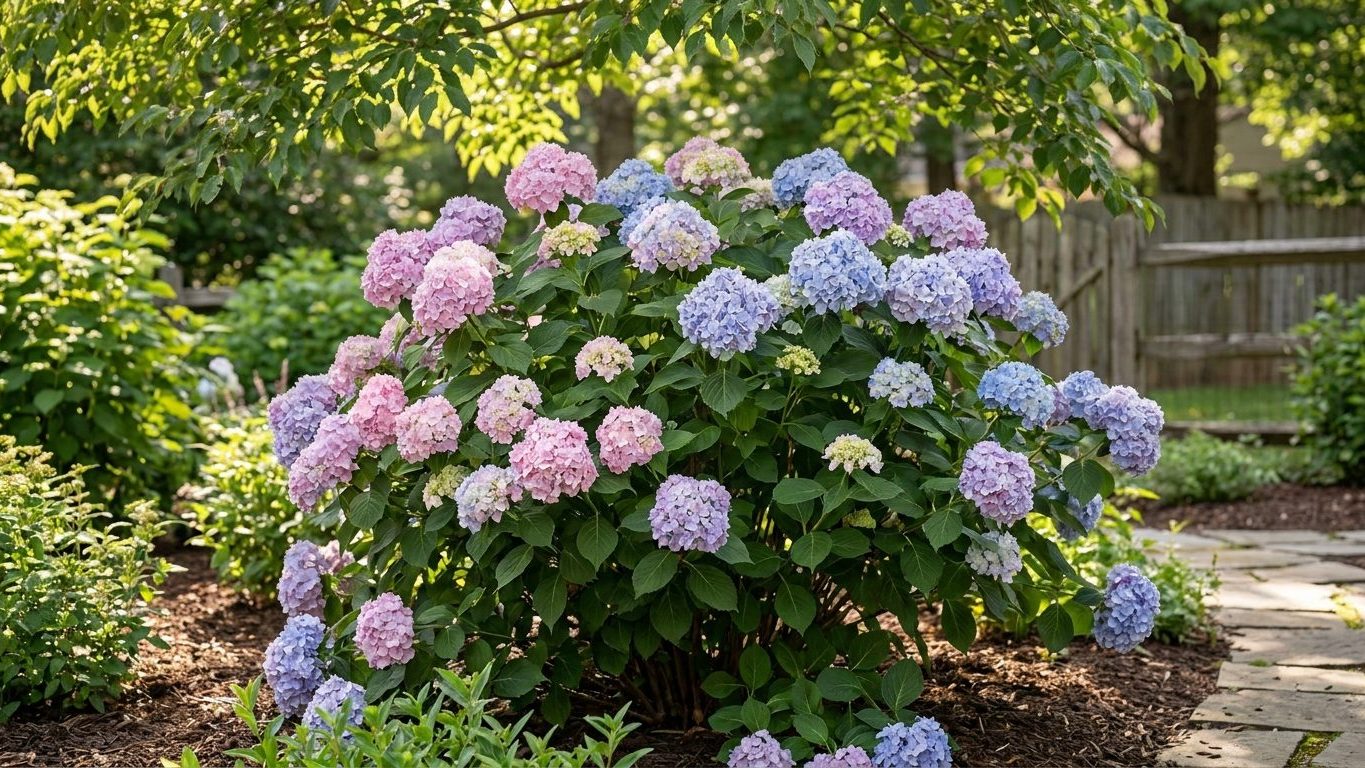
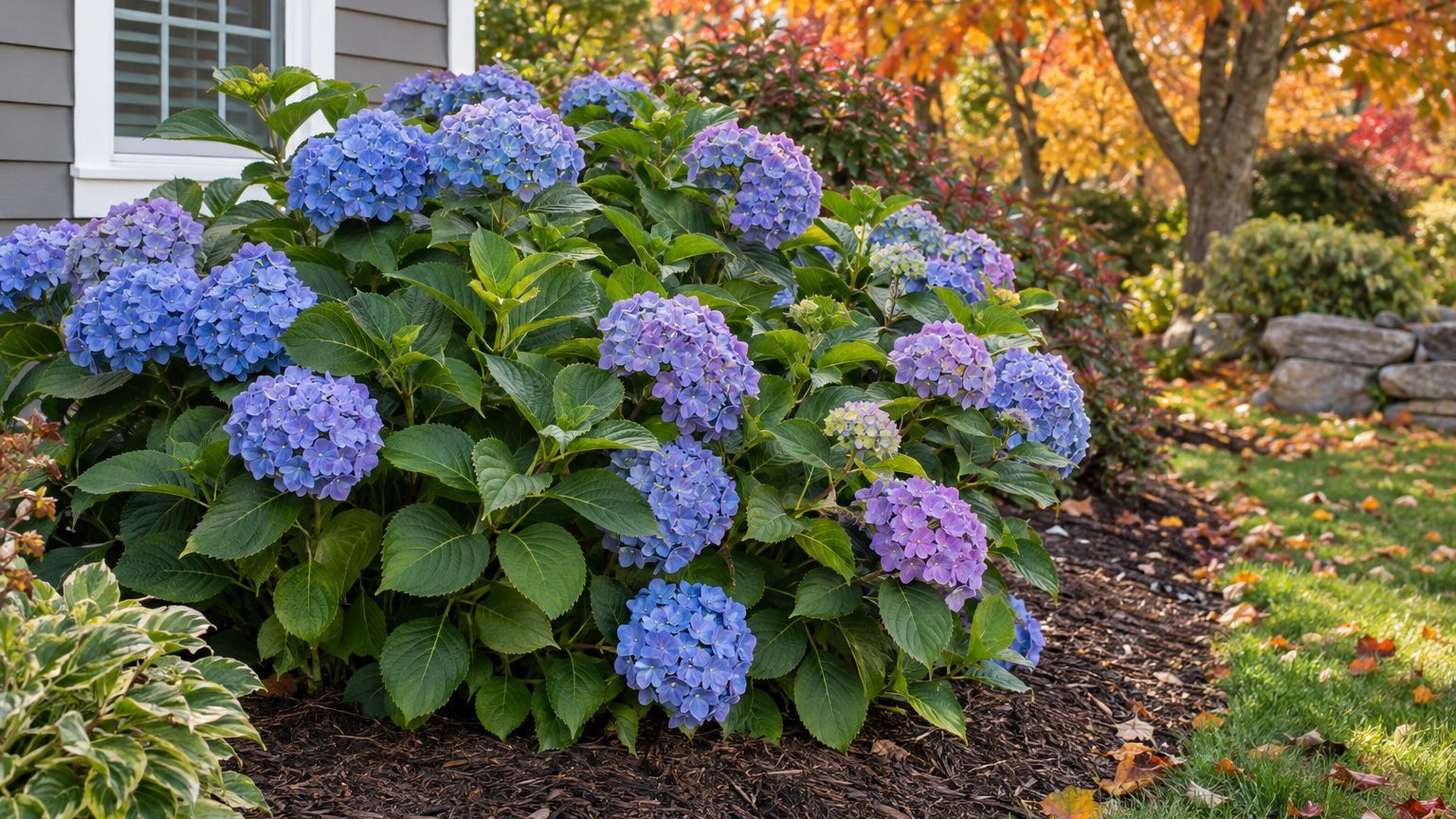
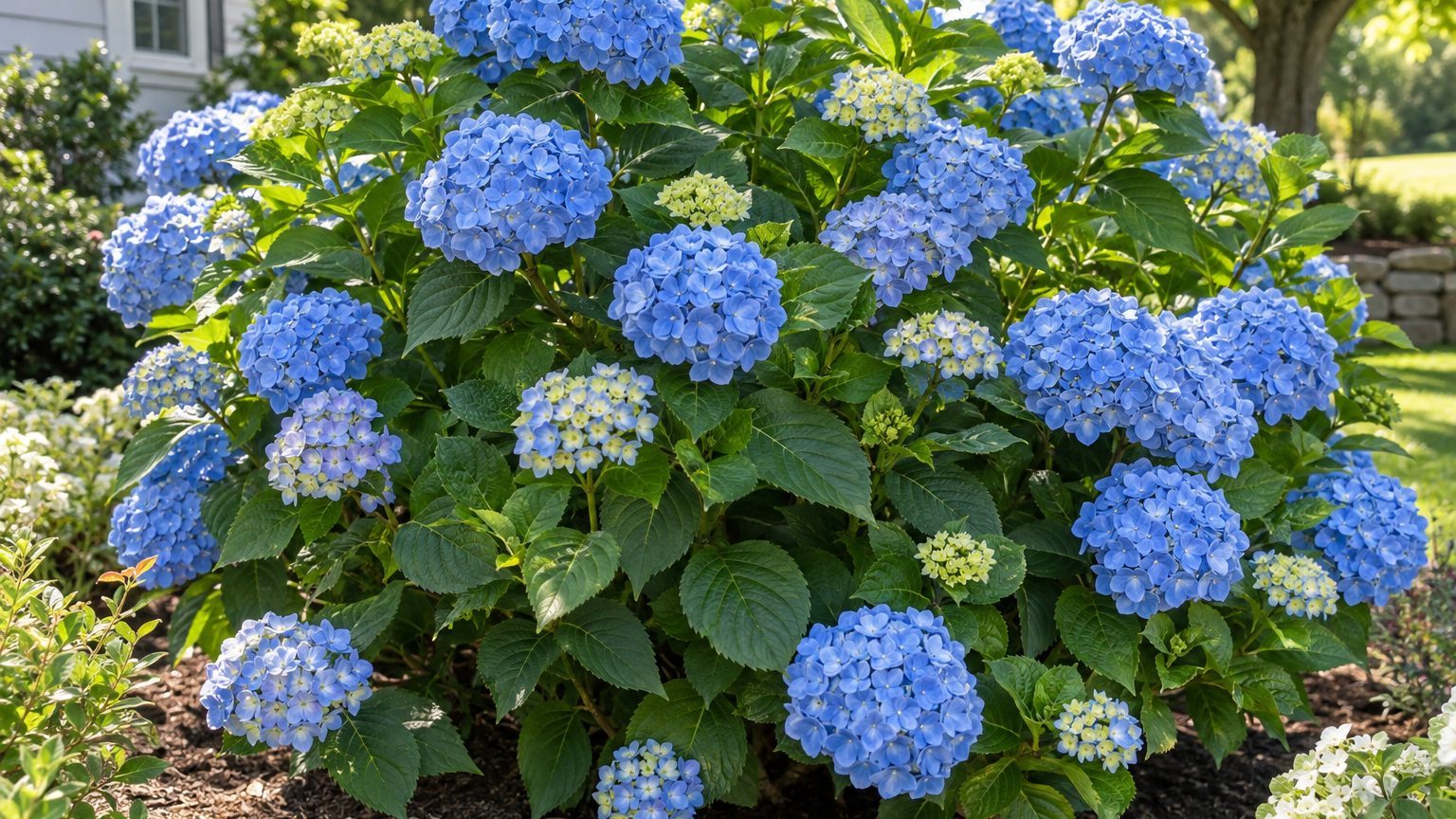
Endless Summer hydrangea is a bigleaf shrub, Hydrangea macrophylla ‘Bailmer’, that grows 3 to 5 feet tall and wide and blooms in USDA zones 4 through 9. It sets flower buds on both old and new wood, so it reblooms even after a hard freeze kills the first flush. Pruning stays light, mostly deadwood removal, and flower color tracks soil pH rather than the plant itself.

What This Variety Is

Endless Summer hydrangea is a bigleaf hydrangea, Hydrangea macrophylla ‘Bailmer’, bred as the first reliably reblooming variety in the group. NC State Extension Gardener Plant Toolbox lists it as hardy in zones 4 to 9, a wider range than most older bigleaf cultivars.

It forms a rounded mound, 3 to 5 feet tall and about as wide, topped with large mophead flower clusters. The shrub sets buds on both old wood and new growth, which is what lets it push a second bloom after a cold snap kills the first.

Flower color follows soil chemistry, not the variety itself. Acidic soil turns blooms blue, while alkaline soil turns the same shrub pink.

Three things set it apart from older bigleaf types:

  • Rebloom on new wood after a hard prune or a late frost
  • A hardiness range that reaches into zone 4, colder than most bigleaf cultivars
  • A compact, rounded form suited to foundation beds rather than woodland borders

Where It Grows: Zones and Regions

NC State Extension Gardener Plant Toolbox puts the range at zones 4 to 9, and each end of that range comes from a different kind of stress, cold in the north and heat in the south.

  • Cold edge (Minnesota, Wisconsin, upstate New York): winters that dip toward zone 3 can kill stems to the ground, and the shrub then reblooms only on new wood that emerges after the last frost.
  • Mid-Atlantic and Midwest (Ohio, Pennsylvania, Illinois): this is the sweet spot, with enough winter chill and a long enough season for two flushes of bloom.
  • The South (Georgia, Texas, the Carolinas): afternoon shade keeps leaves from scorching once temperatures pass the mid 90s.
  • Pacific Coast (Washington, Oregon, coastal California): mild winters and cool summers stretch the bloom season longer than almost anywhere else.
  • Mountain West (Colorado, Utah): dry air and alkaline soil push blooms toward pink and stress the shrub without regular irrigation.

Zone 9 heat in inland Texas or Florida pushes past what the shrub tolerates without steady watering. Your state page, linked from the selector below this section, sets the exact frost dates and pruning window for where you live.

The Year With It, Season by Season

Planting

Spring or early fall planting gives roots time to settle before summer heat or winter cold arrives. Dig a hole twice the width of the root ball and no deeper, then water deeply and keep the soil evenly moist through the first season.

Growth

Growth — Endless Summer Hydrangea: Size, Zones, Pruning and Care

New growth emerges from the base and from stem tips that made it through winter, showing exactly which wood survived. Cut back only the bare, brittle stems to living tissue, since the lower buds on those same stems often carry the first bloom.

Bloom

The first flush opens on old wood by early summer, then a second flush follows on new growth through late summer in most regions. That double bloom window is the trait that gave the series its name and its long season in the bed.

Heat

Afternoon sun above the mid 90s wilts the large leaves by midday even when soil moisture is fine, a normal response rather than a sign of drought stress. A deep morning watering and a spot with afternoon shade keep the leaves upright through the hottest weeks.

Fall

Bloom slows as day length shortens, and spent flower heads can stay on the shrub through the season without hurting next year’s buds. Skip any pruning now, since cuts made in fall remove the very wood that flowers first next spring.

Winter

Stems above ground can die back in a hard freeze, especially at the cold edge of the range, while the crown below the mulch line usually survives. A 2 to 3 inch layer of mulch over the root zone protects the buds that carry next year’s first flush.

Diseases and Pests It Resists

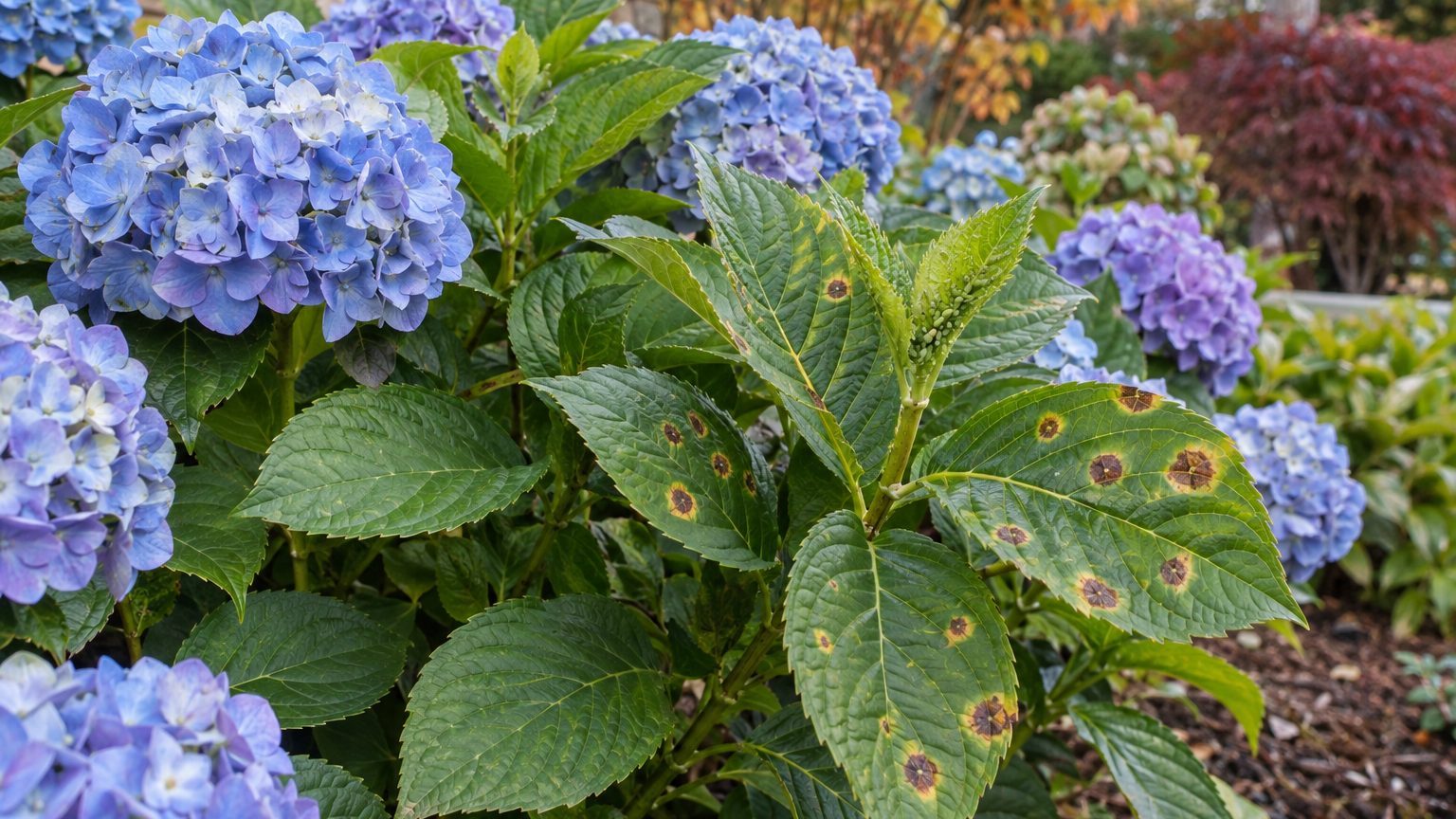
Endless Summer carries the same disease profile as other bigleaf hydrangeas, since breeding for rebloom did not change leaf tissue or resistance genes. Fungal leaf spot and powdery mildew show up in humid summers, especially where air can’t move through a crowded planting.

Deer resistance is inconsistent. Deer browse the leaves and flower buds in many yards, particularly in a hard winter when other food is scarce, and spider mites or aphids turn up on plants stressed by heat or drought.

Threat How common What helps
Leaf spot (fungal) Common in humid climates Water at the base, not overhead
Powdery mildew Common late summer Space plants for airflow
Deer browsing Frequent, not resistant Fencing or repellent in winter
Aphids, spider mites Occasional, on stressed plants Deep watering in heat

Bacterial wilt and root rot are not well documented on this specific cultivar, and the risk there comes mostly from soil that stays soggy rather than from the plant itself.

Where to Plant It in a Yard

A spot with morning sun and afternoon shade suits it best in most yards, close enough to a path or patio to catch the mophead color up close. Pair it with hostas or ferns that share its taste for moist, well-drained soil.

  • Your state page: the frost dates and the exact pruning window for where you garden.
  • Hydrangea types compared: how this bigleaf variety stacks up against panicle and smooth types for size and bloom.
  • Soil pH and bloom color: the acidity range that shifts blooms from pink toward blue.

Set the root ball level with the surrounding soil, mulch to hold moisture, and water deeply for the first season while roots reach into native ground.

Common questions

Why didn’t it bloom this year?

A late frost after budbreak, a fall or winter prune that removed old wood, or too much shade are the three usual reasons. Since it blooms on both old and new wood, one bad flush from frost still leaves a second chance later in summer.

Can I change the flower color?

Yes, by adjusting soil pH rather than the plant. Lowering pH with a soil sulfur amendment shifts blooms toward blue, while raising pH with garden lime shifts them toward pink, though the change takes a full season to show.

How much pruning does it actually need?

Very little. Remove only dead or winter-damaged stems in spring, cutting back to the first set of live, green buds, and leave the rest of the shrub alone through the growing season.

Climbing Hydrangea Hydrangea: Size, Zones, Pruning and Care

Climbing Hydrangea Hydrangea: Size, Zones, Pruning and Care

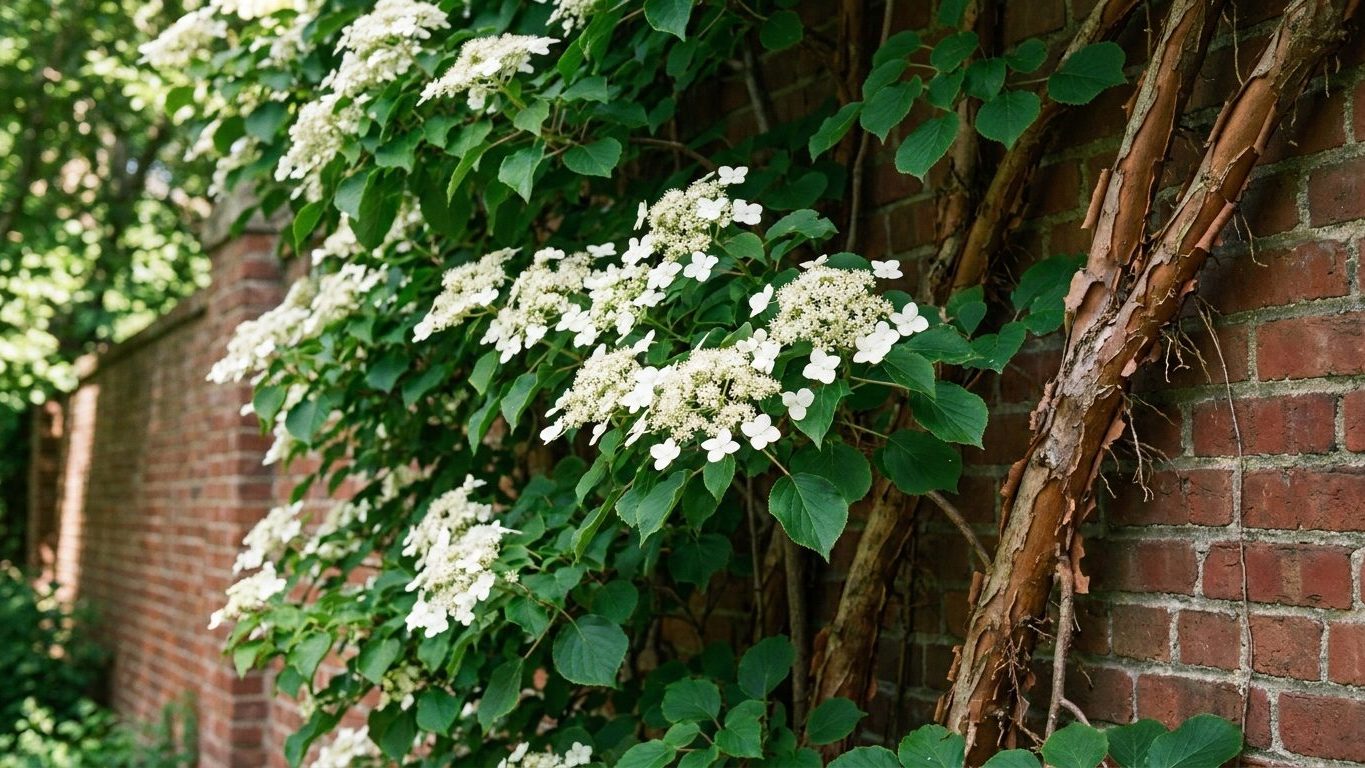
Climbing hydrangea grows as a self-clinging, deciduous vine, not a shrub, reaching 30 to 50 feet on a sturdy wall across USDA zones 4 to 8. It blooms on old wood in white lacecap clusters, needs almost no pruning beyond shaping right after bloom, and takes three to four years to establish before it climbs in earnest and its bark begins to peel.

What This Variety Is

Climbing hydrangea (Hydrangea anomala subsp. petiolaris) is a deciduous, self-clinging vine, not a shrub trained upward. Missouri Botanical Garden Plant Finder lists it hardy from USDA zone 4 to zone 8.

It climbs by aerial rootlets that grip masonry, bark, or wood, and needs no wire or trellis. Mature stems shed to reveal cinnamon-brown bark, a trait few other climbing vines offer in a winter yard.

Growth is slow at first, then fast: three to four years pass before the vine puts on real length. Once established it can add several feet a season and reach 30 to 50 feet on a strong wall.

Three traits set it apart from a shrub-form hydrangea:

  • flowers on old wood, in flat white lacecap clusters
  • bark that exfoliates on mature growth
  • no staking, ties, or cages needed once rootlets take hold

Where It Grows: Zones and Regions

Missouri Botanical Garden Plant Finder puts climbing hydrangea at zone 4 to zone 8, a range that stretches from the cold pockets of northern New England to the humid summers of the coastal South.

  • Northern New England and the Upper Midwest (Maine, Vermont, Minnesota): Minneapolis sits at the zone 4 edge of the range, and the vine needs a sheltered wall and a layer of mulch through its first two winters there.
  • Mid-Atlantic and the Ohio Valley (Pennsylvania, Virginia, Ohio): Philadelphia and Richmond fall in zone 7, comfortably inside the range, and the vine grows without winter protection once past its third year.
  • The Pacific Northwest (Washington, Oregon, Idaho): Seattle and Portland sit at zone 8, and the cool, damp summers there suit the part shade this vine prefers better than almost anywhere else in the country.
  • The Deep South and the Gulf Coast (Georgia, South Carolina, Florida): Atlanta at zone 7b to 8a is near the upper edge of the range, while Miami’s zone 10b puts it out of range entirely.

The state selector below this section opens the frost dates and planting window for your own zip code, so check it before choosing a wall.

The Year With It, Season by Season

Spring

Plant climbing hydrangea in spring, after the last frost, at the base of masonry, a wood fence, or a sturdy trellis, in part shade. Water weekly through the first growing season, since the young aerial rootlets need steady moisture to find a grip and start climbing.

Early Summer

Growth stays modest for the first two to three years while the plant builds roots below ground, a stretch some gardeners call sleep and creep. Once established, it sends out long climbing shoots and can add several feet of new growth in a single season.

Midsummer

White lacecap flowers open in June and July on wood grown the previous year, so pruning has to wait until after bloom. Missouri Botanical Garden Plant Finder lists flower clusters at 6 to 10 inches across, held flat against the glossy green foliage.

Late Summer Heat

In zone 7 and 8 gardens, afternoon shade keeps leaves from scorching during the hottest stretch of July and August. A vine planted against a north or east-facing wall handles heat far better than one on a south-facing brick face that radiates warmth after sunset.

Fall

Leaves turn a soft yellow before they drop, and the bark on stems more than a few years old begins to peel into cinnamon-brown strips. Skip pruning in fall, since cuts made now remove the buds that would have opened as next year’s flowers.

Winter

The peeling bark stands out against bare walls and snow once the leaves are down, a trait few climbing vines offer in the coldest months. In zone 4 gardens, wrapping the base in burlap for the first two winters protects young plants while their roots finish establishing.

Diseases and Pests It Resists

Climbing hydrangea carries a short list of problems compared to shrub-form hydrangeas. Missouri Botanical Garden Plant Finder reports no serious insect or disease problems on this vine.

Deer tend to pass it by, and the thick, leathery leaves shrug off the leaf spot and powdery mildew that trouble bigleaf hydrangea in humid summers. The main risk is root rot in soil that stays wet, not a pest or a fungus on the leaves.

Threat This one Source
Insects No serious pests reported —
Leaf disease No serious disease reported —
Deer browsing Rarely damaged —
Root rot Risk in poorly drained soil —

Bigleaf and panicle hydrangeas carry their own separate pest and disease pages, since their risks differ enough to need their own tables.

Where to Plant It in a Yard

This vine wants something solid to grip: a brick or stone wall, a masonry chimney, a heavy wood fence, or a metal arbor built to carry real weight once it matures.

  • Your state page: the frost dates and planting window for the zip code where you garden.
  • Bigleaf hydrangea: a shrub-form option for a spot near a patio where a vine would need a wall.
  • Panicle hydrangea: a sun-tolerant choice for the open, unshaded side of a yard this vine would scorch in.

Pick the wall first, then plant the vine at its base and give the rootlets a season to find their grip.

Common questions

How long does climbing hydrangea take to bloom?

Missouri Botanical Garden Plant Finder notes the vine can take three to five years to produce its first flowers, since it spends its early seasons building roots and finding a grip before it puts energy into bloom.

Will climbing hydrangea damage my house?

The aerial rootlets grip mortar joints and rough wood, and over years they can loosen aging mortar or damage painted siding. Masonry in good repair, or a freestanding trellis a few inches off the wall, avoids the issue.

Does climbing hydrangea need full sun?

No. It flowers best in part shade to full shade, and in zone 7 and 8 gardens full afternoon sun scorches the leaves. Morning sun with afternoon shade suits it in most regions within its range.

Bobo Hydrangea: Size, Zones, Pruning and Care

Bobo Hydrangea: Size, Zones, Pruning and Care

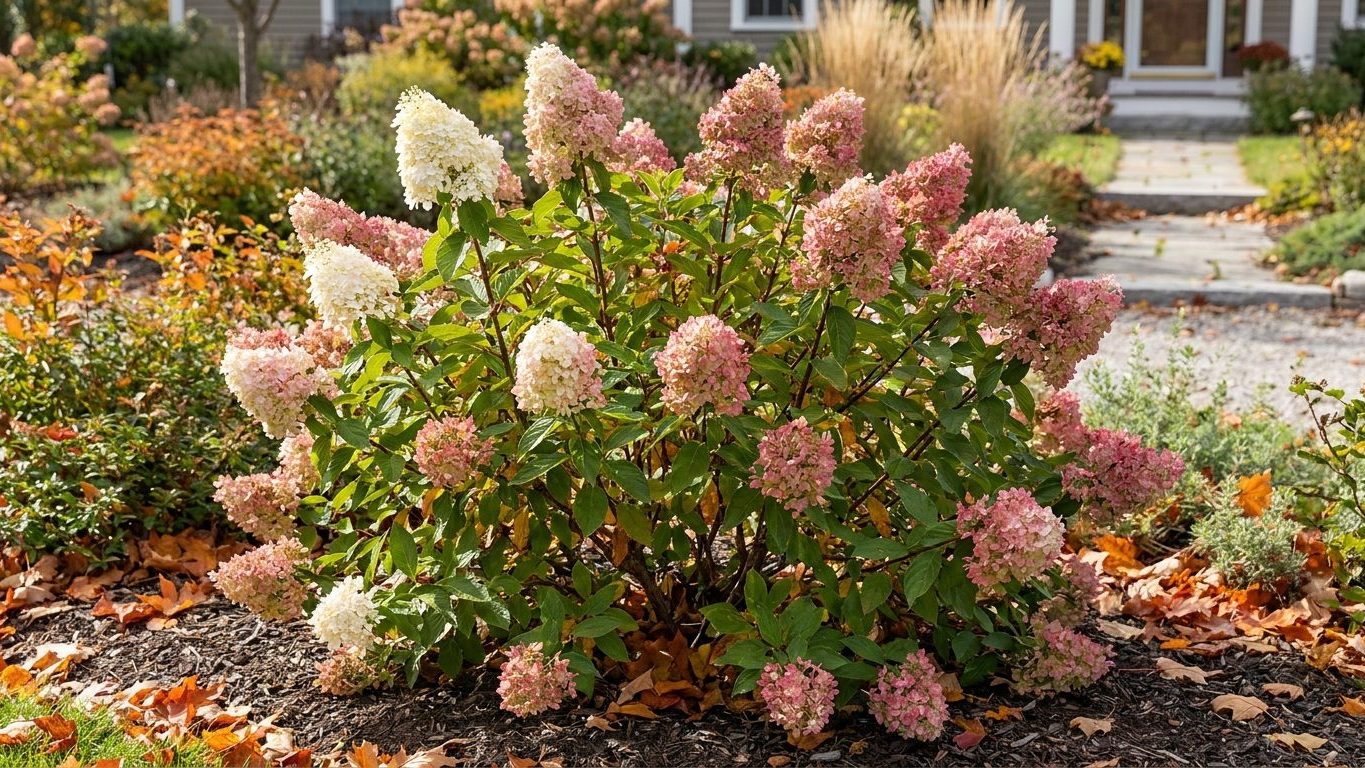
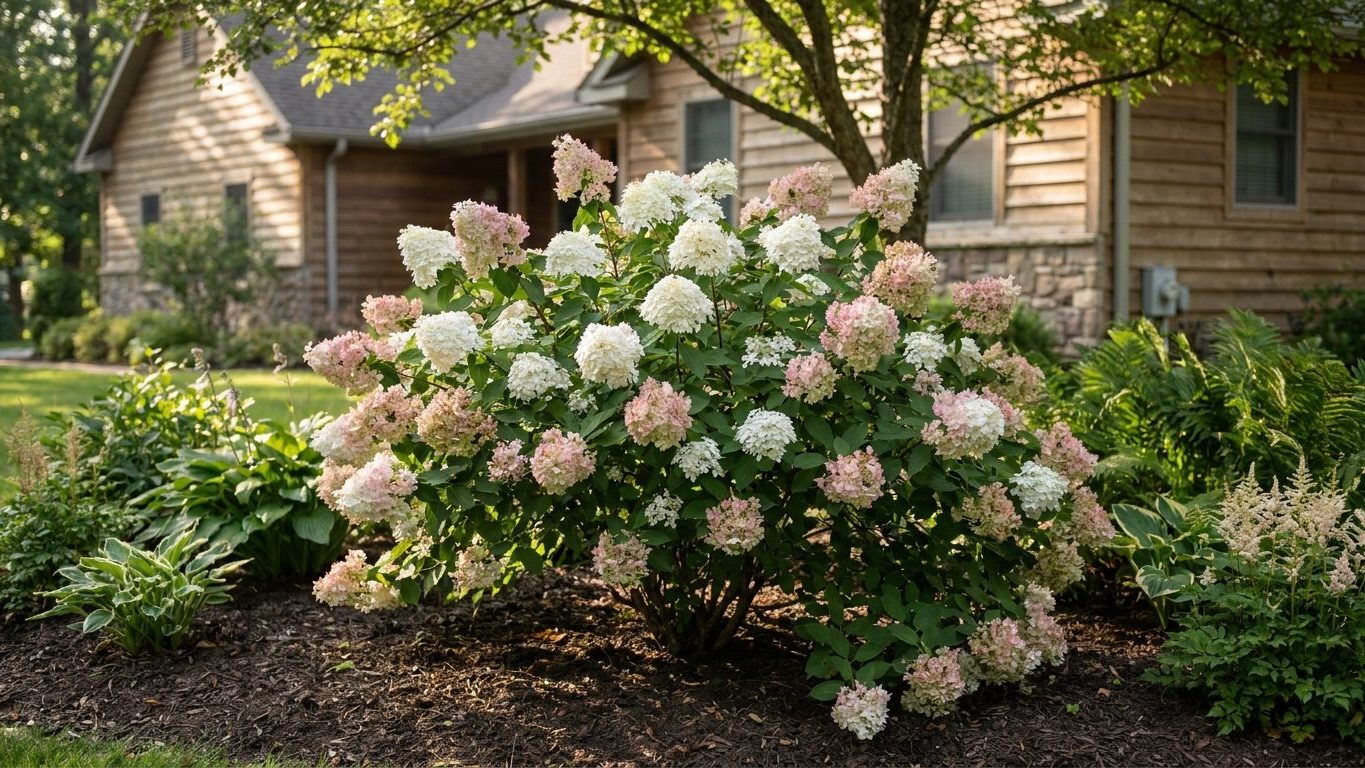
Bobo hydrangea is a dwarf panicle hydrangea that tops out around 2.5 to 3 feet tall and wide, hardy in USDA zones 3 to 8, and it blooms on new wood, which means late-winter pruning never costs you a flower. It carries white cone-shaped blooms that shift to soft pink as nights cool, and it holds its shape best in full sun.

What This Variety Is

Proven Winners, the breeder that introduced Bobo, lists it as a full dwarf form of Hydrangea paniculata, the same species sold as PeeGee hydrangea. It reaches just 2.5 to 3 feet tall and wide, a fraction of the 8 feet a standard panicle hydrangea can hit.

The stems stay short and thick enough to hold up the flower heads without staking. That single trait sets it apart from taller paniculata varieties that flop after a hard rain.

Its flower heads run smaller than a standard paniculata too, cone-shaped panicles that open white in early summer. That earlier, smaller bloom is the trait most growers point to when they explain why it fits a small yard.

Growers also note it flowers from a young age, often blooming its first year in the ground. That head start makes it a fast way to add height and color to a new bed without waiting seasons for size.

  • Compact, mounded habit
  • White blooms that age to pink
  • Sturdy stems that need no staking

Where It Grows: Zones and Regions

Proven Winners rates Bobo hydrangea for USDA zones 3 to 8, a wider range than most panicle hydrangeas carry, which puts it in yards from Duluth to Atlanta and most places in between.

  • Great Lakes and the North (Minnesota, Wisconsin, Michigan): zone 3 winters sit within range, and the plant can die back to the ground some years, then rebuild and bloom that same season since flowers form on new wood.
  • The Northeast and Mid-Atlantic (New York, Pennsylvania, Virginia): zone 5 to 7 summers suit it well, and full sun keeps the compact stems from stretching and going loose.
  • The South (Georgia, Texas, the Carolinas): zone 8 heat pushes it toward part shade, with afternoon shade protecting the blooms from bleaching out fast in July and August.
  • The Plains and Mountain West (Colorado, Nebraska): wind and dry air call for a spot out of the harshest gusts, since the short stems still take a beating in wide-open exposure.

The state selector below this section leads to the page built for where you live, with the frost window and the pruning dates that apply to your zip code.

The Year With It, Season by Season

Spring

New shoots push from the base as soil warms, and this is the pruning window since the buds that matter form later on this new growth. Cut stems back by about a third, or to a low framework if winter dieback took the top.

Summer

Bobo often opens its cone-shaped flower heads earlier than full-size panicle hydrangeas, typically by midsummer. Regular water through hot stretches keeps the compact stems from wilting, since the shallow root system dries out fast in such a small footprint.

Fall

White blooms shift toward pink and then a tan-rose as nights cool, and the heads hold on the stem well into the season. Leave them uncut for color in the yard rather than deadheading early in the fall.

Winter

In the coldest end of its range the top growth can die back to the ground, which is normal rather than a failure. Skip any pruning now and wait for spring, since cutting dormant wood in winter offers no real benefit.

Diseases and Pests It Resists

Proven Winners does not list any serious disease as a regular problem on Bobo hydrangea, and panicle types as a group shrug off much of the leaf spot and mildew that trouble bigleaf hydrangeas.

Deer pressure is the more common complaint in home yards, though panicle hydrangeas rank as one of the less-browsed types when deer have other options nearby.

Threat This one Source
Bacterial leaf spot Not a common issue on panicle types Proven Winners
Powdery mildew Rare compared to bigleaf hydrangea Proven Winners
Deer browsing Occasional, not a preferred plant Proven Winners

Documentation on insect pests specific to Bobo is thin, and the other hydrangea kinds are on their own pages if you are comparing resistance across the full lineup.

Where to Plant It in a Yard

Bobo’s small footprint fits a foundation bed, a low hedge along a walkway, or a large container by a front door, taking full sun in the North or part shade through hot southern summers.

  • Your state page: the frost dates and the pruning window for where you garden.
  • Which hydrangeas hold up here: a comparison of types suited to your zone.
  • Hydrangea pruning guide: the by-type cutting calendar so you prune Bobo at the right moment.

Pair it with low grasses or a groundcover that won’t crowd its shallow roots, and check your state page before the first hard freeze sets the pruning clock.

Common questions

How tall does Bobo hydrangea actually get?

Most plants settle between 2.5 and 3 feet tall and wide, which is why Proven Winners markets it as a full dwarf panicle hydrangea rather than a standard-size one.

Does Bobo hydrangea need full sun?

Full sun works best in cooler climates, while gardeners in zone 7 and 8 heat get sturdier, longer-lasting blooms with some afternoon shade to protect the flower heads.

When should I prune Bobo hydrangea?

Late winter into early spring, before new growth starts, since flowers form on the current season’s wood and pruning then removes no buds at all.

Blushing Bride Hydrangea: Size, Zones, Pruning and Care

Blushing Bride Hydrangea: Size, Zones, Pruning and Care

Blushing Bride is a bigleaf hydrangea from the Endless Summer Collection, reaching 3 to 5 feet tall and wide in USDA zones 4 through 9. It reblooms on old and new wood, so a hard prune rarely costs you the whole season. White flowers age into a soft pink blush as they open in the sun, and the shrub wants steady moisture and shade from the harshest afternoon sun.

What This Variety Is

Blushing Bride is a bigleaf hydrangea, Hydrangea macrophylla, developed within the Endless Summer Collection. Missouri Botanical Garden Plant Finder puts it at 3 to 5 feet tall and just as wide, a rounded shrub sized for a foundation bed.

The flowers open white and semi-double. They take on a pink blush as they age in full sun, a shift driven by light and time, not soil pH.

What separates it from older bigleaf types is where it sets buds. It flowers on both old wood and new wood, so a damaged cane from winter still leaves a summer bloom.

Three traits define how it behaves in a yard:

  • Reblooms from early summer into fall on fresh growth
  • Holds a compact, rounded form without staking
  • Sets flower buds that survive a harder frost than classic mophead types

Where It Grows: Zones and Regions

Missouri Botanical Garden Plant Finder rates Blushing Bride for USDA zones 4 through 9, a wider range than most bigleaf hydrangeas manage. Where it lands inside that range changes how much of the old wood survives winter, and that decides how early the first flush opens.

  • Upper Midwest and New England (Minnesota, Wisconsin, Maine): zone 4 and 5 winters routinely kill old-wood buds back to the snow line, but the shrub still reblooms on new wood by midsummer.
  • Mid-Atlantic and Ohio Valley (Virginia, Ohio, Pennsylvania): zone 6 and 7 conditions let both old and new wood carry buds, giving the longest and heaviest bloom window in the range.
  • The South (Georgia, South Carolina, Texas): zone 8 and 9 heat pushes bloom earlier and fades the blush faster, and afternoon shade keeps leaf margins from scorching.
  • Pacific Northwest (Oregon, Washington): cool, humid summers in zone 7 and 8 match the conditions the cultivar was bred under, with a slower, longer-lasting blush.

Below zone 4, winter tends to kill the crown along with the wood, and above zone 9 the shrub struggles without a real winter chill. The state selector below this section opens the frost dates and pruning window for where you garden.

The Year With It, Season by Season

Planting

Set new plants in spring or early fall so roots establish before extreme heat or a hard frost arrives, spacing them 3 to 5 feet apart to match the mature spread. Keep the root ball consistently moist for the first several weeks after planting.

Spring

New leaves push out from both the old canes and the base once soil warms, and this is when winter damage becomes visible. Cut back only the tips that stayed bare and dark, since live wood lower on the cane may still carry buds.

Early Summer

The first flush opens on last year’s wood if it survived winter, giving the earliest and often fullest blooms of the year. Deadhead spent clusters just above the next set of leaves without cutting into next year’s buds.

Midsummer Heat

New wood starts flowering through this stretch, which is what keeps color coming after the first flush fades. Water deeply once or twice a week during dry spells, since wilted afternoon leaves usually mean dry roots, not a failing plant.

Fall

Blooms slow and the last flowers deepen into a dustier pink or rust tone as nights cool. Leave the spent flower heads on the shrub through this stretch, since they insulate the buds forming just beneath them.

Winter

Dormant buds on old wood are the part most at risk from a hard freeze, especially where temperatures swing above and back below freezing in late winter. A loose mulch layer over the root zone protects the crown, and pruning waits until new growth shows in spring.

Diseases and Pests It Resists

Clemson Cooperative Extension Home & Garden Information Center lists the common threats to bigleaf hydrangeas, and Blushing Bride carries the same exposure as the rest of the group since no resistance breeding targeted these issues. Humid, still air around the shrub is the main driver behind most of them.

Deer browsing and late frost on old-wood buds are the two problems specific to how this cultivar flowers, since a bud lost to either one still leaves the new-wood bloom intact.

Threat This one Source
Cercospora leaf spot Common in humid, still summers Clemson HGIC
Powdery mildew Shows up in shade with poor airflow Clemson HGIC
Deer browsing Buds and foliage both eaten —
Late frost bud kill Old-wood buds lost, new wood still blooms —

Aphids and spider mites turn up occasionally but rarely at damaging numbers on an otherwise healthy plant. Other hydrangea types carry their own separate pest pages, since a panicle or smooth hydrangea faces a different mix of threats.

Where to Plant It in a Yard

Blushing Bride works best as a foundation planting or a low hedge along a walkway, where its rounded 3 to 5 foot form fills space without crowding a window. Pair it with ferns or hostas that share its moisture needs, and keep it clear of thirsty tree roots.

  • Your state page: the frost dates and the pruning window where you live.
  • Which ones hold up here: a side-by-side of hydrangea types rated for your zone.
  • Pruning bigleaf hydrangeas: when to cut old wood without losing next year’s buds.

Common Questions

Does Blushing Bride turn blue or pink depending on soil pH?

Not reliably. The pink blush comes from age and sun exposure on a white flower, not from the aluminum uptake that drives color in classic blue or pink mopheads.

How far back can I cut Blushing Bride without losing blooms?

Since it flowers on old and new wood, a hard prune in late winter removes the earliest flush, but the plant still reblooms on new growth by midsummer.

Does Blushing Bride need afternoon shade everywhere?

Only in zone 8 and 9 heat. In cooler zones 4 through 6 it tolerates more direct sun, sometimes full sun, without scorching.

Bloomstruck Hydrangea: Size, Zones, Pruning and Care

Bloomstruck Hydrangea: Size, Zones, Pruning and Care

Bloomstruck is a reblooming bigleaf hydrangea that tops out around 3 to 4 feet tall and wide, hardy in USDA zones 4 through 9. It flowers on both old and new wood, so a late frost that nips last year’s buds still leaves a summer show. It takes more sun than most bigleaf types and holds its mophead-lacecap blooms through heat that wilts other hydrangeas.

What This Variety Is

Bloomstruck is a bigleaf hydrangea, Hydrangea macrophylla, bred into the Endless Summer collection for a rounded, mounding habit. It reaches 3 to 4 feet tall and spreads about the same width, smaller than older mophead varieties that can sprawl past 6 feet.

What sets it apart is that it sets flower buds on last season’s stems and on new growth the same year. That double bloom path is why gardeners in colder zones still see color after a hard winter kills the old wood back.

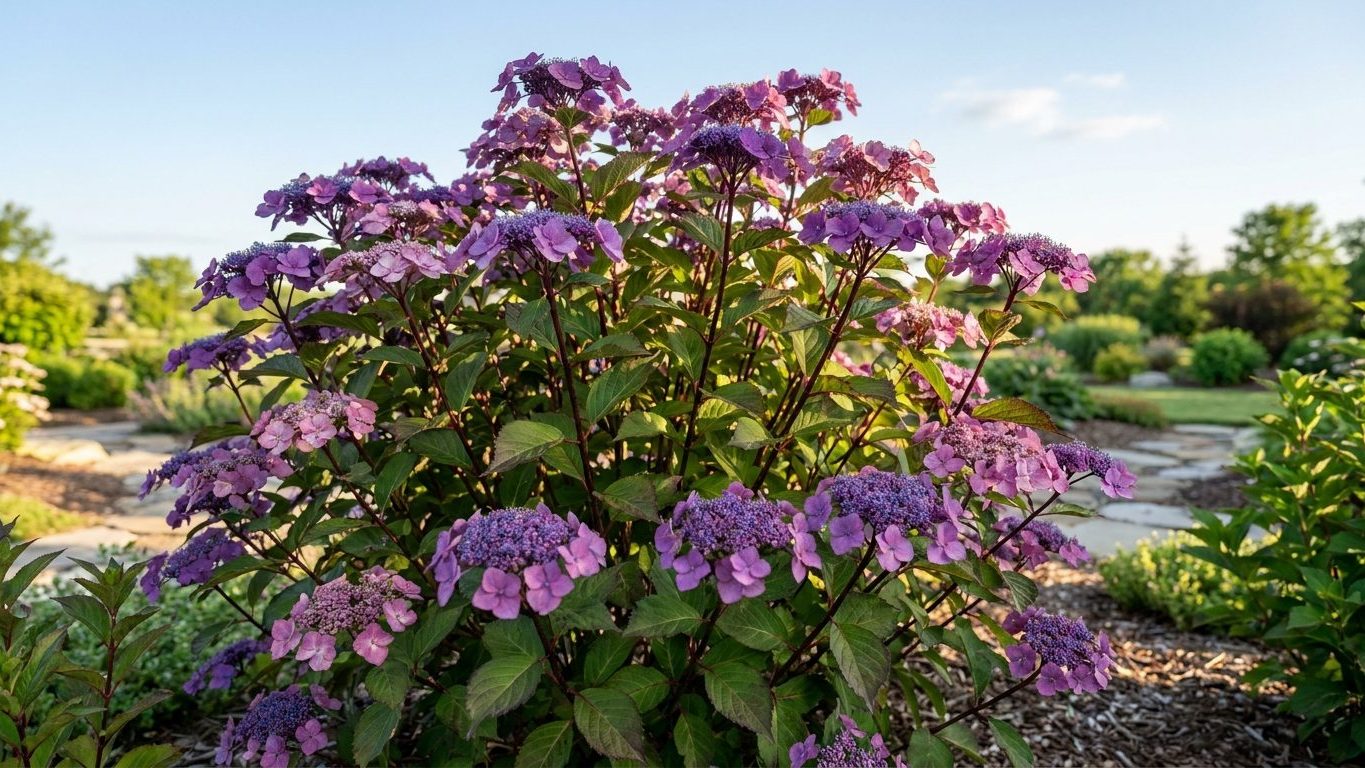
Its flower heads mix mophead and lacecap shapes on the same shrub. Color runs from pink through purple to a deeper red-purple as the soil pH turns more acidic.

The stems run a dark burgundy-red and the leaves pick up a similar wine tone before they drop in fall. That two-tone look, dark stem against green leaf, is one of the easiest ways to spot this cultivar in a nursery row.

Where It Grows: Zones and Regions

NC State Extension Gardener Plant Toolbox lists Bloomstruck hardy from zone 4 through zone 9, a wider spread than the straight bigleaf species usually manages on its own.

  • Upper Midwest and Northeast (Minnesota, Wisconsin, Vermont): zone 4 winters kill the old wood most years, so the shrub leans on its new-wood rebloom to flower at all.
  • Mid-Atlantic and Ohio Valley (Virginia, Ohio, Kentucky): both wood types usually make it through winter here, which gives two separate waves of bloom in one season.
  • Deep South (Georgia, Alabama, Louisiana): zone 8 and 9 heat pushes bloom color toward a deeper purple and shortens the spring flush before summer heat stalls new buds.
  • Pacific Northwest (Oregon, Washington): mild, wet winters keep old wood intact most years, so bloom timing tends to run earlier than in colder zones.

The state selector below this section opens straight to the zone map and frost dates for wherever you garden.

The Year With It, Season by Season

Spring

Buds swell on old wood first, and pruning now means cutting live flower buds off the shrub. The safe move is to wait until leaves fully open, then remove only stems that stayed bare and gray.

Early Summer

The old-wood flush opens first, mophead and lacecap heads together, while new stems keep stretching toward the second wave. Deadheading spent blooms back to the first healthy leaf pair pushes the plant toward that second flush.

Midsummer Heat

New-wood buds open through the hottest stretch, and afternoon sun on dry soil scorches leaf edges fast. A 2 to 3 inch mulch ring and deep watering twice a week keep blooms from wilting by midday.

Fall

Bloom slows as stems set next year’s old-wood buds, so this is the wrong season for a hard cutback. Leaves shift toward burgundy before dropping, a color change that signals the shrub is closing out growth for the year.

Winter

Old wood above ground rides out zone 6 through 9 winters intact most years, but zone 4 and 5 cold routinely kills stems back to the base. A 3 to 4 inch mulch layer over the root zone protects the crown so new-wood rebloom still shows up on schedule.

Diseases and Pests It Resists

Bigleaf hydrangeas as a group draw aphids, spider mites, and Japanese beetles, and Bloomstruck is not immune to any of them. NC State Extension Gardener Plant Toolbox notes the species is also prone to leaf spot fungus and powdery mildew in humid, still air.

Deer browse the leaves and flower buds readily, especially on young plants, and the shrub carries no documented resistance to deer pressure. Root rot shows up fast in soil that stays wet, since bigleaf hydrangea roots need drainage more than most shrubs on this list.

Threat This one Source
Powdery mildew Susceptible in humid, still air NC State Extension
Leaf spot Susceptible, worse with overhead watering NC State Extension
Deer browsing No resistance documented NC State Extension
Aphids and spider mites Common on new growth NC State Extension

Bloomstruck carries no bred-in resistance beyond what the species already has, so the same air circulation and drip irrigation habits that protect any bigleaf hydrangea apply here too.

Where to Plant It in a Yard

Bloomstruck fits a foundation bed, a mixed border, or a spot along a shaded patio where its 3 to 4 foot spread won’t crowd a walkway. Part sun to part shade suits it best, with some cover from hot afternoon sun in zone 8 and 9 gardens.

  • Your state page: the frost dates and pruning window that decide when old wood on Bloomstruck is safe to cut.
  • Hydrangea pruning guide: the cuts that protect both bloom flushes on rebloomers like this one.
  • Which hydrangeas hold up here: a side-by-side of bigleaf, panicle, and smooth types for the same yard.

Common questions

Does Bloomstruck bloom on old or new wood?

Both. It sets buds on stems that survived winter and on new growth the same season, which is why it still flowers after a hard freeze damages the old wood.

How tall does Bloomstruck hydrangea get?

Most plants settle in at 3 to 4 feet tall and about the same width, smaller than older bigleaf mopheads that can reach 6 feet or more.

What zone is best for Bloomstruck hydrangea?

NC State Extension Gardener Plant Toolbox lists it hardy from zone 4 through zone 9, though old wood survives more reliably from zone 6 up.

Annabelle Hydrangea: Size, Zones, Pruning and Care

Annabelle Hydrangea: Size, Zones, Pruning and Care

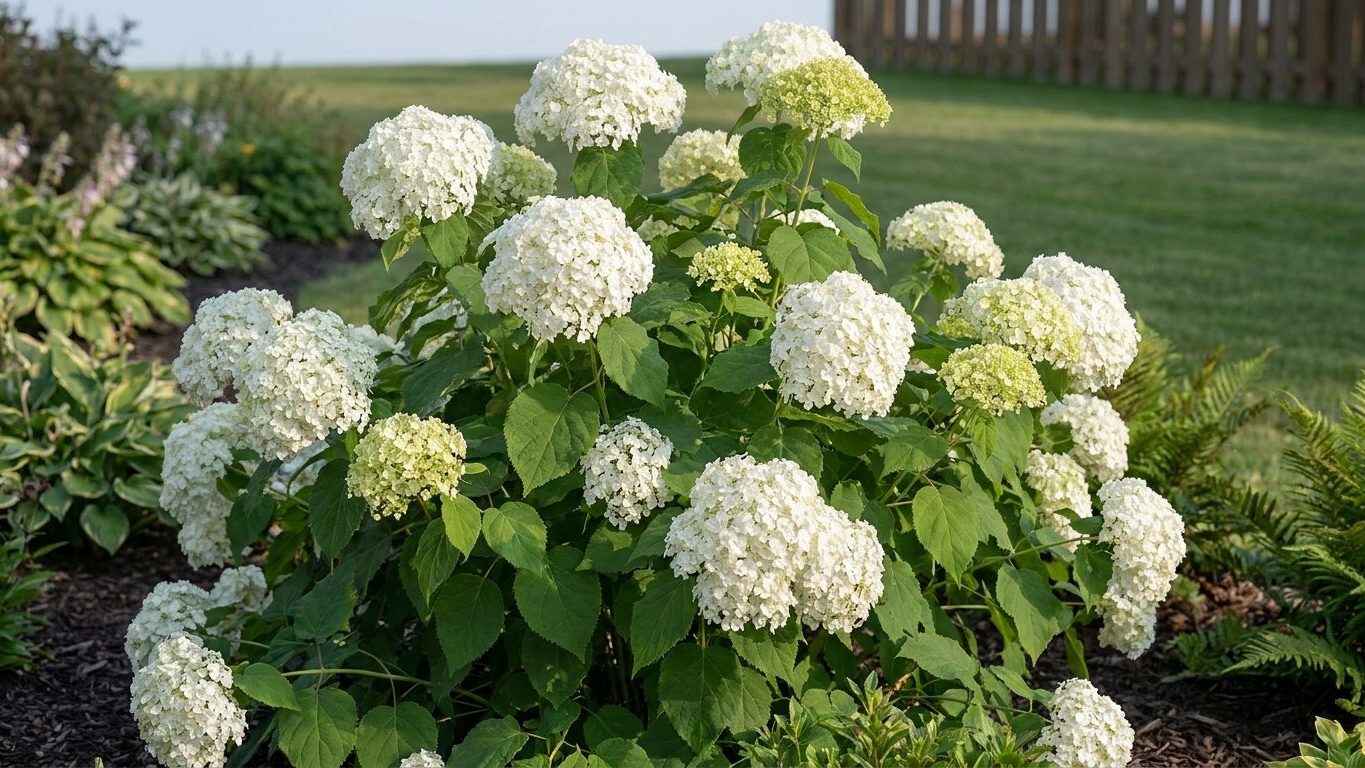
Annabelle hydrangea is a smooth hydrangea (Hydrangea arborescens) that grows 3 to 5 feet tall, holds up through USDA zones 3 to 9, and flowers on new wood, which means the hard prune happens in late winter rather than being skipped to protect old stems. Its white, mophead blooms open in early summer and keep their shape into fall.

What This Variety Is

Hydrangea arborescens ‘Annabelle’ is a smooth hydrangea native to eastern woodlands, not a bigleaf or panicle type. Missouri Botanical Garden Plant Finder puts it at USDA zones 3 to 9, a wider range than most mophead hydrangeas sold at garden centers.

It grows 3 to 5 feet tall and spreads about the same, forming a rounded mound rather than a tall hedge. Its white flower heads can reach up to 12 inches across, among the largest blooms in the genus.

The trait that sets it apart: it flowers on new wood, the growth it puts out each spring. That single fact decides how and when I cut it back, and it is the opposite of what bigleaf owners are told to do.

Left alone for a few seasons, the stems thin out and the heavy flower heads flop over after rain. That habit is common enough to the cultivar that many growers pick a stiffer-stemmed selection instead.

Where It Grows: Zones and Regions

USDA zone 3 covers cold like International Falls, Minnesota, and Annabelle takes that cold without the dieback that flattens many other hydrangeas. Missouri Botanical Garden Plant Finder lists its hardy range up through zone 9, which reaches Gulf Coast heat near Baton Rouge, Louisiana.

  • Great Lakes and the North (Michigan, Minnesota, Wisconsin): winters this cold kill the top growth of many hydrangea types, but since Annabelle blooms on new wood, it flowers again from the base every year without fail.
  • Mid-Atlantic and Northeast (Pennsylvania, Virginia, New York): humid summers push bacterial leaf spot and mildew, so morning sun with afternoon shade keeps the foliage drier through the growing season here.
  • The South (Georgia, Louisiana, the Carolinas): zone 9 heat near the coast calls for **part shade** and steady moisture, or the blooms fade fast and the leaf edges scorch by midsummer.
  • Midwest and Plains (Iowa, Kansas, Nebraska): swings between hard winters and dry summer wind ask for a spot out of prevailing gusts, since the stems and the heavy flower heads bend easily.
  • Pacific Northwest (Oregon, Washington): mild, wet summers suit the plant well, and the bigger challenge there tends to be deer pressure rather than heat or drought.

Your state page, reached through the selector below, sets the frost dates and the exact pruning window for where you garden, since a March freeze in Minnesota falls weeks apart from one in Georgia.

The Year With It, Season by Season

Planting

Set new plants out in spring or fall once the soil is workable, spacing them 3 to 5 feet apart to match their mature spread. Water deeply through the first growing season while the roots establish, since a young Annabelle stresses fast in dry soil.

Spring Growth

Spring Growth — Annabelle Hydrangea: Size, Zones, Pruning and Care

This is the pruning window: cut stems back to 12 to 18 inches, or all the way to the ground, before new growth hardens off. Because flowers form on this new wood, a late prune still leaves enough of the season for buds to develop.

Bloom

Flower heads open in early summer and can reach the full 12 inches the cultivar is known for, holding white through the first weeks. Heavy rain bends the stems under that weight, so a ring support set early in the season keeps the mound upright.

Summer Heat

In zone 7 and warmer, afternoon sun can scorch leaf edges and shorten how long each flower head holds its color. Consistent moisture through July and August matters more here than fertilizer, since drought stress shows up in the blooms within days.

Fall

Flower heads age from white to a papery tan and hold their shape well into the season rather than dropping. I leave mine standing instead of cutting for a vase, since the seed heads add structure and feed birds once other perennials fade.

Winter

Because it blooms on new wood, dieback on the top growth over winter does not cost next year’s flowers the way it would on a bigleaf hydrangea. The plant rests below ground and pushes fresh stems again once soil temperatures climb in spring.

Diseases and Pests It Resists

Annabelle carries the same general toughness the species is known for, and disease is rarely the reason a healthy plant declines. Missouri Botanical Garden Plant Finder lists no serious insect or disease problems for this cultivar, a rare note in the hydrangea group.

The exceptions show up in wet, humid summers: bacterial leaf spot and powdery mildew can mark the foliage, though they rarely kill an established shrub. Deer tend to leave it alone more than they leave bigleaf types, which helps in yards edged by woods.

Threat This one Source
Bacterial leaf spot Occasional in humid summers Missouri Botanical Garden Plant Finder
Powdery mildew Occasional, rarely fatal Missouri Botanical Garden Plant Finder
Deer browsing Generally resistant Missouri Botanical Garden Plant Finder
Serious insect pests None documented Missouri Botanical Garden Plant Finder

Threats common to bigleaf and oakleaf hydrangeas, like aphids or Japanese beetle damage, are not called out for this smooth hydrangea specifically. The other kinds are on their own pages.

Where to Plant It in a Yard

Give it part shade in hot climates and morning sun further north, in soil that holds moisture but drains. It works as a low hedge, a foundation planting, or a mass near a patio where the white blooms show up at dusk.

  • Your state page: the frost dates and the exact pruning window where you live.
  • Which hydrangeas hold up here: a comparison of smooth, bigleaf, panicle, and oakleaf types by zone.
  • Pruning by type: the old-wood versus new-wood rule explained for each hydrangea in the collection.

Check the state selector below before the first hard prune of the season, since that single date shifts by weeks between the Gulf Coast and the northern Plains.

Common questions

Does Annabelle hydrangea need full sun?

It tolerates more sun than bigleaf types but still does best with some afternoon shade in zone 7 and warmer, where full sun can scorch the leaf edges by midsummer.

Why did my Annabelle hydrangea not bloom?

Since it flowers on new wood, a poor bloom season usually traces back to a late hard freeze after pruning, deep shade, or a prune so hard it left no time to build flower buds before summer.

Can I cut Annabelle hydrangea to the ground?

Yes, cutting it back to 12 to 18 inches, or to the ground, in late winter is standard for this cultivar and will not cost you flowers the way it would on a bigleaf hydrangea.

Angel Blush Hydrangea: Size, Zones, Pruning and Care

Angel Blush Hydrangea: Size, Zones, Pruning and Care

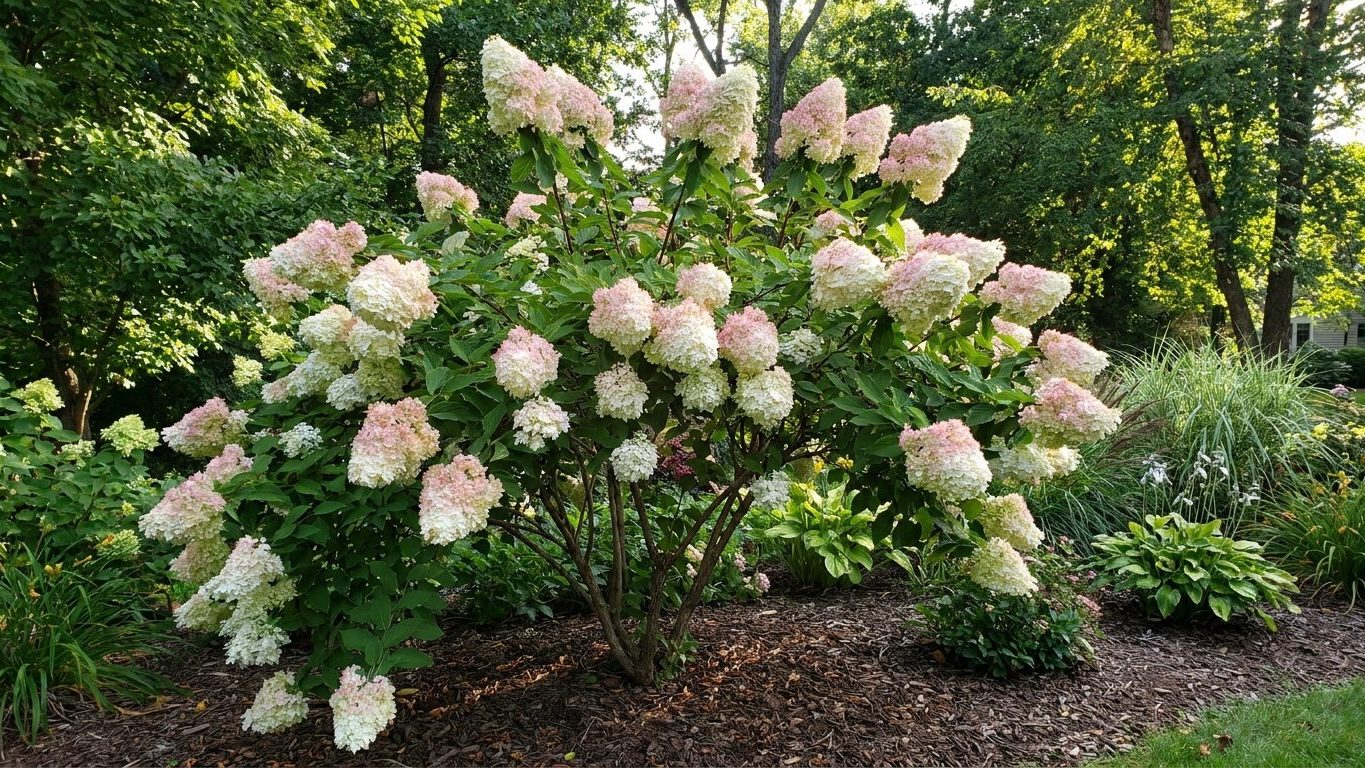
Angel Blush hydrangea is a Hydrangea paniculata shrub with flowers that stay closed in small cupped clusters instead of opening flat, shifting from white to blush pink as summer turns to fall. It tolerates cold better than bigleaf hydrangeas, fits a mid-size yard, and asks for one main gesture: prune in late winter, before new growth starts, since next summer’s blooms form on that fresh wood.

What This Variety Is

Angel Blush is a Hydrangea paniculata selection from Proven Winners. Its blooms keep their sepals fused into small closed cups, unlike most panicle types that open flat.

It grows as a rounded, multi-stem shrub. Sturdy stems hold the panicles upright even after a hard rain.

  • Bloom shape: closed, bell-like sepals rather than flat florets
  • Bloom color: opens creamy white, ages to blush pink
  • Wood: flowers form on new growth each season

Proven Winners puts Angel Blush at USDA zones 3 to 8, wider than most bigleaf hydrangeas manage. Mature shrubs reach 6 to 8 feet tall and spread 4 to 5 feet.

The color shift happens gradually through summer into fall, not overnight. Because it blooms on new wood, a hard prune in late winter still leaves time for flower buds to form before summer.

The panicles run smaller and denser than classic paniculata plumes, closer in scale to a football than a pointed spike. Full sun brings the deepest color change on the flowers.

Where It Grows: Zones and Regions

Proven Winners rates Angel Blush hydrangea for zones 3 to 8, one of the wider ranges among panicle types, though summer length and humidity still separate an easy garden from a hard one. The state selector below this section leads to the frost dates and pruning window for your own address.

  • Upper Midwest and Northeast (Minnesota, Wisconsin, Maine): near the cold edge of the range, stems can die back to the ground in a hard winter, and the shrub still rebounds because it flowers on new wood each year.
  • Mid-Atlantic and Ohio Valley (Virginia, Ohio, Kentucky): this sits in the comfortable middle of the range, with a long enough season for the blush color to fully develop before frost cuts the show short.
  • South and lower Southeast (Georgia, Tennessee, the Carolinas): heat and humidity push conditions toward the upper edge of the range, and afternoon shade helps hold flower color instead of letting it bleach out under strong sun.
  • Interior West and high plains (Colorado, Wyoming, Montana): dry air and a late spring frost threaten the shrub more than winter cold itself, so a wind-sheltered spot matters as much as the zone number on the tag.
  • Pacific Northwest and coastal areas (Washington, Oregon): mild, damp summers slow the color shift, so the flowers hold their white stage longer than in hotter regions before turning blush.

Use the state selector to check the exact zone and frost window for where you garden before you plant.

The Year With It, Season by Season

Planting

Set new plants in spring or early fall so roots establish before extreme heat or a hard freeze arrives. Because Angel Blush blooms on new wood, a fall planting still flowers well the following summer, since next year’s stems form fresh from the base.

Spring

New growth pushes from the base and from any stems that made it through winter once nights stay reliably above freezing. This is the last safe window for a hard prune, since cutting after strong growth starts costs some of that season’s flower buds.

Summer

Panicles open creamy white by early summer and hold that stage for weeks even in real heat. Afternoon shade slows the blush shift, so full sun gardens see the pink tone move in faster than shaded ones do.

Fall

Flower color deepens from blush toward a dustier rose as nights cool, and the panicles dry in place rather than dropping off the shrub. Leave the dried heads on through fall for a second stretch of texture in the yard.

Winter

Stems can die back partway or all the way to the ground in the coldest part of the zone range, but the shrub rebuilds because next year’s flowers form on new wood regardless. Skip pruning until spring shows exactly where live wood ends.

Diseases and Pests It Resists

Angel Blush carries the general toughness of Hydrangea paniculata, which holds up better against bud loss and cold damage than bigleaf types since it flowers on new wood every year.

Missouri Botanical Garden’s Plant Finder lists the species as having no serious disease or pest problems under normal garden conditions, with occasional trouble showing up mainly in wet or crowded sites.

Threat This one Source
Bud loss to late frost Low risk, blooms on new wood so lost buds regrow Missouri Botanical Garden Plant Finder
Powdery mildew Occasional in humid, shaded sites Missouri Botanical Garden Plant Finder
Leaf spot Occasional in wet summers Missouri Botanical Garden Plant Finder
Aphids Occasional on new growth tips Missouri Botanical Garden Plant Finder

Scale insects and spider mites can turn up on a stressed plant, but they are not reported as common problems for this cultivar specifically. Good airflow and morning sun on the leaves keep most of the list above from becoming a real issue.

Where to Plant It in a Yard

Angel Blush works best as a specimen or in a small group where its color change through summer draws the eye, since the shrub holds a tidy, rounded shape without staking.

  • Your state page: the frost dates and pruning window for where you live.
  • Hydrangea pruning guide: when to cut back new-wood bloomers without losing the season’s flowers.
  • Hydrangea companion plants: what to pair with a paniculata’s late-summer bloom time.

Give it full sun for the strongest color shift, then check your state page before the first cut.

Common questions

Does Angel Blush hydrangea change color based on soil pH?

No. Unlike bigleaf hydrangeas, panicle types including Angel Blush do not shift color with soil acidity. The white-to-blush change follows the flower’s own aging, not the soil.

How much sun does Angel Blush hydrangea need?

Full sun to part shade both work, but full sun brings out the deepest blush color and keeps the shrub’s habit tighter. In hot Southern gardens, afternoon shade protects the flowers from bleaching out.

When should I prune Angel Blush hydrangea?

Prune in late winter or very early spring, before new growth pushes hard, since flowers form on the current season’s wood. Cutting later in spring costs some of that summer’s blooms.

All Summer Beauty Hydrangea: Size, Zones, Pruning and Care

All Summer Beauty Hydrangea: Size, Zones, Pruning and Care

All Summer Beauty is a bigleaf hydrangea (Hydrangea macrophylla) that grows 3 to 4 feet tall and 3 to 4 feet wide, and stays hardy in USDA zones 6 through 9. Its edge over most mophead types is that it sets flower buds on new wood as well as old, so a hard winter or a rough pruning cut rarely wipes out the whole season’s bloom.

What This Variety Is

All Summer Beauty is a mophead cultivar of Hydrangea macrophylla, the bigleaf hydrangea group known for round flower clusters. The Missouri Botanical Garden Plant Finder lists it as a rounded, deciduous shrub reaching 3 to 4 feet tall with an equal spread.

Most bigleaf hydrangeas flower only on stems grown the previous year, so a late frost or a bad pruning cut can erase the whole show. This one sets buds on both old and new wood, which is the trait behind its name.

Flower color follows soil chemistry rather than the tag on the plant. Acidic soil pushes the mophead blooms toward blue, alkaline soil pushes them toward pink.

Bloom runs from June into September, a longer stretch than many bigleaf types manage. Part shade suits it best, since full sun in hot climates scorches the leaves and stresses the shrub.

Where It Grows: Zones and Regions

The Missouri Botanical Garden Plant Finder puts All Summer Beauty at USDA zones 6 through 9, a band that runs from the mid-Atlantic down through the Gulf Coast and across to the Pacific Northwest.

  • Mid-Atlantic and Upper South (Virginia, North Carolina, Tennessee): zone 6 and 7 winters are mild enough that old-wood buds usually make it through, so the shrub blooms on both wood types with little help from the gardener.
  • Deep South and Gulf Coast (Georgia, Louisiana, the Florida panhandle): zone 8 and 9 heat is the bigger risk here, and part shade keeps the leaves from scorching by midsummer.
  • Pacific Northwest (Oregon, Washington): mild, damp winters sit inside zone 8, and cool summers stretch the June to September bloom window even further.
  • Northern edge (zone 6 pockets in Ohio, Pennsylvania, Missouri): winter cold can still kill some old-wood buds, but new-wood flowers keep the display going, which is the whole point of this cultivar.

The state selector below this section leads to the frost dates and pruning window for the state where you garden.

The Year With It, Season by Season

Spring

New growth breaks from both the woody stems that overwintered and any old wood that survived the cold. Spring is the window to plant a container-grown shrub, giving roots a full season to settle in before summer heat arrives.

Summer

The Missouri Botanical Garden Plant Finder lists bloom from June to September, a longer run than the typical bigleaf hydrangea manages in one stretch. Medium, even moisture keeps the mophead heads from wilting during the hottest weeks.

Deadheading spent blooms tidies the shrub but isn’t required for rebloom, since new-wood buds keep forming through the season on their own. A layer of mulch over the root zone holds moisture and eases the watering load.

Fall

Stems slow their growth and set the buds that will open as old-wood flowers next year, so a heavy pruning cut now removes blooms before they open. A light shaping cut, if needed at all, is safer right after the summer flowers fade.

Winter

Zone 6 gardens can lose some old-wood buds to a hard freeze, but new-wood growth in spring keeps the shrub flowering anyway. A few inches of mulch over the crown protects the roots through the coldest stretch of the year.

Diseases and Pests It Resists

All Summer Beauty carries no serious insect or disease problems, according to the Missouri Botanical Garden Plant Finder, a cleaner record than most mophead hydrangeas get.

That doesn’t mean it’s untouchable. A handful of common hydrangea pests and diseases still turn up often enough to watch for through the growing season.

Threat Risk on this cultivar
Aphids Occasional, minor foliage feeding
Spider mites Occasional, worse in dry heat
Scale Occasional
Leaf spot Occasional
Powdery mildew Occasional, more common in humid summers

None of these threats rate as serious for this cultivar, and it doesn’t call for a spray program. Rust and viral problems show up in the same source’s list but are rare enough that other hydrangea types carry the bigger burden, and those are covered on their own pages.

Where to Plant It in a Yard

Part shade suits All Summer Beauty best, ideally morning sun with afternoon shade, since full sun in hot climates scorches the leaves by midsummer. A bed near a patio or foundation shows off the long June to September bloom.

  • Your state page: the frost dates and pruning window for where you live.
  • Hydrangea types compared: how All Summer Beauty stacks up against panicle and smooth hydrangeas for size and bloom timing.
  • Soil pH and flower color: how to nudge blooms toward blue or pink in your own beds.

Test the soil before planting, since that single step decides which color shows up on the shrub each summer.

Common questions

Does All Summer Beauty bloom on old wood or new wood?

Both, according to the Missouri Botanical Garden Plant Finder, which is why a rough winter rarely erases the whole season’s flowers.

How tall does All Summer Beauty hydrangea get?

It reaches 3 to 4 feet tall and 3 to 4 feet wide at maturity, a compact size for foundation plantings or a mixed border.

What zone is best for All Summer Beauty hydrangea?

Zones 6 through 9 cover it, with part shade and even soil moisture mattering more day to day than the exact zone number.

Hydrangea Pests and Diseases in Washington

Hydrangea Pests and Diseases in Washington

Wet, mild, and shaded much of the year, western Washington gives hydrangeas a longer disease season than most of the country, not a longer pest season. In Seattle, four fungal problems do more damage than any insect: powdery mildew, botrytis blight, leaf spot, and root rot. Aphids and slugs show up too, but rarely kill a shrub the way soggy clay does.

Hydrangea pests and diseases Washington: The Short Answer

NOAA NCEI 1991-2020 Climate Normals for station USW00024233 puts Seattle’s last spring frost at February 27 to March 18 and the first fall frost at November 13 to November 30, which leaves a long, damp growing season that fungal disease uses far better than insects do.

Aphids on new growth

Small green or black clusters gather on the soft tips as spring growth flushes, curling leaves and leaving a sticky residue behind. A strong hose spray every few days usually clears a light case, and it rarely needs anything stronger on an established shrub.

Cercospora leaf spot

Purple-brown spots with tan centers appear on lower, older leaves first, usually after a stretch of wet weather in late spring. Remove and bag the spotted leaves rather than composting them, and water the soil, not the foliage, going forward.

Powdery mildew

A gray-white dusting settles over leaf tops during humid summer stretches, especially on shrubs crowded against a fence or wall with no airflow. Thinning out crowded stems and spacing new plantings wider solves more of this than any spray does.

Botrytis blight

Cool, damp weather turns flower petals and soft stems brown and mushy almost overnight, often right around bloom. Cutting out the affected stems during the June to July prune window for bigleaf hydrangea keeps it from spreading into next year’s buds.

Slugs and snails

Slugs and snails — Hydrangea Pests and Diseases in Washington

Ragged holes chewed through leaf edges, plus a silvery slime trail at dusk, point straight to slugs rather than any insect. Damp mulch near the crown is their favorite address, so pulling mulch back a few inches from the stems helps.

Root rot

Root rot — Hydrangea Pests and Diseases in Washington

A shrub that wilts even after rain, with leaves yellowing from the bottom up, usually sits in clay that never drains. Improving drainage before one of the fall or spring planting windows matters more here than anything applied after the fact.

Deer browsing

Stems chewed clean at an angle, not shredded, and entire flower heads missing overnight signal deer, not insects. Fencing or repellent applied before the dormant season keeps next year’s buds from disappearing along with this year’s blooms.

How to Work Out the Dates for Your Own Yard

Diagnosing what is actually wrong on a Washington hydrangea starts with the calendar, not the leaf.

  1. Match the symptom to the season: spotting that shows up before the June to July prune window points to leaf spot, while browning right at bloom points to botrytis instead.
  2. Check the fertilize windows first: with fertilizing set for March, May, and July, feeding a shrub mid-outbreak pushes soft new growth that mildew moves into fastest.
  3. Test drainage before the planting windows: February, March, September, and October are the planting months here, and a spot that puddles for hours after rain during any of them is a future root rot site.
  4. Prune only inside the June to July window: cutting bigleaf hydrangea outside that range removes next year’s flower buds, which can look like disease damage but isn’t.
  5. Bring a sample before spraying: a cut stem or a spotted leaf tells a county office more in five minutes than a description over the phone ever will.

Run through those five checks in order and most Washington hydrangea problems sort themselves into fungal, pest, or drainage before you’ve bought a single product.

Washington North to South: How the Dates Shift

USDA Plant Hardiness Zone Map puts Washington anywhere from 4a to 9a, and where a yard falls inside that range decides which of these problems actually shows up.

  • Puget Sound lowlands (Seattle, Tacoma, Bellingham): mild and wet nearly year round, this is where fungal pressure runs highest.
  • Cascade foothills and mountain valleys: shorter, drier summers cut back on mildew and blight but raise the odds of winter stem dieback.
  • Eastern Washington (Spokane, Yakima, the Tri-Cities): high desert air keeps most fungal disease away, trading it for spider mites and leaf scorch.
  • Olympic Peninsula and outer coast: the wettest corner of the state carries the longest fungal disease season of anywhere in Washington.

Whichever pocket a yard sits in, the state calendar page adjusts these same windows to the mild edge or the dry edge of that range.

Mistakes Washington Punishes

Watering the foliage at night

Overhead watering in the evening leaves leaves wet through the cool night hours, which is exactly the setup powdery mildew and botrytis need. Switching to morning watering at the soil line, not the leaves, cuts that risk without changing how often a shrub gets water.

Skipping fall garden cleanup

Fallen leaves and spent flower heads left under the shrub overwinter fungal spores in the mild Puget Sound climate that never gets cold enough to kill them off. Raking and bagging that debris before the dormant season breaks the cycle for next spring.

Planting too deep in heavy clay

Setting the root ball below grade in Washington’s common clay soils traps water right where the roots need air, which is how root rot starts. Planting slightly high, with the top of the root ball at or above grade, during one of the planting windows avoids the problem entirely.

Washington Extension Offices and County Contacts

The frost and calendar figures above are a starting point, not a diagnosis. County offices and WSU Extension carry the rest.

  • Your county WSU Extension office: soil testing and on the ground diagnosis specific to your ZIP code.
  • WSU Extension: statewide factsheets on identifying hydrangea disease before it spreads.
  • Master Gardener plant clinics: free sample diagnosis during the growing season, no appointment needed at most locations.

Bring a cut stem or a spotted leaf to that first visit, not just a phone photo.

Common questions

Do Washington hydrangeas need fungicide every year?

Not automatically. Spacing plants for airflow and watering at the soil line prevent most of the fungal problems common here before any spray is needed.

What’s eating holes in my hydrangea leaves in Seattle?

Ragged edges with a slime trail nearby point to slugs and snails rather than an insect, especially in damp mulch close to the stems.

Can I compost blighted hydrangea leaves?

Bag and discard spotted or blighted leaves instead. Home compost piles rarely reach a temperature high enough to kill off the spores that cause leaf spot and botrytis.

When to Prune Hydrangeas in Washington

When to Prune Hydrangeas in Washington

In western Washington, the planting window falls in February, March, September, and October, timed around Seattle’s last spring frost of February 27 to March 18 and first fall frost of November 13 to November 30. Prune bigleaf hydrangeas in June and July, right after bloom, never in fall. East of the Cascades, the season runs shorter and colder.

When to prune hydrangeas in Washington: The Short Answer

Seattle’s frost calendar decides everything here. NOAA NCEI 1991-2020 Climate Normals puts the last spring frost at February 27 to March 18 and the first fall frost at November 13 to November 30, which is why the site’s planting window sits in February, March, September, and October rather than the traditional spring rush.

  • January: The ground is still cold and wet, so this is not a planting month here. Wrap the root zone in mulch and leave pruning tools in the shed.
  • February: Planting opens even though the last frost hasn’t cleared yet, because container stock can settle into cool, workable soil. Water in well and skip fertilizer until the ground warms.
  • March: Planting continues and the first fertilizer round of the year lands now. The tail end of frost risk means new leaves can still get nipped, so hold off on cutting anything back.
  • April: No planting, fertilizing, or pruning task is scheduled this month for Washington. Spend it watching new growth and pulling weeds before they compete for water.
  • May: The second fertilizer feeding of the season goes down now. Buds are forming on old wood, so this is not the month to prune anything.
  • June: Bigleaf pruning opens as soon as the first flush of blooms fades. Cut just above a healthy bud pair and stop there, since next year’s flowers are already setting.
  • July: Pruning continues alongside the third and final fertilizer round of the year. Water deeply during any dry stretch, since summer heat here is short but real.
  • August: No listed gesture falls in August. Keep watering consistent and let the shrub finish its bloom cycle undisturbed.
  • September: The fall planting window opens, roughly two months ahead of the first frost. Roots still have time to establish before the ground cools.
  • October: Planting wraps up this month, the last safe stretch before frost risk climbs. Get any new shrub in the ground early in the month rather than late.
  • November: The first frost arrives somewhere between the 13th and the 30th. Mulch the base heavier once the ground starts to chill.
  • December: The shrub is fully dormant. Leave it alone until the calendar turns back to February.

That’s twelve months of gestures pinned to a single station’s frost data, but Washington is a state of microclimates, and the next two sections show how far these dates can drift and how to translate them onto your own ground.

How to Work Out the Dates for Your Own Yard

Your own frost date might differ from Seattle’s by a week or more, so here’s how to adjust the calendar above to your actual yard.

  1. Find your local frost window: check a nearby station or ask your county extension office rather than assuming Seattle’s range applies if you garden inland or at elevation.
  2. Count back from planting: if your last frost lands later than the Sound’s window, push the February planting start back by however many weeks separate you from that range.
  3. Watch the soil, not just the calendar: cold, wet clay holds spring planting back well past the last freeze, so wait until the ground crumbles rather than clumps in your hand.
  4. Time pruning to bloom, not to the month: bigleaf hydrangeas get cut back in June and July here because that’s right after the first flush fades, so a later-blooming shrub earns a later cut.
  5. Check your hardiness zone: USDA Plant Hardiness Zone Map places Washington between 4a and 9a, and a shrub rated for the low end of that range needs less winter cover than one rated for the high end.

None of this replaces watching your own yard. A south-facing bed against a brick wall warms weeks ahead of an open lawn, and that gap matters more than any single date.

Washington North to South: How the Dates Shift

Washington’s hydrangea calendar shifts hard between the wet west side and the dry east side, and elevation adds another layer on top of that.

  • Puget Sound lowlands (Seattle, Tacoma, Olympia): the mildest, wettest corner of the state, where the frost windows above apply most directly and shrubs can lean toward the earlier end of each planting month.
  • Olympic Peninsula and the coast (Aberdeen, Port Angeles): ocean influence keeps winters even milder than the Sound, though near-constant rain means drainage matters more than frost timing.
  • Cascade foothills and higher elevation (North Bend, Cle Elum): every few hundred feet of elevation pushes both frost dates outward, shrinking the planting window from both ends.
  • Eastern Washington (Spokane, Yakima, the Columbia Basin): high desert conditions mean colder winters, hotter summers, and a shorter season overall, closer to the cold end of the state’s hardiness range than the mild Sound.

If you’re east of the Cascades, treat every date as a starting point and lean on the state guide for how far it moves in your county.

Mistakes Washington Punishes

No flowers after fall pruning

No flowers after fall pruning — When to Plant and Prune Hydrangeas in Washington

Bigleaf hydrangeas set next year’s buds on old wood by late summer, so cutting them back in September or October removes the very growth that would have bloomed. Prune only in June and July, right after the first flush fades.

Root rot in wet clay

Western Washington’s rain keeps native clay soaked through winter, and roots sitting in standing water rot before spring arrives. Plant on a slight mound or work in coarse material, especially in low spots that stay soggy longest.

Planted too early, stalled all spring

February technically opens the planting window, but cold, wet soil holds root growth back for weeks even after frost risk fades. Wait until the ground crumbles rather than clumps before digging, which usually pushes real planting closer to March.

Washington Extension Offices and County Contacts

The frost windows above come from one Seattle-area station, but soil, elevation, and microclimate vary by county, and your local extension office fills that gap with numbers tuned to your yard.

  • Your state page: the frost dates and the pruning window where you live.
  • Which ones hold up here: the hydrangea varieties suited to Washington’s range of climates.
  • WSU Extension: county-level contacts for soil tests and planting advice specific to your area.

Common questions

Can I plant hydrangeas in fall in Washington?

Yes, September and October are part of the state’s planting window, giving roots about a month or more to settle in before the first frost arrives between November 13 and November 30 in the Seattle area.

What month is best for planting hydrangeas in Seattle?

March tends to work best for most yards, since the last spring frost falls between February 27 and March 18 and the soil has usually warmed enough by then to stop holding roots back.

Do hydrangeas need winter protection in Washington?

It depends on where in the state you garden. Western Washington’s mild, maritime conditions rarely require extra winter cover, but areas toward the cold end of the state’s 4a to 9a range should mulch the base heavier before November.

The almanac, state by state. Every date on this site comes from a state’s own frost facts and its extension service’s calendar — and says where it comes from.