Skip to content

Hydrangeas That Grow Well in Virginia

Hydrangeas That Grow Well in Virginia

Panicle and smooth hydrangeas grow well in every part of Virginia, from Virginia Beach to the Blue Ridge, because they bloom on new wood each spring and shrug off a late freeze. Bigleaf hydrangea, the classic mophead, only holds up reliably along the coast, where winters stay mild enough to spare its old-wood flower buds.

Hydrangeas that grow well in Virginia: The Short Answer

The USDA Plant Hardiness Zone Map puts Virginia at 5a to 8b, and that spread explains which hydrangea holds up where in the state. Virginia Beach, home to the coastal weather station behind these dates, sits at the mild end of that range, while the Blue Ridge and southwest Virginia run several zones colder.

A shrub that blooms without fail on the coast can lose every bud a hundred miles inland. Here are six that cover the state, ranked from the safest bet to the one that needs the right spot to pay off.

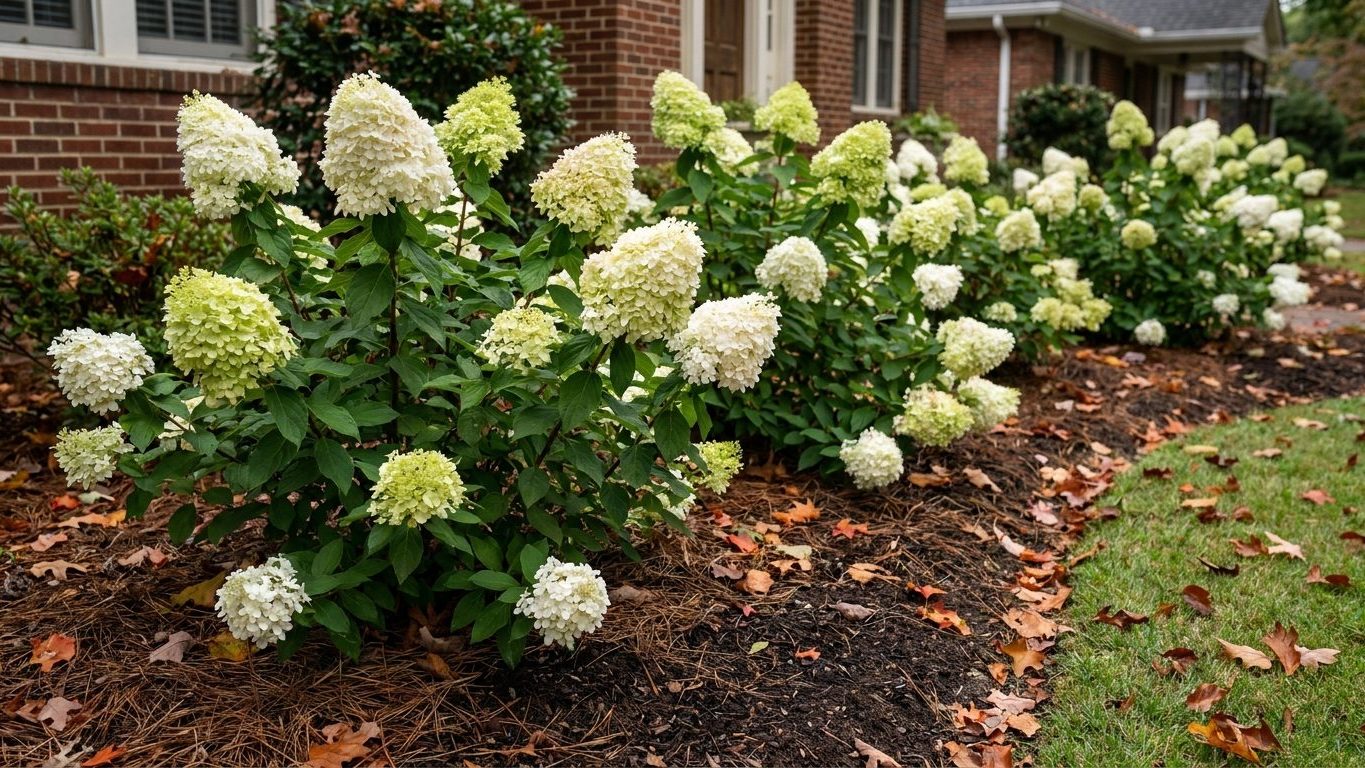
Panicle hydrangea

Panicle hydrangea — Hydrangeas That Grow Well in Virginia

Hydrangea paniculata blooms on new wood, so a late freeze nipping the stems in spring doesn’t touch the flower buds, which form later. It handles the cold pockets of the Blue Ridge and a Virginia Beach summer with equal ease. This is the shrub I’d plant first, sight unseen.

Smooth hydrangea

Smooth hydrangea — Hydrangeas That Grow Well in Virginia

Hydrangea arborescens, parent of the popular ‘Annabelle’, is native to the eastern woodlands that include Virginia, so it already suits the state’s freeze-thaw swings. It blooms on new wood too, which makes it nearly foolproof from the mountains to the coast. Afternoon shade keeps the flower heads from flopping in July heat.

Oakleaf hydrangea

Oakleaf hydrangea — Hydrangeas That Grow Well in Virginia

Hydrangea quercifolia is native to the Southeast and feels at home in Virginia’s clay soil and part shade. Its cone-shaped blooms fade to a rust color that holds into fall, after the panicle and smooth types have gone bare. The coldest mountain hollows can still burn its buds some winters.

Climbing hydrangea

Climbing hydrangea — Hydrangeas That Grow Well in Virginia

Hydrangea anomala subsp. petiolaris is hardy statewide but slow, often taking several seasons to bloom while it establishes on a wall or trellis. Once rooted in, it performs about as reliably as the panicle type. Patience is the real requirement here, not the climate.

Mountain hydrangea

Mountain hydrangea — Hydrangeas That Grow Well in Virginia

Hydrangea serrata is a smaller cousin of bigleaf, with flower buds that survive a harder freeze than the classic mophead. It still blooms mostly on old wood, so a hard late frost in the colder third of the state can cut the show short. It suits Piedmont gardens better than the open Blue Ridge crest.

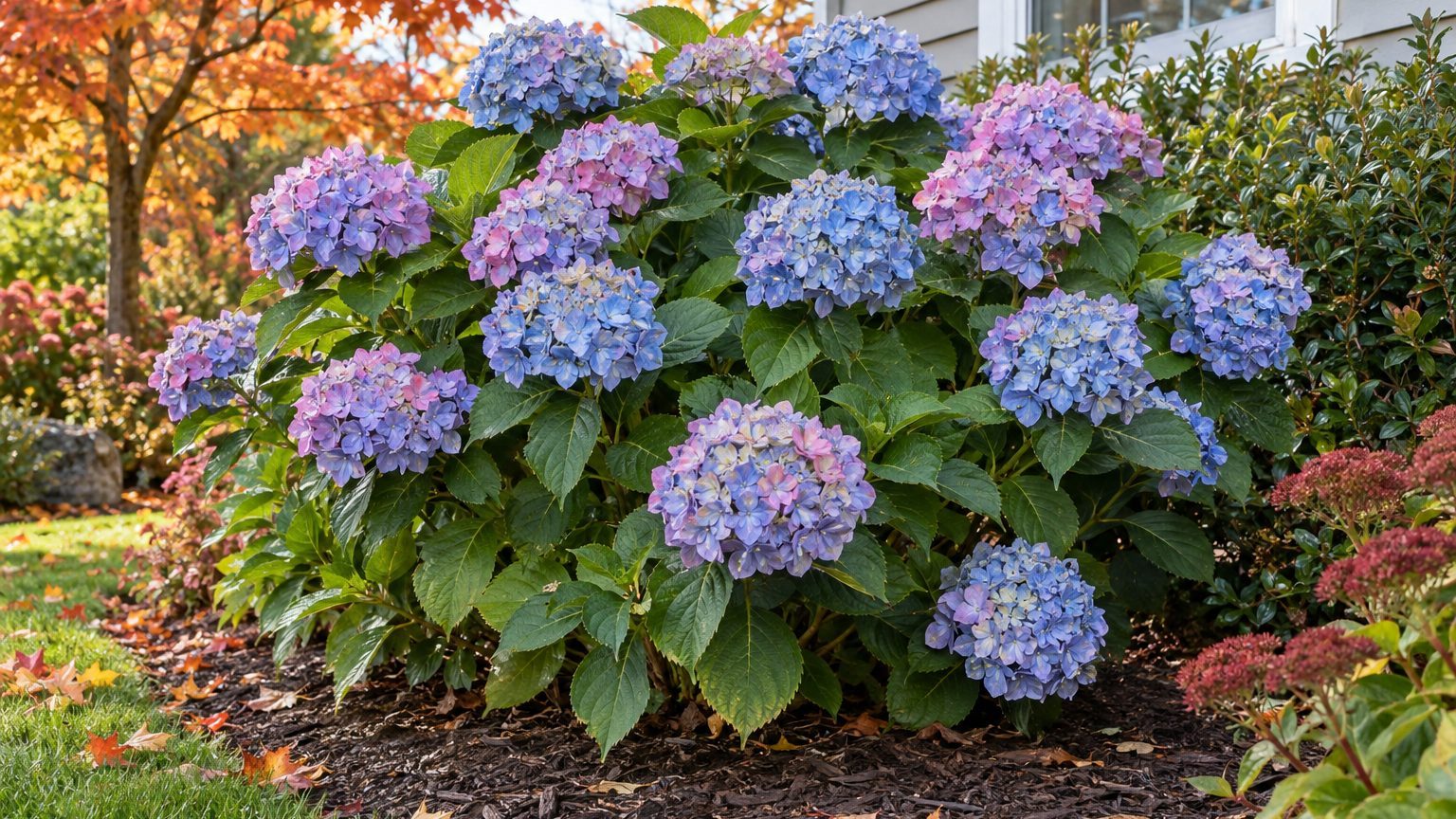
Bigleaf hydrangea

Bigleaf hydrangea — Hydrangeas That Grow Well in Virginia

Hydrangea macrophylla is the classic mophead, with big pink or blue blooms, and it’s the riskiest pick statewide. It sets flower buds on old wood, so a late freeze or hard winter can strip a healthy plant of every bloom. It performs best near Virginia Beach, less well toward the mountains.

How to Work Out the Dates for Your Own Yard

Working out whether a hydrangea will perform in your yard starts with the same frost window that governs every other spring job in Virginia, adjusted for the fact that flower buds often form months before they open.

  1. Locate your zone on the map: Virginia spans 5a to 8b, so a shrub rated no colder than zone 7 is a gamble past the Piedmont.
  2. Check bloom habit before buying: old-wood bloomers set next year’s flowers by late summer, so a hard freeze during NOAA NCEI 1991-2020 Climate Normals’ last spring frost window, March 20 to April 3 near the coast, can wipe them out.
  3. Weigh the first fall frost too: the same normals put it at November 10 to November 24 near the coast, and a shrub needing a long season to finish wood struggles in the colder third of the state.
  4. Match bud swell to the frost window: if buds are already swelling before that spring window closes, the plant is exposed, count backward from it rather than forward from planting day.
  5. Compare against a plant that already works: panicle hydrangea blooms on wood grown after both frost windows close, so it never gambles on a single date.
  6. Check the reference city against yours: Virginia Beach anchors these dates, so gardens in the Blue Ridge or southwest should push every window later in spring and earlier in fall.

Bigleaf hydrangea fails this test across half the state, since it needs old wood to survive winter intact, and in the colder pockets that’s not a safe bet most years. Panicle passes because it starts fresh each spring, regardless of what winter did to last year’s stems.

Virginia North to South: How the Dates Shift

Elevation and distance from the ocean shift these dates more than latitude does within Virginia, and the direction it moves changes which hydrangea makes sense.

  • Coastal Tidewater and Virginia Beach: the mild end of the state, where the frost windows named above apply directly and bigleaf hydrangea has its best odds.
  • The Piedmont, around Richmond: spring frost lingers later and fall frost arrives sooner than at the coast, narrowing the season for anything that blooms on old wood.
  • The Blue Ridge and Shenandoah Valley: elevation pushes both frost dates further from the coastal window, favoring panicle and smooth over bigleaf.
  • Far southwest Virginia: the coldest ground in the state, where the season runs weeks shorter than the coast and only the hardiest new-wood types are worth the effort.

Whichever part of the state you garden in, shift the coastal dates later heading inland and check the Virginia hydrangea calendar for the exact planting and pruning months.

Mistakes Virginia Punishes

Planting bigleaf inland and hoping

Bigleaf sets flower buds on old wood, and inland Virginia’s colder nights kill those buds most winters even when the plant itself survives. Plant it only near the coast, and choose panicle or smooth for the Piedmont and mountains instead, checking the ranked list above before buying on looks alone.

Pruning on the wrong month

Cutting bigleaf back in fall or winter removes the buds it already set for next summer’s flowers. The safe window runs June and July, right after the current bloom fades and before next year’s buds start forming on the new growth.

Skipping afternoon shade

Full sun all day scorches hydrangea leaves fast once Virginia’s summer humidity sets in, especially on bigleaf and oakleaf types. Give it morning sun and afternoon shade instead, and mulch to keep roots cool through the fertilizing months of March, May, and July.

Virginia Extension Offices and County Contacts

The USDA Plant Hardiness Zone Map’s 5a to 8b range is a starting point, not a verdict for your yard, and Virginia Cooperative Extension fills in the rest county by county.

  • Virginia Cooperative Extension: ext.vt.edu lists the local office for your county, along with soil testing and plant clinics.
  • The Virginia hydrangea calendar: month-by-month planting and pruning dates for wherever you live in the state.
  • What goes wrong with hydrangeas in Virginia: the pests and problems specific to this state’s climate, and how to spot each one.

Common questions

Can bigleaf hydrangea survive in the Blue Ridge?

It can survive the cold and still fail to bloom, since the plant itself is hardier than the flower buds it sets on old wood. Most gardeners in the mountains get better results from panicle or smooth hydrangea instead.

When should I plant a new hydrangea in Virginia?

March, April, September, and October are the planting months for the state, giving roots time to settle before summer heat or winter cold arrives.

Why did my hydrangea leaf out but never flower?

An old-wood bloomer like bigleaf or mountain hydrangea likely lost its flower buds to a late frost or a cold winter, even though the rest of the plant survived fine. Switching to a new-wood bloomer solves this for good.
Hydrangea Pests and Diseases in Virginia

Hydrangea Pests and Diseases in Virginia

Virginia’s humid summers set the terms for hydrangea trouble. Wet leaves, crowded stems and a long growing season invite fungal spots and sap-feeding insects far more often than they kill a shrub outright. Nearly every problem shows on the foliage first, in the order the season delivers it. Inland yards will differ.

Hydrangea pests and diseases Virginia: The Short Answer

In Virginia Beach, NOAA NCEI 1991-2020 Climate Normals put the last spring frost between March 20 and April 3 and the first fall frost between November 10 and November 24. Hydrangea problems live in that stretch, so match what you see below and confirm with extension before spraying anything.

Blackened new growth in spring

A late freeze, not a disease, blackens tender shoots after leaf-out. Wait until the last spring frost window closes, March 20 to April 3 in Virginia Beach, then clip only tips that are clearly dead. Spraying does nothing here, and structural pruning of bigleaf waits for June and July.

Ragged holes in fresh leaves

Many chewing insects work at night and hide by day, so the damage is often the only clue. Check leaves after dark with a flashlight, and hand-pick what you find into soapy water. Holes on a few leaves are cosmetic. Widespread loss, or an insect you cannot name, goes to extension.

Sticky leaves and curled tips

Sap-feeding insects excrete a sugary film, which can turn black as a sooty mold grows on it. Blast colonies off with a firm stream of water, then look again in a few days. Skip extra fertilizer. Soft, lush growth feeds them, and feeding fits March, May and July.

Speckled, bleached leaves in heat

Tiny sap-feeders on leaf undersides stipple the surface with pale dots, especially in midsummer heat. Turn a leaf over and look for fine debris or webbing. Rinse undersides with a hose every few days and keep the root zone evenly moist. Stressed, thirsty shrubs suffer most.

White powder on the surface

A powdery white coating shows up where air barely moves, on shaded, crowded stems and in humid weather. It wipes off with a finger but returns. Thin a few old stems at the base in June or July for airflow, remove the worst leaves, and keep water off the foliage.

Round brown spots that spread

Leaf spots follow long wet spells, and rain splash carries spores from fallen leaves up to healthy ones. Pick off spotted leaves, bag them rather than composting, and water at the base. Rake fallen foliage before the first fall frost window, November 10 to November 24 in Virginia Beach.

How to Work Out the Dates for Your Own Yard

Start with Virginia Beach as the anchor, since NOAA NCEI 1991-2020 Climate Normals give March 20 to April 3 for the last spring frost and November 10 to November 24 for the first fall frost, then read your own shrubs against those windows.

  1. Mark leaf-out against the spring window: anything blackened before the last frost window closes, March 20 to April 3 in Virginia Beach, is usually cold injury rather than disease, so wait before you diagnose.
  2. Read the pattern on the whole shrub: holes, stickiness, stippling, powder and round spots each point to a different family of problems, and new growth versus old growth narrows it further.
  3. Flip leaves from sun and shade: insects and fungus favor different spots, and undersides give away what the tops hide.
  4. Count back from the fall window: take November 10 to November 24 and subtract about four weeks, and you land in mid-to-late October, the time to rake and bag spotted leaves.
  5. Bag a sample for the county office: one stem with healthy and affected leaves side by side, sealed in a bag, is what an extension agent can actually work with.

The arithmetic works anywhere: a frost range minus a number of weeks gives a date range, never a single day. Move the window later for a Blue Ridge yard and every check moves with it.

Virginia North to South: How the Dates Shift

The USDA Plant Hardiness Zone Map spans 5a to 8b across Virginia, and the season for leaf problems slides along with it.

  • Tidewater and the coast (Virginia Beach, Norfolk, Chesapeake): the mild end of the state, with the earliest leaf-out and the latest fall frost, so wet-leaf problems get the most weeks to build.
  • The Piedmont (Richmond, Charlottesville, Danville): frost comes later in spring and earlier in fall than on the coast, and humid summer stretches still favor leaf spots and powdery coatings.
  • Blue Ridge and Shenandoah Valley (Roanoke, Staunton, Harrisonburg): altitude and cooler nights push everything back by weeks, so watch for cold injury in spring before you worry about fungus.
  • Southwest Virginia (Abingdon, Wytheville, Wise): the shortest season, with frost lingering in spring and arriving early in fall, so pests have less time but one cold snap can undo new growth.

The statewide picture, including what to plant and where, sits on Hydrangeas in Virginia.

Mistakes Virginia Punishes

Leaves wet from evening sprinklers

Sprinklers running at dusk leave foliage wet through Virginia’s warm, humid nights: ideal for fungal spots. Water in the morning, at the base, so leaves dry by midday. Drip lines or a hand-held hose make this easy, and coastal yards near Virginia Beach feel the humidity most.

Shrubs planted shoulder to shoulder

Tight spacing traps humid air inside the canopy, which invites powdery coatings and spots. Give each shrub room to reach mature width when you plant in March, April, September or October. A tough, well-suited variety helps too, and Hydrangeas That Grow Well in Virginia covers which ones suit the state.

Extra feeding on top of the schedule

Feeding beyond March, May and July pushes soft, sappy growth that sap-feeding insects favor. Lush growth looks healthy, and that is the trap. Hold to those three rounds. Pruning bigleaf has its own window, June and July, laid out in When to Plant and Prune Hydrangeas in Virginia.

Virginia Extension Offices and County Contacts

The frost figures belong to Virginia Beach, and your yard may sit weeks off. The USDA NIFA Land-Grant University Extension directory lists ext.vt.edu as Virginia’s extension service, and your county office knows which problems are circulating nearby.

  • Hydrangeas in Virginia: the statewide guide, with the frost dates and the pruning window where you live.
  • Hydrangeas That Grow Well in Virginia: which types suit the state, useful when the same problem keeps coming back.
  • When to Plant and Prune Hydrangeas in Virginia: the planting and pruning months, so cuts and feeding land on schedule.

Bag one affected stem this week and take it to your county office.

Common questions

When do hydrangea problems show up in Virginia?

Cold injury appears right after leaf-out, and insects follow as the weather warms. Fungal spots and powder build in humid stretches through summer. In Virginia Beach, NOAA NCEI 1991-2020 Climate Normals put the last spring frost between March 20 and April 3.

Should I spray as soon as I see spots?

No. Spots, holes and stippling have different causes, and the wrong spray wastes money and can stress the shrub. Pick off affected leaves, water at the base, and take a sample to your county extension office through ext.vt.edu. Sprays come after the problem has a name.

Do mountain yards get the same problems as the coast?

The same families of problems show up, but the calendar shifts. The Blue Ridge and southwest Virginia run weeks later in spring and earlier in fall than Virginia Beach, so cold injury matters more early and the fungal season runs shorter. Your county office can confirm the local rhythm.

When to Prune Hydrangeas in Virginia

When to Prune Hydrangeas in Virginia

In Virginia Beach, the state’s mildest reference point, hydrangeas go into the ground twice a year: in spring once the soil clears the last frost window of March 20 to April 3, and again in fall between September and October before the first frost lands between November 10 and November 24.

When to prune hydrangeas in Virginia: The Short Answer

Here is how the twelve months break down for a hydrangea bed anywhere from the Tidewater to the Blue Ridge.

  • January: The ground is dormant and too cold to dig, so this month is for ordering stock and picking a site with morning sun. No fertilizer, no pruning, just planning.
  • February: Frost still grips most of the state, weeks ahead of the last spring frost. Prep the planting hole now so it’s ready the moment soil temperatures climb.
  • March: NOAA NCEI 1991-2020 Climate Normals puts Virginia Beach’s last spring frost at March 20 to April 3, and planting can start once that risk fades. This is also the first of three fertilizing months.
  • April: Planting continues as the frost window closes statewide. New root systems need steady moisture through this stretch, not just a one-time soak.
  • May: A second fertilizing round feeds the flush of leaf growth. Skip planting this month and let spring-set roots establish instead.
  • June: Bigleaf pruning opens now, limited to spent blooms and dead wood. Cutting further back risks removing next year’s flower buds.
  • July: The pruning window for bigleaf hydrangeas closes at month’s end, alongside the third and final fertilizing round. Afternoon shade matters more than ever as heat peaks.
  • August: No fertilizing and no pruning this month, since either would push tender growth into an unforgiving stretch of heat. Deep, infrequent watering keeps root balls from drying out.
  • September: Fall planting opens back up as nights cool. Roots set now have two full months before the first fall frost to anchor themselves.
  • October: The second fall planting month, and the better one for cooler soil and steadier rain. This is the last comfortable window before frost returns.
  • November: The first fall frost lands somewhere between November 10 and November 24 depending on elevation. Mulch goes down now, not before, to insulate roots without inviting rot.
  • December: The shrub is fully dormant and needs nothing but a check on mulch depth after any hard freeze. Save the pruning tools for June.

Spring and fall are the two safe doors into a Virginia hydrangea bed, with summer heat and winter dormancy locking everyone else out. The exact week still depends on where in the state that yard sits, which is what the next section works out.

How to Work Out the Dates for Your Own Yard

Working out a planting date for one specific yard means counting backward from the frost window instead of copying a date off a calendar.

  1. Check the local hardiness zone first: The USDA Plant Hardiness Zone Map puts Virginia’s range at 5a to 8b, and a yard near the coast sits at the warm end while a Blue Ridge property lands close enough to 5a that a marginal variety struggles some winters.
  2. Confirm the local frost window: Virginia Beach’s last spring frost falls between March 20 and April 3, but that date shifts later with every mile inland and every foot of elevation gained.
  3. Count forward past the last frost date before digging: That buffer lets soil temperature catch up to air temperature, which matters more to a hydrangea’s roots than the calendar does.
  4. Watch the soil, not just the thermometer: Cold, waterlogged soil in early spring can rot a new root ball even after the air has warmed past frost risk.
  5. Count backward from the first fall frost for a September or October planting: with the first fall frost landing November 10 to November 24, a plant set in September gets close to two months to root in before cold arrives, while an October planting gets far less cushion.
  6. Pick the species before the date: a panicle hydrangea tolerates a wider planting window than a bigleaf, which is pickier about both heat at planting and cold once it’s established.

None of this replaces watching the specific yard. A south-facing bed against brick warms weeks ahead of an open lawn, and that gap is often bigger than the difference between two Virginia counties.

Virginia North to South: How the Dates Shift

Elevation and distance from the water move these dates more than latitude alone does.

  • Tidewater and the coast (Virginia Beach, Norfolk, Hampton Roads): the mildest corner of the state, where the reference frost dates above apply almost exactly and the growing season runs longest.
  • The Piedmont (Richmond, Charlottesville): sits inland enough that spring arrives later and fall arrives sooner than the coastal reference dates, trimming the season from both ends.
  • The Shenandoah Valley (Winchester, Harrisonburg): valley cold air pools overnight, so frost lingers later into spring than the elevation alone would suggest.
  • The Blue Ridge and southwest (Blacksburg, Abingdon): the coldest ground in the state, where spring planting waits longest and fall planting has to start earliest to beat frost.

The state hydrangea guide lines up these regional shifts against the coastal reference dates for a specific county.

Mistakes Virginia Punishes

Pruning bigleaf in fall or winter

Bigleaf hydrangeas set next year’s flower buds on the current season’s wood by late summer, so a fall or winter cut removes blooms before they ever open. Keep pruning inside the June and July window and limit it to spent flower heads and dead stems.

Fertilizing past July

A late feeding in August or September forces soft new growth that has no time to harden before the first fall frost arrives in November. Stop after the third round in July and let the plant slow down on its own.

Planting into a Tidewater heat wave

Setting a hydrangea into the ground during a hot, dry stretch of Virginia Beach summer stresses roots that haven’t spread far enough to keep up with water loss. Hold off until the September or October window, when cooler soil gives roots a real head start.

Virginia Extension Offices and County Contacts

Virginia’s hardiness range of 5a to 8b covers coastal Norfolk to the Blue Ridge, and Virginia Cooperative Extension‘s county offices narrow that down to a specific soil and frost pattern.

  • Your state page: the frost dates and the pruning window where you live.
  • Which ones hold up here: bigleaf, panicle, and other names weighed against this state’s winters.
  • What goes wrong here: the pests and mistakes this climate makes worse, and the fix that actually works.

Common questions

Can I plant hydrangeas in Virginia in summer?

Nothing stops a summer planting except the hydrangea’s odds. July and August heat in Virginia Beach and points west stresses new roots before they’ve spread, so most gardeners wait for the September window instead.

Do hydrangeas need winter protection in Virginia?

Most of the state’s 5a to 8b range doesn’t require covering a hydrangea, but a bigleaf variety planted at the cold edge near the Blue Ridge benefits from a mulch layer applied once the first fall frost settles in.

What happens if I miss the fall planting window?

Spring is the fallback, and it works nearly as well once the last spring frost has passed in late March or early April. The trade-off is a shorter head start before summer heat arrives.

Hydrangeas That Grow Well in Vermont

Hydrangeas That Grow Well in Vermont

Panicle and smooth hydrangeas are the dependable choices in Vermont, because they flower on the current season’s growth and shrug off a hard winter. Oakleaf and climbing types come next, and bigleaf is the gamble, especially in the Green Mountains and the Northeast Kingdom. Here are six worth planting, ranked from safest to riskiest, and how to fit them to your own yard.

Hydrangeas that grow well in Vermont: The Short Answer

In Burlington, where NOAA NCEI Climate Normals put the last spring freeze at April 30 to May 10, the winner is any hydrangea whose buds form on new wood. They cannot be frozen off in winter because they do not exist yet. Old-wood bloomers carry theirs through January.

Burlington sits on Lake Champlain, the mildest corner of the state. The Green Mountains and the Northeast Kingdom run substantially shorter, so read this ranking, safest first, as a best case.

Limelight

Panicle hydrangea (Hydrangea paniculata) with large cone-shaped flower heads, 20–30 cm long, made of many small four-petalled florets. They open lime-

A panicle hydrangea, and the most dependable choice for a Vermont front yard. It flowers on new wood, so a hard winter that kills back tips costs nothing come August. Give it full sun to part shade and cut it back in late winter before growth starts. Cold is rarely the problem, heavy blooms flopping in wind can be.

Annabelle

The classic smooth hydrangea, and it thrives on neglect. Even if winter kills every stem to the ground, it regrows and blooms on that season’s growth. The flaw is soft stems: big white heads flop after rain. Plant it in sun to part shade with some support nearby and cut it low in late winter.

Incrediball

A smooth hydrangea bred for stiffer stems, so the heads stay upright where Annabelle bows. It shares the same new-wood habit, which is why Vermont winters barely slow it down. Choose it for a spot along a walkway or near the house where a sagging bloom would show. Same late-winter cut, same sun to part shade.

Climbing hydrangea

Slow to start, then long-lived. It clings to a stone wall or a mature tree and blooms on old wood, so a sheltered wall beats an exposed one. Expect a few years of leaves before flowers. Near Lake Champlain it does better than on a windy hilltop.

Oakleaf hydrangea

Oakleaf hydrangea, with lobed leaves and bold fall color, is native to the Southeast and blooms on old wood. A cold Vermont winter can kill the buds even when the stems live. Plant it against a south or east wall, mulch the roots, and treat any bloom as a bonus.

Endless Summer

The bigleaf gamble. Bigleaf hydrangeas set buds on old wood, and Vermont cold often kills them, so a shrub can look healthy and never flower. Reblooming types like Endless Summer also bloom on new growth, which helps. Even so, keep them on a sheltered site, and prune only after bloom, not in spring.

How to Work Out the Dates for Your Own Yard

Work backward from the frost window, then adjust for your own hill or valley.

  1. Find the first fall freeze: NOAA NCEI Climate Normals put Burlington at October 3 to October 13.
  2. Subtract about six weeks: that rule of thumb for root settling turns the window into August 22 to September 1, inside the August and September planting months.
  3. Anchor the spring side: the last freeze runs April 30 to May 10, so May planting follows it, while April suits only dormant, hardy stock.
  4. Match the wood to the winter: the USDA system runs 3b to 5b across Vermont, and Burlington sits at the mild end. Annabelle blooms on new wood, so it passes the winter even when stems die to the ground. A classic bigleaf sets buds on old wood the summer before, so the same winter can leave leaves and no flowers.
  5. Fix the maintenance dates: feed in March, May and July, and prune bigleaf in June and July, right after bloom.

Your yard will not match Burlington. A hollow where cold air pools or an exposed ridge can move every date, so log your own first killing frost each fall and shift the range to match.

Vermont North to South: How the Dates Shift

Elevation and water move these dates more than latitude does, and every shift below is measured against Burlington.

  • Champlain Valley (Burlington, Shelburne, Charlotte): the lake holds warmth into autumn, so frost arrives later and the whole ranking is in play, including a trial bigleaf.
  • Green Mountains (Stowe, Killington, the Mad River Valley): each step up in elevation shortens the season, so frost comes earlier in fall and lingers in spring. Stay with panicle and smooth types.
  • Northeast Kingdom (Newport, St. Johnsbury, Island Pond): the coldest winters and the shortest season. Plant early in the window and skip oakleaf and bigleaf.
  • Connecticut River Valley (Brattleboro, Windsor, Bellows Falls): low, sheltered ground runs milder than the hills above it, and south-facing slopes add a little more.
  • Southern hills (Bennington, Manchester, Wilmington): valley floors are forgiving, ridges are not, and cold air pools in hollows.

For the full state picture on frost and pruning, start with Hydrangeas in Vermont.

Mistakes Vermont Punishes

Pruning bigleaf in early spring

Bigleaf carries next summer’s flower buds on last year’s stems, so a spring haircut removes the show. Prune bigleaf in June and July, right after it blooms, and trim only dead tips before then. The timing table sits in When to Plant and Prune Hydrangeas in Vermont.

Planting too close to freeze

Late roots get no time to anchor before the ground locks up. NOAA NCEI Climate Normals put Burlington’s first fall freeze at October 3 to October 13, so finish fall planting in August or September, well ahead of that window, and water the new shrub through dry weeks.

Blaming pests for dead stems

Black, brittle stems in spring usually mean winter dieback, not disease. Wait for leaf-out, then cut back to living wood. If leaves later show spots, holes or a coating, check Hydrangea Pests and Diseases in Vermont before you spray anything.

Vermont Extension Offices and County Contacts

The USDA NIFA Land-Grant University Extension directory lists the University of Vermont’s Extension service at uvm.edu/extension. The statewide numbers here are a starting point, and county staff know your soil and your frost pockets.

  • Your state page: the frost dates and the pruning window where you live.
  • The calendar page: month-by-month planting, feeding and pruning.
  • The problems page: what to check when leaves spot or stems die. Bring a photo of the stems when you call your county office.

Common questions

Can bigleaf hydrangeas grow in Vermont?

Yes, on sheltered sites, with mixed results. A classic bigleaf can survive and never flower after a hard winter. Odds are better near Lake Champlain than in the Green Mountains or the Northeast Kingdom. Reblooming types hedge the bet. Prune in June or July, after bloom.

What is the best month to plant hydrangeas in Vermont?

The calendar lists April, May, August and September. Fall planting gives roots warm soil and time before Burlington’s first freeze. Spring planting works best once the last freeze has passed, which is why May beats April for most shrubs.

When should I fertilize hydrangeas in Vermont?

The calendar lists March, May and July. Stop after July, since a late push of soft growth can be caught by the first freeze. Follow the label rate, and skip a feeding if the shrub already grows well.

Hydrangea Pests and Diseases in Vermont

Hydrangea Pests and Diseases in Vermont

Hydrangea trouble in Vermont follows the freeze, not the calendar. Winter bud kill on bigleaf varieties, powdery mildew in humid summer stretches, and vole damage under snow cover account for most of the state’s problems, with Burlington’s short frost-free season setting the rhythm. Panicle and smooth hydrangeas dodge nearly all of it. The list below covers only what actually shows up here, in the order it appears each season.

Hydrangea pests and diseases Vermont: The Short Answer

USDA Plant Hardiness Zone Map places Burlington and the rest of Vermont across zone 3b to 5b, a range built on the average annual extreme minimum temperature, and that cold accounts for most of what goes wrong here. Vermont hydrangea trouble leans toward winter bud kill and fungal leaf disease rather than the insect pressure that dominates warmer states, with each problem arriving in a fairly predictable order through the season.

No blooms after a hard winter

Flower buds set the previous fall froze out over winter, common where lows dip toward the zone 3b end of Vermont’s range. Prune out only the dead wood once new leaves appear in spring. Panicle and smooth hydrangeas bloom on new wood instead and skip this problem most years.

Curled new growth in early summer

Curled new growth in early summer — Hydrangea Pests and Diseases in Vermont

Aphids cluster on tender shoot tips as new growth pushes out, leaving sticky honeydew and sooty mold behind on the leaves below. A strong hose spray every few days clears light infestations before ladybugs and lacewings move in on their own. Save insecticidal soap for heavy clusters only.

White dust on the upper leaves

Powdery mildew coats leaves during warm days followed by cool, humid nights, a pattern Vermont’s short but muggy summers deliver often enough to matter. It rarely kills the plant outright but weakens next year’s bloom. Thin crowded stems for airflow and water the soil, not the foliage.

Brown spots ringed in purple

Brown spots ringed in purple — Hydrangea Pests and Diseases in Vermont

Cercospora leaf spot shows up on the lower, older leaves first during wet stretches in mid to late summer, then spreads upward as spores splash off wet foliage. Rake and discard fallen leaves each fall instead of composting them. A layer of mulch keeps soil-borne spores from splashing back up.

Flowers turning to gray mush

Flowers turning to gray mush — Hydrangea Pests and Diseases in Vermont

Botrytis blight moves fast through spent blooms and soft new growth during cool, damp stretches, turning petals to gray fuzz almost overnight. Deadhead spent flowers promptly and space plants out for better airflow between them. Bigleaf varieties, with their dense mophead clusters, hold moisture longest and see this most.

Stems gnawed near the ground

Stems gnawed near the ground — Hydrangea Pests and Diseases in Vermont

Voles chew bark at snow level over winter, girdling stems hidden under drifts, while deer browse buds and soft shoots whenever the ground is bare. A hardware-cloth collar around the base stops both kinds of damage. Wrap the base in late fall, before the ground freezes hard for good.

How to Work Out the Dates for Your Own Yard

Pinning down which of these problems you actually have starts with the calendar, because Vermont’s compressed frost-to-frost season narrows the list fast once you know what points to what, before you reach for pruners or spray.

  1. Check the date against frost: damage showing up before Burlington’s last spring frost, which NOAA NCEI 1991-2020 Climate Normals puts at April 30 to May 10, almost always traces back to winter cold rather than a fungus or insect.
  2. Read the moisture, not just the damage: a cool, rainy stretch anywhere in the growing season favors botrytis blight and powdery mildew both, while a dry, hot week is usually when aphid numbers climb fastest on new growth instead.
  3. Count back from the first fall frost: spots or wilting that show up within a few weeks of October 3 to October 13 are usually late leaf spot finishing its run, not a fresh infection worth spraying for.
  4. Match the plant part to the cause: bare, brittle wood with no leaves points to winter injury, spotted leaves point to fungus, sticky or curled leaves point to aphids, and gnawed bark points to deer or voles.
  5. Note which hydrangea type is in the ground: bigleaf carries most of the bud-blast and botrytis risk described above, while panicle and smooth hydrangeas mostly sidestep both and rarely need this checklist.
  6. Check drainage after heavy rain: standing water around the root ball for more than a day stresses roots and opens the door to fungal problems even when every other sign on the calendar looks fine.

Running through these six checks takes less time than a trip to the garden center, and it keeps a healthy shrub from being pruned back or sprayed for a problem it never actually had this season.

Vermont North to South: How the Dates Shift

Frost timing and hardiness zone both slide as you move away from Lake Champlain, and that shift changes which hydrangea problem shows up first and how hard it hits each year.

  • Champlain Valley (Burlington, Vergennes, St. Albans): the lake keeps this corner in the milder end of Vermont’s hardiness range, so bud blast is less common here than anywhere else in the state.
  • Green Mountains and higher elevations (Stowe, Killington, Manchester): colder nights push bud blast risk up sharply, and the frost-free stretch runs noticeably shorter than the reference dates for Burlington.
  • Northeast Kingdom (St. Johnsbury, Newport, Island Pond): the coldest corner of the state, where bigleaf hydrangeas struggle most and winter injury outweighs every fungal problem put together.
  • Connecticut River Valley and the south (Brattleboro, Bellows Falls, Springfield): milder than the mountains and closer to the Champlain Valley’s timing, though still a step behind it most years.

None of that changes which pests and diseases turn up, only how early and how hard each one hits, so check the state guide for the frost and hardiness specifics that apply to your part of Vermont.

Mistakes Vermont Punishes

Wrapping shrubs too early

Burlap or foam cones piled on while stems are still damp from fall rain trap moisture against the plant, and that turns into botrytis blight before winter sets in. NOAA NCEI 1991-2020 Climate Normals puts Burlington’s first fall frost at October 3 to October 13, so wait for nights near that range before covering anything.

Pruning bigleaf in fall

Cutting back bigleaf stems in September or October removes the very buds meant to open into next year’s flowers, since this variety sets bloom on old wood rather than new. Save any major cuts for June or July instead, and remove only clearly dead wood at other times of year.

Planting in full afternoon sun

A hot, exposed spot pushes hydrangeas to wilt daily even when watered well, and that ongoing stress leaves them open to powdery mildew and aphid buildup for the rest of the growing season. Morning sun paired with afternoon shade suits every hydrangea type Vermont can reasonably grow well.

Vermont Extension Offices and County Contacts

Vermont’s zone 3b to 5b range and Burlington’s frost dates are a starting point, not a full diagnosis, and University of Vermont Extension fills in the county-level detail your specific soil and site need.

  • Your state page: the frost dates and the pruning window where you live.
  • Which ones hold up here: which hydrangea types tolerate Vermont winters and which ones struggle.
  • UVM Extension: county offices that can confirm a diagnosis and suggest a treatment for your yard.

Bring a photo or a clipped sample to the call, it settles the question faster than a description ever does.

Common questions

Do I need to spray my hydrangeas every year in Vermont?

Most Vermont yards only need treatment when a problem actually shows up, not on a fixed schedule. Panicle and smooth hydrangeas often go years without any spray at all, while bigleaf varieties benefit more from good spacing and morning watering than from routine chemicals.

Can I compost diseased hydrangea leaves?

Leaves with leaf spot or botrytis blight should go in the trash or a hot municipal compost pile, not a backyard bin. Home compost rarely reaches the temperature needed to kill fungal spores, and they can survive to reinfect next year’s growth.

Will a late spring frost kill my hydrangea outright?

A frost after Burlington’s typical April 30 to May 10 window usually damages soft new growth and flower buds rather than killing the whole plant. Bigleaf types lose the most bloom potential, while panicle and smooth hydrangeas, which leaf out later, generally come through unharmed.

When to Prune Hydrangeas in Vermont

When to Prune Hydrangeas in Vermont

In Burlington, the safe planting windows for hydrangeas run April, May, August, and September, timed around a last spring frost of April 30 to May 10 and a first fall frost of October 3 to October 13. Bigleaf pruning waits until June or July, after bloom, never in fall.

When to prune hydrangeas in Vermont: The Short Answer

NOAA NCEI’s 1991-2020 Climate Normals put Burlington’s last spring frost at April 30 to May 10 and its first fall frost at October 3 to October 13, and the state’s hydrangea calendar builds outward from those two windows.

  • January: the ground is frozen solid and nothing goes in the soil. Leave any mulch dome over the crown untouched.
  • February: still dormant season here. Order stock now so it arrives ready for the April planting window.
  • March: the first fertilize month of the year. Feed once new growth starts to swell, not before.
  • April: the plant window opens, but frost risk lingers into early May. Hold containers by a wall until the ground truly warms.
  • May: planting continues and it’s also a fertilize month. Wait until after May 10 in most yards before committing roots to open ground.
  • June: the bigleaf pruning window opens right after the first flush of bloom. Cut spent flower heads back to the first healthy bud pair.
  • July: pruning and fertilizing both continue. This is the last feeding of the season, so root growth slows before fall.
  • August: a second plant window. Roots set now have real weeks to establish before the ground cools.
  • September: the last safe planting month. Anything set in now needs mulch on standby for the frost that follows.
  • October: the first fall frost lands October 3 to October 13. Stop planting and mulch anything new heavily.
  • November: fully dormant. Check that mulch still covers the root zone after any hard rain.
  • December: nothing to do outside. Use the quiet month to plan next spring’s plant list.

Every gesture on that list traces back to the same two dates. Miss the frost window in either direction and the plant pays for it, not the calendar.

How to Work Out the Dates for Your Own Yard

USDA’s Plant Hardiness Zone Map puts Vermont anywhere from 3b to 5b, and that range is the first thing to pin down before you count backward from frost.

  1. Find your zone: a yard at 3b behaves very differently from one at 5b, and it decides whether bigleaf hydrangea survives the winter at all here.
  2. Get your local frost window: compare your address to Burlington’s April 30 to May 10 spring frost and October 3 to October 13 fall frost, then adjust earlier for elevation.
  3. Pick a planting month: match your frost-free stretch to the state window of April, May, August, or September, favoring the month furthest from either frost date.
  4. Schedule pruning after bloom: bigleaf gets cut back in June or July only, once flowering has finished for the season.
  5. Align feeding to the calendar: fertilize in March, May, and July, and skip the March feed entirely if the ground is still frozen at your elevation.
  6. Recheck before the ground freezes: confirm mulch is down before your local first frost, not Burlington’s.

A shrub planted in the Champlain lowlands can go in the ground weeks before one in the Green Mountains reaches the same soil temperature, even though both sit inside the same statewide window.

Vermont North to South: How the Dates Shift

Elevation and the lake do more work here than latitude ever does.

  • The Champlain Valley (Burlington, Vergennes, Middlebury): the mildest corner of the state, closest to the frost dates cited above.
  • The Green Mountains (Stowe, Killington, Manchester): elevation pushes both frost dates inward, so the safe planting window shrinks from both ends.
  • The Northeast Kingdom (St. Johnsbury, Newport, Island Pond): the shortest season in Vermont, where fall planting after early September carries real risk.
  • Southern Vermont (Brattleboro, Bennington): lower elevation than the Kingdom softens both frost dates slightly, closer to the Champlain pattern.

None of these local shifts are figures NOAA breaks out by town, so treat Burlington’s dates as the reference point and adjust by feel from there.

Mistakes Vermont Punishes

No Blooms After a Hard Winter

Bigleaf sets its flower buds on old wood the summer before, and a Vermont winter at zone 3b or 4a can kill those buds outright even when the shrub survives. Choose reblooming types or a hardier species for this state.

Fall Pruning That Cuts Off Next Year’s Flowers

Cutting bigleaf back in September or October removes the very buds meant to bloom next summer. Prune only in June or July, right after flowering finishes.

Planting Too Close to October Frost

Roots set in late September have almost no time to establish before the first fall frost arrives October 3 to October 13. Push fall planting earlier in the window, or wait for spring instead.

Vermont Extension Offices and County Contacts

Vermont’s statewide dates are a starting point, and UVM Extension fills in what your specific soil and county actually need.

  • Your state page: the frost dates and the pruning window where you live.
  • Which ones hold up here: the varieties bred to survive a Vermont winter without dying back to the ground.
  • What goes wrong here: the pests and problems this state’s growing conditions actually produce.

Common questions

Can I plant hydrangeas in Vermont in October?
No. The first fall frost lands October 3 to October 13, and roots planted that late have too little time to establish before the ground freezes.

Why didn’t my hydrangea bloom this year?
In most Vermont yards it’s winter bud damage on bigleaf types, not a planting or pruning mistake. A hard freeze at zone 3b or 4a can kill flower buds set the previous summer.

Is spring or fall better for planting hydrangeas here?
Spring, specifically April or May, gives the longest stretch of frost-free growing time before winter. Fall planting in August or September still works, but leaves less margin for error.

Hydrangeas That Grow Well in Utah

Hydrangeas That Grow Well in Utah

If you garden along the Wasatch Front, the hydrangeas built to last through Utah’s dry summers and cold snaps are panicle types such as ‘Limelight’ and smooth hydrangeas like ‘Annabelle.’ Both bloom on new wood, so a late spring freeze in Salt Lake City doesn’t wipe out the season. Bigleaf mopheads can survive here, but they need a sheltered, part-shade spot to bloom reliably.

Hydrangeas that grow well in Utah: The Short Answer

The USDA Plant Hardiness Zone Map puts Utah’s growing range at 4a to 9a, and Salt Lake City sits toward the milder middle of that spread. Higher valleys and southern desert towns pull the number toward either edge.

That gap matters for hydrangeas more than for most shrubs. Varieties that bloom on new wood shrug off a hard winter, while ones that set buds on old wood can lose a whole season to one cold snap.

Above 6,000 feet in the Wasatch Back or Cache Valley, expect the cold end of that range, closer to 4a. In St. George and the Dixie corridor, the mild end near 9a stretches the growing season by weeks.

Hydrangea paniculata ‘Limelight’

Hydrangea paniculata 'Limelight' — Hydrangeas That Grow Well in Utah

This panicle hydrangea blooms on new wood, so pruning mistakes or a late frost never erase the flush. It tolerates the alkaline clay common along the Wasatch Front and takes more direct sun than any other type on this list.

Hydrangea arborescens ‘Annabelle’

Hydrangea arborescens 'Annabelle' — Hydrangeas That Grow Well in Utah

Smooth hydrangea comes from a much colder native range than Utah asks for, and it dies back and rebuilds its blooms every year. It wants regular water through a dry summer, but the cold here was never the problem.

Hydrangea paniculata ‘Pee Gee’

Hydrangea paniculata 'Pee Gee' — Hydrangeas That Grow Well in Utah

An older panicle cultivar, ‘Pee Gee’ handles the same wide temperature swings as ‘Limelight’ and can be trained into a small tree, which keeps its flowers above reflected heat from patios and driveways.

Hydrangea quercifolia ‘Snow Queen’

Hydrangea quercifolia 'Snow Queen' — Hydrangeas That Grow Well in Utah

Oakleaf hydrangea does well in the Salt Lake Valley with afternoon shade, but it struggles in colder mountain valleys where a late frost can catch its early buds. Give it a spot out of the wind.

Hydrangea macrophylla ‘Endless Summer’

Hydrangea macrophylla 'Endless Summer' — Hydrangeas That Grow Well in Utah

This bigleaf cultivar reblooms on new growth, which helps it recover from Utah’s freeze swings better than older mopheads. It still wants consistent moisture and shelter from the state’s dry wind and reflected sun.

Hydrangea anomala subsp. petiolaris

Hydrangea anomala subsp. petiolaris — Hydrangeas That Grow Well in Utah

Climbing hydrangea is the riskiest pick on this list. It needs years of steady moisture and a shaded wall to establish, conditions Utah’s dry air and alkaline soil rarely offer without heavy irrigation.

How to Work Out the Dates for Your Own Yard

Work backward from your own frost window instead of a generic planting chart, and the calendar for your specific yard falls into place.

  1. Find your frost window: NOAA NCEI’s 1991-2020 Climate Normals for station USW00024127 near Salt Lake City put the last spring freeze between April 12 and April 29, so treat that whole stretch as risk, not one date.
  2. Push planting past the frost tail: the state’s plant window opens in April and runs into May, right at the edge of that freeze range, so newly set roots need mulch for insurance.
  3. Pick bloom type by risk tolerance: if your yard sits in a low spot that catches cold air, choose a new-wood bloomer like ‘Limelight’ over a bigleaf type that sets buds the fall before.
  4. Count backward from fall frost: the first fall freeze lands between October 18 and October 29, so stop fertilizing by July, matching the third feeding window, to avoid pushing tender growth into that cold.
  5. Time the pruning cut: prune bigleaf hydrangeas in June or July, right after bloom and well ahead of both frost windows, so the plant has a full season to harden new wood.
  6. Plant again in late summer: the second window in August and September lets roots establish in warm soil before the October freeze, an option panicle types handle better than bigleaf.

In practice, ‘Limelight’ clears every one of these steps without extra fuss because it blooms on new wood and tolerates the alkaline soil common along the Wasatch Front.

Climbing hydrangea planted against a hot brick wall in the same yard often struggles through both frost windows and the dry months between them, since its roots need years of steady moisture to establish.

Utah North to South: How the Dates Shift

Elevation and desert exposure move these dates more than latitude does within Utah’s borders.

  • Wasatch Front (Salt Lake City, Ogden, Provo): the valley floor holds heat longer into fall and warms earlier in spring than the benches above it, giving panicle and smooth types the longest safe season.
  • High mountain valleys (Park City, Cache Valley, Bear Lake): cold air pools here on clear nights, pushing frost dates further apart than the valley floor, so bigleaf types struggle to finish a bloom cycle.
  • Southern Utah and Dixie (St. George, Washington County, the Virgin River basin): lower elevation and desert heat push both frost dates outward, stretching the season while adding sun and wind stress none of these hydrangeas handle without afternoon shade.
  • Uinta Basin and eastern high desert (Vernal, Roosevelt): elevation and dry continental air narrow the safe window from both ends, favoring only the hardiest panicle and smooth cultivars.

Match your own address to the closest of these before leaning on the statewide zone range, and check the Utah hydrangea state guide for the frost dates tied to your area.

Mistakes Utah Punishes

Three habits explain most of the hydrangea failures I hear about from Wasatch Front yards, and each one has a simple fix.

Pruning bigleaf hydrangeas in fall

Bigleaf types set next year’s flower buds on the current season’s wood, so a fall cleanup cut removes the very buds that would open next summer. Utah’s prune window for bigleaf falls in June and July only, right after bloom finishes and well before the first frost of fall arrives to catch new growth.

Skipping wind and afternoon shade

Utah’s dry air and strong valley wind scorch hydrangea leaves faster than the same heat would in a humid climate, especially on oakleaf and bigleaf types with big, thin leaves. Morning sun with afternoon shade, or a windbreak on the west side, keeps the foliage from crisping through July.

Chasing blue blooms in alkaline soil

Utah soil runs alkaline almost everywhere along the Wasatch Front, which pushes bigleaf hydrangea blooms toward pink no matter how much aluminum sulfate goes into the ground. Panicle and smooth types skip the fight entirely, since their white and green flowers don’t shift with soil pH at all.

Utah Extension Offices and County Contacts

The statewide zone range is a starting point, not a final answer for your address. Utah State University Extension and your county office layer local soil, elevation, and wind data on top of it.

  • Utah State University Extension: extension.usu.edu lists county offices, soil testing services, and plant fact sheets for the state.
  • Your county extension office: the local contact for a soil pH test and advice on microclimates specific to your elevation.
  • The Utah hydrangea calendar page: the month-by-month planting, fertilizing, and pruning windows tied to your part of the state.

Common questions

Do hydrangeas need afternoon shade in Utah?

Most types do, especially bigleaf and oakleaf hydrangeas with broad leaves that scorch under the state’s dry, intense sun. Panicle types like ‘Limelight’ tolerate more direct exposure, but even they appreciate relief during the hottest weeks of July.

Can I grow bigleaf hydrangeas in Salt Lake City?

Yes, in a sheltered spot with afternoon shade and consistent water, though a reblooming cultivar such as ‘Endless Summer’ recovers better from cold snaps than older mophead varieties that set all their buds the fall before.

How do I get blue hydrangea blooms in Utah’s alkaline soil?

It’s a long fight against the state’s natural chemistry, and even heavy aluminum sulfate treatments tend to fade back toward pink within a season or two. Growing a variety in a large container with acidic potting mix gives more reliable control than amending ground soil.

Hydrangea Pests and Diseases in Utah

Hydrangea Pests and Diseases in Utah

In Salt Lake City, the hydrangea problems homeowners hit most are iron chlorosis from alkaline soil and hard water, plus winterkill of flower buds after a cold snap.

Add aphids and spider mites on new growth, and leaf scorch through the dry, high-elevation summer. Each one has a specific fix tied to this state’s climate and soil chemistry.

Hydrangea pests and diseases Utah: The Short Answer

The USDA Plant Hardiness Zone Map puts Utah at 4a to 9a, and Salt Lake City, the valley, sits on the milder side of that range.

That mild pocket does not spare local hydrangeas from a short, predictable list of problems: bud winterkill, iron chlorosis, aphids, botrytis, spider mites, and powdery mildew, roughly in that order across the growing season.

No flowers on a healthy shrub

No flowers on a healthy shrub — Hydrangea Pests and Diseases in Utah

Flower buds formed the summer before often die over winter here, especially after a hard freeze near the fall frost window of October 18 to October 29. Foliage returns fine, bloom does not. Pick a variety that flowers on new wood, or mulch buds heavy before that window closes.

Leaves turning yellow between green veins

Leaves turning yellow between green veins — Hydrangea Pests and Diseases in Utah

Utah’s alkaline soil and hard tap water lock up iron, so mophead and lacecap hydrangeas often show yellow leaves with dark green veins by early summer. Ordinary fertilizer will not fix this. Work in soil sulfur or an iron chelate at planting, then test pH again after a season.

Curled new growth covered in sticky residue

Aphids cluster on tender spring shoots and leave a shiny film that draws ants and sooty mold. They rarely kill an established shrub. A hard spray from the hose every few days, or insecticidal soap on the worst clusters, clears most infestations before the June pruning window arrives.

Gray fuzz on blooms after a cool, wet spell

Botrytis blight shows up as gray, fuzzy patches on flowers and soft brown spots on leaves during damp, cool stretches in late spring. It spreads fast in still, humid air. Cut out and discard affected blooms, and space plants so air moves freely between them.

Speckled, bronze leaves in a hot dry spell

Spider mites thrive in the dry heat of a Utah summer, stippling leaves with tiny pale dots that turn bronze under stress. Fine webbing on the underside confirms it. A strong hose rinse a few times a week, or a miticide if the shrub is heavily infested, breaks the cycle.

Leaves scorched on the sunny side

Full afternoon sun and low humidity crisp leaf edges brown by midsummer, a common sight along the Wasatch Front. This is heat and wind damage, not disease. Move the shrub to morning sun and afternoon shade, and mulch roots deep to hold moisture through August.

White powdery coating on leaves late summer

White powdery coating on leaves late summer — Hydrangea Pests and Diseases in Utah

Powdery mildew appears as a white, dusty film on leaves when nights cool but irrigation keeps foliage damp into evening. It rarely kills the shrub but stunts new growth. Water at the base in the morning instead of overhead, and thin crowded stems to let air through.

How to Work Out the Dates for Your Own Yard

The calendar above is a starting point, not a fixed date, and the fastest way to know which problem you actually have is to work backward from your own last frost.

  1. Mark your last spring frost: NOAA NCEI 1991-2020 Climate Normals puts Salt Lake City’s window at April 12 to April 29, so check bud survival on bigleaf hydrangea once that window closes.
  2. Watch the first two weeks of new growth: soft, curled tips in that stretch point to aphids, not chlorosis.
  3. Test soil pH before the March fertilizing pass: yellow leaves with green veins showing up before you feed confirm iron chlorosis rather than a nutrient shortfall.
  4. Track cool, wet stretches through May: gray fuzz on blooms during that weather is botrytis, not a watering mistake.
  5. Check leaves during July heat: fine stippling and webbing means spider mites, while crisp brown edges without webbing means scorch instead.
  6. Note humidity around the June and July pruning window: a white film that shows up now, after overhead watering, is powdery mildew.

Run through this list once a season, in order, and you will know within a week which entry above applies, instead of guessing from a single yellow leaf.

Utah North to South: How the Dates Shift

The frost window from NOAA NCEI 1991-2020 Climate Normals covers Salt Lake City only, and the rest of Utah moves earlier or later around it depending on elevation and the Great Salt Lake.

  • The Wasatch Front (Salt Lake City, Ogden, Provo): the valley floor and lake effect push frost later in fall and pull it earlier in spring, giving the mildest window in the state.
  • Southern Utah and Dixie (St. George, Cedar City): lower elevation and desert heat mean a longer frost-free stretch, but also harsher sun and faster soil drying, which raises the risk of scorch and mites.
  • High country and the Uintas (Park City, Logan, Cache Valley): elevation shortens the frost-free season sharply, so bud winterkill is a bigger risk here than any insect.
  • The West Desert (Tooele, Delta): dry air and wide temperature swings favor chlorosis and scorch over fungal problems like botrytis or mildew.

Whatever part of the state you garden in, check the state guide’s frost dates for your own valley before you assume a pest is the whole story.

Mistakes Utah Punishes

Three habits explain most of the sick-hydrangea calls I hear about in this state.

Watering overhead in the evening

Wet foliage overnight in a dry climate still breeds botrytis and powdery mildew, because it is the only humid microclimate the plant sees all day. Switch to a soaker hose or drip line at the base, watered in the morning, and both problems mostly disappear by midsummer.

Planting in full afternoon sun

A spot with hot afternoon exposure will scorch leaves and dry roots fast, no matter how much you water. Give hydrangeas morning sun and afternoon shade, ideally near an east or north wall, and skip the west-facing bed that bakes all July.

Feeding instead of testing the soil

Reaching for fertilizer at the first yellow leaf usually feeds a plant that already has enough nitrogen and not enough iron. Test pH first, since alkaline soil across most of the state drives chlorosis, then correct with sulfur or a chelated iron product.

Utah Extension Offices and County Contacts

The state-wide notes here are a starting point, and your county office through Utah State University Extension can confirm what is happening in your own soil and microclimate.

  • Your state page: the frost dates and the pruning window for Utah in one place.
  • Which ones hold up here: the varieties that tolerate this soil and this cold.
  • The Utah hydrangea calendar: bring a leaf sample or soil test to your county office before treating anything, since chlorosis and mite damage can look alike from a distance.

Common questions

Why do my hydrangea leaves turn yellow every summer in Utah?

Most of the time it is iron chlorosis from alkaline soil and hard water, not a pest or a nutrient shortage. Test soil pH and treat with sulfur or chelated iron rather than reaching for a general fertilizer.

Do I need to spray for pests every year?

No. Aphids and spider mites show up in most years but rarely need chemical treatment. A hard rinse from the hose a few times a week usually keeps both populations low enough to ignore.

Can I still grow hydrangeas if my soil is very alkaline?

Yes, with amendments. Working sulfur or an iron chelate into the planting hole, and retesting pH each season, lets mophead and lacecap varieties hold their color instead of yellowing every summer.

When to Prune Hydrangeas in Utah

When to Prune Hydrangeas in Utah

Plant hydrangeas in Salt Lake City in April, May, August, or September, working around the last spring frost window of April 12 to April 29 and the first fall frost of October 18 to October 29. Prune bigleaf varieties in June or July, right after bloom finishes. Higher elevations and colder valleys push these dates later.

When to prune hydrangeas in Utah: The Short Answer

The gardening year in Salt Lake City moves in a fixed order, each task keyed to the spring and fall frost windows.

  • January: hydrangeas are dormant here, and there is nothing to plant or prune. Use the quiet weeks to sketch where a shrub will get morning sun and afternoon shade.
  • February: still dormant, and any snow cover is doing the mulch’s job for you. Order bare-root stock now if you want it ready for the April window.
  • March: this is the first fertilize month, and NOAA NCEI 1991-2020 Climate Normals puts the last spring frost in Salt Lake City at April 12 to April 29, so a feed now gets roots moving before that date arrives. Skip planting, the ground is still too cold and frost risk is high.
  • April: the plant window opens, but only push root balls into the ground once you are past the tail end of that frost range. Early April is still gamble territory here.
  • May: the safer half of spring planting, since the frost window has closed by now, and it doubles as a fertilize month too. This is when most Wasatch Front yards get a new hydrangea in.
  • June: bigleaf pruning starts as soon as the last blooms fade, since these shrubs set next year’s buds on old wood. Cut too late and you remove next summer’s flowers.
  • July: bigleaf pruning continues, paired with the third and final fertilize month. Water deeply, since this is the hottest stretch of the Utah summer.
  • August: the second plant window opens, aimed at getting roots down before fall cold arrives. Afternoon shade matters more now than it did in spring.
  • September: still a plant month, and the calmer one, with cooling nights and less transplant stress. Keep watering through this month regardless of what you planted when.
  • October: the first fall frost lands between October 18 and October 29, so treat mid-month as the cutoff for anything beyond cleanup. Stop fertilizing well before this window opens.
  • November: dormancy sets in, and a thick mulch layer over the root zone matters more than anything you do above ground. Do not prune now.
  • December: fully dormant, roots protected under mulch and snow. This is a planning month, not a working one.

Two plant windows, two fertilize gaps, one prune stretch, that is the whole Salt Lake City calendar, and the shape barely changes as long as you keep it anchored to those frost dates.

How to Work Out the Dates for Your Own Yard

The state windows above hold for Salt Lake City specifically, and getting your own yard’s version means working the same logic backward from your own frost dates.

  1. Pin down your frost window: NOAA NCEI 1991-2020 Climate Normals puts Salt Lake City’s last spring frost at April 12 to April 29 and its first fall frost at October 18 to October 29, and gardeners higher up the Wasatch Front or out on the western desert should expect later spring dates and earlier fall ones.
  2. Treat the plant window as a range, not a date: April through May and August through September give two shots at planting, so pick the earlier end only once you are confident the frost window has closed for the year.
  3. Hold fertilizer to the three named months: March, May, and July are the feed months here, spaced so nothing pushes tender new growth right before a frost date.
  4. Prune bigleaf only after bloom: June and July are the window because bigleaf hydrangeas set next year’s flower buds on this year’s wood, and pruning outside those two months costs you next summer’s blooms.
  5. Check your zone before you shop: the USDA Plant Hardiness Zone Map places Utah between zone 4a and zone 9a, so confirm where your address falls before buying a shrub rated for warmer ground than yours.

Run those five checks once and you have a planting calendar built for your actual yard, not just for the valley floor.

Utah North to South: How the Dates Shift

Salt Lake City’s dates are a valley-floor baseline, and the rest of Utah pulls away from them in both directions depending on elevation and desert exposure.

  • Wasatch Front valleys (Salt Lake City, Ogden, Provo): the mildest ground in the state, closest to the frost windows named on the calendar above, and the safest bet for the earlier end of any plant month.
  • Mountain valleys and high benches (Park City, Logan, higher parts of Cedar City): elevation adds cold, so push both plant windows later and expect the fall frost to land earlier than the valley floor sees it.
  • Southwest Utah desert (St. George, Hurricane): the warmest corner of the state, with a longer frost-free stretch that lets an August or September planting settle in without rushing.
  • West Desert and high plains (Tooele, Delta): thin air and exposed ground swing temperatures harder in both directions, so treat any date here as an estimate until you check a local station.

The USDA Plant Hardiness Zone Map spans Utah from zone 4a in the coldest mountain pockets to zone 9a near St. George, which is as wide a swing as most single states carry, so lean on your own state page for the range that matches your elevation.

Mistakes Utah Punishes

No flowers on a healthy shrub

No flowers on a healthy shrub — When to Plant and Prune Hydrangeas in Utah

Pruning bigleaf hydrangeas outside the June to July window is the top cause, since these shrubs set next year’s buds on this year’s wood almost immediately after bloom. Prune only in that stretch, and check the “which ones hold up here” page before assuming your variety needs pruning at all.

Leaves scorched on the sunny side

Utah’s dry air and intense afternoon sun pull water out of the leaf faster than roots in full western exposure can replace it. Plant on the east or north side of the house instead, and water deeply rather than often once August heat sets in.

Yellowing leaves despite regular feeding

Utah’s alkaline soil locks up iron long before it reaches the roots, so more fertilizer rarely fixes it and can push tender growth right before a frost date instead. Work sulfur or an iron chelate into the soil at planting, not after the yellowing shows.

Utah Extension Offices and County Contacts

The USDA Plant Hardiness Zone Map places Utah between zone 4a and zone 9a, but that number only sets the outer edge, and your county extension office fills in the rest for your actual address.

  • Your state page: the frost dates and the pruning window where you live.
  • Which ones hold up here: the hydrangea varieties rated for Utah’s range of zones, from safest to riskiest.
  • What’s wrong with my hydrangea: the pests and problems specific to this state, in the order they show up.

For a county-level answer, Utah State University Extension is the named service for local advice, and its county offices are the next call before you plant.

Common questions

Can I plant hydrangeas in Utah in early spring?

Hold off until you are past the last spring frost window of April 12 to April 29 in the Salt Lake City area. May is the calmer, safer month for the same plant window if you want less risk.

How cold does it get for hydrangeas in Utah?

The state runs from USDA hardiness zone 4a in the coldest mountain valleys to zone 9a around St. George, a wide enough range that the same variety can thrive in one county and struggle in the next.

When should I prune hydrangeas in Utah without losing next year’s blooms?

Prune bigleaf varieties in June or July, right after the flowers fade and before next year’s buds start forming on the new wood.

Hydrangeas That Grow Well in Texas

Hydrangeas That Grow Well in Texas

Oakleaf, bigleaf and panicle hydrangeas earn their space in Texas yards, with oakleaf the safest bet and smooth and climbing types the ones that sulk. Houston is the reference city for the dates below, and it sits at the mild Gulf end of a state that runs from piney woods to high plains. Afternoon shade matters as much as the name on the tag.

Hydrangeas that grow well in Texas: The Short Answer

In Houston, NOAA NCEI Climate Normals for the IAH station put the last spring freeze between February 4 and March 1 and the first fall freeze between December 1 and December 19. Winter rarely tests a hardy shrub here, so summer heat, soil and afternoon sun sort the six below, safest first.

Oakleaf hydrangea

Large deciduous shrub, 1.5–2.5 m; deeply lobed, oak-shaped leaves 15–20 cm long, dull green above and paler and downy beneath, turning burgundy, orang

Hydrangea quercifolia comes from the Southeast and handles heat, humidity and a dry spell better than its showier cousins. The cone-shaped white blooms age to pink, and the lobed leaves turn burgundy in fall. Give it part shade and it is the safest pick for a Houston yard.

Bigleaf hydrangea

Hydrangea macrophylla is the classic mophead and lacecap. It wants morning sun and afternoon shade, because leaves scorch and flowers fade under a Texas afternoon. It prefers acidic, well-drained soil, and in alkaline ground the leaves can yellow between the veins.

Panicle hydrangea

Hydrangea paniculata takes more sun than any other species on this list and blooms on new wood, so a late freeze rarely costs you the flowers. Blooms open white and fade to pink. Expect it to sulk through July and August without regular watering.

Mountain hydrangea

Hydrangea serrata is a smaller, finer cousin of bigleaf, with lacecap flowers on compact plants. It copes better with cold than with Gulf heat. Reserve it for deep shade and reliable irrigation, and treat any bloom as a bonus.

Smooth hydrangea

Hydrangea arborescens, best known as ‘Annabelle’, produces big white snowballs but wilts hard in long Texas heat. It only makes sense with morning sun and soil that never dries out. In Houston I would treat it as a gamble.

Climbing hydrangea

Hydrangea anomala subsp. petiolaris is the riskiest on the list. It takes years to establish, likes cool roots and feels at home in northern gardens. In Texas it needs a shaded wall and a lot of patience.

How to Work Out the Dates for Your Own Yard

The Houston windows are a starting point, and the arithmetic behind them takes five steps you can repeat with your own county’s numbers.

  1. Write your frost window in words: for Houston, NOAA NCEI Climate Normals for the IAH station put the last spring freeze between February 4 and March 1 and the first fall freeze between December 1 and December 19. Ranges, never single dates.
  2. Count back from the first fall freeze: take a few weeks off the December 1 to December 19 window and you land in roughly late October to mid-November, which sits inside the October and November planting months.
  3. Count forward from the last spring freeze: add a couple of weeks of margin to February 4 to March 1 and you get mid-February to mid-March, matching the February and March planting months.
  4. Pick the name that survives your summer: oakleaf passes because it is a Southeast native that copes with heat and humidity, and winter never threatens it when the first freeze holds off until December. Smooth hydrangea fails the same test because it wilts in long Gulf heat.
  5. Date the pruning to the bloom: bigleaf gets its cut in June and July, right after flowering, so next season’s buds stay on the stem.

Hobby airport runs two weeks milder than IAH, so a yard near the Gulf can shift every range earlier by that much. Fertilizer follows the same logic: March, May and July. Inland, throw the Houston numbers out and start with When to Plant and Prune Hydrangeas in Texas.

Texas North to South: How the Dates Shift

The USDA Plant Hardiness Zone Map runs from 6a to 10a across Texas, and what moves your dates inside that spread is latitude, elevation and distance from the Gulf.

  • Gulf Coast (Houston, Galveston, Beaumont): the mildest freezes and the earliest planting window, but heat and humidity are the real test for bigleaf and smooth types.
  • East Texas Piney Woods (Tyler, Lufkin, Nacogdoches): acidic soil and more rain suit oakleaf and bigleaf, and freezes arrive somewhat earlier than on the coast.
  • Central Texas and Hill Country (Austin, Fredericksburg, Kerrville): higher ground brings cooler nights, but thin, limestone-based soil is alkaline and pushes bigleaf toward yellow leaves.
  • North Texas (Dallas, Fort Worth, Denton): colder winters and hard late freezes push planting later in spring and favor panicle and oakleaf.
  • Panhandle and High Plains (Amarillo, Lubbock): the earliest fall freezes, the latest spring ones and wind that dries leaves, so choose panicle and shelter everything else.

The full picture for your part of the state lives on Hydrangeas in Texas.

Mistakes Texas Punishes

Copying Houston dates statewide

NOAA NCEI Climate Normals for the IAH station put Houston’s last freeze between February 4 and March 1, the mild Gulf end of Texas. Panhandle yards freeze later in spring and earlier in fall. Build your range from your county, starting with When to Plant and Prune Hydrangeas in Texas.

Planting in summer heat

A hydrangea set out in June has to build roots while its leaves lose water faster than they can replace it. Plant in October or November, or in February or March, so roots settle before the next summer. If leaves already scorch, check Hydrangea Pests and Diseases in Texas.

Pruning bigleaf in fall or winter

Bigleaf sets next year’s flower buds soon after it finishes blooming, so a winter haircut removes them. Prune in June or July, right after flowers fade, and take only spent blooms and dead wood. The dated list sits on Hydrangeas in Texas.

Texas Extension Offices and County Contacts

Houston’s range is a starting point. Your county extension office knows your soil and freeze history, and AgriLife Extension at agrilifeextension.tamu.edu, also listed in the USDA NIFA Land-Grant University Extension directory, points you to it.

  • Hydrangeas in Texas: the state overview, with the frost dates and the pruning window in one place.
  • When to Plant and Prune Hydrangeas in Texas: the month-by-month order of planting, feeding and cutting.
  • Hydrangea Pests and Diseases in Texas: what goes wrong through the season, worth a read before the first spotted leaf shows.

Common questions

Which hydrangea is easiest to grow in Texas?

Oakleaf, because it tolerates heat, humidity and dry spells better than the others. Give it part shade and decent drainage. Bigleaf and panicle come next, with panicle the better choice where sun is strong or winters run cold.

Should I plant hydrangeas in spring or fall in Texas?

The planting months are February, March, October and November. Fall planting gives roots a full cool season before the first summer. Outside the Gulf area, check your county extension office before you dig, since freezes fall on different dates.

Will my bigleaf bloom blue in Texas?

Color follows soil chemistry. Acidic soil gives blue and alkaline soil gives pink. Much of Central and West Texas has alkaline ground, so expect pink unless you amend the bed, and amending is a repeating chore, not a one-time fix.

The almanac, state by state. Every date on this site comes from a state’s own frost facts and its extension service’s calendar — and says where it comes from.