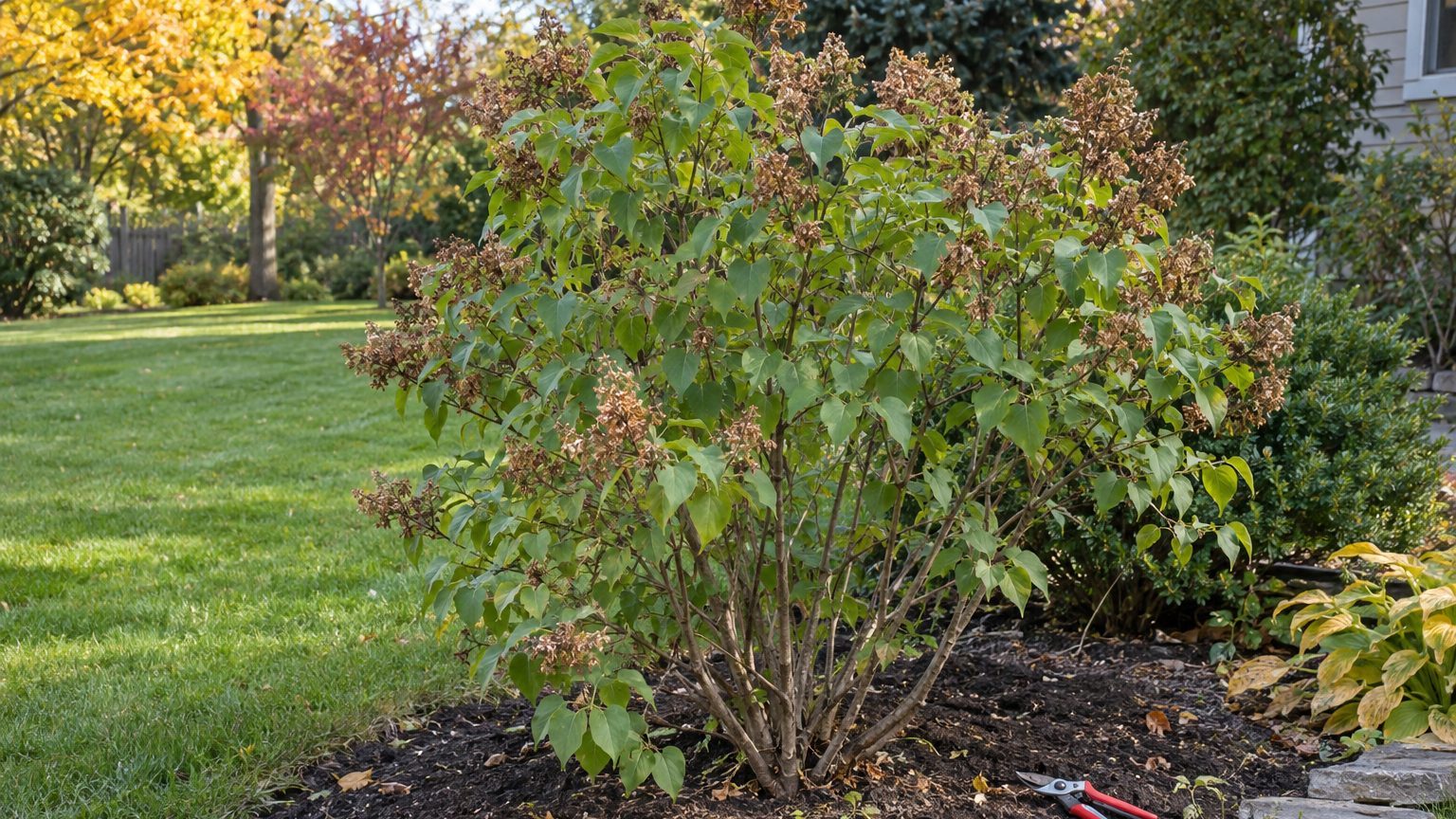
Lilac blooms fade to brown, and that is the moment to pick up the pruners. In New York, the cutting happens once the flowers are spent, because the shrub is already setting next year’s buds.
When to Prune Lilacs in New York

Prune lilacs in May and June, right after the flowers fade, often in May. A lilac blooms on last year’s wood and sets next spring’s flower buds in summer, soon after it flowers, so a late cut takes the coming show with it.
Bloom itself arrives in April and May, with later species running into June. The pruning window follows the flowers, not the calendar alone.
| Type of pruning | When in New York | Why |
|---|---|---|
| Routine upkeep: trimming spent blooms, thinning crowded stems, shaping | May, June, right after the flowers fade | Next year’s buds form soon after bloom, so cutting early keeps them |
| Hard renovation cut of an overgrown lilac | March, April, while the plant is dormant | Cutting back hard in late winter costs the next flowers, and the shrub will not bloom for a few years afterward |
Lilacs are pruned just after their flowers fade. The renovation cut is a last resort for a shrub that has grown tall, bare and leggy. If the lilac still flowers decently, skip it and stay with the light after-bloom trim.
New York — the year and the numbers
- State
- New York
- USDA zones
- 3b-7b
- Last spring frost
- March 23 to April 3
- First fall frost
- November 14 to November 27
- Annual rain
- 50 in
- Lawn zone
- cool-season
- Source
- NOAA NCEI U.S. Climate Normals 1991-2020, 32F freeze probabilities · New York City
How to Tell When Your Lilacs Are Ready to Prune
The plant gives clear signals, and they matter more than any date on the calendar.
- Flower clusters turning brown and dry mean the bloom is over and the pruning window has opened.
- Petals dropping onto the ground under the shrub tell you the flowers are finished, so cut soon rather than waiting.
- Fresh green leaves filling out around the spent clusters show the shrub moving on to summer growth, which is when the next buds start forming.
- Leave the new growth below the spent flower heads in place, because it will carry the flower buds that form after bloom.
- Stems that are thick, old and bare at the base are candidates for thinning now, while the shrub can still put out new growth this season.
If the flowers are still bright and fragrant, wait. Waiting keeps the flowers on display, while cutting too early removes blooms you could have enjoyed.
Should You Prune Lilacs in Fall or Winter in New York?
No. Cutting in late summer, fall or winter removes the flower buds that formed after the last bloom, so the following spring brings little or nothing. The shrub survives, but the show is gone for that year.
Hard renovation is different and belongs in March or April. Done while the plant is dormant, it resets an overgrown lilac, but it comes at the price of flowers for a few years afterward. Plan it only for a shrub that has stopped earning its place.
A broken or dead branch can come out whenever you spot it, since removing it takes no healthy buds along with it.
How Lilac Pruning Time Shifts Across New York
New York stretches from city blocks to the Adirondacks, and the hardiness range runs from zone 3b to 7b on the USDA system. Lilacs like cold winters, so they suit most of the state, but the bloom date moves with the weather where you live.
- New York City and Long Island: Spring warms sooner, so lilacs bloom and fade earlier, and the pruning window tends to open toward the front of May. In New York City, the last spring frost falls between March 23 and April 3.
- Hudson Valley and the Finger Lakes: The lakes and valleys moderate the chill, so bloom lands in the middle of the usual range, with pruning following soon after.
- Adirondacks and the North Country: Frost lingers longer in spring, so bloom comes later and the pruning window slides toward June. Cold winters here suit lilacs well, and the rest of the shrub’s cycle simply starts later.
Whatever the region, watch the flowers rather than the date, and prune when they fade.
Where to Get Lilac Advice in New York
Local questions about a stubborn lilac are best settled with people who know your soil and your microclimate. Cornell Cooperative Extension serves the state, and its county offices answer yard questions directly.
- The state extension site has plant care guidance you can read before you prune, ideally before bloom ends.
- Your county extension office can help with a lilac that will not flower or has grown out of hand, and a spring visit or call fits the pruning window well.
Common Questions
Why Did My Lilac Stop Blooming After I Pruned It?
A cut made in late summer, fall or winter likely removed the buds set for next spring. Check the timing of the cut and the sun the shrub gets, since lilacs thrive in sunny sites with good air circulation.
Do Lilacs Need Cold Winters to Bloom Well?
Yes. The chill of winter helps the flower buds mature, which is why lilacs do well across most of New York and struggle in hot, humid summers.
Can You Cut an Overgrown Lilac to the Ground?
You can cut it back close to the ground in March or April while it is dormant. Expect no flowers for a few years afterward, so reserve the cut for a shrub in poor shape.