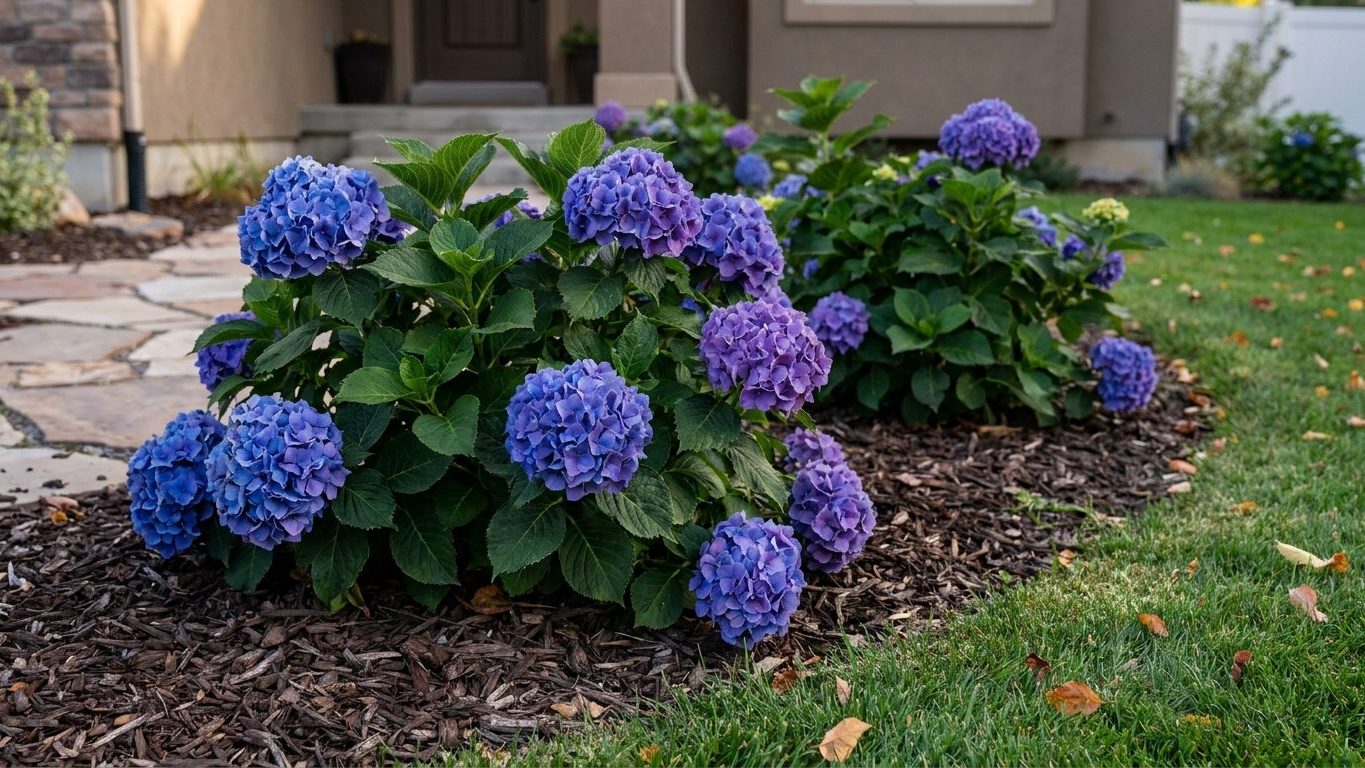
Yes, hydrangeas grow in Utah, though the state’s dry air and its wide swing in elevation make timing and variety the real decisions. Utah spans USDA zones 4a to 9a, and in Salt Lake City the frost-free stretch runs from late April to mid-October. Pick a hardy type, plant it out of the afternoon sun, and the rest follows the calendar below.
Hydrangeas Care Calendar for Utah

In Salt Lake City, NOAA NCEI 1991-2020 Climate Normals mark the last spring frost between April 12 and April 29 and the first fall frost between October 18 and October 29, at station USW00024127, and that stretch sets the whole growing year for a hydrangea here.
- Dormancy: late winter is the one safe window to move or divide a hydrangea, before buds swell and roots take the disturbance hard.
- Planting: two to three weeks after the last spring frost, once nights hold above freezing, gives roots time to settle before summer heat.
- Bud break: through May, new growth shows first on panicle and smooth types, since they push from the base each spring.
- Deep watering: through the hottest weeks of summer, since Utah’s dry air pulls moisture from leaves faster than roots can replace it.
- Slowdown: as nights cool toward the first fall frost, growth stops and the plant hardens off for winter.
- Winter mulch: right after the first fall frost, a thick layer over the root zone buffers the freeze and thaw swings common at elevation.
Zone here spans 4a to 9a, and most of that gap comes down to how high above the valley floor you garden, so treat these dates as a Salt Lake City starting point, not a statewide rule.
Utah — the year and the numbers
- State
- Utah
- USDA zones
- 4a-9a
- Last spring frost
- April 12 to April 29
- First fall frost
- October 18 to October 29
- Annual rain
- 16 in
- Lawn zone
- transition-season
- Source
- NOAA NCEI 1991-2020 Climate Normals, 32F freeze probabilities · Salt Lake City
Best Hydrangeas for Utah
USDA Plant Hardiness Zone Map puts Utah’s range at 4a to 9a, and that gap decides which hydrangea is worth planting. A shrub that flowers on new wood shrugs off a hard winter, while one that flowers on last year’s wood can lose every bud before it opens.
Panicle and smooth types dominate nurseries along the Wasatch Front, since they rebuild flower buds every spring no matter how cold the winter got. Bigleaf and oakleaf need a gentler hand, since their buds form the summer before and often meet a late freeze instead.
| Kind | Flowers on | Verdict here | Why |
|---|---|---|---|
| Panicle | New wood | Reliable statewide | Rebuilds buds every spring, blooms even after a hard freeze. |
| Smooth (Annabelle type) | New wood | Reliable statewide | Same new wood habit, tolerates Utah’s alkaline soil well. |
| Oakleaf | Mostly old wood | Best in milder valleys | Old wood buds risk the late frost window on higher benches. |
| Bigleaf (mophead) | Old wood | Struggles above the valley floor | Buds rarely survive the cold end of the state’s 4a to 9a range. |
| Climbing | New and old wood | Workable but slow | Takes years to establish, best in a spot sheltered from wind. |
Mountain hydrangea and reblooming bigleaf cultivars sit further down this list, and the other kinds are on their own page with fuller detail on each one.
When to Plant, Prune and Feed Hydrangeas in Utah
NOAA NCEI 1991-2020 Climate Normals put Salt Lake City’s last spring frost between April 12 and April 29, and every window below counts forward or back from that single date.
Prune at the wrong week and you cut off next year’s flowers instead of shaping this year’s growth, so the right task depends on whether your shrub blooms on old wood or new.
| Task | Window here | Counted from |
|---|---|---|
| Planting | Two to three weeks after the last frost, into mid May | Last spring frost |
| Pruning new wood types | Late winter, before growth starts | Ahead of last spring frost |
| Pruning old wood types | Right after flowers fade in summer | Not tied to frost dates |
| Feeding | Once after growth starts, again in early summer | After last spring frost |
| Fall cutback and mulch | Two to three weeks before the first frost, ahead of October 18 | First fall frost |
Once you know your own frost dates, mark these three windows on a real calendar, since a bench above the valley runs the whole schedule later than Salt Lake City.
Hydrangeas Problems in Utah and What Causes Them
No blooms on a healthy shrub
USDA Plant Hardiness Zone Map puts the cold end of Utah at zone 4a, and an old wood bloomer that set its buds the summer before can lose them in a freeze that severe. Switch to a new wood type, or wrap the base before the first fall frost, and see the varieties page for options that skip this risk.
Leaf edges scorched by afternoon sun
Utah’s thin, dry air lets more sun through than the same shrub would see back east, and afternoon exposure burns leaf margins fast. Plant on the east or north side of a wall or tree, and give it shade for the hottest hours of the day.
Wilting despite regular watering
Dry air pulls moisture out of hydrangea leaves faster than shallow roots can pull it back from alkaline soil common across the state. Water deeply and less often, mulch the root zone, and expect the plant to droop by afternoon even when the soil underneath is damp.
Utah North to South: How the Dates Shift
The frost dates above belong to Salt Lake City, and the rest of Utah moves earlier or later depending on elevation and latitude.
- Southern Utah (St. George and the lower desert valleys): warmer and closer to zone 9a, with a frost window that opens earlier and closes later than the Wasatch Front.
- Wasatch Front valleys (Salt Lake, Provo, Ogden): the reference dates above apply most directly here, on the milder valley floor.
- High benches and mountain valleys (Park City, Cache Valley, the Uinta Basin): colder, toward zone 4a, with frost lingering weeks into spring and returning weeks earlier in fall.
Check the state calendar page for the city closest to your own before you trust Salt Lake City’s dates for a garden higher up.
Utah Extension Offices and County Contacts
Utah State University Extension is the land grant contact for the whole state, and your county office narrows that down to what actually survives on your block.
- Utah State University Extension: county contacts and local advice for wherever you garden in the state.
- The Utah hydrangea calendar: month by month planting, pruning, and feeding windows for this state.
- Which hydrangeas hold up here: a fuller look at the varieties worth planting and the ones to skip.
This month, walk your beds and mark which shrubs bloom on old wood, since their winter protection has to go on before the first fall frost arrives.
Common questions
Can hydrangeas survive a Utah winter?
Panicle and smooth types generally do, since they rebuild their flower buds each spring regardless of how cold the winter got. Bigleaf and oakleaf types are riskier toward the cold end of the state’s 4a to 9a range, and often need mulch or a sheltered spot to keep their buds through winter.
When should I plant hydrangeas in Utah?
Plant two to three weeks after the last spring frost, once nights hold above freezing and the soil has warmed. In Salt Lake City that puts planting in early to mid May, though a higher garden runs later.
Which hydrangea is easiest to grow in Utah?
Panicle hydrangea is the safest bet for most of the state, since it tolerates alkaline soil, blooms on new wood, and holds up across the state’s wide zone range. Smooth hydrangea is a close second for the same reasons.