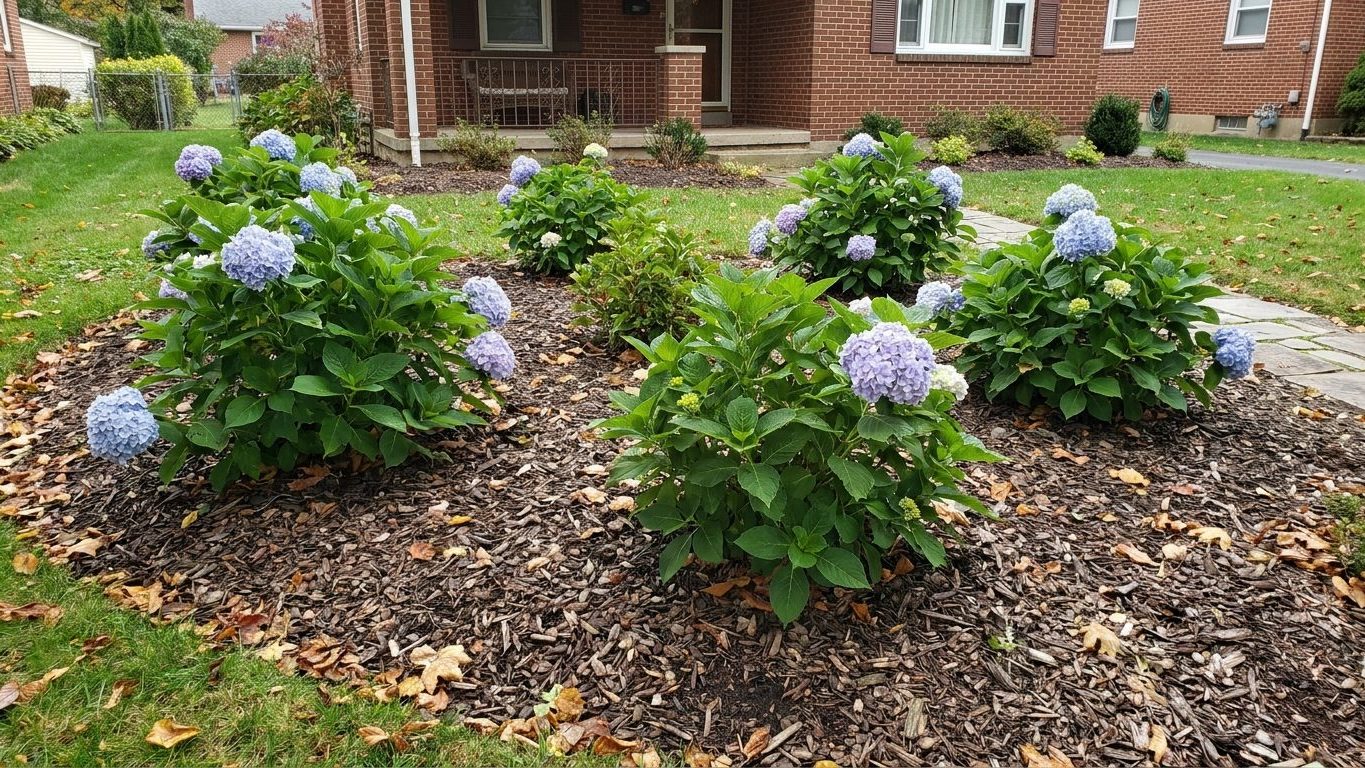
Pennsylvania homeowners can grow hydrangeas successfully across the state’s USDA zones 5a to 7b, but the safe bet changes by county. Panicle and smooth hydrangeas bloom reliably from the Alleghenies to Philadelphia. Bigleaf hydrangeas need a sheltered spot and winter protection outside the state’s mildest pockets, where a late frost still nips old wood most springs.
Hydrangeas Care Calendar for Pennsylvania

In Philadelphia, the mildest corner of Pennsylvania, NOAA NCEI’s U.S. Climate Normals 1991-2020 puts the last spring freeze at March 29 to April 6 and the first fall freeze at November 5 to November 16, while the northern tier and the Alleghenies run two to four weeks later in spring.
- Dormancy: from late fall through late winter the plant sits leafless, and this is the one safe window to transplant or divide without disturbing new growth.
- Planting: set new hydrangeas in the ground two to three weeks after the last spring freeze, so mid to late April near Philadelphia, once soil has warmed.
- Spring leaf-out: buds swell and leaves unfurl through April and May, and a late cold snap inside that window can still nip bigleaf flower buds.
- Bud set on old wood: bigleaf and oakleaf hydrangeas form next year’s flowers by mid to late summer, so any hard pruning has to happen before that window closes.
- Feeding: a light feed goes down once spring growth is underway and again by early summer, never later.
- Fall hardening: growth should slow on its own three to four weeks before the first fall freeze, roughly October near Philadelphia, and feeding should stop well before then.
- Winter protection: once the first freeze passes, mid-November near Philadelphia, mulch the root zone and cage bigleaf types with dry leaves.
Every one of these windows shifts later the farther a yard sits from Philadelphia’s mild river valley.
Pennsylvania — the year and the numbers
- State
- Pennsylvania
- USDA zones
- 5a-7b
- Last spring frost
- March 29 to April 6
- First fall frost
- November 5 to November 16
- Annual rain
- 44 in
- Lawn zone
- transition-season
- Source
- NOAA NCEI U.S. Climate Normals 1991-2020, 32F freeze probabilities · Philadelphia
Best Hydrangeas for Pennsylvania
The USDA Plant Hardiness Zone Map, built on 1991-2020 normals, spans Pennsylvania from 5a in the northern tier and the Alleghenies to 7b along the Philadelphia corridor. That range decides which species reliably survive winter unassisted.
Panicle and smooth hydrangeas bloom on new wood, so a hard winter that kills the top growth still leaves flowers the following summer. Bigleaf and oakleaf types set buds on old wood, which makes them the riskiest bet outside the mildest zone.
| Kind | Flowers on | Verdict here | Why |
|---|---|---|---|
| Panicle | New wood | Reliable statewide | Blooms even after a hard winter kills the top growth |
| Smooth | New wood | Reliable statewide | Native to the eastern U.S. and tolerant of the state’s cold snaps |
| Bigleaf | Old wood | Best near Philadelphia only | Flower buds are the first thing a late frost or a harsh winter kills |
| Oakleaf | Old wood | Worth trying in a sheltered spot | Hardier than bigleaf but still sets buds on wood that can freeze |
Climbing hydrangea and mountain hydrangea are the other kinds worth a look for a Pennsylvania yard, and each gets its own page on which ones hold up here.
When to Plant, Prune and Feed Hydrangeas in Pennsylvania
Planting, pruning and feeding all key off the frost dates NOAA NCEI’s Climate Normals set for Philadelphia: last spring freeze March 29 to April 6, first fall freeze November 5 to November 16.
Pruning timing depends on which kind is planted, since bud location decides whether cutting in spring removes the coming season’s flowers or simply clears the way for new ones.
| Task | Window here | Counted from |
|---|---|---|
| Planting | Mid to late April near Philadelphia | Two to three weeks after the last spring freeze |
| Pruning panicle and smooth | Late winter, before buds swell | Ahead of the last spring freeze |
| Feeding cutoff | Late September near Philadelphia | Six weeks before the first fall freeze |
Bigleaf and oakleaf pruning follows the bloom, not the frost, so cut spent flowers right after they fade and never in fall or early spring.
Hydrangeas Problems in Pennsylvania and What Causes Them
No flowers on a healthy, green shrub

This is almost always winterkill or bad timing, not disease. A late frost inside the March 29 to April 6 window can kill bigleaf flower buds that already survived winter, and pruning old wood in fall removes next summer’s blooms entirely.
Leaves scorched on the sunny side
Pennsylvania’s humid summer heat scorches bigleaf leaves planted in full sun, especially in the Philadelphia corridor where afternoons run hottest. Moving new plants to part shade or afternoon shade fixes most cases within a season.
Stunted growth after a hard winter
In the state’s colder zone 5a pockets in the north and the Alleghenies, stems can die back to the ground even when roots survive. Cutting dead wood in spring and mulching heavier each fall reduces the damage the following year.
Pennsylvania North to South: How the Dates Shift
Pennsylvania’s frost dates and bloom windows shift by more than latitude alone, and the gap between the Philadelphia corridor and the northern counties can run close to a month.
- The Philadelphia corridor and the southeast (Philadelphia, Chester, Bucks counties): the mildest ground in the state, closest to the March 29 to April 6 last-frost window, and the safest place to try bigleaf without heavy winter protection.
- The Alleghenies and south-central ridges (Somerset, Bedford, the Laurel Highlands): elevation pushes both frost dates two to four weeks later, which shortens the bloom season for old-wood types.
- The northern tier (Erie, Potter, Bradford counties): the coldest ground in the state, where panicle and smooth hydrangeas are the dependable choice and bigleaf struggles most years.
- The Lake Erie shore: the lake moderates spring cold snaps somewhat, which can nudge the local last frost earlier than nearby inland counties at the same latitude.
The month-by-month calendar page breaks each of these windows down further for a specific county.
Pennsylvania Extension Offices and County Contacts
The state’s 5a to 7b range from the USDA Plant Hardiness Zone Map is a starting point, and a county extension office fills in the rest with local frost data and pest alerts.
- Your county extension office: local frost dates, soil test results and pest alerts specific to a yard.
- Penn State Extension: the state’s land-grant program for home garden questions, reachable at extension.psu.edu.
- The state calendar page: month-by-month planting, pruning and feeding windows, including the mulching push before the first fall freeze lands in Pennsylvania this November.
Common questions
Can I plant hydrangeas in Pennsylvania in fall?
Yes, fall planting works well here as long as it happens at least six weeks before the first fall freeze, which falls between November 5 and November 16 near Philadelphia, giving roots time to establish before the ground cools.
Do hydrangeas need winter protection in Pennsylvania?
Panicle and smooth types don’t need it anywhere in the state. Bigleaf and oakleaf types benefit from a mulch cage in the colder zone 5a and 6a counties, and can often skip it in the milder 7a to 7b pockets near Philadelphia.
Why didn’t my hydrangea bloom this year in Pennsylvania?
The most common reason is a late frost inside the March 29 to April 6 window killing bigleaf flower buds, followed closely by pruning old wood at the wrong time of year.