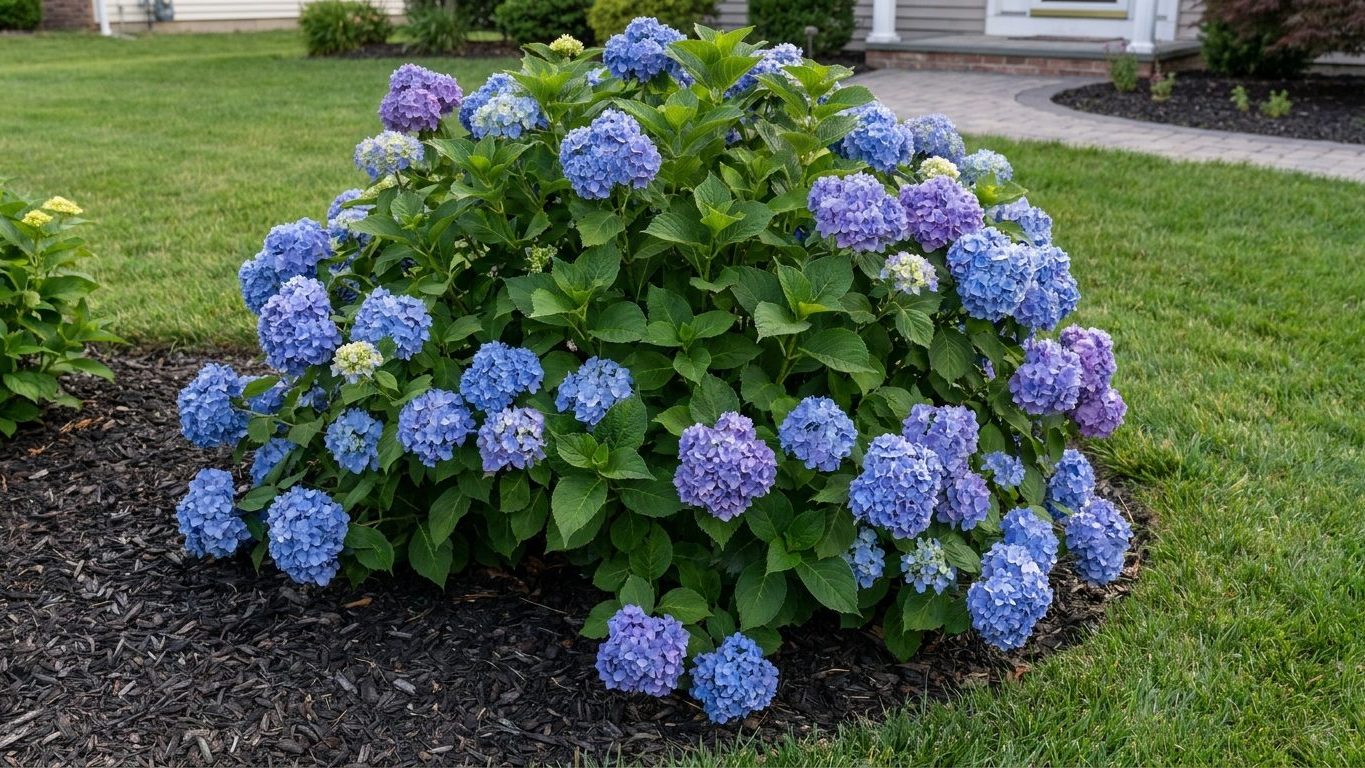
Plant hydrangeas in New Jersey once the last spring frost has passed and soil has warmed, typically two to three weeks after Newark’s frost-free date. The state’s zone 6a to 7b range means most kinds survive winter, but which one blooms reliably depends on whether it flowers on old wood or new. Pruning timing and variety choice decide more than the calendar alone.
Hydrangeas Care Calendar for New Jersey

Newark’s airport station, per NOAA NCEI’s 1991-2020 U.S. Climate Normals, puts the last spring frost between March 29 and April 6, and the first fall frost between November 4 and November 16. New Jersey sits at zone 6a to 7b, and that seven-month gap is what the whole calendar below is built on.
- Dormancy: late winter, before buds swell, is the one safe window to move or divide a hydrangea without disturbing its roots.
- Planting: two to three weeks after the last spring frost, once the ground has warmed, is when a new hydrangea establishes best.
- Mulching: a two to three inch layer right after planting holds moisture through New Jersey’s often muggy summer.
- Feeding: the first feed goes down once new leaves show, with a second by midsummer at the latest.
- Pruning: old-wood bloomers get cut right after their flowers fade, new-wood bloomers wait until late winter dormancy.
- Fall prep: mound mulch over the crown before the first fall frost arrives between November 4 and November 16.
Skip a step out of order, especially pruning, and a healthy bigleaf can go a whole season without a single bloom.
New Jersey — the year and the numbers
- State
- New Jersey
- USDA zones
- 6a-7b
- Last spring frost
- March 29 to April 6
- First fall frost
- November 4 to November 16
- Annual rain
- 47 in
- Lawn zone
- transition-season
- Source
- NOAA NCEI U.S. Climate Normals 1991-2020, 32F freeze probabilities · Newark
Best Hydrangeas for New Jersey
New Jersey’s zone 6a to 7b range, drawn from the USDA Plant Hardiness Zone Map, means winter cold rarely turns brutal, but a hard snap can still nip an exposed flower bud in a rough year. That single fact separates the hydrangeas that shrug off a Jersey winter from the ones that sulk every spring.
Bigleaf types draw the most questions because they set next year’s flowers on this year’s stems, and a late freeze after Newark’s frost window can strip a whole season’s blooms. Panicle and smooth types dodge that risk by blooming on new wood instead.
| Kind | Verdict here | Why |
|---|---|---|
| Bigleaf | Reliable most years, bud loss possible after a hard freeze | Flowers on last year’s wood |
| Panicle | Dependable across the whole state | Flowers on new wood, shrugs off winter dieback |
| Smooth (Annabelle type) | Dependable, tolerates a hard cutback | Flowers on new wood, forgiving of pruning mistakes |
| Oakleaf | Workable in a sheltered spot | Mixes old and new wood bloom depending on variety |
| Climbing | Slow to establish | Takes several seasons before it flowers reliably |
Reblooming bigleaf varieties bred to flower on both old and new wood close some of that gap, giving a second flush even after a bud-killing freeze. The other kinds, along with a closer look at each variety’s flowering habit, are covered on the page that ranks which ones hold up here.
When to Plant, Prune and Feed Hydrangeas in New Jersey
Three dates decide most of a New Jersey hydrangea’s year, and NOAA NCEI’s 1991-2020 Climate Normals anchor all three to Newark’s frost window. Miss the order and a shrub either sulks through summer or loses next year’s flowers to an early freeze.
Planting waits until the ground has warmed and frost risk has passed, while feeding starts once new leaves appear and stops well before fall dormancy sets in. Pruning timing depends entirely on whether a variety blooms on old wood or new.
| Task | Window here | Counted from |
|---|---|---|
| Planting | Two to three weeks after the last spring frost, once soil has warmed | Last spring frost, March 29 to April 6 in Newark |
| Pruning | Right after bloom fades for old-wood types, late winter dormancy for new-wood types | Falls between Newark’s two frost dates |
| Feeding | First feed at new growth, last feed by late summer | First fall frost, November 4 to November 16 in Newark |
A calendar built for Newark still needs an adjustment for a colder county or a sheltered yard that never freezes as hard. The month-by-month version of this same schedule lives on the state’s dedicated calendar page.
Hydrangeas Problems in New Jersey and What Causes Them
No flowers on a healthy shrub

Old-wood bloomers set next year’s buds by late summer, and NOAA NCEI’s Climate Normals put Newark’s fall frost at November 4 to 16, early enough to nip those buds some years. Check the variety before pruning, and see the page on what goes wrong here for pest causes too.
Leaves scorched on the sunny side
New Jersey summers pair full sun with humidity, and a bigleaf planted without afternoon shade dries out fast even in average soil. Move exposed plants to part shade or add a soaker hose, and check watering habits on the state’s dedicated care page.
Winter dieback on new stems
A hydrangea planted late in fall has little time to root before Newark’s first frost lands between November 4 and 16, and young stems above ground die back hard. Plant earlier next season, or mulch heavily and expect to prune the damage away in spring.
New Jersey North to South: How the Dates Shift
New Jersey packs highlands, coastline, and pine flatland into one small state, and none of them read exactly like Newark’s frost dates. Elevation and distance from the ocean both push the safe planting window in opposite directions.
- The Northwest Highlands (Sussex, Warren, Morris counties): higher ground holds frost later into spring and welcomes it back earlier in fall, favoring the hardier panicle and smooth types.
- The Jersey Shore (Monmouth, Ocean, Atlantic counties): the ocean’s moderating effect keeps frost off a bit longer, giving bigleaf hydrangeas a slightly better shot at keeping last year’s buds.
- South Jersey and the Pinelands (Cumberland, Salem, Cape May counties): milder winters near the state’s 7b edge, per the USDA Plant Hardiness Zone Map, push both frost dates and pruning windows a little earlier than Newark’s.
Check a county extension office before trusting Newark’s dates too far from the state’s center.
New Jersey Extension Offices and County Contacts
Newark’s frost dates are a starting point, not a guarantee for every yard. Rutgers Cooperative Extension tracks conditions county by county across New Jersey and is worth a call before a big planting or pruning decision.
- Your state page: the frost dates and pruning window for New Jersey gathered in one place.
- Which ones hold up here: a deeper look at bigleaf, panicle, smooth, oakleaf, and climbing hydrangeas across the state’s zone 6a to 7b range.
- Rutgers Cooperative Extension: county offices for a soil test or a second opinion on a struggling shrub.
Call before cutting back a bigleaf you’re not sure about, the wrong month costs a whole season of flowers.
Common questions
When should I plant hydrangeas in New Jersey?
Wait until two to three weeks after Newark’s last spring frost, which falls between March 29 and April 6, so the soil has warmed and the risk of a late freeze has dropped.
Do hydrangeas survive winter in New Jersey?
Most do, since the state sits at USDA zone 6a to 7b, but bigleaf types can lose their flower buds in a hard winter because they bloom on stems grown the previous year. Panicle and smooth types bloom on new wood and come back reliably.
Why is my hydrangea not blooming?
The usual cause is pruning at the wrong time or a late freeze after the spring window that killed buds already set on old wood. Match the pruning timing to the variety and the blooms usually return the next season.