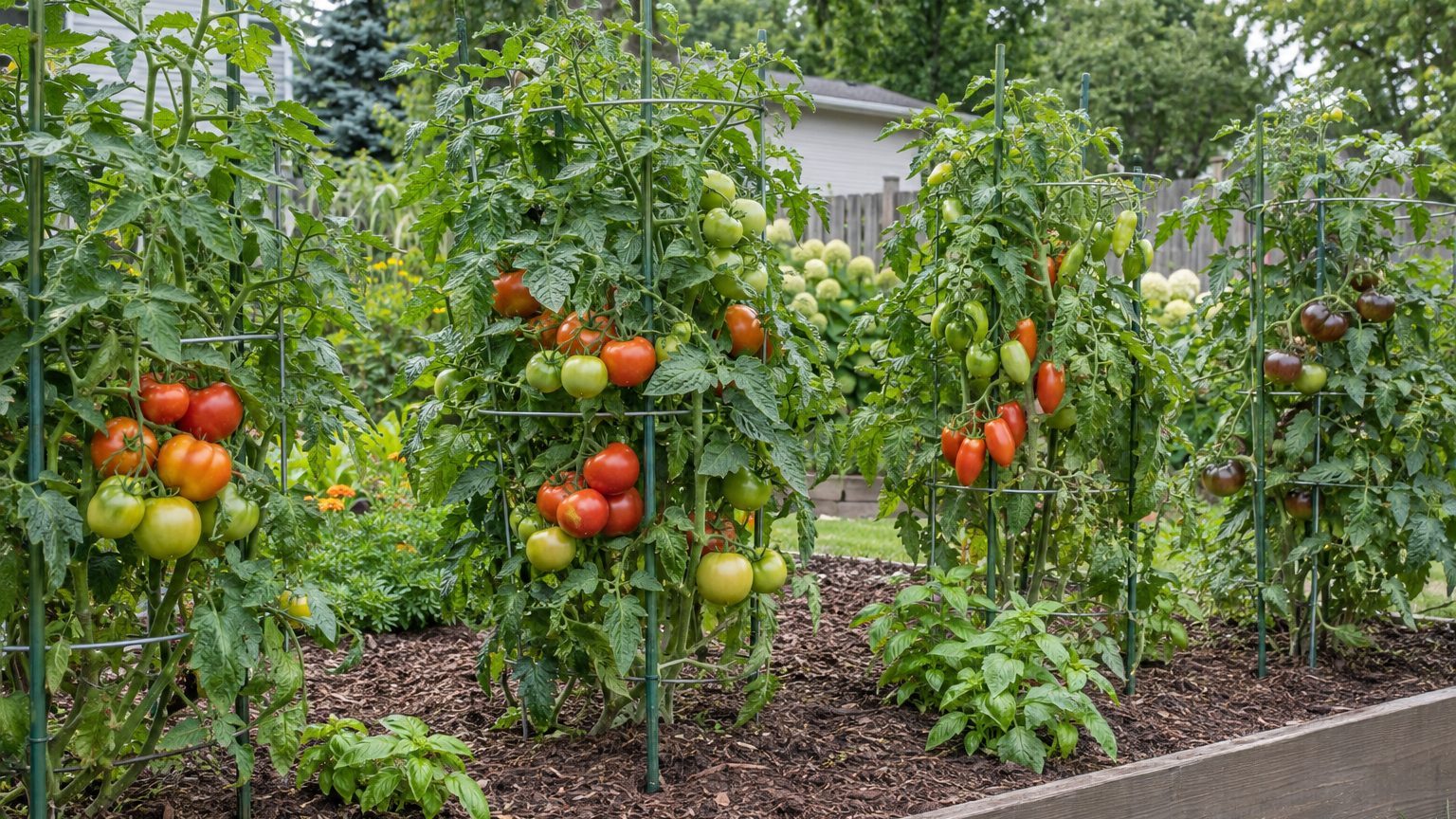
Tomato plants in Minnesota spend the first weeks of the season waiting on the weather, and the right variety makes that wait pay off. Cool-tolerant, early and disease-resistant tomatoes do best here. A handful of dependable varieties suit the way Minnesota summers start slowly and turn humid.
Best Tomatoes to Grow in Minnesota

Tomatoes that cope with cool weather, ripen early and shrug off common leaf diseases earn their place in Minnesota gardens. No single variety wins in every yard, so plan to try a few and keep the ones that perform in your soil and microclimate. Seed catalogs often note which varieties avoid particular problems, which helps narrow the list.
Celebrity
Celebrity is among the popular, reliable tomatoes, and its determinate vines resist many diseases. The fruits are very flavorful and resist cracking, which matters after a dry spell followed by a heavy rain.
Because the vines are determinate, they stay a more manageable size than sprawling types. Give them room anyway and stake or cage them early.
BadaBing!
BadaBing! is one of the first varieties to resist Septoria leaf spot, a very common tomato disease. Watch the lower leaves for spots and yellowing, and check with your local extension office for help identifying the problem.
In a humid summer that resistance can keep the plant covered in healthy foliage and the fruit shaded. Consider it if leaf spot has hit your garden before.
Early Girl
Early Girl is widely available, and gardeners like its extra-early yields of bright red, delicious fruits. In a state where the season starts late, ripe tomatoes sooner are a real advantage.
It is a sensible pick for a first harvest while slower varieties are still green.
Mountain Series
The Mountain series, including Mountain Fresh Plus, is famous for growing well in cool climates and resisting diseases. That description fits Minnesota, where cool nights can slow other tomatoes.
Look for these at local garden centers in spring, or order seed ahead and start them indoors.
Minnesota — the year and the numbers
- State
- Minnesota
- USDA zones
- 3a-5a
- Last spring frost
- April 17 to April 30
- First fall frost
- October 11 to October 23
- Annual rain
- 32 in
- Lawn zone
- cool-season
- Source
- NOAA NCEI 1991-2020 Climate Normals, 32F freeze probabilities · Minneapolis
How to Choose Tomatoes for Your Minnesota Garden
Your garden conditions narrow the field quickly. A cool, short season, a humid summer with leaf disease or a wish for early fruit each point to different varieties.
Where you garden matters too. The Twin Cities are the milder south of the state, and northern Minnesota has a tighter season, so earlier varieties matter more as you go north.
| Your situation | What suits it in Minnesota | Why |
|---|---|---|
| Cool nights and a slow start to summer | Mountain series, including Mountain Fresh Plus | Known for growing well in cool climates |
| Want ripe tomatoes early | Early Girl | Extra-early yields of bright red fruits |
| Humid summer and leaf spot trouble | BadaBing! | One of the first varieties to resist Septoria leaf spot |
| Cracked fruit after heavy rain | Celebrity | Fruits resist cracking and the vines resist many diseases |
If none of these fits, or you are unsure, grow several kinds side by side for a season. Seed catalogs describe which problems each variety avoids, and a few trials show which ones do well in your yard.
Tomato Buying Mistakes to Avoid in Minnesota
Planting Too Early
Tomatoes are killed by frost and stall in cold soil, so a warm April afternoon is a poor guide. Plants go out after all danger of frost has passed and the soil has warmed, to about 60°F. In Minnesota that means May or June.
Setting plants out sooner risks losing them overnight. If a store has plants on display early, buy them later or keep them indoors until planting time.
Skipping Disease Resistance
Choosing only on fruit picture or familiar names can leave you with a plant that struggles through a humid summer. Resistance to leaf spot or cracking is worth looking for on the tag or in the catalog.
If a variety did poorly last year, swap it for one bred to resist the problem you saw.
Buying Without Knowing Plant Size
A small pot hides a plant that may grow into a large, sprawling vine. Read the tag for whether it is determinate, like Celebrity, with a more contained habit. Plan space and a cage or stake before you bring it home.
Starting your own gives you more choice. Sow seed indoors in April, though March works too, about six to eight weeks before planting out.
Where to Get Tomato Advice in Minnesota
University of Minnesota Extension publishes guidance for home gardeners, and your county extension office can point you to local help. Use them before you buy plants or seed.
- The state extension website explains tomato growing and common problems, and spring is a good time to read it before shopping.
- Your county extension office can advise on varieties that suit your area, so call before planting season starts.
Common Questions
When Is the Last Spring Frost in the Twin Cities?
Frost risk in the Twin Cities runs from April 17 to April 30 in spring. Tomatoes should still wait until the danger has fully passed and the soil has warmed.
Do Store-Bought Tomato Plants Need Hardening Off?
Yes. Seedlings, whether bought or homegrown, are hardened off outdoors for one to two weeks before planting so they adjust to sun and wind.
Which Tomatoes Should You Plant in Northern Minnesota?
Northern Minnesota has a shorter season than the Twin Cities, so lean toward Early Girl and the Mountain series. Both are suited to cool conditions or early yields.