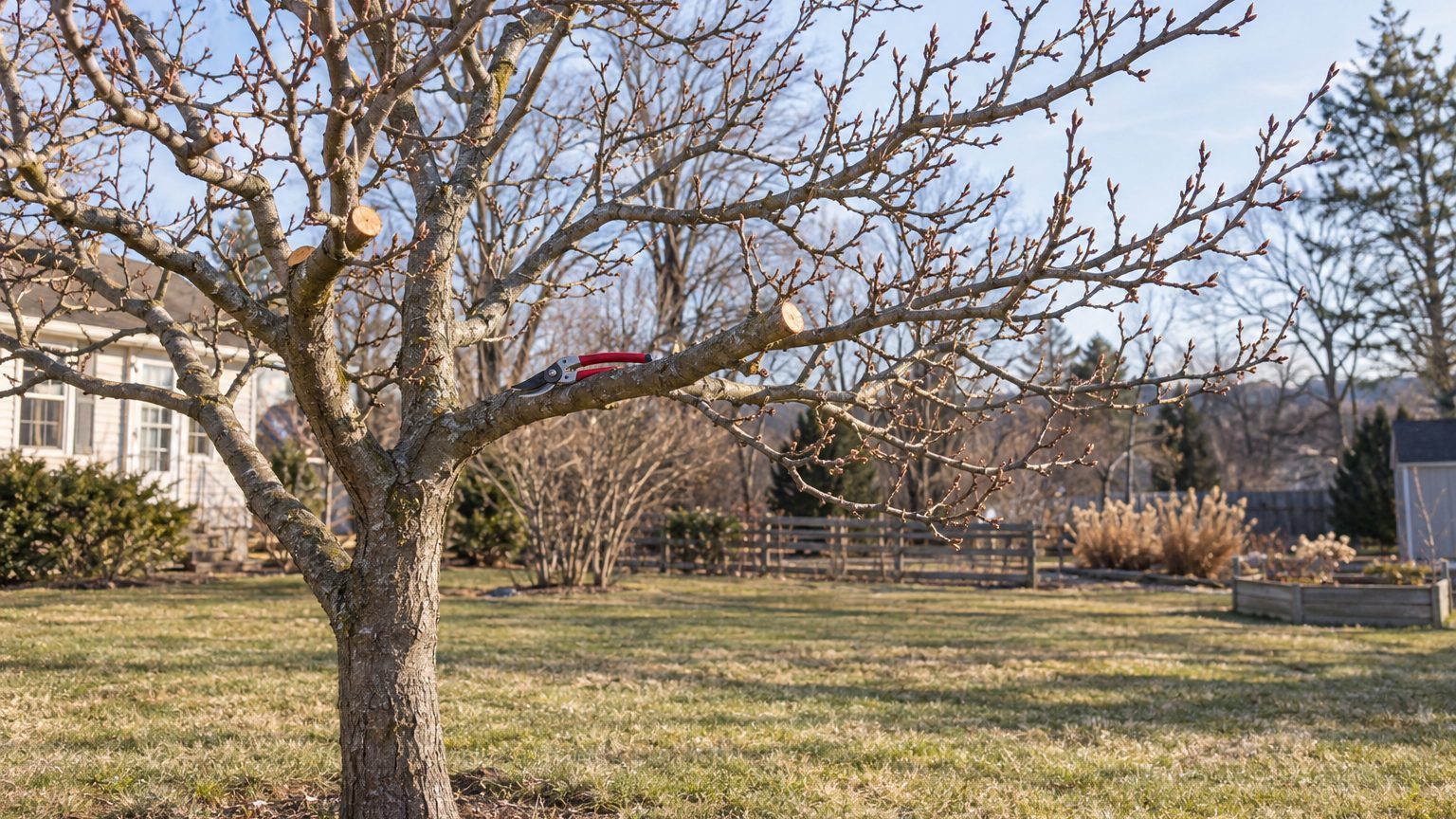
Bare branches against a gray late-winter sky are the signal: the fruit trees in your Minnesota yard are asleep, and the saw can come out. The pruning window runs from late winter into early spring, after the hardest cold has passed and before the buds open.
When to Prune Fruit Trees in Minnesota

Dormant pruning of apples, pears, peaches, cherries and plums happens in March and April. Pruning then keeps the work after the coldest weather and before bud break.
| Fruit tree | When to prune in Minnesota | Why |
|---|---|---|
| Apples and pears | March into April, while fully dormant | Pruned first, in the middle of the rest period |
| Peaches | Late in the window, April, close to bloom | Flower buds are easily hurt by cold, so these go last |
| Cherries and plums | March and April, before the buds swell | Pruning happens before the buds swell |
| Young fruit trees | March and April, before bud break | Prune while the tree is dormant and before bud break |
Fall and early winter are poor times for the saw. A cut made then can trigger new growth that may not harden before the cold arrives. These dates fit the Twin Cities, where the last spring frost falls between April 17 and April 30. Northern Minnesota runs tighter, so the same work shifts later there, still before the buds open. Hardiness zones across the state range from 3a to 5a on the USDA system.
Minnesota — the year and the numbers
- State
- Minnesota
- USDA zones
- 3a-5a
- Last spring frost
- April 17 to April 30
- First fall frost
- October 11 to October 23
- Annual rain
- 32 in
- Lawn zone
- cool-season
- Source
- NOAA NCEI 1991-2020 Climate Normals, 32F freeze probabilities · Minneapolis
How to Tell Your Fruit Trees Are Ready to Prune
The tree itself tells you more than the calendar does, and a quick walk around the yard is enough to read it.
- The tree stands bare and its buds are still tight and closed, signs that it is dormant.
- The hardest stretch of winter is behind you, so the wood is less likely to be hurt by a cold snap after the cuts.
- The buds are still tight and closed, so pruning can go ahead before bud break.
- Buds that have started to swell mean the dormant pruning window has closed.
- Green showing at the bud tips means bud break has begun, and the pruning saw should wait for the next dormant season.
Peaches reward patience, so leave them until late in the pruning window, close to bloom.
When to Prune Peach and Apple Trees in Minnesota
Apples are the first fruit trees to get pruned. They are pruned in March or early April, once the worst cold has passed and before any bud swell.
Peaches wait. Their flower buds are easily hurt by cold, so you prune them last, in April and as close to bloom as you dare.
Spring work should not be the only pruning on your mind. Keep routine pruning to the dormant season, before the buds swell. A tree that was pruned in fall or early winter can suffer from new growth that never hardened.
Where to Get Fruit Tree Advice in Minnesota
Variety, rootstock and orchard layout all change how hard a tree should be pruned. For those questions, University of Minnesota Extension and your county office are the places to turn.
- The university’s fruit and vegetable resources cover apple varieties, rootstocks and winter pruning, and they are most useful in late winter before you pick up the saw.
- Your county extension office can answer local questions about timing in your part of the state, so call before the buds begin to move.
Common Questions
Can You Prune Fruit Trees in Minnesota in Fall?
Fall pruning is best avoided. Cuts can push new growth that has little time to harden, and the tree then heads into winter with soft tips that are easily hurt.
Does Rootstock Change How a Fruit Tree Grows?
Yes. Rootstock mostly affects the height of an apple tree and how soon it begins to bear, and it can add cold hardiness, disease resistance and yield. Budagovsky rootstocks are known for their cold hardiness, and the V.1 rootstock performed well for yield in research.
Which Apple Varieties Handle Minnesota Winters?
Honeycrisp needs somewhere between 800 and 1000 chilling hours to break dormancy. Pink Lady needs far less cold and is not recommended for the state. Honeycrisp also has one apple scab resistance gene, which makes it somewhat resistant, and Triumph has two.