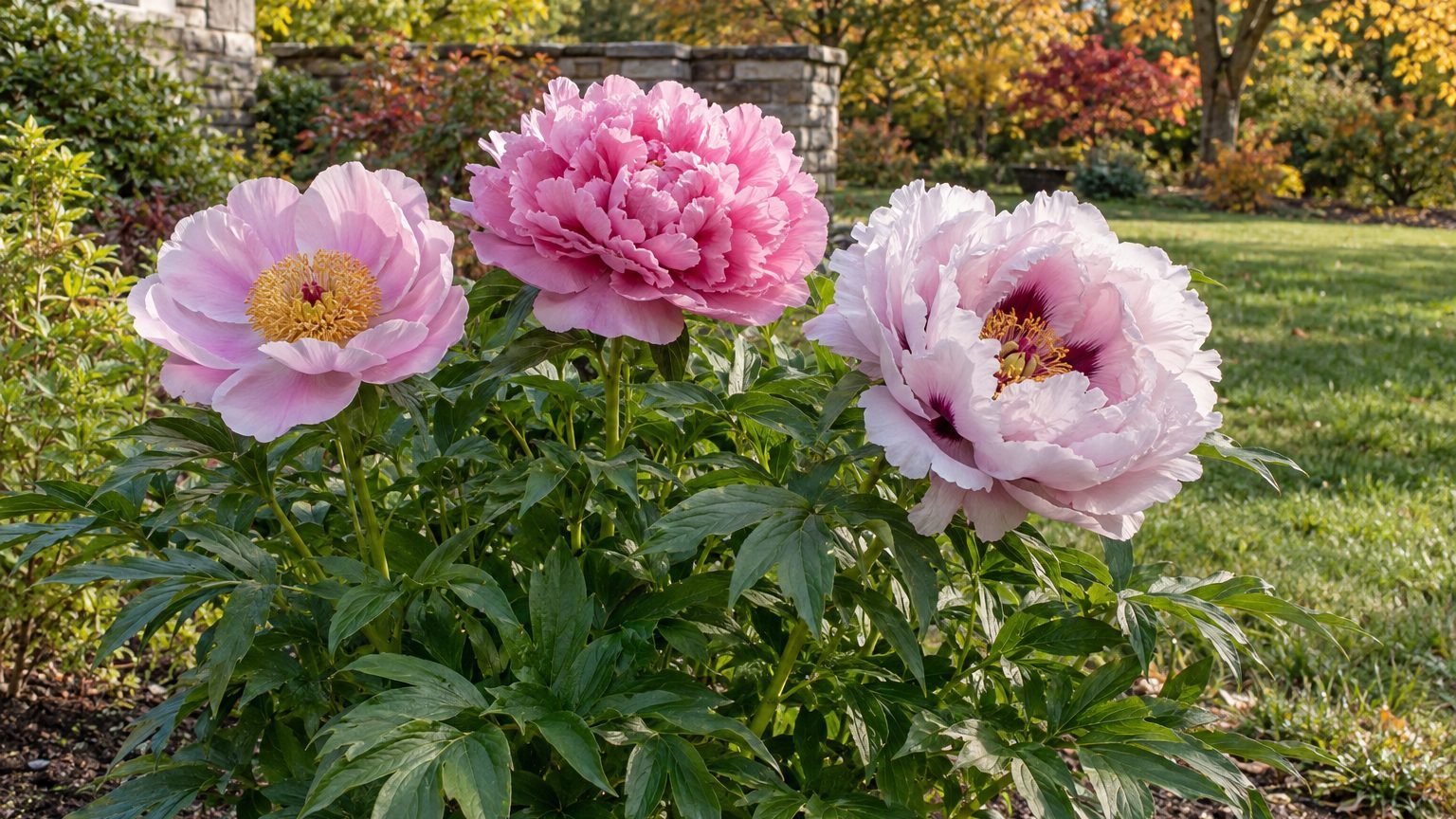
Peonies in Newfoundland and Labrador earn their place by what winter does for them. The cold rest sets the buds, and the late-spring warmth brings them out. The choice comes down to bloom timing and how much upkeep you want.
Best Peonies to Grow in Newfoundland and Labrador

Peonies need a cold winter rest to flower; St. John’s is in Canadian hardiness zone 6a. Zone 6a is a Canadian rating that does not convert to a USDA zone, and it describes that city, not the whole province.
Garden Peony

The garden, or herbaceous, peony is the classic border plant, a hybrid of Paeonia species. It dies back to the ground each year, so the old stems are cut back after frost has finished them. Its blooms come after the woodland and tree peonies, which stretches the season.
Tree Peony

The woody tree peony, including Paeonia suffruticosa, keeps its stems through winter and is never cut back to the ground. Its woody framework stays in place through winter. Its flowers open after woodland peonies and ahead of garden types.
Intersectional Peony
Also called the Itoh, this is a hybrid of the garden and tree peonies. It combines traits from garden and tree peonies and comes last in the bloom sequence. To extend the bloom season, add an intersectional peony to your garden peonies.
Woodland Peony
Paeonia japonica is the woodland peony, a white-flowered type that opens first in the sequence. It suits a shadier corner than the others. Because it leads the sequence, it gives you an early peony while the rest are still in bud.
Newfoundland and Labrador — the year and the numbers
- State
- Newfoundland and Labrador
- Hardiness zones
- 6a
- Last spring frost
- May 30
- First fall frost
- October 17
- Annual rain
- 60 in
- Lawn zone
- cool-season
- Source
- Environment and Climate Change Canada — Canadian Climate Normals 1981-2010, station ST JOHN'S A · St. John's
How to Choose a Peony for a Newfoundland and Labrador Garden
Winter cold is not the limit here, so the decision is about how you like to garden. Think about upkeep, bloom timing and patience.
Planting or dividing is best in August and September, and it can also be done in October. Local timing in the province has no dedicated guidance of its own, so these dates follow the nearest comparable climate. Confirm them with a local garden centre, a garden society or a provincial gardening group.
| Your situation | What suits it in Newfoundland and Labrador | Why |
|---|---|---|
| Cold winters | Any peony type listed here | Peonies need a cold rest to flower and do best where winters are cold |
| Prefer woody stems | Tree peony | It keeps its woody stems and is never cut back |
| Want a long bloom season | Woodland, tree, garden and intersectional together | Each type opens in turn, from woodland first to intersectional last |
| Shady corner | Woodland peony | It is the white-flowered woodland type and the first to bloom |
| Planting in spring | Any type, with patience | Spring planting is possible but may delay flowers a year |
For fall cleanup, cut a garden peony’s foliage back after it has died down. A tree peony skips that chore entirely. Growing garden and tree peonies together extends the bloom sequence.
Which Peonies Suit Different Parts of Newfoundland and Labrador
The province is not one climate, and spring arrives at different times in different districts. That matters for how early or late a peony wakes and blooms.
- St. John’s and the Avalon: Spring frost lands on average around May 30, and in one year out of two it falls later than that. Treat it as the middle of a window, not a safe date.
- Northern Newfoundland and Labrador: Spring frost comes weeks later than in St. John’s, so a shorter, later season favors early openers such as the woodland and tree peonies.
Whichever district you garden in, a sheltered spot helps a peony settle.
Peony Buying Mistakes to Avoid in Newfoundland and Labrador
Planting Too Deep
A peony set too deep may bloom poorly or not come up at all. It can leave you waiting for flowers. When you plant, keep the eyes close to the soil surface and firm the soil around the roots without burying them.
Cutting Back a Tree Peony
Treating a tree peony like a garden peony removes the woody stems that carry next year’s flowers. The plant then has to rebuild before it can bloom again. Cut back only the herbaceous types and the intersectional hybrid’s dead foliage, and leave the tree peony’s wood alone.
Expecting Blooms in Year One
A newly planted or transplanted peony may not bloom the first spring. That is normal, not a sign of failure. Planting in fall gives the roots time to settle, while spring planting can delay flowers by a year, so plan on patience either way.
Where to Get Peony Advice in Newfoundland and Labrador
Canada has no county extension offices, so advice comes from the province and from local growers. Start with the provincial ministry, then ask the people who garden near you.
- The provincial Department of Fisheries, Forestry and Agriculture is a place to ask general gardening and plant questions.
- A local garden centre or garden society can tell you which peonies are available and how they have done in your district, so visit before the August planting months.
- A provincial gardening group can confirm planting dates for your area, which is worth doing before you buy.
Common Questions
When Do Peonies Bloom in Newfoundland and Labrador?
Peonies bloom from May into June, depending on the type. The woodland peony opens first, then the tree peony, then the garden types, and the intersectional hybrids finish the season.
When Should You Plant or Divide Peonies in Newfoundland and Labrador?
August and September are the months to aim for, and October works as a fallback. Planting in fall gives the roots time to establish before winter.
When Should You Cut Back a Garden Peony in Newfoundland and Labrador?
Cut the foliage to the ground in November or December, after it has died back. Early spring, in March or April, is the other window. Leave tree peonies uncut.