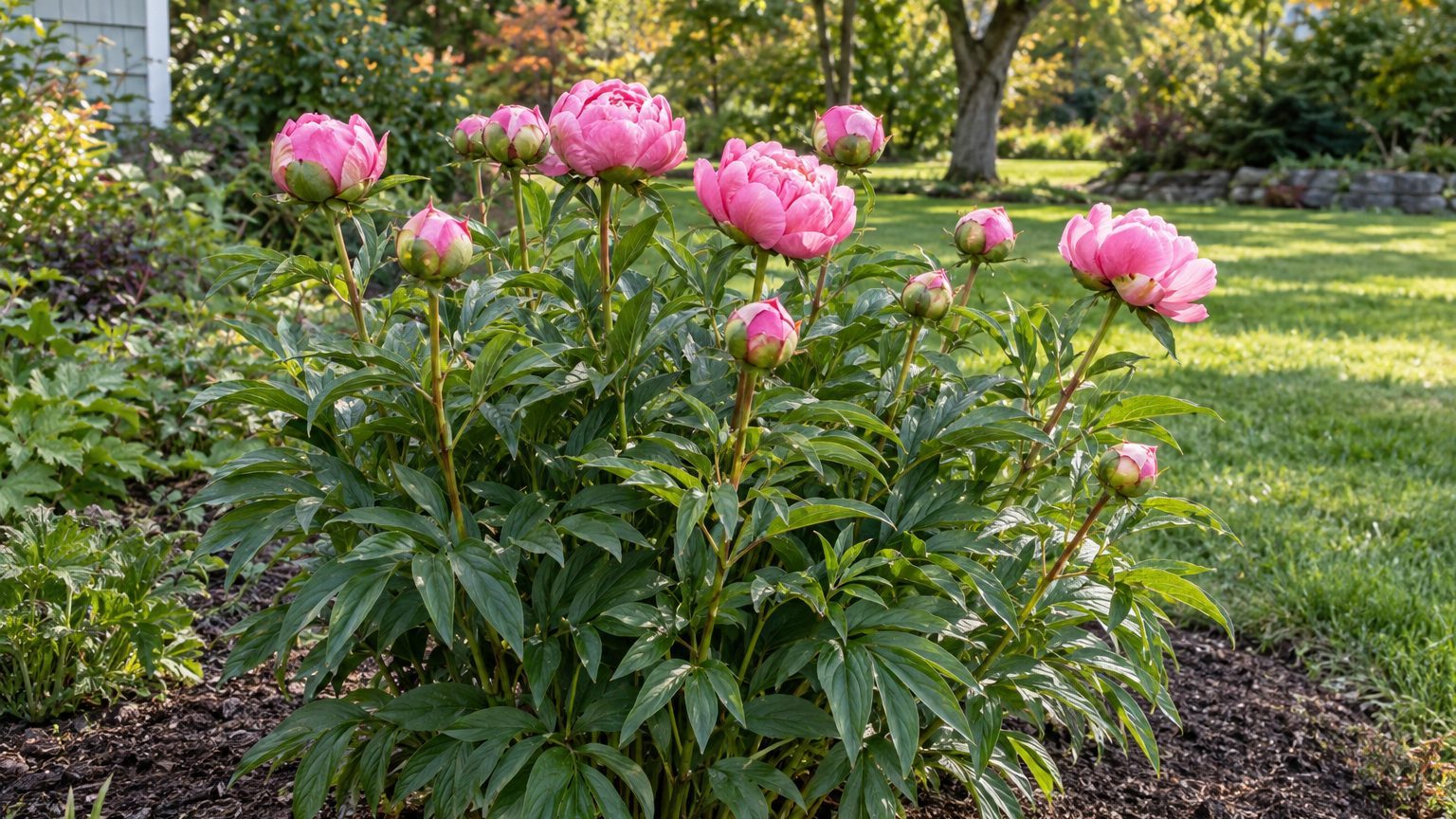
Peony buds swell on the stems in late spring, and the first big blooms open. In Nova Scotia, that show runs through May and June, with the exact week set by the type of peony and how the spring has behaved.
When Do Peonies Bloom in Nova Scotia?

Peonies bloom in Nova Scotia from May into June, with late spring carrying most of the show. The dates here follow the nearest comparable climate in northern New England, so confirm local timing with a garden centre, a garden society or a provincial gardening group.
Each type takes its turn, so a yard with a mix can stay in flower for weeks. Cold winters help, since peonies need a good stretch of chilly winter weather to set flowers, and Nova Scotia winters supply that.
| Type of peony | When it blooms in Nova Scotia | What to know |
|---|---|---|
| Woodland peony (Paeonia japonica) | Late spring, first in the sequence | White flowers that open ahead of the other types |
| Tree peony (including Paeonia suffruticosa) | Late spring, after the woodland type | Woody stems stay through winter and are never cut back |
| Garden or herbaceous peony | Late spring into June | Dies back each year and is cut back after frost |
| Itoh (intersectional) peony | June, last in the sequence | A hybrid of the garden and tree peonies |
Frost still matters in spring. In Halifax, the last spring frost falls on average around May 7. In one year out of two, it comes later. Treat that as the middle of a window, not a safe date. Halifax sits in Canadian hardiness zone 6b, a Canadian rating that does not convert to a USDA zone.
Nova Scotia — the year and the numbers
- State
- Nova Scotia
- Hardiness zones
- 6b
- Last spring frost
- May 7
- First fall frost
- October 18
- Annual rain
- 55 in
- Lawn zone
- cool-season
- Source
- Environment and Climate Change Canada — Canadian Climate Normals 1981-2010, station HALIFAX STANFIELD INT'L A · Halifax
How to Tell When Your Peonies Are About to Bloom
Your own plants give useful notice, and each stage suggests what to do next.
- Red shoots pushing through the soil in spring mean the plant has woken up, so clear old mulch and debris from the crown to let them rise freely.
- Shoots turning from red to green and unfolding into leaves tell you growth is on track, and tall or heavy stems may soon need support.
- Small round buds at the stem tips mean flowers are coming, so set a cage or ring around the clump before the stems get heavy.
- Buds that are firm and still tightly closed show the bloom is some way off.
- Buds that turn soft when you press them gently, with color showing at the seams, are about to open.
- A clump with plenty of leaves and no buds often points to a plant set too deep, so check that the eyes sit near the soil surface.
A newly planted or transplanted peony may not bloom the first spring, so a bare year is not a failure.
When to Cut Back Peonies in Nova Scotia
Cut herbaceous peonies back in November or December, once the foliage has died back after a hard frost. Take the stems down to the ground, and the plant is ready for winter. If the job slips, early spring in March or April is the other window, before new red shoots start to rise.
Remove old stems and leaves from the bed; discard diseased foliage rather than composting it. Leaving them on the ground lets any disease on the foliage carry over into next year’s growth.
Tree peonies are the exception. Their woody stems carry next year’s buds, so they are never cut to the ground. Remove only dead or damaged wood and leave the framework alone.
How Peony Bloom Time Shifts Across Nova Scotia
Nova Scotia is a long, narrow province surrounded by water, so bloom time varies from one area to another, even within a single type of peony.
- Halifax and the Atlantic coast: The sea keeps spring cool, so buds open a little later than inland, though winters are cold enough for good flowering.
- Annapolis Valley: Sheltered from the coast, this farming valley warms sooner in spring, so peonies here tend to bloom ahead of the shore.
- Cape Breton: Cooler and more exposed, it runs behind the mainland, so expect the flowers to arrive later in the June window.
Use your own plants as the guide, since a sunny wall or a shaded north side can shift bloom time.
Where to Get Peony Advice in Nova Scotia
Nova Scotia has no county extension office, so help comes from the province and from local growers. Nova Scotia Agriculture is the provincial starting point for gardening questions.
- Local garden centres can tell you which varieties are blooming nearby, so ask in late spring when the plants are in flower.
- Garden societies and master gardener groups hold plant swaps and talks, and members often know how peonies behave in your own community.
- Provincial gardening groups can confirm local timing before you plant or divide in August and September.
Common Questions
When Should You Plant or Divide Peonies in Nova Scotia?
August and September are the months to plant or divide, and October can also work. Early fall gives the roots time to settle before the ground freezes. Spring planting is possible, but it may delay flowers a year.
Why Are Your Peonies Not Blooming?
Look at how deep the crown sits together with how old the planting is. A peony set too deep may bloom poorly or not come up at all, so keep the eyes near the soil surface. A clump moved recently may simply need another spring.
Do Peonies Need a Cold Winter to Flower?
Yes. Peonies need a cold winter rest to flower, so they do best where winters are cold and may flower poorly in mild-winter climates. Nova Scotia winters give them what they need.