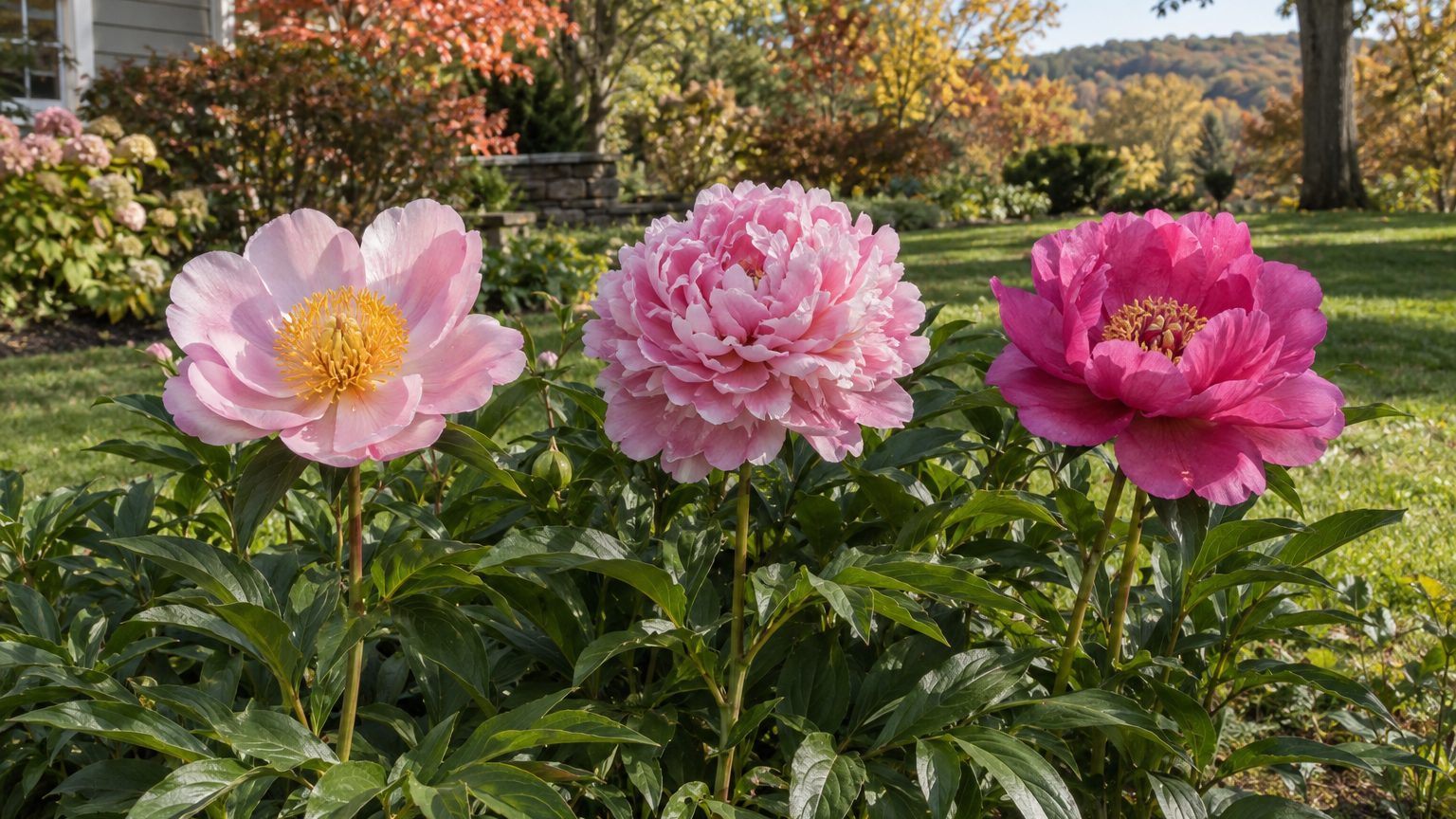
Peony buds swell on the stem in late spring, then open into large, showy flowers in the early garden. Nova Scotia gives peonies the cold winters they need, so herbaceous, tree, intersectional and woodland types all have a place. Which one fits depends on how much care you want to give and what you want from the bloom.
Best Peonies to Grow in Nova Scotia

Peonies need a cold winter rest to flower, and they flower poorly where winters stay mild. Halifax sits in Canadian hardiness zone 6b, a rating built on several climate variables and not comparable to a USDA zone. Peonies generally need temperatures below 40°F. That cold period should last at least 6 weeks, which a Nova Scotia winter supplies.
Garden Peony

The garden or herbaceous peony (Paeonia hybrids) is the classic border plant. It dies back to the ground each year and returns from the roots in spring, which suits a province with a real winter.
Tree Peony

The tree peony, including Paeonia suffruticosa, is woody. Its stems stay standing through winter and carry the buds, so the shrub builds a framework year after year. It comes into bloom a little ahead of the garden types.
Intersectional Peony
Also called the Itoh, the intersectional peony is a hybrid of the garden and tree types. It is the last of the groups to bloom, which stretches the season well into June. Choose it if you want flowers after your garden peonies have faded.
Woodland Peony
The woodland peony (Paeonia japonica) carries white flowers and opens first in the sequence. Its show is brief, but it starts the peony season before any of the others.
Nova Scotia — the year and the numbers
- State
- Nova Scotia
- Hardiness zones
- 6b
- Last spring frost
- May 7
- First fall frost
- October 18
- Annual rain
- 55 in
- Lawn zone
- cool-season
- Source
- Environment and Climate Change Canada — Canadian Climate Normals 1981-2010, station HALIFAX STANFIELD INT'L A · Halifax
How to Choose a Peony for a Nova Scotia Garden
Nova Scotia has no peony timing guide of its own, so the months here follow the nearest comparable climate. Confirm local timing with a garden centre, a garden society or the provincial gardening groups.
Planting or dividing is best in August and September, and it can also be done in October. Roots then settle before the ground freezes.
| Your situation | What suits it in Nova Scotia | Why |
|---|---|---|
| Cold winters | Garden peony | It dies back each year and uses the winter cold to set flowers |
| Little time for care | Garden peony | It is cut back after frost and needs no woody pruning |
| You want a woody shrub | Tree peony | Its stems stay through winter and are never cut back |
| You want flowers for weeks | Woodland, tree, garden and intersectional peonies together | The types bloom one after another, from late spring into June |
Spring planting is possible, though it may delay flowers by a year.
Which Peonies Suit Different Parts of Nova Scotia
Local conditions change across the province, so timing and exposure matter when you choose a peony.
- Halifax: The last spring frost falls on average around May 7, but that date is only the middle of a window.
- Cape Breton Highlands and other upland or northern districts: spring frost clears weeks later than in Halifax, so confirm local timing with a local garden centre, a garden society or the provincial or territorial gardening groups.
A local garden society can tell you how far your district runs behind the coast.
Peony Buying Mistakes to Avoid in Nova Scotia
Cutting a Tree Peony Down
A tree peony keeps its woody stems, and the buds for next spring sit on that old wood. Cut it to the ground and you remove the flowers with it. Treat only the herbaceous types as cut-to-the-ground plants.
Planting the Eyes Too Deep
A peony set too deep may bloom poorly or not come up at all. Keep the eyes near the soil surface when you plant or divide, and check the depth before you backfill.
Buying Without Knowing the Type
A potted peony can be a herbaceous plant that vanishes each fall or a tree peony that stays woody, and their care differs. Read the label for type and adult size before you choose a spot. A new plant may also skip flowers its first spring, so do not judge it too soon.
Where to Get Peony Advice in Nova Scotia
The Nova Scotia Department of Agriculture is the provincial starting point, and local growers fill in the district detail.
- A garden centre can confirm type and adult size on the label, so ask before the planting window of August to September.
- A garden society can tell you when peonies bloom in your own district, which varies from the coast to the uplands.
- The provincial gardening groups can point you to growers who have kept peonies through local winters.
Common Questions
When Do Peonies Bloom in Nova Scotia?
Bloom runs from May into June, depending on the type. As a guide, the woodland peony opens first, followed by tree peonies. Herbaceous types follow, then the intersectional hybrids finish the season.
When Should You Cut Back Peonies in Nova Scotia?
Cut herbaceous peonies back in November or December, once the foliage has died back. They can also be cut back in March or April, so the timing is flexible.
Does a May 7 Last Frost Mean Peonies Are Safe After That Date?
No. That date is an average for Halifax, so in about half the years frost arrives later. Treat it as the middle of a window and keep a cover handy for new shoots, especially on upland ground.