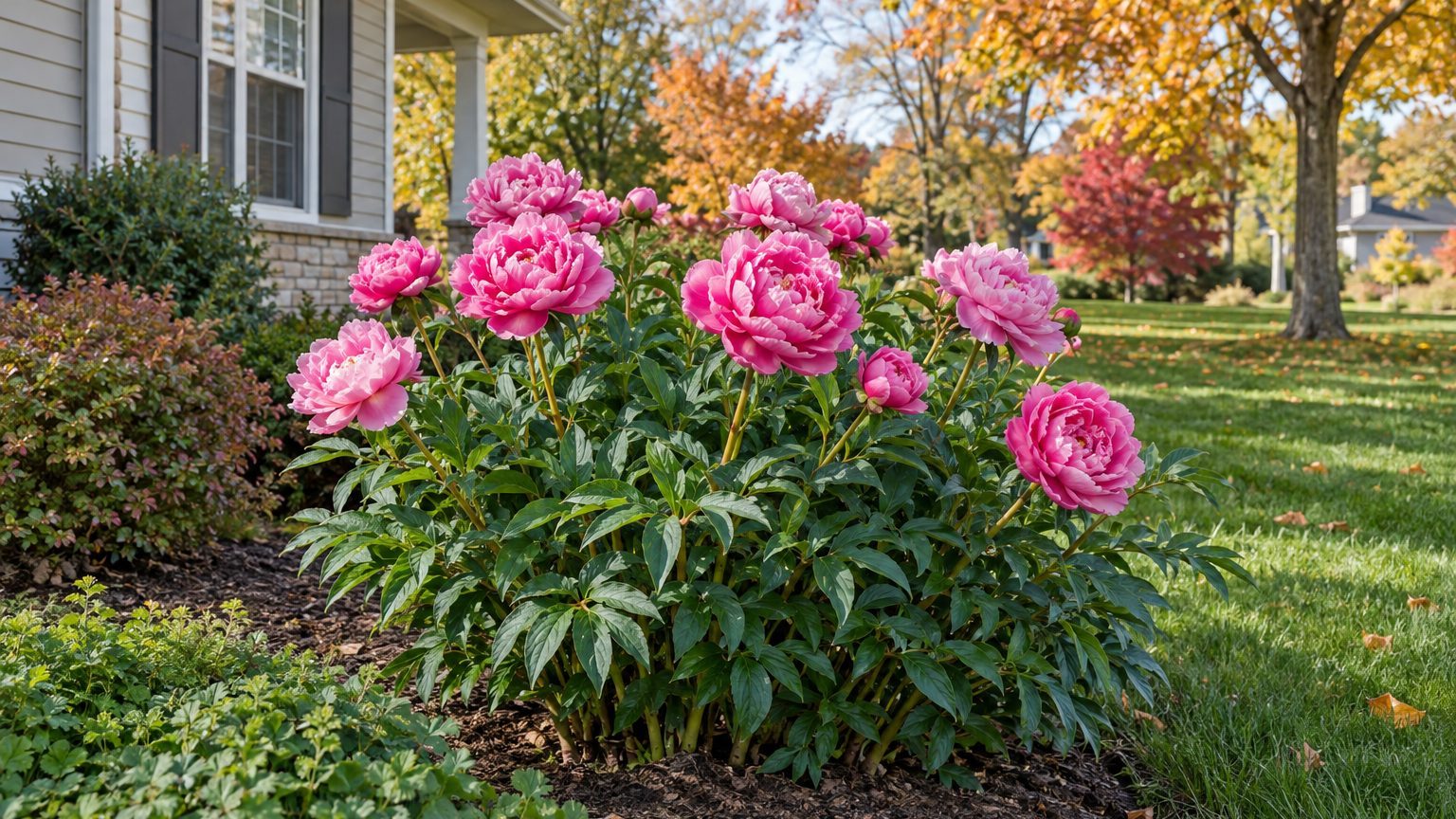
Peony stems come up red and stubby in early spring, and the plants that flower best in a Kansas yard are the ones that went into the ground the autumn before. Planting is a fall job here, with a short window that closes before the soil turns cold and hard.
When to Plant Peonies in Kansas

Plant or divide peonies in September, with October as the latest month, so the roots settle in before winter. The frost figures here come from the reference weather station, and your own yard is likely to freeze later in spring and earlier in fall, so check your county.
- In early spring, red shoots push up and the plant is leafing out, a stretch when the last frost in Wichita falls between April 4 and April 18, and a late freeze can nip the tips without harming the roots.
- Through May into June, the buds open, and a peony planted or moved the previous fall may skip flowers the first spring.
- Over summer, the leaves feed the roots, which store the energy that next year’s buds depend on.
- In September, new bare-root plants go in and crowded clumps can be divided while the roots have several weeks to settle before the cold.
- In October, planting can still happen, and the first fall frost in Wichita arrives between October 23 and November 2, which is when the foliage of herbaceous plants begins to fade.
- From October into November, after frost has blackened the leaves, herbaceous peonies are cut back, and it can also be done in March or April.
Whichever month you choose, set the buds, called eyes, near the soil surface. A peony planted too deep may bloom poorly or not come up at all. Hardiness zones in Kansas run from 5b to 7a on the USDA system, so the exact timing shifts a little with your location.
Kansas — the year and the numbers
- State
- Kansas
- USDA zones
- 5b-7a
- Last spring frost
- April 4 to April 18
- First fall frost
- October 23 to November 2
- Annual rain
- 34 in
- Lawn zone
- transition-season
- Source
- NOAA NCEI 1991-2020 Climate Normals, 32F freeze probabilities · Wichita
Which Peonies Grow Best in Kansas?
Peonies are a good fit for Kansas because they need a cold winter rest to flower, and Kansas winters supply it. They bloom in May and June here. Herbaceous and intersectional types are the easiest to grow and share the same care.
Tree peonies also grow here, but they behave differently, since they are woody shrubs rather than perennials that die to the ground.
| Peony type | How it does in Kansas | Why |
|---|---|---|
| Herbaceous (garden) | Easy to grow | Dies back each fall and returns each spring |
| Intersectional (Itoh) | Easy to grow | Same culture as herbaceous, a hybrid of garden and tree peonies |
| Tree peony | Grows, with different care | A woody shrub that goes dormant and renews growth each spring on woody stems |
Woodland peonies are another group grown in home landscapes. For most gardeners, a herbaceous peony is the simplest place to start, and an Itoh is a sturdy alternative with the same routine.
When to Plant, Cut Back and Feed Peonies in Kansas
The year’s work follows the plant’s rhythm: root in the fall, tidy after frost, and enjoy the flowers in late spring. Feeding has no month in the calendar, so it is best tied to what the plant is doing rather than the date.
| Task | Best timing in Kansas | Why then |
|---|---|---|
| Plant or divide | September, or October at the latest | Roots establish before winter |
| Cut back herbaceous peonies | October into November, after frost | The foliage has died back and the plant is dormant |
| Cut back, alternative window | March or April | Old stems can come off before new growth is far along |
| Flowers open | May into June | The plant’s natural bloom season |
When cutting back, take the stems down to within a couple of inches of the ground. A tree peony keeps its woody stems and is never cut back. For feeding, use a soil test to decide whether the plants need anything at all.
How Peony Planting Dates Change Across Kansas
Kansas stretches across several hardiness zones, so the season for your peonies nudges earlier or later depending on where you garden.
- Northeast Kansas, around Manhattan and Johnson County: winters are colder than in the south, so the fall planting window closes a little sooner and spring growth begins somewhat later.
- Wichita and south-central Kansas: milder winters and warmer springs bring the season on earlier, which is the area the frost dates above describe.
- Western Kansas: higher and drier country, where frost tends to come earlier in fall and linger later in spring, so planting at the start of the window gives roots the most time.
Suburban and rural yards usually freeze later in spring and earlier in fall than a city airport does, so lean toward September if you are outside town.
Where to Get Peony Advice in Kansas
Local help is useful when a plant refuses to bloom or a clump needs dividing. Kansas has a statewide service through K-State Research and Extension, with an office in each county.
- The county extension office can identify problems if you bring a stem or leaf sample, ideally during the growing season.
- Many offices run soil tests, and fall is a good time to submit one before planting.
- Staff can help you decide when and how to divide a clump, especially if you plan to share plants with neighbors.
Common Questions
Why Did My Peony Not Bloom This Year?
Look at how deep the eyes sit and how long ago the plant was moved, and consider them together. A peony set too deep may bloom poorly, and a newly planted or transplanted peony may not bloom the first spring.
Can You Divide Peonies in Spring in Kansas?
The calendar points to September, or October at the latest, for dividing. Fall division gives the replanted pieces time to settle before winter, which spring work cannot match.
Should You Cut Back Tree Peonies in Kansas?
No. A tree peony is a woody shrub that keeps its stems through winter and sprouts new growth from them each spring. Only herbaceous types are cut back to the ground.