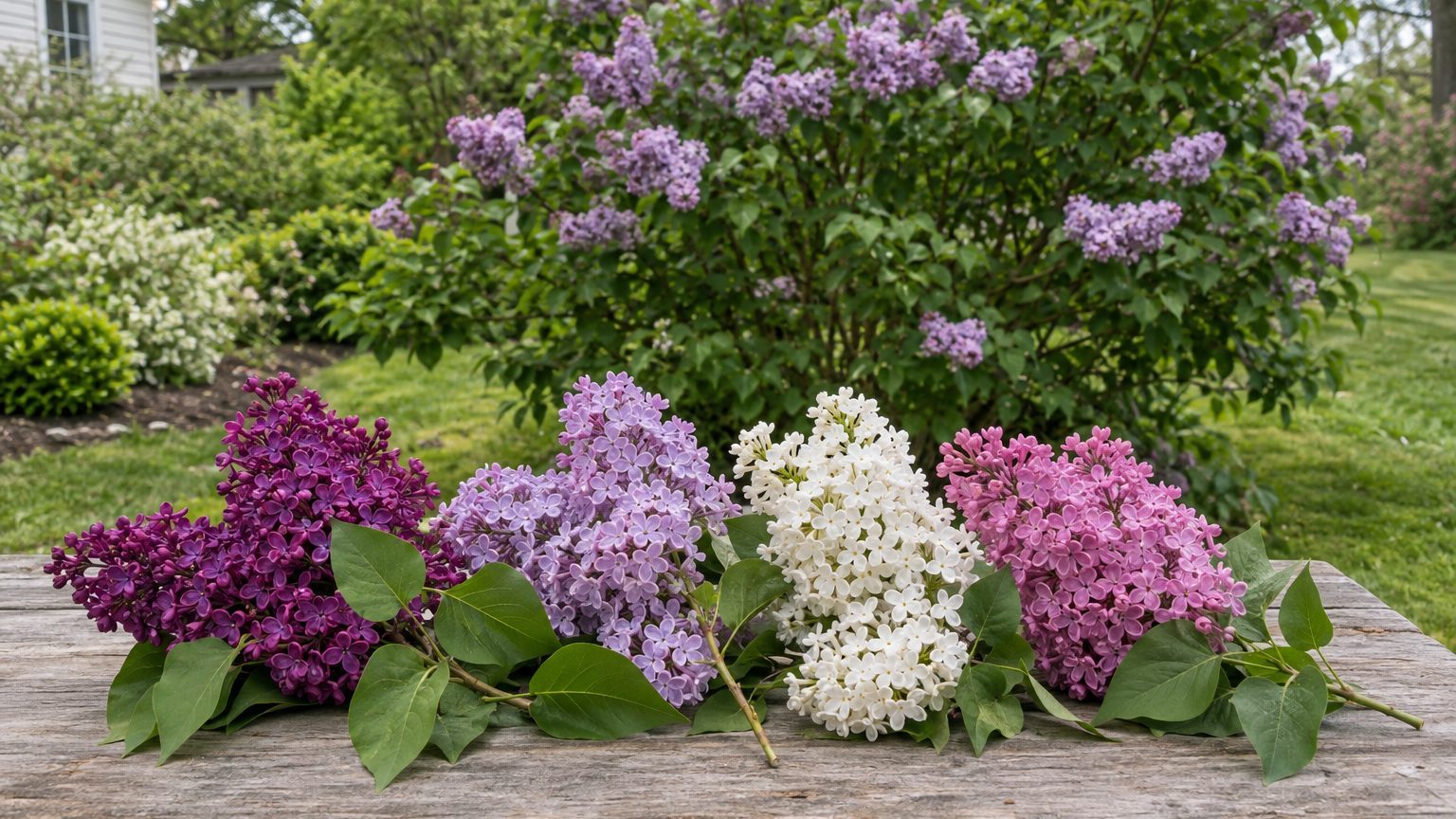
Lilac blossoms open across Massachusetts yards in May, and their scent drifts over fences. Choosing the right lilac for your yard comes down to how much winter chill it needs and how it handles summer humidity.
Best Lilacs to Grow in Massachusetts

Massachusetts sits in the cold-winter range lilacs like, and the USDA system places the state between zones 5a and 7b. The chill of winter is what matures their flower buds, so many lilacs suit Massachusetts winters. The one limit is hot, humid summer weather, which favors disease-resistant types.
Common Lilac

Syringa vulgaris is the lilac most people picture, with fragrant masses of purple, lavender and white blooms in May. It is the classic choice for a sunny spot with good air circulation, and winter cold suits it.
The trade-off is disease. Common lilac is susceptible to powdery mildew, bacterial blight, scale and borers, so give it room for airflow and watch the leaves in humid summers.
Bloomerang Series

Dwarf hybrids like the Bloomerang series are more disease-resistant than typical common lilac. The series resists powdery mildew and reblooms, which helps in a humid New England summer.
These plants also mature shorter in height, so they fit where a full-size lilac would crowd a walk or window.
Hyacinthiflora Hybrids
Hyacinthifloras are vigorous hybrids that look like French hybrids but bloom earlier. They are very hardy, but because they flower early, they belong where late frosts are less frequent.
That makes them a better fit for milder, sheltered spots than for frosty hollows.
Other Lilac Species
Many lilac species originated in Europe and Asia, and some are less susceptible to disease than the common lilac. Colors run beyond purple to red, blue, pink, white, mauve and yellow.
If mildew has troubled lilacs in your neighborhood, look for resistant cultivars or these less susceptible species and hybrids.
Massachusetts — the year and the numbers
- State
- Massachusetts
- USDA zones
- 5a-7b
- Last spring frost
- April 1 to April 8
- First fall frost
- November 3 to November 14
- Annual rain
- 44 in
- Lawn zone
- cool-season
- Source
- NOAA NCEI 1991-2020 Climate Normals, 32F freeze probabilities · Boston
How to Choose a Lilac for a Massachusetts Garden
Start with what your yard throws at a lilac: winter cold, humid summer air, limited space or limited time. Lilacs need a cold winter rest to set their buds, so they suit Massachusetts well, but disease and size shape which one you buy.
Match the plant to the problem you are most likely to have.
| Your situation | What suits it in Massachusetts | Why |
|---|---|---|
| Very cold winter | Common lilac | Lilacs are well suited to cold climates, and winter chill matures their buds |
| Hot, humid summer | Bloomerang series | It resists powdery mildew, while common lilac is prone to it |
| Little time for upkeep | Bloomerang series or resistant cultivars | They are more disease-resistant than typical common lilac |
| Small space | Dwarf hybrids | They mature shorter in height |
| Frosty spring pocket | Common lilac over early Hyacinthifloras | Early bloomers are best where May frosts are less frequent |
Lilacs also want a sunny site. A plant tucked into shade will sulk however well the variety suits the state.
Which Lilacs Suit Different Parts of Massachusetts
Massachusetts runs from a mild coast to cold hills, and that shifts which lilacs carry the least risk.
- Boston and the coast: Milder conditions here make early bloomers such as Hyacinthifloras a safer bet, since frost eases off sooner than inland.
- Worcester County and inland suburbs: Spring frost lingers longer than at the waterfront, so late-opening common lilacs hold their flowers better than early hybrids.
- The Berkshires: Cold winters are what lilacs want, but later spring frost can nip early blooms, so lean on common lilac rather than early hybrids.
Wherever you live, humid summer air is the common challenge, so airflow and resistant selections matter everywhere.
Lilac Buying Mistakes to Avoid in Massachusetts
Picking an Early Bloomer for a Frosty Spot
Early Hyacinthifloras open their flowers sooner, so a late frost can take the whole show. Plant them only where late frosts are less frequent, and choose common lilac for colder pockets.
Ignoring Disease in a Humid Summer
Common lilac is susceptible to powdery mildew, bacterial blight, scale and borers. A plant that looks fine in the pot can struggle by midsummer. Look for a resistant cultivar, or a dwarf hybrid like the Bloomerang series, and leave space for air to move.
Buying Without Knowing Adult Size
A small pot hides how big the shrub will grow. Check the mature height before you plant, and choose a dwarf hybrid for tight spots. An overgrown lilac can be cut hard in March or April, but it will not flower for a few years afterward.
Where to Get Lilac Advice in Massachusetts
For advice that fits your own soil and climate, University of Massachusetts Amherst’s UMass Extension is the state’s land-grant service, and county offices can answer local questions.
- This service publishes lilac and shrub guidance, so check its advice in spring before you buy.
- Your county extension office can help identify mildew or borer damage.
Before you buy a plant, check its mature size and disease resistance, then pick the planting spot.
Common Questions
When Do Lilacs Bloom in Massachusetts?
Lilacs bloom in April and May, and later species can carry on into June.
When Should You Prune Lilacs in Massachusetts?
Prune right after the flowers fade, in May and June. Lilacs set next year’s buds on last year’s wood, so cutting later removes the next spring’s flowers.
Can You Cut Back an Overgrown Lilac?
Yes, in March or April while the plant is dormant. Expect no flowers for a few years afterward.