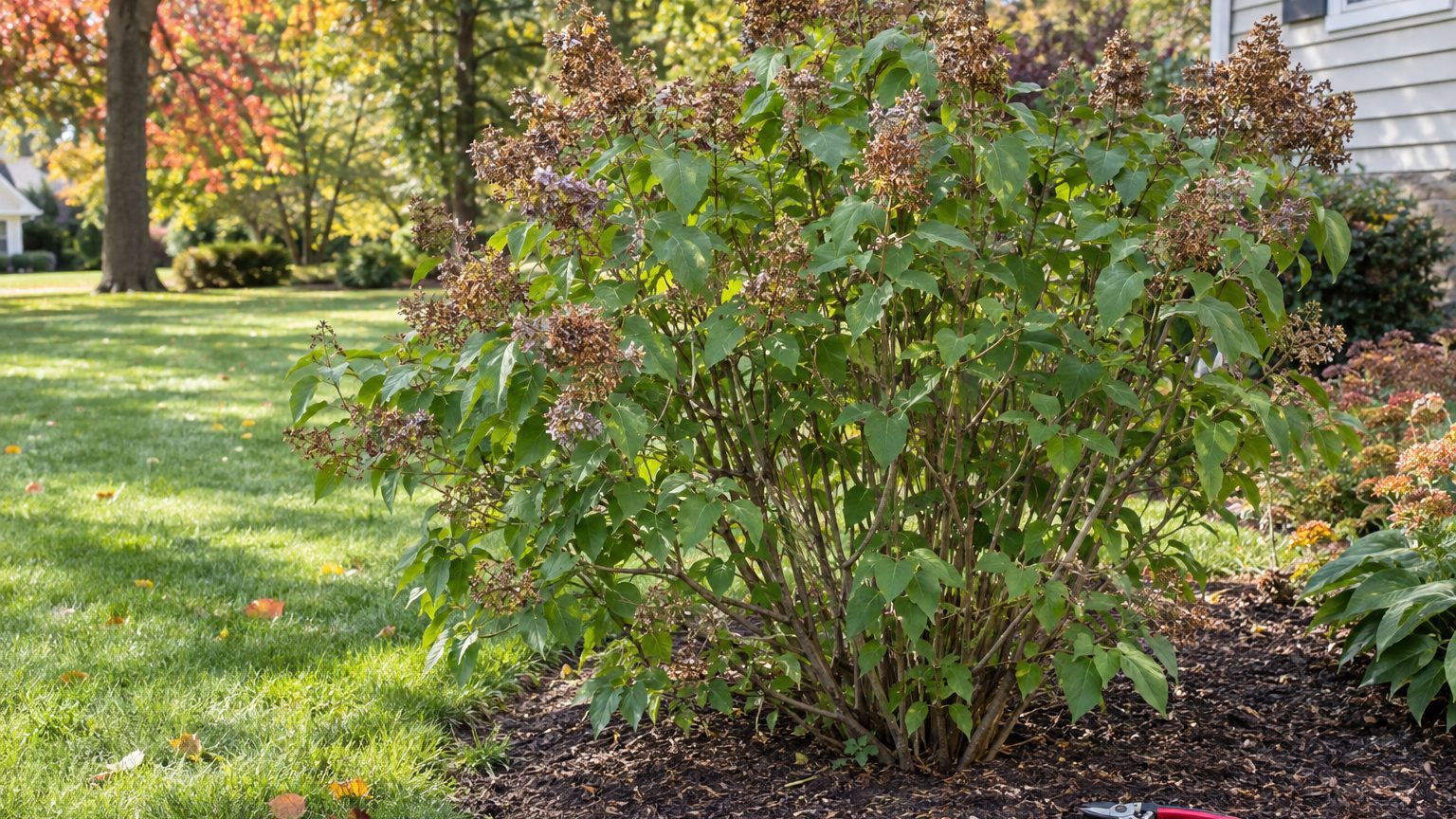
Lilac flowers turn brown and papery on the branch, and that is the cue to pick up the pruners. In Yukon the cutting happens in June and July, soon after the last clusters fade. The reason is timing inside the shrub, since next year’s flowers are already forming.
When to Prune Lilacs in Yukon

Prune right after the flowers fade, which in Yukon means June into July. Lilacs open their blooms in June, and in a mild spring they can start in May. Yukon has no local lilac timing page of its own, so these months follow the nearest comparable northern climate. Confirm local timing with a garden centre, a garden society or a territorial gardening group.
| Type of pruning | When in Yukon | Why |
|---|---|---|
| Routine upkeep: spent flowers, weak or crossing stems | June to July, right after the flowers fade | Next year’s flower buds form in June and July, so cutting early leaves them on the plant |
| Hard cutback of an old, overgrown lilac | Late winter, while the shrub is dormant | The shrub regrows strongly, but it will not flower for a few years afterward |
Keep the cuts modest in a short northern summer, because the shrub needs its leaves to fuel those new buds.
Yukon — the year and the numbers
- State
- Yukon
- Hardiness zones
- 1b
- Last spring frost
- June 5
- First fall frost
- August 25
- Annual rain
- 10 in
- Lawn zone
- cool-season
- Source
- Environment and Climate Change Canada — Canadian Climate Normals 1981-2010, station WHITEHORSE A · Whitehorse
How to Tell When Your Lilacs Are Ready to Prune
The shrub gives clear signals, and they matter more than any date on the calendar, especially in a cool year when bloom runs late.
- Flower clusters turn brown and dry, which tells you the show is over and pruning can begin.
- Petals drop and the stems at the tips look tired, so it is time to remove the spent cluster.
- New leafy growth is pushing out below the old flowers, a sign the shrub has moved on to building next year’s buds.
- Summer is advancing into July, and if the shrub bloomed late you still have time to prune, though the window is closing.
- Stems are crowded, crossing or dead after winter, and they are easy to spot now that the shrub is fully leafed out.
Once the buds for next spring are set, any cut removes flowers, so work soon after the bloom ends and put the pruners away after July.
Should You Prune Lilacs in Fall or Winter in Yukon?
No, not for routine pruning. A lilac blooms on last year’s wood and sets its next flower buds in summer, so cutting in late summer, fall or winter removes the following spring’s flowers.
Late winter is reserved for the hard cutback of an old lilac that has grown tall, bare at the base and thick with stems. The shrub will respond with vigorous new growth, but it will not flower for a few years afterward.
Cold itself is not the concern. Lilacs need a cold winter rest to mature their flower buds, which suits a territory like Yukon well. The pruning calendar is what protects those buds.
How Lilac Pruning Time Shifts Across Yukon
Yukon is large, and local conditions move the bloom and the pruning window earlier or later from one yard to the next.
- Whitehorse: The average last spring frost falls on June 5, which means that in one year out of two it comes later. Treat that date as the middle of a window and expect lilacs to flower on a cool, late schedule.
- Dawson City: Farther north, spring arrives later than in Whitehorse, so lilacs flower and fade later and the pruning window sits at the end of the June to July range.
- Higher ground and cold pockets: Yards on slopes or in frosty hollows run behind sheltered, south-facing sites, so wait for the flowers to fade rather than going by the month.
A sheltered wall or a south-facing slope can bring bloom forward in any part of the territory, so watch your own shrub.
Where to Get Lilac Advice in Yukon
Agriculture and Agri-Food Canada covers general horticulture, and local growers know which lilacs survive nearby winters.
- Visit a garden centre in spring, when staff can tell you which hardy lilacs have done well locally and when local plants tend to bloom.
- Join a garden society or territorial gardening group before the June bloom, and ask neighbors with established shrubs when theirs flower.
- Check the federal agriculture department’s site for hardiness and general horticulture guidance before you plant a new shrub.
Common Questions
Can Lilacs Survive Winter in Yukon?
Yes, hardy types can. Whitehorse falls in Canadian hardiness zone 1b, a system built on several climate variables and not comparable to USDA zones. Choose a cold-hardy lilac, since some common cultivars struggle in the coldest northern yards.
Should You Remove Faded Lilac Flowers?
Yes. Snipping off spent clusters tidies the shrub and keeps it from putting energy into seed. Take care to leave the new buds untouched.
Can a Late Frost Hurt Lilacs in Yukon?
It can. In Whitehorse, the average last spring frost is June 5, and in one year out of two the final frost comes later. Early-opening lilacs can lose flowers to a late freeze, so a spot sheltered from cold air is worth choosing.