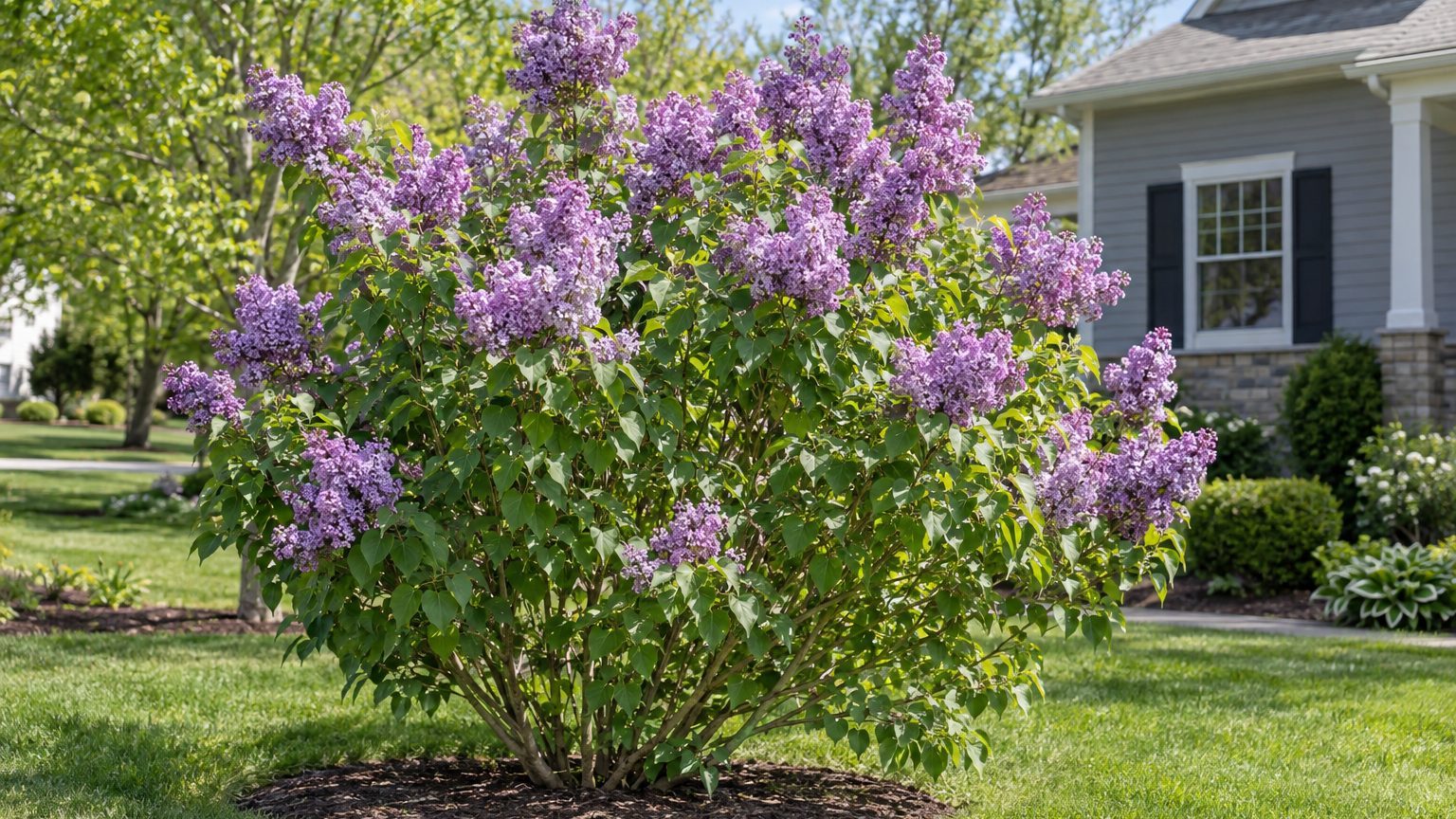
A lilac in a Kentucky yard puts on a fragrant spring show. Across the state, bloom time shifts with local conditions, and well-timed care helps the shrub flower year after year.
When Do Lilacs Bloom in Kentucky?

Lilacs in Kentucky bloom in April and May, and some species carry on into June. The year of a lilac here runs in a steady loop, and each stage sets up the next.
- In April and May, the flower clusters open on wood that grew last year.
- In May and June, right after the flowers fade, is when pruning belongs, before the shrub starts building next year’s display.
- Through summer, the plant sets its flower buds for the following spring, which is why late cuts remove future blooms.
- In fall, the leaves drop and the shrub slows down, with the buds already formed at the tips of the stems.
- In winter, the cold rest matures those buds, so a properly chilly stretch is what you want from the season.
Frost risk helps frame the year. At the Louisville reference point, the last spring frost falls between March 24 and April 4, which is why early buds sometimes get nipped. The first fall frost arrives between November 2 and November 12. Kentucky spans USDA hardiness zones 6a to 7a, and Louisville runs a little warmer than the surrounding countryside, so rural yards should expect a tighter frost-free window.
Kentucky — the year and the numbers
- State
- Kentucky
- USDA zones
- 6a-7a
- Last spring frost
- March 24 to April 4
- First fall frost
- November 2 to November 12
- Annual rain
- 48 in
- Lawn zone
- transition-season
- Source
- NOAA NCEI 1991-2020 Climate Normals, 32F freeze probabilities · Louisville
Which Lilacs Grow Best in Kentucky?
Lilacs can grow in Kentucky, though they are happiest where winters are cold and summers stay gentle. Flower buds need a stretch of winter chill to mature, and hot, humid summers wear the shrub down. Common lilac needs winter chill to bloom fully, while a mix of species can stretch the display into June.
| Lilac type | How it does in Kentucky | Why |
|---|---|---|
| Common lilac (Syringa vulgaris) | Blooms well in a sunny spot with good drainage | Buds need winter chill to open fully in spring |
| Species with varied flowering times | Spreads the show across April, May and into June | Each species flowers on its own schedule |
| Planting a mix of lilac species | Gives a long blooming season | Staggered flowering extends the display |
Warmer winters work against any lilac, since less chill means fewer and weaker flowers. If a shrub leafs out well but blooms poorly, check the amount of sun and the timing of past pruning before blaming the variety.
When to Plant, Prune and Feed Lilacs in Kentucky
Pruning has a clear window because a lilac sets next year’s buds in summer, soon after it flowers. Cut right after the flowers fade and you keep the following spring’s display. Cut in late summer, fall or winter and you remove it.
| Task | Best timing in Kentucky | Why then |
|---|---|---|
| Enjoy the bloom | April and May, with some species into June | Flowers open on last year’s wood |
| Routine pruning | May and June, right after the flowers fade | Pruning now avoids cutting off next year’s flower buds |
| Hard renovation cut of an overgrown shrub | March and April, while the plant is dormant | Old wood is removed before growth starts, at the cost of the next flowers |
A hard renovation gives an overgrown lilac a fresh start, but it will not flower for a few years afterward, so reserve it for shrubs that have truly gotten out of hand. For a closer look at cuts and technique, the Kentucky page on when to prune lilacs goes deeper. A sunny site supports flowering, while fertilizer cannot replace the winter chill lilacs need.
How Lilac Bloom Time Changes Across Kentucky
Bloom time shifts a little from one part of the state to another, following how quickly spring warms up.
- Louisville: the city runs warmer than the countryside around it, so lilacs here tend to open a bit earlier than in surrounding farmland.
- Eastern Kentucky hills: higher ground stays cooler, which usually pushes flowering later and favors the species that bloom toward June.
- Western Kentucky: warmer, humid summers are harder on lilacs, though spring flowering still arrives in April and May.
Within a yard, a south-facing wall brings flowers sooner than a shaded corner on the north side.
Where to Get Lilac Advice in Kentucky
For problems that photos cannot settle, such as poor flowering or leaf trouble, local experts are close by. University of Kentucky Extension runs an office in every county, staffed by people who know local soil and weather.
- Your county extension office can look at a leaf or stem sample and help diagnose what is going on, so bring a cutting while the shrub is in leaf.
- A soil test through the same office tells you whether the soil needs adjusting.
Common Questions
Why Is My Lilac Not Blooming in Kentucky?
Look at these together: the weather and the shrub itself. A shrub in shade that grows lush leaves but few flowers is probably short on sun. A shrub that was cut in late summer, fall or winter likely lost its buds. A mild winter can add to the problem, since the buds need cold to mature.
Can You Cut Back an Overgrown Lilac in Kentucky?
Yes. March and April, while the plant is still dormant, suit a hard cut. Expect no flowers for a few years afterward as the shrub rebuilds.
Do Lilacs Smell Strongest in May?
Lilacs are fragrant while their clusters are fully open in April and May. Planting a mix of species stretches the scent into June.