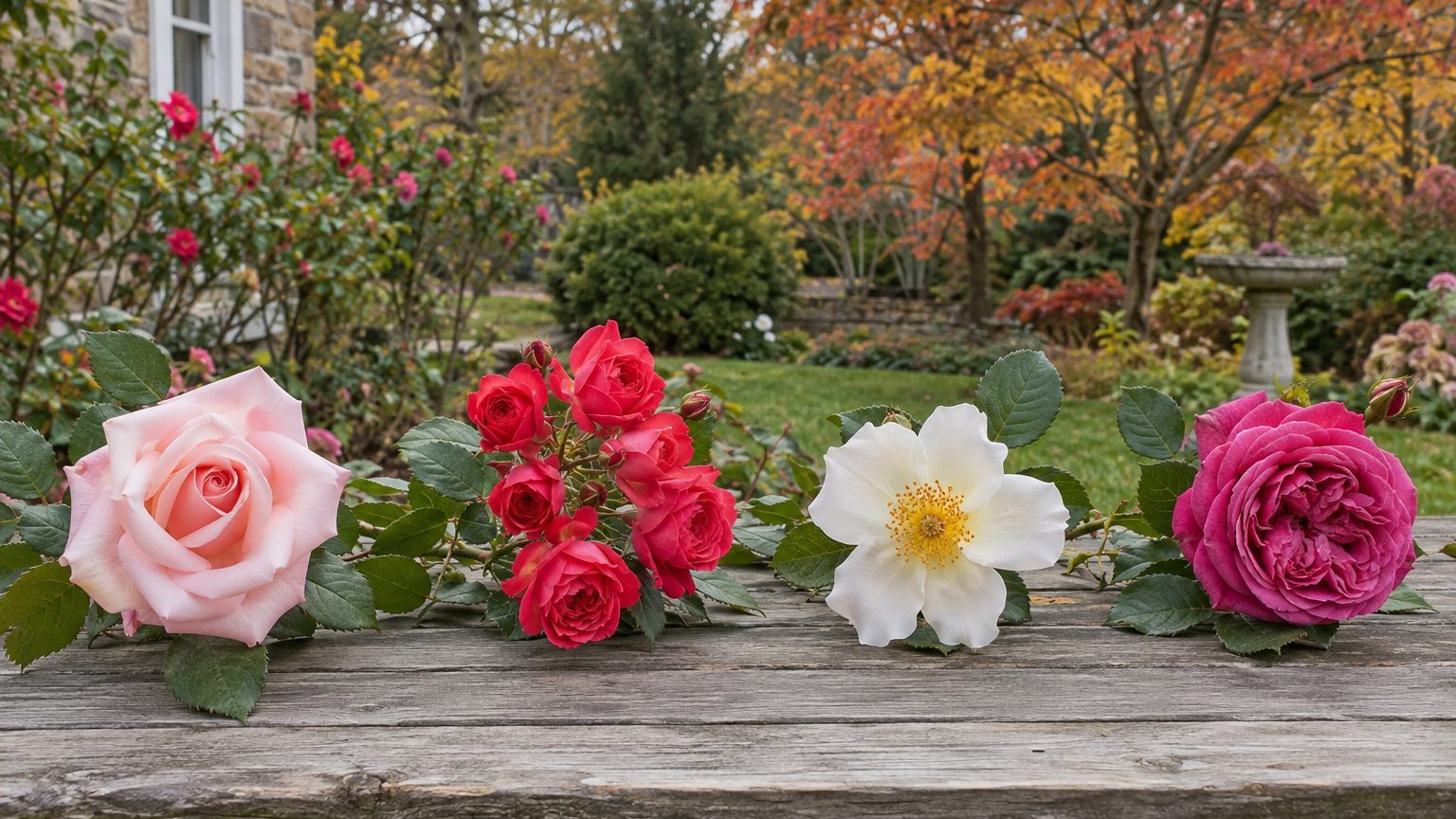
Roses leaf out in Washington while the weather is still cool and gray, and by summer the difference between a tough rose and a fussy one is plain on the bush. Shrub, species and rugosa roses handle cold well, while disease resistance is especially useful in the damp west. Disease-resistant varieties matter most in wet summers, especially west of the Cascades.
Best Roses to Grow in Washington

The roses that hold up here are the hardy, low-care types. Washington covers USDA hardiness zones 4a to 9a, so winters range from mild and maritime in the west to properly cold in the east. Humid summers in the west invite leaf diseases. Choose a rose rated for your own zone, then favor disease resistance.
Species Roses

Species roses are the closest to wild roses, and they are generally the most disease-resistant group. That counts for a lot where damp air sits on the leaves. They live through hard winters unharmed, so they suit cold corners of the state with no coddling.
Shrub and Rugosa Roses

Often called hardy shrub roses, these can look like wild roses and still carry plenty of scented, roselike blooms. They need much less care than other roses, which suits a busy gardener. Rugosas also root from cuttings more readily than most, so one good plant can become a hedge.
Old Garden Roses
Many old garden roses are hardy enough to come through cold winters unharmed. One old rose described for Washington gardens flowers so continuously that cold only turns its buds a paler shade, and they stay fresh on the bush. It tolerates shade but hates cold wind, so give it shelter.
Climbing Roses
A climbing rose has stiff stems with medium to large flowers, carried on a framework of mature wood that is usually permanent. Put one against a wall or trellis and leave that framework alone. Ramblers and some climbers also root from cuttings, which is handy for filling a fence line.
Miniature Roses
Miniatures are more prone to black spot than other types, which matters in a damp western summer. A few varieties are reliably resistant to every strain of the disease. Look for those by name before you buy, and skip any miniature sold without a disease rating.
Washington — the year and the numbers
- State
- Washington
- USDA zones
- 4a-9a
- Last spring frost
- February 27 to March 18
- First fall frost
- November 13 to November 30
- Annual rain
- 39 in
- Lawn zone
- transition-season
- Source
- NOAA NCEI 1991-2020 Climate Normals, 32F freeze probabilities · Seattle
How to Choose a Rose for a Washington Garden
Start with your winter and your summer air, because those two decide more than flower color does. A rose that shrugs off cold may still struggle with black spot in a damp western summer.
Time and space come next. A rose that wants constant attention is a poor match for a busy household, however pretty the catalog photo.
| Your situation | What suits it in Washington | Why |
|---|---|---|
| Very cold winter | Species, shrub or old garden roses | They are hardy and live through cold winters unharmed |
| Humid summer | Species roses or varieties marked disease-resistant | Species roses are generally the most disease-resistant, and leaves stay cleaner |
| Little time | Shrub or rugosa roses | They need much less care than other roses |
| Wall or fence to cover | A climbing rose | Its permanent framework of mature wood carries large flowers |
For a small space, a miniature rose stays compact, but only if you pick a variety resistant to black spot. Dry soil and colder winters are bigger issues east of the Cascades, where hardy shrub roses are a practical place to start.
Which Roses Suit Different Parts of Washington
The Cascades split the state into two very different rose climates, and that changes which type you reach for.
- Seattle and the Puget Sound lowlands: Winters are mild and maritime, while damp summers make disease resistance important. Disease is. Put resistant varieties first, and keep miniatures and other black spot prone types to the ones rated resistant.
- Eastern Washington beyond the Cascades: This is high desert with a far shorter growing season and colder winters. Species, shrub and old garden roses earn their place here, while tender hybrids ask for more protection.
A hardiness zone map is a good first filter, but your own yard, its wind and its shelter, adjusts the final choice.
Rose Buying Mistakes to Avoid in Washington
Buying Tender Roses for Cold Areas
A tender rose in a cold part of the state can lose its canes to winter, and the plant you paid for starts over from the base. If you want one anyway, mound loose mulch such as shredded leaves, compost, pine needles or sawdust over its base. Do it in November or December, once the plant is dormant and before hard frost.
Ignoring Black Spot Resistance
Choosing on bloom color alone can leave you with a rose that spots and drops leaves in a damp summer. Miniatures are the usual offenders. Ask for a variety listed as resistant, and favor species roses when you want the least trouble.
Pruning Once-Blooming Roses in Spring
Old garden roses, ramblers and many climbers flower once a year on last year’s wood. Cut them in early spring and you remove the year’s flowers. Prune them right after they bloom. Repeat-blooming roses are different: prune them in February or March, around the time forsythia blooms, since later pruning also delays the first flush of flowers.
Where to Get Rose Advice in Washington
Local growers can tell you which varieties handle your own town’s cold and damp. Washington State University Extension offers research-based garden advice, and your county has its own office.
- The extension website carries rose care guidance written for Washington gardens, useful to read before you shop.
- Your county extension office can answer questions about local conditions and disease problems, and it is worth a call in late winter, before planting season.
Common Questions
When Should You Plant Roses in Washington?
Bare-root roses go in during February or March, while they are dormant and can build roots before spring growth. Potted roses are more flexible and can go in as late as June, though earlier is better so they establish before the heat of midsummer.
When Should You Feed Roses in Washington?
Begin at bud break in spring and keep feeding regularly from March through July. A late feeding in August is fine, but stop as the roses head toward dormancy in late summer.
Can You Grow Roses from Cuttings in Washington?
Some roses root more easily than others. Ramblers and rugosa roses are good candidates, along with some climbing roses and large-flowered types, so start with those if you want free plants.