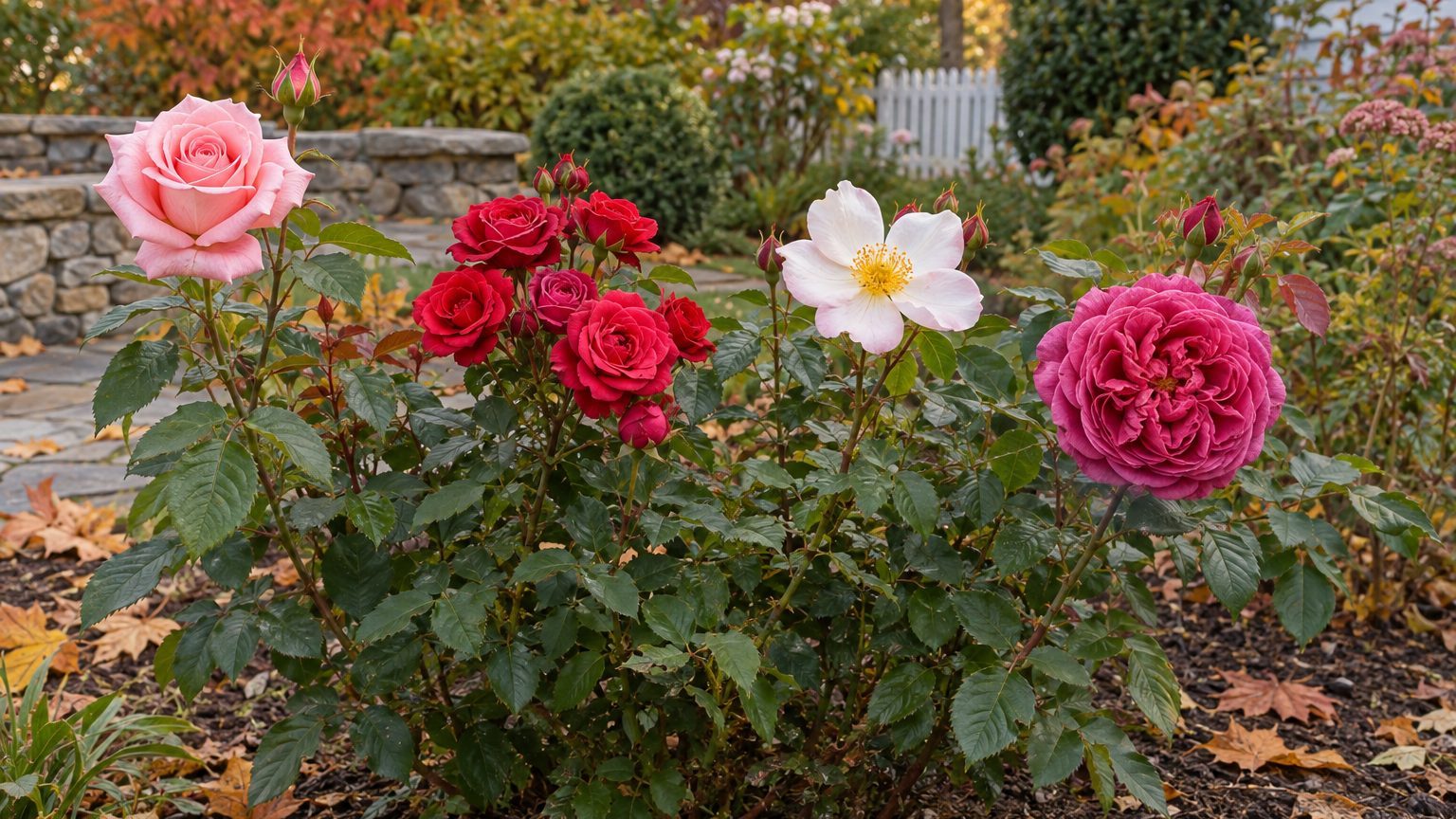
Rose canes that leaf out cleanly after a Nova Scotia winter usually belong to a tough shrub rose, not a fussy hybrid tea. The province’s cold season sorts roses by hardiness more than anything else.
Best Roses to Grow in Nova Scotia

Hardy shrub roses, floribundas, polyanthas, hybrid perpetuals and many old-fashioned roses are the types that hold up here, because winter is the limit and these are tougher in cold than hybrid teas and grandifloras. Halifax sits in Canadian hardiness zone 6b, a Canadian rating that does not translate to a USDA zone, so choose types rated for your own winter.
Hardy Shrub Roses
Shrub roses such as Knock Out perform well without extra winter protection, which makes them the easy path for a front yard border. They repeat-bloom on new wood, so a spring pruning in April or May shapes them once buds start to swell and new growth begins.
Explorer Series Roses
The Canadian Explorer series carries the names of explorers such as Champlain, Cabot and Kelsey. Some are shrubs and some are climbers, and they are bred for cold country. Like other hardy shrub roses, they do well without extra protection, which suits anyone who would rather not wrap canes every November.
Meidiland Series Roses
The Meidiland series has shown good cold hardiness in northern trials, though hardiness varies by variety in the coldest zones. Before buying one, check the tag for its hardiness rating and compare it with your own winter, since you are choosing a variety, not a whole series.
Floribundas and Polyantha Roses
Floribundas and polyanthas generally come through winter better than hybrid teas, so they make a sturdier choice for beds near the house. Prune them in spring, in April or May, once active growth shows. They need winter protection in cold winters.
Old-Fashioned and Hybrid Perpetual Roses
Hybrid perpetuals and many old-fashioned roses prove more winter hardy than hybrid teas. Some old garden roses, ramblers and many climbers flower once a year on last year’s wood, so prune them right after they bloom, never in early spring, or you cut off that season’s flowers.
Hybrid Teas and Grandifloras
Hybrid teas and grandifloras are the least forgiving types here. They need winter protection in cold winters, so grow them only if you are willing to cover them each November. For a first rose, a shrub rose is the smoother start.
Nova Scotia — the year and the numbers
- State
- Nova Scotia
- Hardiness zones
- 6b
- Last spring frost
- May 7
- First fall frost
- October 18
- Annual rain
- 55 in
- Lawn zone
- cool-season
- Source
- Environment and Climate Change Canada — Canadian Climate Normals 1981-2010, station HALIFAX STANFIELD INT'L A · Halifax
How to Choose a Rose for a Nova Scotia Garden
Start with how much winter work you want to do. Hardy shrub roses ask for the least. Hybrid teas ask for the most, though they repay it with classic blooms.
Whatever you pick, match the type to your winter, since a rose only has to survive the cold it will actually face.
| Your situation | What suits it in Nova Scotia | Why |
|---|---|---|
| Very cold winter exposure | Explorer series or other hardy shrub roses | They are bred for cold and perform without extra protection |
| Little time for upkeep | Knock Out and similar shrub roses | No winter wrapping is needed |
| Love of hybrid teas | Hybrid teas, covered in late November | They need winter protection in cold winters |
| Once-a-year bloom from an old rose or rambler | Prune right after flowering | It blooms on last year’s wood |
| Bare-root roses in hand | Plant in April or May | Potted roses can go in later |
Humid summers and heat or drought can affect how roses perform, so ask a local garden centre which varieties shrug off summer disease in your area. A tag that names the rose’s disease resistance is worth reading before you buy.
Which Roses Suit Different Parts of Nova Scotia
Winter hardiness decides the choice everywhere in the province, but how much margin you have changes with where you garden.
- Halifax: Spring frost arrives on average around May 7, and in one year out of two it falls later. That makes Halifax a reasonable place to try shrub roses and, with November cover, even hybrid teas.
- Northern and upland districts: Spring runs weeks behind Halifax, so stay with the hardy shrub roses and Explorer types, and hold off on tender hybrid teas unless you will protect them thoroughly.
Confirm local timing with a garden centre, a rose society or a provincial gardening group, because the months here follow the nearest comparable climate and no Nova Scotia source sets them.
Rose Buying Mistakes to Avoid in Nova Scotia
Hybrid Teas Without Winter Cover
A hybrid tea or grandiflora left bare through a cold winter can lose canes, and the cost is a plant that has to rebuild from low on the stem or from nothing. Either buy a hardy shrub rose instead, or commit to covering the plant.
Covering Too Early
Winter protection goes on in late November, after hard frosts have killed the leaves. Covering earlier traps living growth under mulch. Wait for the leaves to blacken and drop, then mound or wrap.
Pruning Once-Bloomers in Spring
Old garden roses, ramblers and many climbers bloom on last year’s wood. Cut them in April and you remove the flower buds for the season. Wait until they finish flowering, then prune right away, and save April and May pruning for the repeat-bloomers such as hybrid teas, floribundas and modern shrub roses.
Where to Get Rose Advice in Nova Scotia
The Nova Scotia Department of Agriculture is the provincial starting point, and nearby growers fill in what varies by district.
- Provincial agriculture department: Look here for general growing guidance before you plant in April or May.
- Local garden centre or rose society: Visit in spring to ask which varieties do well in your district, and check which ones come through winter locally.
- Master gardener or provincial gardening groups: Contact them for timing questions before you cover roses in November.
Common Questions
When Should You Feed Roses in Nova Scotia?
Feed roses monthly from April through July, and a final feeding in August is acceptable. After that, stop, so that late soft growth does not get caught by winter before it hardens.
When Do You Take Winter Protection Off Roses?
Early May is the usual time, before new growth begins. It can also be done in April, as long as you pull the mulch before buds push through it.
Can You Plant a Potted Rose Later than a Bare-Root Rose?
Yes. Bare-root roses go in during April or May, while potted roses can be planted later.