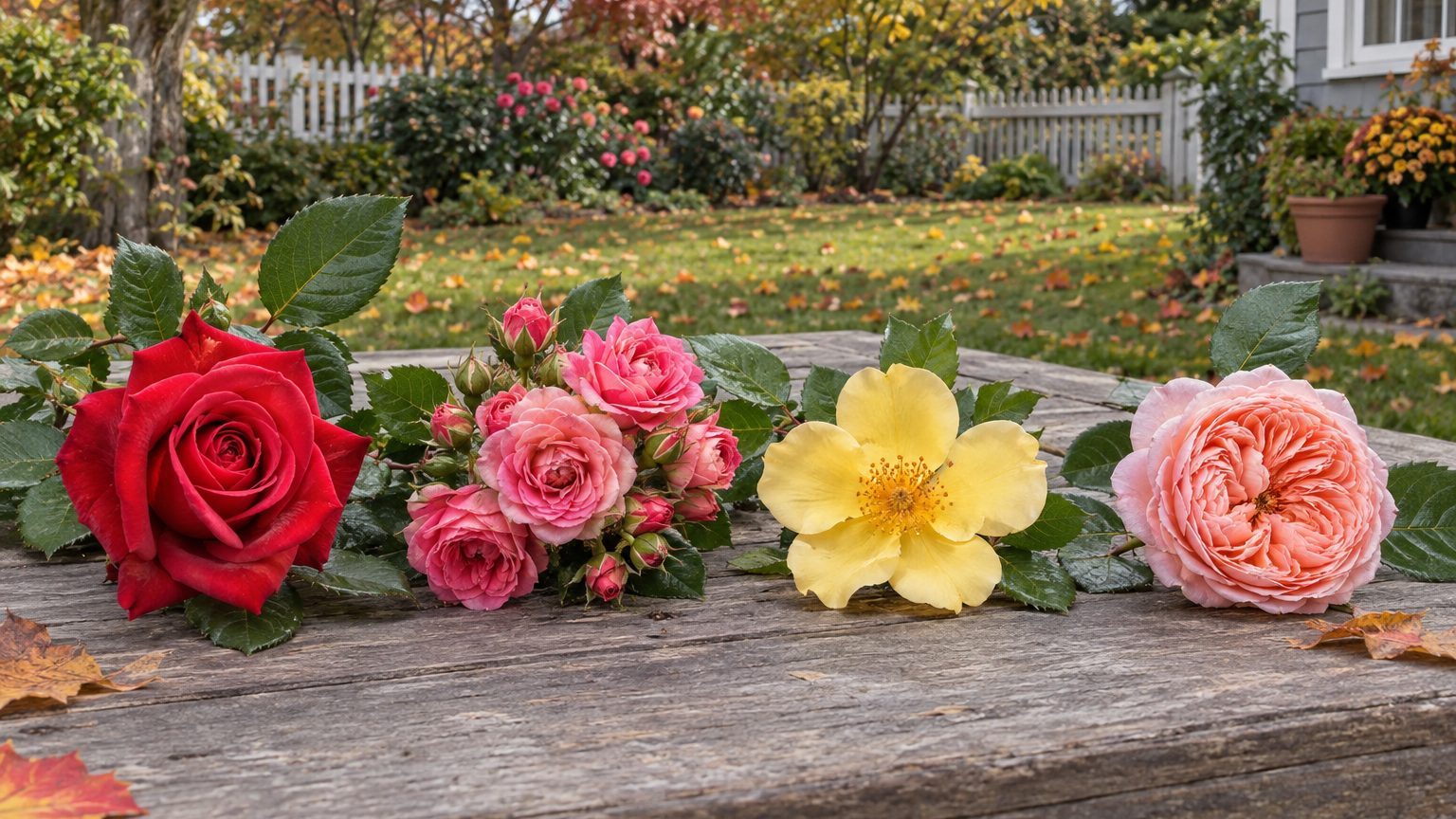
A Nevada spring can look very different in a low-desert yard and at high elevation. Hybrid teas, floribundas, polyanthas, miniatures, climbers and old garden roses all earn a place here, though elevation and summer heat decide which suits your yard.
Best Roses to Grow in Nevada

Hybrid teas and floribundas are the roses grown most often, and the rest of the popular types (polyanthas, miniatures, climbers, old garden roses) earn their place for specific reasons. Dry air and summer heat matter in low-desert gardens, while colder high ground calls for a different plan.
Hybrid Teas
Hybrid teas are continuous bloomers, and many are resistant to powdery mildew, which suits dry air that can still leave leaves dusty with it in cool, shaded corners. They are the classic long-stemmed rose and the type most often grown in dry-climate gardens.
Prune them in January or February, and it can also be done in March.
Floribundas
Floribundas are grown nearly as often as hybrid teas and give you clusters of blooms instead of single stems. They bloom repeatedly, so they take the same winter pruning.
Use them where you want color over a long stretch rather than a few cutting-quality flowers.
Polyanthas
Polyanthas make excellent borders and small hedges, and they do well in containers. Many are hardy, and most varieties bloom continuously.
That makes them a sensible pick along a walkway or on a patio where you want low upkeep and steady flowers.
Miniatures
Miniatures sit among the popular types for dry-climate gardens and fit beds too small for a full-size shrub. Pot them or tuck them at the front of a border.
Check whether a miniature rose repeats or blooms once before choosing its pruning time.
Climbers
Climbers can cover fences and arbors. Some bloom once and some repeat, so check the tag before you buy.
A once-blooming climber flowers on last year’s wood, so prune it right after it blooms and never in early spring. A repeat bloomer follows the winter schedule.
Old Garden Roses
Old garden roses split into European types, which are cold hardy and bloom once, and Asian types, which repeat. Growers who keep European and Asian old garden roses often find the old garden group needs less maintenance than modern roses, especially in the hot summer months.
That is a real advantage in a Nevada summer.
Nevada — the year and the numbers
- State
- Nevada
- USDA zones
- 4a-10a
- Last spring frost
- January 7 to February 1
- First fall frost
- December 8 to December 23
- Annual rain
- 4 in
- Lawn zone
- warm-season
- Source
- NOAA NCEI U.S. Climate Normals 1991-2020, 32F freeze probabilities · Las Vegas
How to Choose a Rose for a Nevada Garden
Nevada spans USDA hardiness zones 4a to 10a, so the right rose depends on where you garden more than on any one favorite variety. Start with the problem your yard poses, then pick the type that answers it.
The pruning and planting months below follow the nearest comparable climate, since Nevada has no local rose-timing page. Confirm them with a local garden center or a rose society.
| Your situation | What suits it in Nevada | Why |
|---|---|---|
| Very cold winter, high ground | European old garden roses | They are cold hardy, and in the high mountains other roses need some protection |
| Powdery mildew on leaves | Hybrid teas and other mildew-resistant varieties | Many hybrid teas resist mildew, and planting resistant varieties is the best control |
| Hot, dry summer | Old garden roses | They need less upkeep than modern roses in the hot months |
| Little time to spare | Polyanthas | They are hardy, and most varieties bloom continuously |
| Small space or patio | Polyanthas in containers, or miniatures | Polyanthas do well in pots and make small hedges |
For bare-root roses, the planting months run January and February, with March as a fallback. Potted roses can go in later than that. Pruning repeat bloomers follows the same months, and feeding starts after pruning.
Which Roses Suit Different Parts of Nevada
The gap between the desert south and the mountain edges is wide, and it changes which roses you can rely on.
- Las Vegas: Heat is the main test in the low desert, so lean toward old garden roses and the sturdier modern types, and plant bare-root roses early in the winter window.
- Reno and Carson City: Winters are colder here than in the south, so favor cold-hardy roses and confirm bare-root planting time with a local garden center or rose society.
- Lake Tahoe and the high mountains: Conditions at Lake Tahoe and in the high mountains differ sharply from the low desert, so confirm suitable rose types and winter care locally.
Your own yard may sit in a pocket warmer or colder than the town around it, so treat these as starting points.
Rose Buying Mistakes to Avoid in Nevada
Choosing a Type Too Tender for Winter
A hybrid tea planted on a high, exposed site can suffer where a cold-hardy rose would not, because the high mountains are where roses need protection from winter. The cost is canes killed back and a slow, weak start the next year.
Look up your hardiness zone before you buy, and choose a cold-hardy European old garden rose or a polyantha if your site runs cold.
Buying a Mildew-Prone Variety
Powdery mildew can show up on roses in shaded or crowded plantings. A susceptible variety may leave you reaching for a spray.
Look for varieties sold as mildew resistant, since planting resistant varieties or using a preventive fungicide spray is how this disease is best controlled. Good airflow around each plant helps too.
Planting a Grafted Rose in a Hard Winter Spot
Where winter is hardest, a grafted rose can lose its top growth and leave only the rootstock to sprout, which means a plant that is not the rose you paid for. The loss shows up in spring, when the new shoots look different from the original.
Ask the nursery whether the rose is grafted and how it handles winter at your elevation. In cold sites, favor the hardy types already named above.
Where to Get Rose Advice in Nevada
Local advice matters most here, because conditions change so much from valley floor to mountain slope. University of Nevada, Reno Extension and your county extension office can tell you what grows in your own zone.
- The state extension service offers gardening guidance for Nevada conditions, so check it before choosing varieties.
- Your county extension office can answer questions about your specific site, and the cooler months before planting season are a good time to call.
- A local rose society or garden center can confirm timing and tell you which varieties do well near you.
Common Questions
When Should You Feed Roses in Nevada?
Feeding runs from February through June, starting after pruning and repeating regularly until June. Skip midsummer, then feed again from September to mid-October.
Why Do Roses Stop Blooming in Summer Heat?
Many varieties pause blooming during extreme summer heat. They usually pick up again as the weather cools.
Do Light-Colored Roses Attract Thrips?
Thrips are said to prefer light-colored blossoms, such as yellow and white. If thrips bother your roses, darker varieties may be less appealing to them.