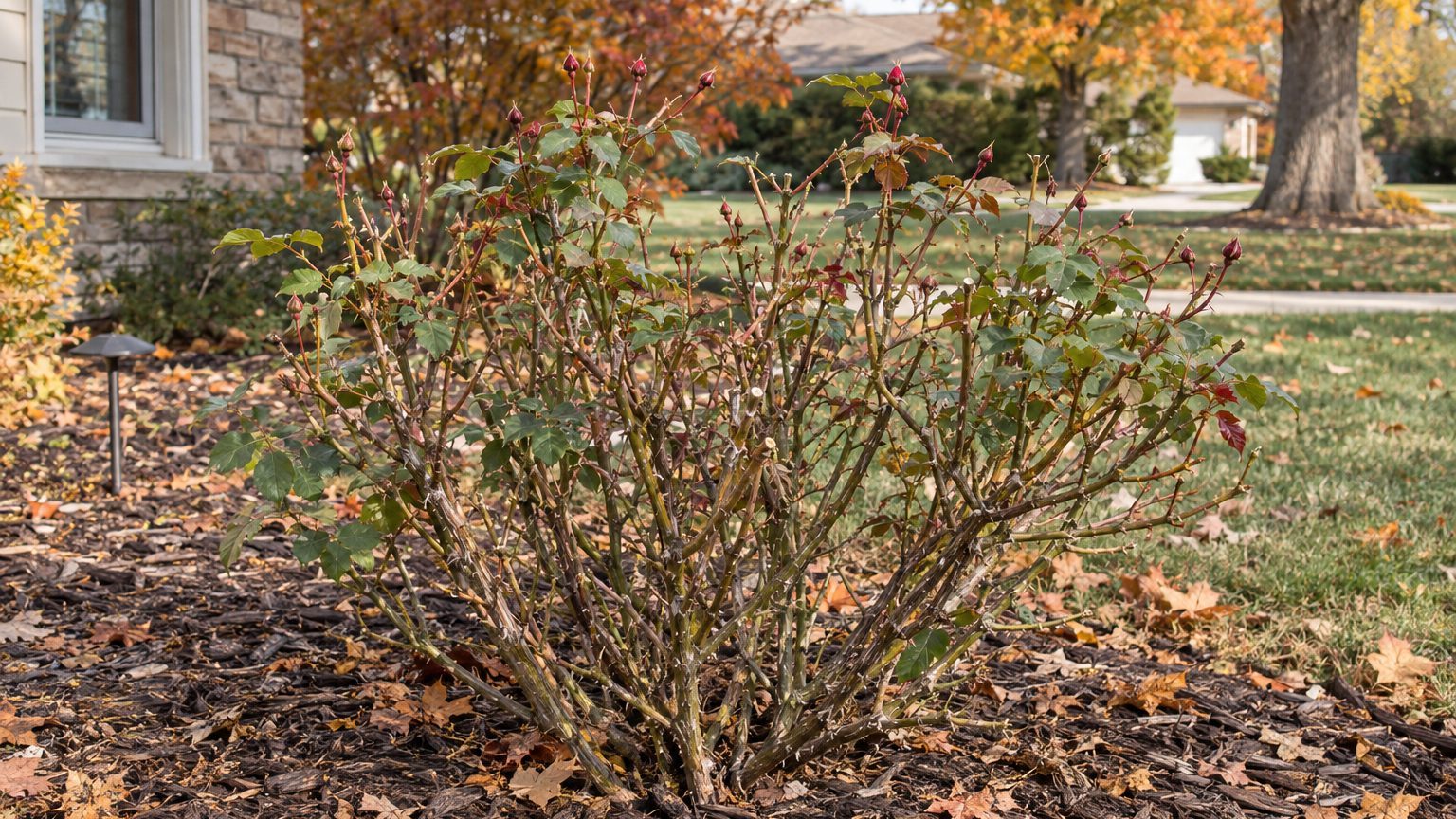
When the forsythia along a Kansas fence line opens its yellow flowers and the mounded soil or mulch comes off the rose bed, the pruners come out. Early spring is when repeat-blooming roses get their yearly cut, and in the yard that means knowing which roses wait, which go first, and what to do in fall.
When to Prune Roses in Kansas

Prune repeat-blooming roses in March or April in Kansas. February works as a fallback in an early spring, once the forsythia is in bloom and the winter protection is off.
Once-blooming roses follow a different rule. They flower on last year’s wood, so a spring cut removes the very canes that would carry the blooms.
| Type of rose | When to prune in Kansas | Why |
|---|---|---|
| Hybrid teas, floribundas, modern shrub roses | March to April, or February in an early spring | They bloom on new growth, so a spring cut sets up the season’s flowers |
| Old garden roses, once-blooming climbers | Right after they bloom, never in spring | They flower once a year on last year’s wood |
| Repeat-blooming climbers | Spring, after winter protection comes off | They flower on new growth through the season |
In Kansas, extension advice for hybrid teas, floribundas and grandifloras is to cut canes back to 8 to 12 inches, leaving 3 to 5 healthy ones, and to remove weak, dead, damaged or crossing canes first. Winter protection comes off between mid-March and mid-April, once the ground thaws, so pruning and uncovering usually happen in the same stretch.
Kansas — the year and the numbers
- State
- Kansas
- USDA zones
- 5b-7a
- Last spring frost
- April 4 to April 18
- First fall frost
- October 23 to November 2
- Annual rain
- 34 in
- Lawn zone
- transition-season
- Source
- NOAA NCEI 1991-2020 Climate Normals, 32F freeze probabilities · Wichita
How to Tell When Your Roses Are Ready to Prune
Weather varies from one Kansas spring to the next, so the plant itself is a better guide than the date on the wall.
- Forsythia in bloom tells you spring pruning season has opened, and it is a handy signal because the shrub is common in Kansas yards.
- Swelling buds on the canes mean the rose is waking up, which is the moment to cut just above an outward-facing bud.
- A thawed, workable soil means the winter mound or mulch can come off, and that comes before the pruning.
- Canes that are brown and shriveled inside show winter damage, so keep cutting back until you reach white pith.
- A stretch of hard freezes behind you, or at least none forecast, means fresh cuts are less likely to be burned by a late cold snap.
Last spring frost at the Kansas reference city falls between April 4 and April 18, and gardens in the suburbs and countryside usually see it later, so check with your own county before trusting that range.
Should You Prune Roses in Fall or Winter in Kansas?
Not much. In fall, the only cut worth making is shortening very long stems so winter wind does not whip the plant around and loosen its roots. Leave the real pruning for spring.
Severe cutting before the plant has gone dormant invites tender new growth that freezes. Winter protection goes on in November, or December if the weather allows, after several killing freezes have put the roses to sleep. Hybrid teas, floribundas and grandifloras need that cover in cold winters, while hardy shrub roses such as Knock Out or the Explorer series do fine without it.
Feeding also stops in late summer, since fertilizer after mid-August pushes soft growth that cold will damage.
How Rose Pruning Dates Shift Across Kansas
Kansas stretches across hardiness zones 5b to 7a (USDA system), so spring arrives at different times from one end of the state to the other.
- Northern Kansas: Spring warms later here, so wait for the forsythia and swelling buds, and expect to be pruning in April rather than February.
- Southern Kansas: Warmth comes sooner, so March pruning is common and a February cut in a mild spring is more realistic than farther north.
- Western Kansas: Higher ground and drier, colder air keep growth back, so watch the buds closely and lean toward the later end of the window.
Wherever you garden, the forsythia and the buds outrank the calendar.
Where to Get Rose Advice in Kansas
Your questions about varieties, winter damage and timing are best answered by K-State Research and Extension and your county extension office, resources for Kansas gardeners.
- The extension site has rose care fact sheets, worth reading in late winter before the pruning window opens.
- Your county extension office can tell you how local conditions shift your timing, so call it when the buds begin to swell.
Common Questions
Can You Plant a Rose in Kansas Spring?
Yes. Bare-root roses go in March or April, before growth starts. Container roses can be planted from April through midsummer.
When Should You Feed Roses in Kansas?
Feed from April through July, starting after pruning, again at first bloom, and once more in mid-July. In Kansas, extension advice for hybrid teas is about one-fourth to one-half cup per bush at each feeding.
What Should You Do If Roses Show Winter Damage?
Cut dead canes back to healthy, white-centered wood once the buds swell and new growth shows you where the live wood ends. Dark, dry canes that stay bare when the others leaf out are the ones to remove.