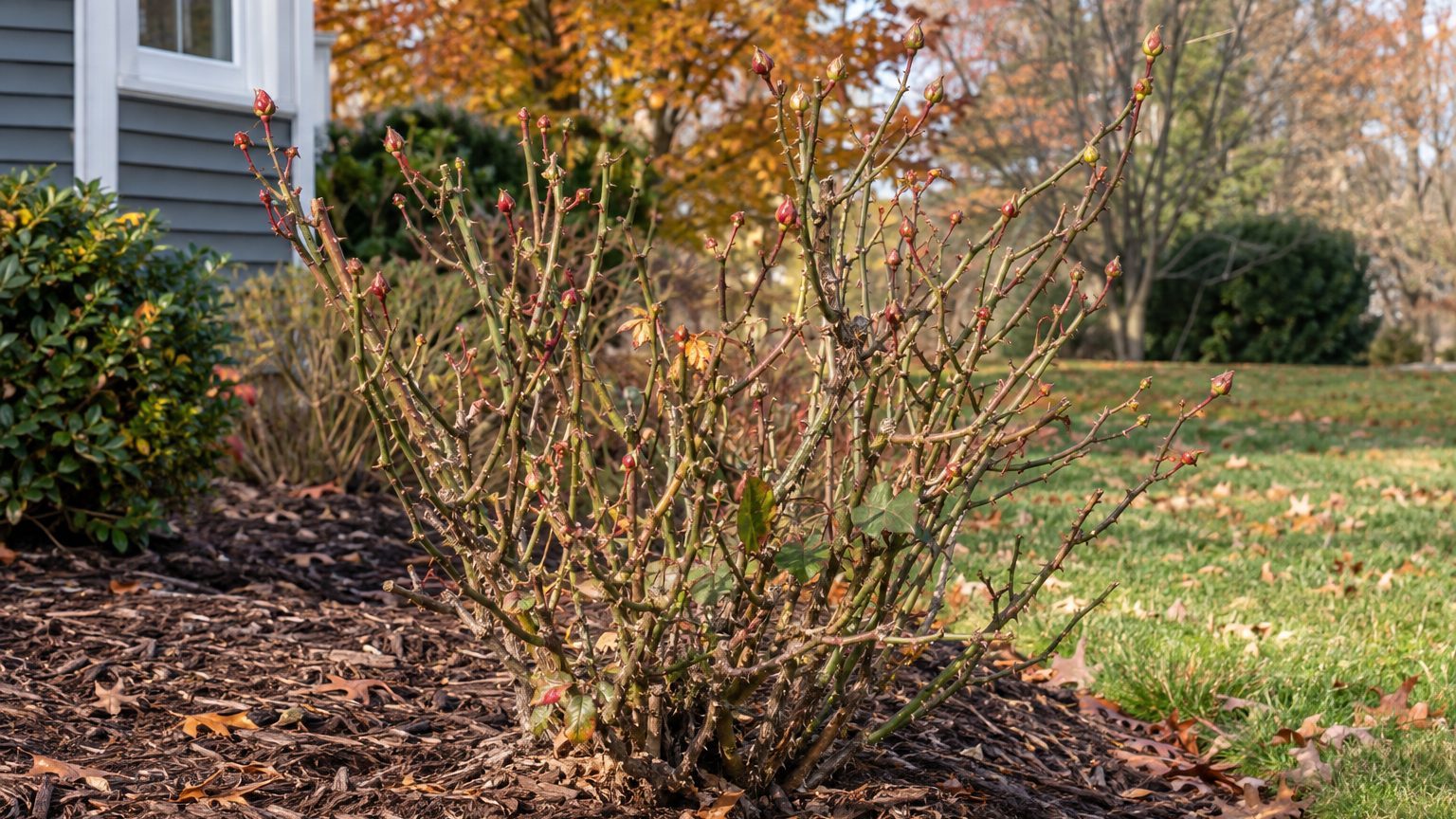
Rose canes go through a Delaware winter looking half dead, and the urge to grab the pruners comes early. Waiting pays off, because the right moment is set by the roses waking up, not by the first mild afternoon. Timing also depends on whether a rose blooms again or only once a year.
When to Prune Roses in Delaware

Prune repeat-blooming roses in March in Delaware. February and April also work when the weather or the buds push you that way. Roses that bloom only once a year follow a different rule and are pruned right after their flowers fade.
| Type of rose | When to prune in Delaware | Why |
|---|---|---|
| Repeat-blooming roses (hybrid teas, floribundas, modern shrub roses) | March, or February or April if the season runs early or late | They flower on new growth, so a hard spring cut sets up the season’s blooms |
| Once-blooming roses (old garden roses, ramblers, many climbers) | Right after the flowers fade, never in spring | They flower on last year’s wood, so a spring cut removes the buds |
Climbers that repeat bloom behave like the other repeat bloomers and take their pruning in spring, once winter protection is off. Old garden roses need less cutting than modern ones. A hard cut ruins their graceful shape and cuts into the flowering.
Delaware — the year and the numbers
- State
- Delaware
- USDA zones
- 7a-8a
- Last spring frost
- April 3 to April 14
- First fall frost
- October 26 to November 7
- Annual rain
- 45 in
- Lawn zone
- cool-season
- Source
- NOAA NCEI 1991-2020 Climate Normals, 32F freeze probabilities · Wilmington
How to Tell When Your Roses Are Ready to Prune
March is the month to aim for, but the plant itself gives the final signal, and a few signs in the yard line up with it.
- The buds along the canes swell and turn plump, which tells you the rose has left dormancy and you can see which buds are alive.
- Forsythia comes into bloom nearby, a familiar signal that pruning season has opened for repeat-blooming roses.
- The hardest freezes of winter are behind you, so new growth stimulated by pruning is less likely to be burned back.
- Any winter mound of soil or mulch has been pulled away from the base, because pruning goes best when you can see the whole plant.
- Canes show green or white pith when cut, while brown and hollow centers mark wood that died over winter and needs to come out.
If a warm spell wakes the buds in February, that is the plant telling you the calendar is running early, and a cold April simply pushes the job later.
Should You Prune Roses in Fall or Winter in Delaware?
For repeat-blooming roses, fall and winter are not pruning months here. Their cuts belong in March, with February and April as the fallback. A hard cut in autumn invites tender new growth that winter can damage, and it removes canes that would otherwise protect the crown.
The one trim that makes sense before spring is modest. If very long canes whip around in winter wind, shorten them a little so they do not rock the plant at the roots. Leave the real shaping and the heavy cutting until the buds swell.
Feeding follows the same logic. Roses are fed from April through August, with March possible, so the plant is not pushed into soft growth as cold weather approaches. Once-blooming roses get their pruning after flowering, which also lands well before winter.
How Rose Pruning Dates Shift Across Delaware
Delaware sits in USDA hardiness zones 7a to 8a, and other parts of the territory differ, so the calendar months are a guide while the buds decide the exact week.
- Wilmington and northern New Castle County: Suburban and rural yards here often stay colder later than the city, so lean toward the later end of March or into April before you cut.
- Dover and Kent County: Gardens in the middle of the state fit March well. Check the buds before you start, since a sheltered spot wakes sooner than an open field.
- Lewes, Rehoboth Beach and coastal Sussex County: Water near the coast softens the cold, so roses there often wake earlier. February is more realistic here than farther inland.
Wherever you garden, a south-facing wall or a windy open lot can move your roses ahead or behind a neighbor’s by a noticeable margin.
Where to Get Rose Advice in Delaware
Questions about a stubborn rose or a specific variety are easiest to settle with local help. University of Delaware Cooperative Extension covers the state, and your county office knows local conditions.
- The state extension site carries research-based guidance on roses and other garden plants, and it is worth checking before the buds swell in late winter.
- Your county office can answer questions about your own soil, microclimate and plant problems, so call or visit in early spring when pruning decisions come up.
Common Questions
When Can You Plant Bare-Root Roses in Delaware?
March and April are the months for bare-root roses, and February also works if the ground can be dug. Potted roses can go in later than bare-root ones, which makes them the easier choice if spring slips past you.
When Should You Feed Roses in Delaware?
Feeding runs from April through August, starting once the first leaves open. March is possible in a warm season. Stopping after August keeps the plant from making soft new growth that winter can damage.
Do Old Garden Roses Need Hard Pruning?
No. Old garden roses need far less cutting than hybrid teas and floribundas, and a hard prune spoils their natural shape and cuts the bloom. Take out dead wood and thin them lightly right after they flower.