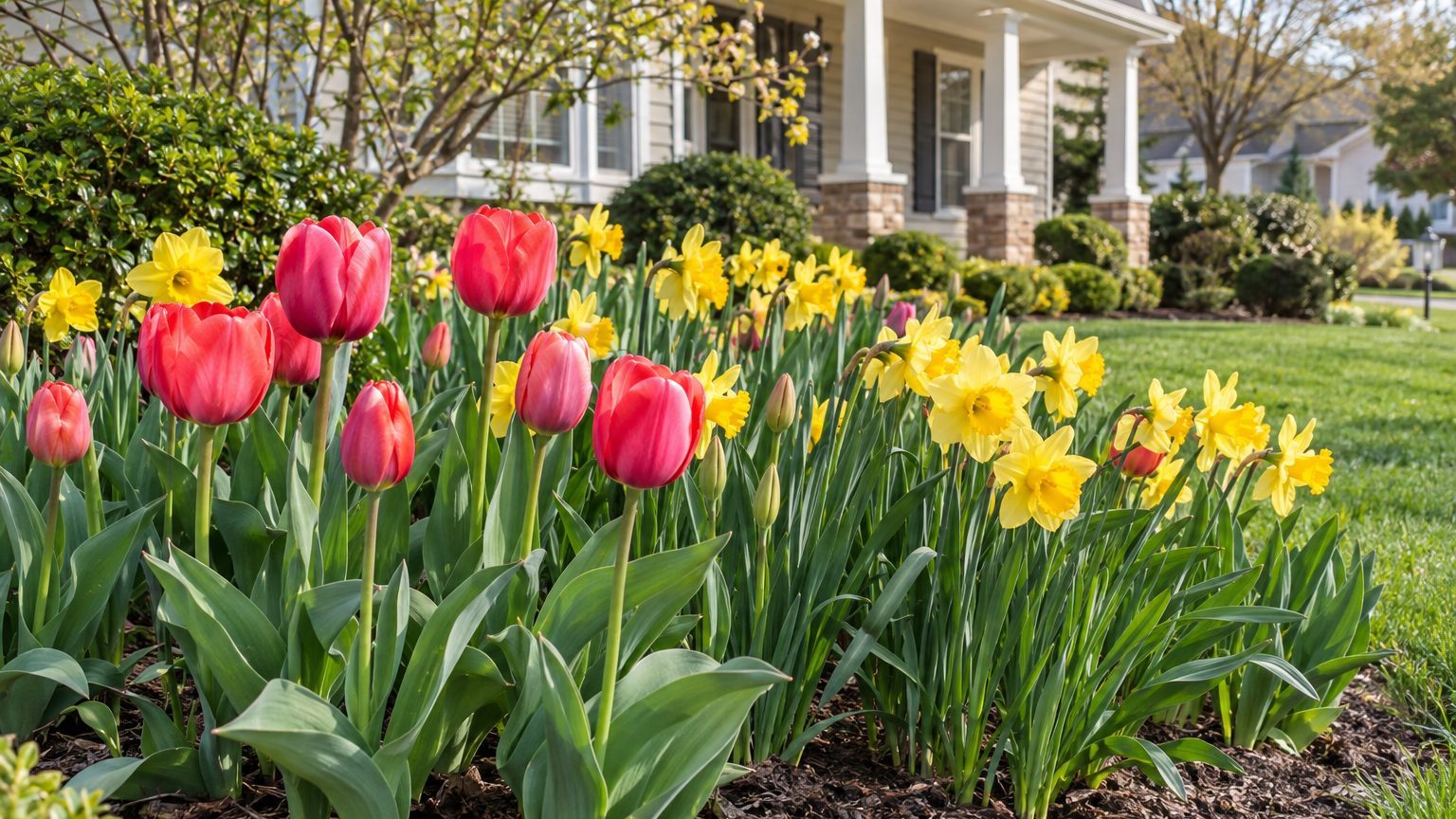
Daffodils pushing up through winter-bare beds are the surest sign of spring in a North Carolina yard, and they come back year after year with almost no help. Tulips are a different story here, and hyacinths and alliums sit somewhere in between.
Best Spring Bulbs to Grow in North Carolina

Daffodils
Daffodils (Narcissus) are the most dependable and least fussy choice for North Carolina. They multiply over the years, need no chilling or pre-treatment, and deer and rodents leave them alone.
Plant them in November, once the soil has cooled below about 60°F. Leave the leaves in place after bloom until they turn brown, and remove only the faded flowers.
St. Keverne Daffodil
For a classic, large yellow daffodil that returns and multiplies for years, St. Keverne is a reliable all-around performer for southern landscapes. It suits North Carolina beds where you want a bold patch of yellow without replanting.
Tulips
Tulips are tricky here. Our climate and soil tend to stay too warm for them to come up year after year, and they need a longer chilling period than local soil often provides.
In eastern North Carolina, treat them as annuals and replant each year. Voles, squirrels, rabbits and deer also eat them, so protect the planting or accept some losses.
Pre-Chilled Tulip Bulbs
If you want tulips, buy pre-chilled bulbs or chill them yourself in the refrigerator, away from fruit, for 8 to 10 weeks. Then plant them in December. Most spring bulbs want about 12 to 16 weeks of cold, and a mild North Carolina winter often falls short of that, so the fridge fills the gap.
Alliums
According to Iowa State University Extension, alliums, the ornamental onions, need the cold of winter to bloom. Plant them in November with your other bulbs and let them close out the spring show.
Hyacinths
Hyacinths share the tulip’s need for cold, so in a mild North Carolina winter they are chilled in the refrigerator before planting. Do that, then plant in the cool soil of late fall and they have what they need to flower.
North Carolina — the year and the numbers
- State
- North Carolina
- USDA zones
- 5b-8b
- Last spring frost
- March 23 to April 5
- First fall frost
- October 30 to November 8
- Annual rain
- 44 in
- Lawn zone
- transition-season
- Source
- NOAA NCEI U.S. Climate Normals 1991-2020, 32F freeze probabilities · Charlotte
How to Choose Spring Bulbs for Your North Carolina Garden
Your choice comes down to how much work you want to do and how mild your winters run. Daffodils ask the least of you, while tulips and hyacinths ask for a little planning ahead.
Planting timing is the same for all of them: November is the target, with October and December as fallbacks. In North Carolina the soil usually cools below 60°F from mid-October through early December.
| Your situation | What suits it in North Carolina | Why |
|---|---|---|
| Warm winters that fall short on cold | Daffodils or alliums | Neither needs chilling or pre-treatment to bloom |
| Hot, warm-soil summers | Daffodils | Tulips struggle to return when soil stays too warm |
| Little time for upkeep | Daffodils | They multiply over time and need little care |
| Deer, voles or squirrels visit | Daffodils | Rodents and deer leave them alone, while tulips and crocus get eaten |
| Need for cold | Pre-chilled tulips or hyacinths | Chilling in the refrigerator replaces the cold the winter does not supply |
If you want tulip color in a bed, plan on replanting each year and treat them as seasonal flowers, the way you would pansies.
Which Spring Bulbs Suit Different Parts of North Carolina
North Carolina stretches from the mountains to the sea, and the choice of bulb shifts a little along the way.
- Eastern North Carolina: Soil here stays too warm for tulips to return, so they are best treated as annuals. Daffodils are the dependable perennial choice.
- Charlotte and the Piedmont: Winters are milder than in the hills, so pre-chilled tulips and hyacinths help. Daffodils and alliums need no extra step.
- The Blue Ridge mountains: Spring arrives several weeks later than in the Piedmont, and winter cold is deeper, so bulbs bloom later and get more of the chill they want.
Wherever you garden, daffodils remain the safest bet from the coast to the mountains.
Spring Bulb Buying Mistakes to Avoid in North Carolina
Planting Tulips and Expecting Returns
Tulips are often short-lived in the garden, and in our warm soil they rarely come back well. Buying a large lot and planting it as if it were permanent leads to thin, disappointing blooms the second year. Plant fewer, or buy pre-chilled bulbs and replant each year.
Skipping the Chill
Tulips and hyacinths need 12 to 16 weeks of cold to flower, and many North Carolina winters do not deliver it. Bulbs planted straight from the bag may come up weak or not at all. Chill them in the refrigerator, away from fruit, before planting.
Holding Bulbs Over the Winter
A bulb left in the bag does better planted late than stored. Put it in as soon as the ground can be dug, even if November has passed. Planting too early is the opposite risk, since bulbs set in warm soil may sprout in the fall before winter arrives.
Where to Get Spring Bulb Advice in North Carolina
NC State Extension publishes bulb guidance written for this state, and each county has its own office that knows local soil and winter patterns.
- The extension website carries planting and chilling advice, worth a look before you order bulbs in late summer.
- Your county extension office can tell you how cold your yard gets, so call before you plant in fall.
Common Questions
Can You Plant Daffodils in December in North Carolina?
Yes. November is the target, but October and December also work. Bulbs still in the bag should go in as long as the ground can be dug.
Do Crocus Grow Well in North Carolina?
Crocus can be grown, though voles, squirrels, rabbits and deer eat them. Plant them where those animals are not a problem, or choose daffodils.
When Do Tulips and Daffodils Bloom in North Carolina?
Early, mid and late-season varieties flower in succession from February through April, so mixing them stretches the show.