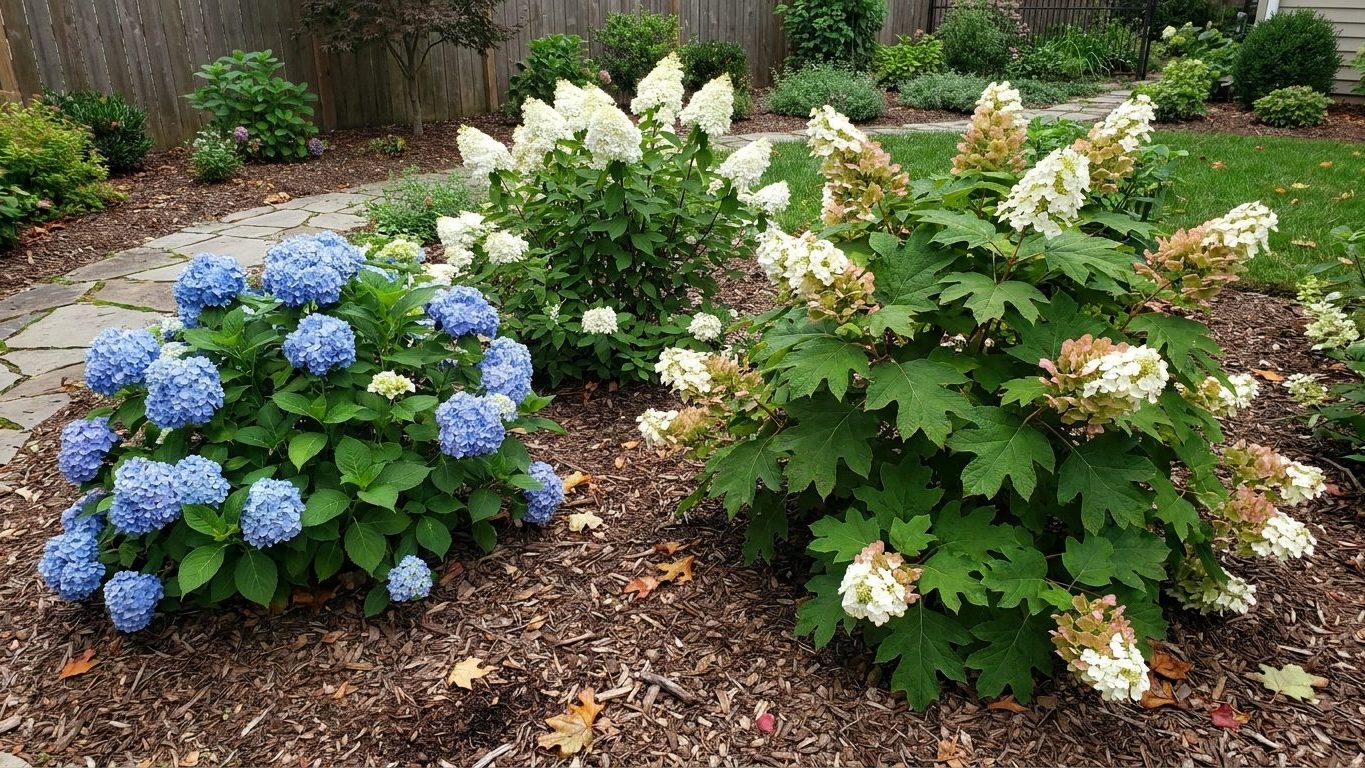
Six hydrangea species handle North Carolina’s swing from Blue Ridge winters to coastal summers, and the panicle types top the list for reliability. Charlotte, sitting in the Piedmont, is the reference point most growers use, with USDA hardiness zones running from 5b in the mountains to 8b along the coast. Pick by bloom wood and sun tolerance, not by catalog color alone.
Hydrangeas that grow well in North Carolina: The Short Answer
The USDA Plant Hardiness Zone Map 2023 puts the state’s range at 5b to 8b, stretching from the Blue Ridge peaks to the barrier islands, and Charlotte’s Piedmont sits comfortably in the middle of that band.
That spread is why one hydrangea species can thrive in Asheville and struggle in Wilmington, or the reverse. The six below are ranked from the toughest bet in a Piedmont yard to the one that asks the most patience.
Panicle hydrangea

Hydrangea paniculata blooms on new wood, which means the state’s frost window can’t wipe out next year’s flowers. It shrugs off full sun and the humid heat that settles in by July, making it the safest bet from the coast to the foothills.
Smooth hydrangea

Hydrangea arborescens, the native behind ‘Annabelle’, dies back hard in winter and rebuilds from the root every spring. That habit makes it nearly frost-proof across the whole 5b to 8b range, though flopping stems after a heavy rain are the tradeoff.
Oakleaf hydrangea

Hydrangea quercifolia is native to the Southeast and handles Piedmont clay and dry shade better than any hydrangea on this list. Fall color and peeling bark carry the plant once the summer blooms fade, and it rarely needs winter protection here.
Mountain hydrangea

Hydrangea macrophylla subsp. serrata sets flower buds that tolerate more cold than standard bigleaf types, which matters most above 3,000 feet in the Blue Ridge. It stays a better bet than bigleaf anywhere the last frost tends to run late.
Bigleaf hydrangea

Hydrangea macrophylla is the shrub most people picture, but it blooms on old wood, so a late freeze in the mountains or a hard winter can erase a season of flowers even while the plant itself survives fine.
Climbing hydrangea

Hydrangea anomala subsp. petiolaris can take two or three years just to put out its first bloom, and it needs a sturdy structure to climb. Patience is the real requirement, which puts it last on this list for most yards.
North Carolina — the year and the numbers
- State
- North Carolina
- USDA zones
- 5b-8b
- Last spring frost
- March 23 to April 5
- First fall frost
- October 30 to November 8
- Annual rain
- 44 in
- Lawn zone
- transition-season
- Source
- NOAA NCEI U.S. Climate Normals 1991-2020, 32F freeze probabilities · Charlotte
How to Work Out the Dates for Your Own Yard
NOAA NCEI U.S. Climate Normals 1991-2020 puts Charlotte’s last spring frost between March 23 and April 5, and working backward and forward from that range decides almost every date on a hydrangea calendar.
- Mark the frost window: treat March 23 to April 5 as a line for tender new growth, not a single circled date.
- Plant only in the open months: March, April, August, and September avoid both that spring frost risk and the worst of summer heat stress.
- Prune bigleaf after bloom, never before: June and July fall safely after flowering finishes and before next year’s buds start to set.
- Fertilize on the three-month rhythm: March, May, and July keep feeding tied to active growth instead of dormancy.
- Count forward to the first fall frost: October 30 to November 8 marks when new plantings need to already be rooted in, not freshly dug.
A panicle hydrangea planted in April has months to root before that fall window arrives, which is why it passes both a Piedmont winter and a coastal summer without much fuss.
A bigleaf planted the same week can still freeze its flower buds the following spring, since the wood carrying next year’s blooms is already a year old by the time frost risk returns.
North Carolina North to South: How the Dates Shift
Elevation and distance from the ocean move these dates more than latitude does inside North Carolina, and the mountains, the middle, and the coast each play by slightly different rules.
- Blue Ridge Mountains (Asheville, Boone, Blowing Rock): last frost lands weeks later than the Piedmont figure above, and first frost arrives earlier, shortening the season for old-wood bloomers like bigleaf.
- Piedmont (Charlotte, Raleigh, Greensboro): the frost windows apply most directly here, where most of the state’s gardeners work.
- Coastal Plain (Wilmington, Fayetteville, the Outer Banks): milder air off the ocean pushes the last frost earlier and the first frost later, stretching the season and easing pressure on bigleaf’s old wood.
None of that changes the state’s overall 5b to 8b hardiness range, only where a given yard falls inside it, so county-level detail matters more than a statewide average.
Mistakes North Carolina Punishes
Pruning bigleaf on the wrong month
Cutting back Hydrangea macrophylla in fall or winter removes the old wood already holding next year’s flower buds, since bigleaf blooms on growth from the prior season. Prune only in June or July, right after the blooms fade, before reaching for shears any other month.
Planting in the August heat without shade
A new hydrangea set out in full Piedmont sun during a dry summer stretch loses moisture faster than its roots can replace it, and scorched leaf edges show up within days. Plant in the cooler edges of the March, April, August, or September window, and water deeply the first two weeks.
Skipping mulch before the spring frost window
Bare soil around the root zone swings temperature faster than mulched soil, putting tender new shoots at risk during the March 23 to April 5 stretch. A three-inch layer of mulch buffers that swing and protects the buds that decide whether a bigleaf blooms at all that year.
North Carolina Extension Offices and County Contacts
The USDA Plant Hardiness Zone Map 2023 range of 5b to 8b is only a starting point for the whole state, and North Carolina Cooperative Extension narrows it down to actual soil and elevation at the county level.
- Your county extension office: soil test results and pest pressure specific to your address, through North Carolina Cooperative Extension.
- The state calendar page: the month-by-month frost dates and pruning window for wherever you live in the state.
- What goes wrong here: the pests and problems North Carolina hydrangeas actually run into, season by season.
Start with the county office if a shrub that bloomed fine last year comes back bare this spring.
Common questions
Which hydrangea blooms most reliably in North Carolina?
Panicle hydrangea blooms on new wood, so it flowers every year regardless of how hard the winter or how late the frost runs, which is why it tops the safest list for the whole state.
Can bigleaf hydrangea survive North Carolina winters?
The shrub itself survives fine across most of the state’s 5b to 8b range, but its flower buds are what’s vulnerable, and a late freeze in the mountains or a hard cold snap in the Piedmont can erase a season of blooms without killing the plant.
Do North Carolina hydrangeas need winter protection?
Native species like oakleaf and smooth hydrangea rarely need it, but a layer of mulch over the root zone helps any bigleaf or mountain hydrangea get through the frost window with its buds intact.