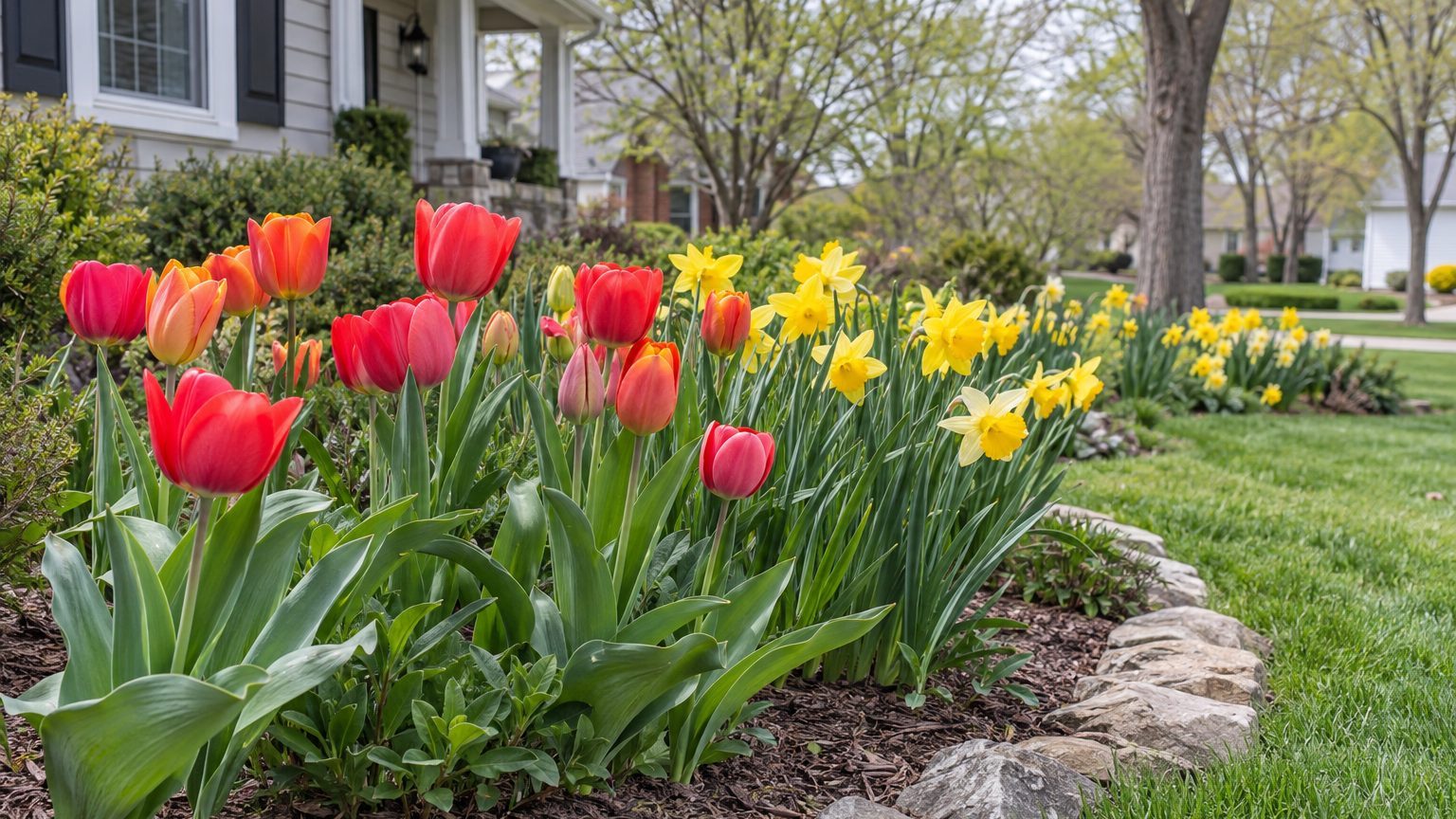
Green tips pushing through cold ground in March or early April are the first sign that fall planting paid off. In Iowa, daffodils, alliums, tulips and crocus all get the winter cold they need. Daffodils and alliums return more dependably than tulips or crocus. Which ones earn a spot depends on how much you want to replant and which animals visit your yard.
Best Spring Bulbs to Grow in Iowa

Daffodils and alliums are the dependable choices for Iowa, because winters here supply the chill that most spring bulbs need, about 12 to 16 weeks of it. Tulips and crocus grow fine too, but they cost more effort and more replanting. USDA zones 4b to 6a cover the state, and every bulb below handles that cold.
Daffodils
Daffodils are the more reliable perennial bulb, lasting longer than tulips and growing with more vigor than most other spring-flowering bulbs. Voles, squirrels, rabbits and deer leave them alone, which matters in a front yard that wildlife crosses.
For named varieties, look for cultivars that have won the American Daffodil Society’s Wister Award, given for long-lasting flowers, disease resistance and good garden performance.
Tulips
Tulips give the boldest color, but they are often short-lived in the garden, so expect to replant some over the years. Voles, squirrels, rabbits and deer all eat them.
Plant them where the show is worth that risk, close to a door or walkway where you will enjoy every bloom, and let daffodils carry the rest of the bed.
Crocus
Crocus are small, and they draw the same hungry crowd as tulips, including voles, mice, chipmunks and rabbits. Some losses are likely.
Plant them in generous handfuls so a few missing bulbs do not leave gaps in the display.
Alliums
According to Iowa State University Extension, alliums, the ornamental onions, need the cold of winter to bloom, so they are easy to fit into any fall planting. They come at the end of the long spring succession that begins with snowdrops and winter aconites.
Iowa — the year and the numbers
- State
- Iowa
- USDA zones
- 4b-6a
- Last spring frost
- April 12 to April 24
- First fall frost
- October 14 to October 25
- Annual rain
- 37 in
- Lawn zone
- cool-season
- Source
- NOAA NCEI 1991-2020 Climate Normals, 32F freeze probabilities · Des Moines
How to Choose Spring Bulbs for Your Iowa Garden
Most of the decision comes down to how much work you want in return and what else lives in or visits your yard. A bulb that survives the winter is only half the question. The other half is whether it will still be there in a few seasons.
| Your situation | What suits it in Iowa | Why |
|---|---|---|
| Very cold winter | Any of the common spring bulbs | Most need 12 to 16 weeks of cold to flower, and Iowa winters supply it |
| Little time to spare | Daffodils | They last longer than tulips and are the more reliable perennial bulb |
| Deer, rabbits and voles in the yard | Daffodils | Animals leave them alone, while tulips and crocus get eaten |
| Want color across the season | A mix from snowdrops and winter aconites to alliums | Spring bulbs bloom in a long succession |
| Bulbs still in the bag | Plant them anyway | Late planting beats storing over the winter |
Small beds suit the same logic. A compact planting of daffodils gives years of flowers, while tulips are best treated as a seasonal accent. Whichever you pick, leave the leaves standing after the bloom fades.
Which Spring Bulbs Suit Different Parts of Iowa
Iowa spans USDA hardiness zones 4b to 6a, so the colder and milder ends of the state lean toward slightly different choices.
- Northern Iowa: Near the Minnesota line, where winters are colder, lean on daffodils and alliums, which hold up reliably, and treat tulips as a bonus.
- Central Iowa: Around Des Moines and Ames, the full range of daffodils, tulips, crocus and alliums is open to you, with animal pressure being the main deciding factor.
- Southern Iowa: Along the Missouri line, where the ground tends to stay open longer, a late planting of tulips has better odds of getting into the soil.
Wherever you garden, hardiness zones are a guide, and a sheltered, sunny yard can behave a notch milder than its neighbors.
Spring Bulb Buying Mistakes to Avoid in Iowa
Planting Tulips and Crocus Without a Plan
Voles, squirrels, rabbits and deer treat tulips and crocus as a buffet. The cost is a bed that blooms thinly or not at all after the first winter. Mix in daffodils, which animals ignore, and put your tulips where you will notice quickly if they disappear.
Expecting Tulips to Last Forever
Tulips are often short-lived in the garden. Buying them as if they were permanent leads to a bed that fades while you wait for it to recover. Daffodils are the better bet for long-term color. Budget for fresh tulip bulbs now and then.
Storing Bulbs Over the Winter
A bag of bulbs left in the garage looks like a plan for next fall, but bulbs are better planted late than stored. Plant as long as the ground can be dug, even into November or December while the soil is unfrozen. A late bulb still has a chance, while a stored one only dries out.
Where to Get Spring Bulb Advice in Iowa
Iowa State University Extension publishes planting guidance written for Iowa gardens, and your county office can help with local questions about soil and pests.
- The extension website has articles on selecting and planting spring bulbs, which are worth reading before you order in late summer.
- Your county extension office can answer questions about voles, rabbits and deer in your area, and is useful to call in early fall before bulbs go in.
Common Questions
When Do Spring Bulbs Bloom in Iowa?
Bulbs come up in March or early April, and tulips flower April through May. The earliest daffodils can open in late February.
How Do You Know When to Plant Spring Bulbs in Iowa?
Plant in September through October, once the soil has cooled below about 60°F. That gives roots time to form before the ground freezes, and it is late enough that the bulbs do not sprout in the fall.
What Should You Do with the Leaves After Bloom?
Remove only the faded flowers. Leave the leaves on the plant until they turn brown, because they feed the bulb for next year’s bloom.