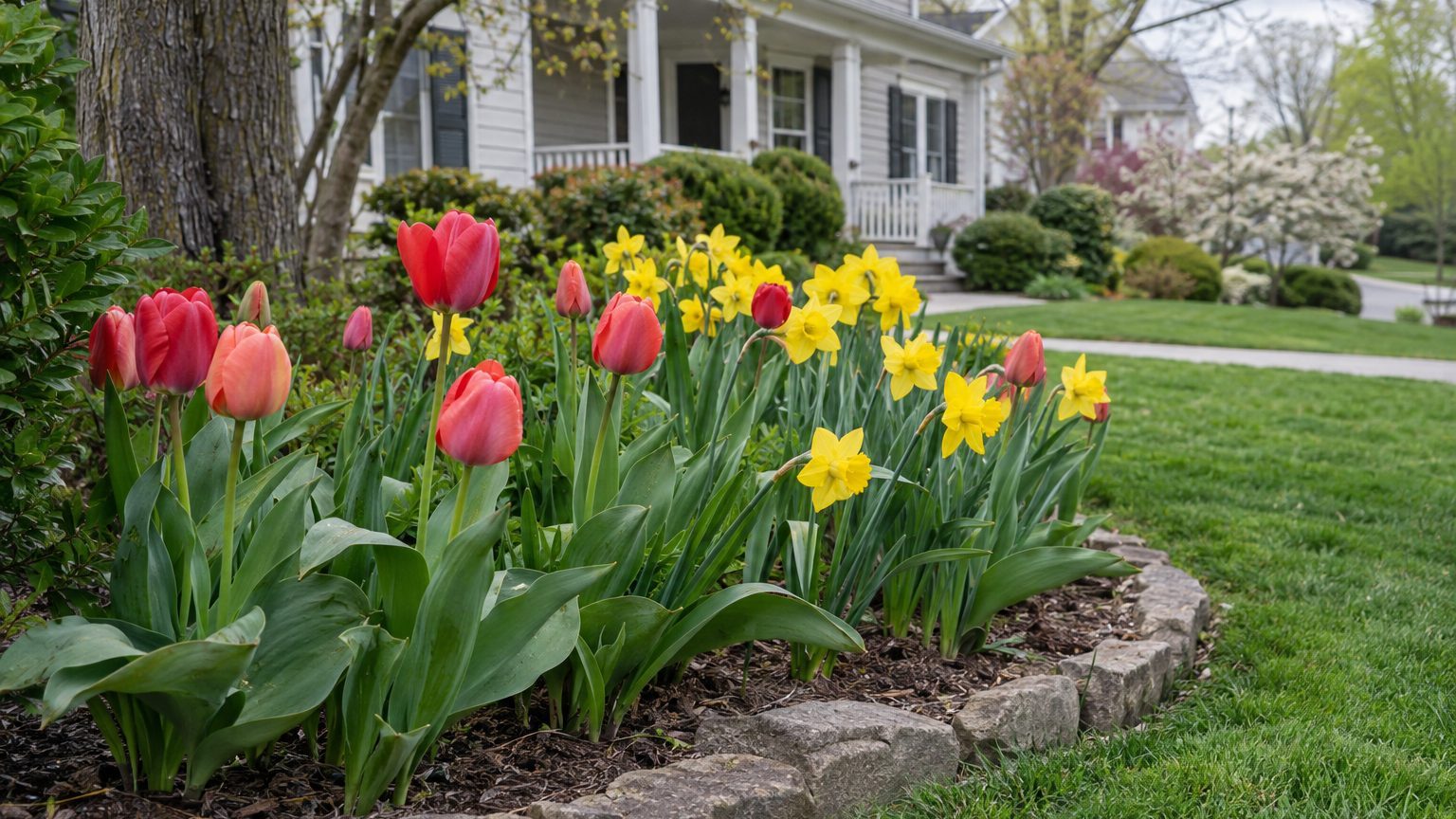
Daffodils nodding along a driveway edge in April are a familiar Connecticut sight, and the bulbs behind them went into the ground the autumn before. Winter cold is what these plants are waiting for. Daffodils, sturdy tulips and crocus do well across the state, and each comes with its own habits and a few cautions.
Best Spring Bulbs to Grow in Connecticut

Daffodils and Fosteriana tulips are the bulbs that hold up best here. Connecticut falls in zones 6a to 7b of the USDA system, and most spring bulbs are comfortable well below those winter lows. Crocus and garden tulips grow fine too, but they ask for a little more care.
Daffodils
Most daffodils are hardy to zone 3, so a Connecticut winter is no test for them. They also last longer than tulips, which makes them the more reliable perennial bulb for a front bed.
Daffodils naturalize well, especially in partly shady spots under trees or along a fence. Voles, squirrels, rabbits and deer leave them alone, so they can guard tender plants that animals like better.
Fosteriana Tulips
Fosteriana tulips perennialize well, which sets them apart from many tulips that fade after a season or two. If you want tulip color that keeps coming back, this group is where to start.
Plant them in a sunny bed, and leave the foliage in place after the flowers fade so the bulb can recharge.
Garden Tulips
Tulips are often short-lived in the garden, so treat them as a seasonal splurge rather than a permanent fixture. They bloom beautifully the first spring and may thin out afterward.
Voles, squirrels, rabbits and deer all eat them. Tuck them into a spot close to the house, or plant them among daffodils.
Crocus
Crocus is one of the small bulbs that carries the color into the garden early, and it tolerates Connecticut cold without trouble. It is also a favorite food of voles, squirrels and rabbits.
Plant it where you can watch it, and expect to replace a few corms if animals find the bed.
Connecticut — the year and the numbers
- State
- Connecticut
- USDA zones
- 6a-7b
- Last spring frost
- April 2 to April 12
- First fall frost
- October 28 to November 10
- Annual rain
- 44 in
- Lawn zone
- cool-season
- Source
- NOAA NCEI 1991-2020 Climate Normals, 32F freeze probabilities · Bridgeport
How to Choose Spring Bulbs for Your Connecticut Garden
Start with what your yard throws at the bulbs. Cold is rarely the limit in Connecticut, so the real questions are who visits the bed, how much shade it gets and how much replanting you want to do.
The match below follows those situations.
| Your situation | What suits it in Connecticut | Why |
|---|---|---|
| Very cold winter in the hills | Daffodils | Most are hardy to zone 3 |
| Little time for replanting | Daffodils and Fosteriana tulips | Both come back reliably year after year |
| Deer, rabbits, voles or squirrels visit | Daffodils | Animals leave them alone |
| Partly shady corner | Daffodils | They naturalize well in part shade |
| Wish for tulip color | Fosteriana tulips | They perennialize well, unlike many tulips |
Timing matters as much as the pick. October is the month to plant, so the roots form before the ground freezes, and November or December still works if the soil is not frozen. Flowers then arrive from March for the hardiest bulbs through April and May for the later ones.
Which Spring Bulbs Suit Different Parts of Connecticut
Connecticut is a small state, but the shoreline and the hills do not behave alike, and that shifts what you can count on.
- Bridgeport and the Long Island Sound shore: Spring freezes end earlier here than in the northern part of the state, with the last one arriving around April 2 to April 12. Crocus and tulips are easier to enjoy here, though animal pressure still decides how long they last.
- The Litchfield Hills and the rest of inland and northwest Connecticut: Freezes come noticeably earlier in fall and linger later in spring. Plant on the early side of the planting window and lean on daffodils, which shrug off the hard winters.
Wherever you garden, a sheltered, sunny spot near the house gives early bloomers the best start.
Spring Bulb Buying Mistakes to Avoid in Connecticut
Counting on Tulips to Return
Garden tulips are often short-lived, so a bed that looks full in the first spring can look thin later. Buy a few Fosteriana tulips for staying power, and plan on daffodils for the permanent show.
Planting Crocus Without a Plan
Voles, squirrels and rabbits go after crocus and tulips, and a bed can disappear overnight. Mix in daffodils nearby, since animals avoid them, and keep the vulnerable bulbs where you can watch them.
Planting Too Early
Bulbs set in warm soil can sprout in fall, and that growth is wasted when the cold arrives. Wait until the soil has cooled below about 60°F, which in Connecticut usually points to October.
Where to Get Spring Bulb Advice in Connecticut
UConn Extension answers Connecticut garden questions, from which bulbs suit a shady yard to how to handle animals in the bed. Your local county office can look at the specifics of your site.
- The extension website has fall planting guidance, so check it before you buy bulbs in late summer or early fall.
- Your county extension office can help with questions about soil or animal damage when the beds start to look ragged in spring.
Common Questions
Do Spring Bulbs Need to Be Chilled Before Planting in Connecticut?
Most spring-flowering bulbs need about 12 to 16 weeks of cold to flower, and Connecticut winters supply it on their own. Chilling tulips and hyacinths in the refrigerator is for places with mild winters. Alliums, like other spring bulbs, need the cold of winter to bloom.
When Can You Remove Daffodil Leaves After Bloom?
Remove only the faded flowers. The leaves feed the bulb for next year, so leave them on the plant until they turn brown.
Can You Still Plant Bulbs That Are Still in the Bag?
Yes. A bulb still in the bag is better planted late than stored over the winter, so keep planting as long as the ground can be dug.