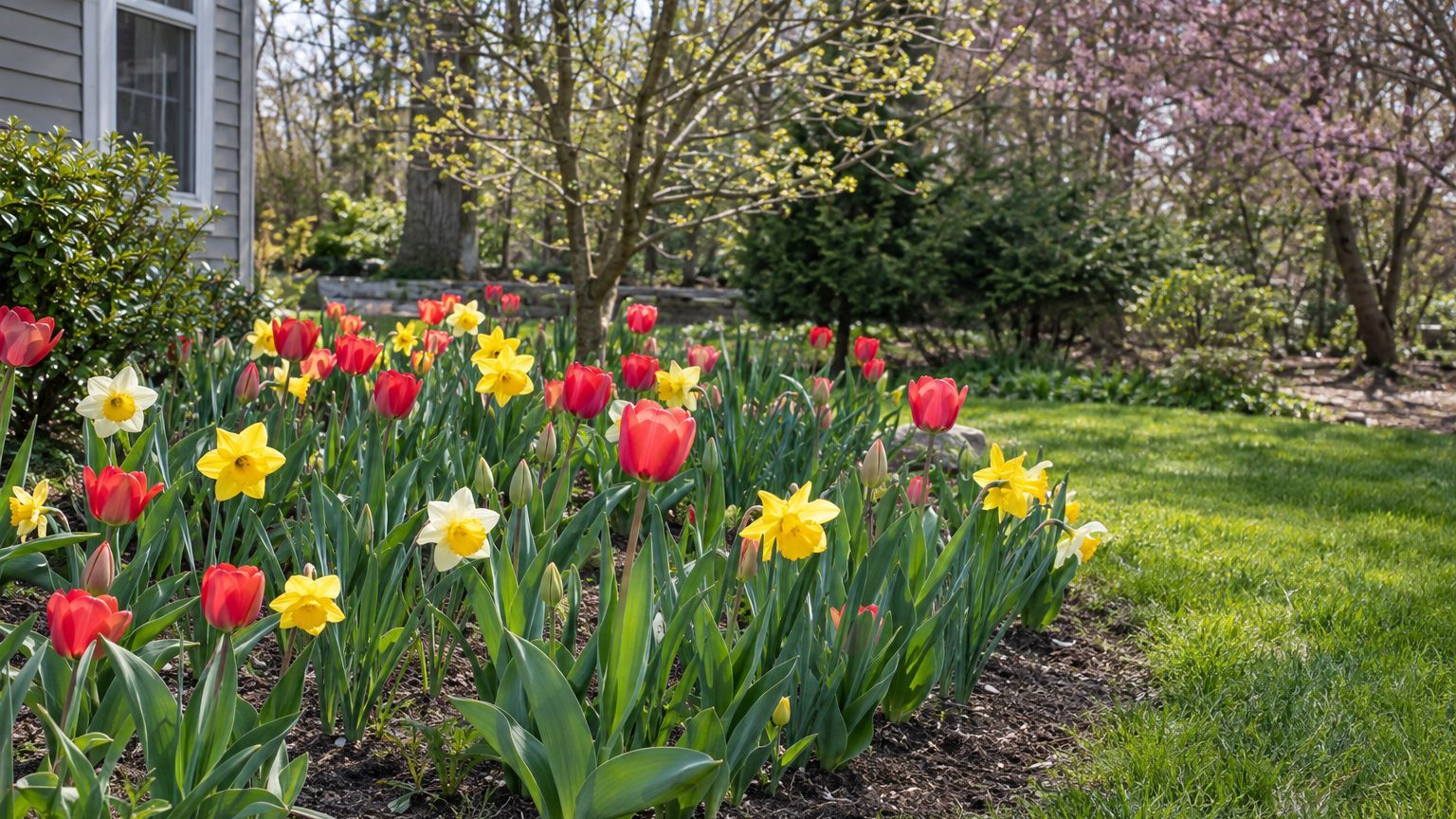
Spring in a South Carolina yard starts with green daffodil leaves pushing through leaf litter, long before the last cold snap has fully passed. Tulips and daffodils flower on a similar rhythm, set by how quickly the weather warms.
When Do Tulips and Daffodils Bloom in South Carolina?

Tulips and daffodils bloom in spring, once the weather warms up after winter, and no fixed month applies to every yard. Bloom follows the warmth of the particular year and the particular spot, so a mild late winter brings flowers sooner than a cool one.
Before that spring show, the bulbs need winter cold, about 12 to 16 weeks of it. Where South Carolina winters run too mild, tulips and hyacinths are chilled in the refrigerator before planting.
| Bulb | When it blooms in South Carolina | What sets the timing |
|---|---|---|
| Crocus | Spring, as the weather warms | Spring warming after a cold winter |
| Daffodils (jonquil, tazetta, poeticus and species types) | Spring, as the weather warms | Spring warming, with reliable growth throughout the state |
| Single late tulips | Spring, as the weather warms | Warm-climate type that copes with mild winters |
| Species tulips | Spring, as the weather warms | Some come from warm climates and need no cold period |
| Hyacinths | Spring, as the weather warms | Refrigerator chill before planting where winters are mild |
| Alliums | Spring, near the end of the bulb season | Needs winter chill to bloom |
Garden zones across South Carolina run from 7a to 9a in the USDA system, which is why the same bulb can open at different times in different parts of the state. Bulbs bloom in a long succession, from snowdrops at the start of the season to alliums at the end. Early-season colors fade before late ones arrive.
South Carolina — the year and the numbers
- State
- South Carolina
- USDA zones
- 7a-9a
- Last spring frost
- February 28 to March 17
- First fall frost
- November 20 to December 5
- Annual rain
- 53 in
- Lawn zone
- warm-season
- Source
- NOAA NCEI 1991-2020 Climate Normals, 32F freeze probabilities · Charleston
How to Tell Your Bulbs Are About to Bloom
Your bulbs give plenty of notice, and a quick walk along the beds in late winter tells you more than any calendar.
- Green tips poking through the soil mean the bulb has rooted and is awake, so keep mulch light and leave the tips uncovered.
- Leaves that stretch upward and open out show the bulb is gathering energy from the sun, so avoid stepping or raking near them.
- A fat bud rising between the leaves means flowers are coming, which is the moment to check that a cold night will not catch it unprotected.
- A bud that starts to show color means petals are days from opening, though how fast depends on the weather, so enjoy it soon after.
- Flattened or missing growth where tips appeared last week points to hungry animals, since voles, squirrels, rabbits and deer eat tulips and crocus while daffodils are left alone.
If a bed shows no tips at all after a mild stretch, the bulbs may have been eaten, or tulips planted last year may simply be spent.
What to Do After Tulips and Daffodils Bloom in South Carolina
Remove only the faded flowers. Leave the leaves on the plant until they turn brown, and do not cut, braid or tie them while they are green. Those leaves feed the bulb for next spring, so a tidy look now means weaker flowers later.
Daffodils reward that patience. They last longer than tulips and are the more reliable perennial bulb, and in South Carolina daffodils are the most successful of the popular spring bulbs for naturalizing. Planted once, they come back and spread.
Tulips are a different story. In South Carolina they can usually be counted on for a single season of color, so many gardeners treat them like annuals and replace them in fall. If you want a tulip that returns, single late tulips are among the best groups for warm climates. A few species tulips will naturalize in the South.
How Bloom Time Shifts Across South Carolina
South Carolina stretches from the mountain foothills to the Atlantic, and bloom follows the warmth of each place.
- Upstate: Winters are colder and spring arrives later than on the coast, so flowers open later here, and the frost season is tighter at both ends.
- Charleston and the coast: Winters are milder, with the peninsula milder still than the airport side of town, so blooms tend to come sooner. Coastal gardeners plant most bulbs in late December or early January, and tulips and hyacinths often need the refrigerator chill to flower well.
Plant in the cooler months across the state, sooner in the Upstate and later on the coast, and expect flowers to follow the same direction.
Where to Get Bulb Advice in South Carolina
Local conditions vary enough that a nearby expert can fine-tune what a general guide cannot. Your local extension office is close at hand for planting dates, varieties and troubleshooting.
- Clemson Extension publishes the state’s spring bulb guidance, and its pages are worth reading in autumn before you buy.
- Your county extension office can tell you which bulbs hold up in your soil and which animals tend to dig, so call before planting.
Common Questions
Can You Plant Tulips in South Carolina Without Chilling Them?
Where winters are too mild to give the cold they need, tulips and hyacinths are chilled in the refrigerator before planting. Single late tulips and some species tulips cope better with warm winters.
Will Deer and Squirrels Eat Daffodils?
Daffodils are left alone. Voles, squirrels, rabbits and deer go after tulips and crocus, so plant daffodils where animals are a problem.
Can You Still Plant Bulbs in January?
Yes. November and December are the usual planting months, but it can also be done in January, and a bulb still in the bag is better planted late than stored over the winter. Plant as long as the ground can be dug.