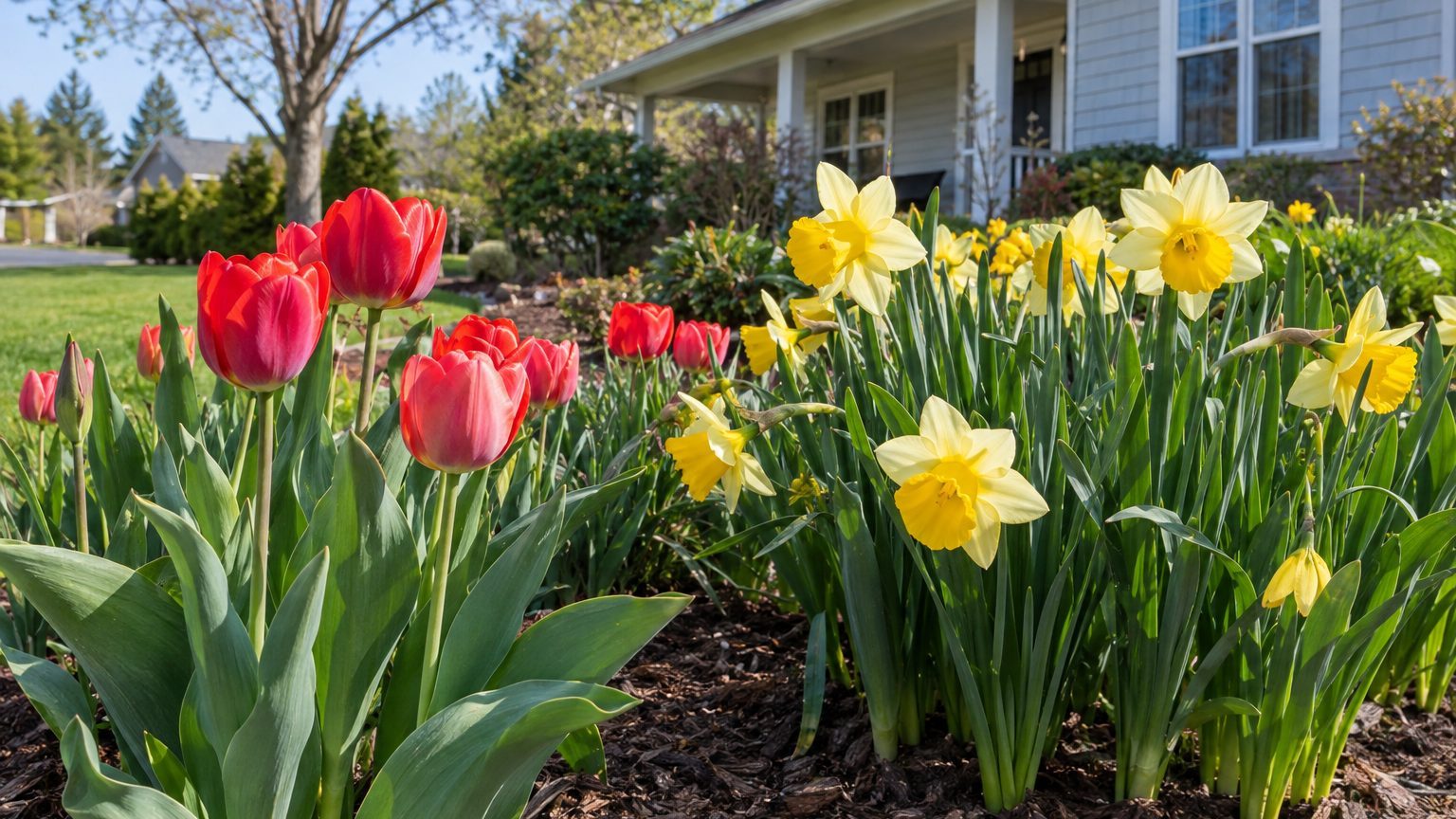
Bulbs bought in a paper sack in early autumn look like nothing, yet by spring they turn a bare bed into a row of daffodils and tulips. In Oregon, the planting calendar follows the soil more than the date, and it shifts between the wet valleys west of the Cascades and the drier interior.
When to Plant Tulips and Daffodils in Oregon

Plant tulips and daffodils in October and November, with late September and December as workable fallbacks. The dates below speak for Portland and the western valleys, where the first fall frost usually arrives November 11 to November 27. USDA hardiness zones across Oregon run from 4a to 9b, so other parts of the state differ.
- In early autumn, buy bulbs while the selection is full, and choose firm ones with no soft spots or mold. Keep them in a cool, dry, airy spot until planting day.
- In late September, gardeners in the colder interior start planting, since the ground there freezes sooner and roots need time to settle first.
- Through October and November, plant in Western Oregon once the soil has cooled below about 60°F, early enough for roots to form and late enough that the bulbs do not sprout in the fall.
- After planting, spread a layer of mulch over the bed to even out soil temperature and slow weeds. Bulbs still waiting can go in through mid-December as long as the soil is workable.
- In late winter, the first green tips push through the mulch, and bloom follows in March, April and May.
Roots do their work underground through autumn and winter, long before anything shows on top. That hidden head start is why planting on time matters more than any trick later.
Oregon — the year and the numbers
- State
- Oregon
- USDA zones
- 4a-9b
- Last spring frost
- March 6 to March 21
- First fall frost
- November 11 to November 27
- Annual rain
- 37 in
- Lawn zone
- transition-season
- Source
- NOAA NCEI U.S. Climate Normals 1991-2020, 32F freeze probabilities · Portland
Which Spring Bulbs Do Best in Oregon?
Tulips, daffodils, crocus, hyacinths and alliums all have a place in Oregon beds. Daffodils are the dependable perennial, since they come back for years and critters leave them alone. Tulips give the biggest color but tend to fade after a few seasons, and deer and voles go after them.
| Bulb type | How it does in Oregon | Why |
|---|---|---|
| Daffodils and narcissus | Reliable year after year | Long-lived perennial bulb, left alone by deer, voles, squirrels and rabbits |
| Hybrid tulips | Showy but often short-lived | Open from late March to early May, and deer, voles, squirrels and rabbits eat them |
| Darwin hybrid and Emperor tulips | Better at returning | Bred to return for several years |
| Species tulips | Hardy and likely to come back | Smaller than hybrids, and good for naturalizing in the garden |
| Crocus | Easy early color | Bloom early, though slugs bother them and voles and squirrels eat them |
| Alliums | Good in any bed | Needs winter cold to bloom, and they close out the season |
Hyacinths also do well when planted in fall with the rest. Mixing early and late varieties of daffodils stretches the show into early summer, and pairing them with species tulips gives a bed that looks better each year instead of thinning out.
When to Plant, Chill and Care for Spring Bulbs in Oregon
The year for a bulb has only a few real jobs, and each one has its own window. Planting comes in autumn, and the care that matters most comes after the flowers fade, when the leaves are quietly refilling the bulb.
| Task | Best timing in Oregon | Why then |
|---|---|---|
| Plant in Western Oregon | October and November, or into mid-December while the soil is workable | Roots need time to establish before spring flowers can form |
| Plant in Central and Eastern Oregon | Late September through October | The ground freezes sooner, so roots need an earlier start |
| Plant bulbs still in the bag | As soon as the ground can be dug | A late bulb does better in soil than stored over winter |
| Leave the foliage | After bloom, as long as the leaves are green | The leaves feed the bulb for next year’s flowers |
After bloom, snip off only the faded flower heads and let the leaves yellow and turn brown before removing them. Tucking bulbs among perennials that leaf out later hides the fading foliage without cutting it back too soon.
How Bulb Planting Time Changes Across Oregon
Oregon is really two climates split by the Cascades, and planting time moves with them.
- Willamette Valley: Planting runs October and November, and mild soil often stays workable into mid-December. Portland and the valley towns fit this pattern.
- Central Oregon: Bend and the high desert plant earlier, from late September through October, because the ground freezes sooner than in the valley.
- Eastern Oregon: The same earlier timing holds across the dry eastern side, where winters turn cold fast and roots need to settle before the soil locks up.
Higher ground and drier air pull the whole schedule forward, while the wet west gives you the longest planting season.
Where to Get Bulb Advice in Oregon
Questions about a stubborn bed, a pest, or a bulb that never showed up are best sent to people who know local soil and weather.
- The Oregon State University Extension site carries articles on planting spring bulbs, including tips for pots, and it suits a question about what to buy.
- Your county extension office can help diagnose a failing bulb, and it is the place to ask about a soil test before you dig a new bed.
Common Questions
Which End of a Bulb Goes Up?
The pointed end faces up and the flat, root end goes down. If you cannot tell, set the bulb on its side and the shoot will find its way, though it will take a little more effort.
Can You Plant Spring Bulbs in Pots?
Yes. Use a container with drainage holes and a loose potting mix, because bulbs rot in soil that stays soggy. Keep the pots outdoors through winter so they get the cold they need.
Should You Water Bulbs After Planting?
Give new bulbs one good soak to settle the soil around them. In the western valleys, regular fall rain often does the rest, while the drier interior may need a little extra water if autumn stays dry.