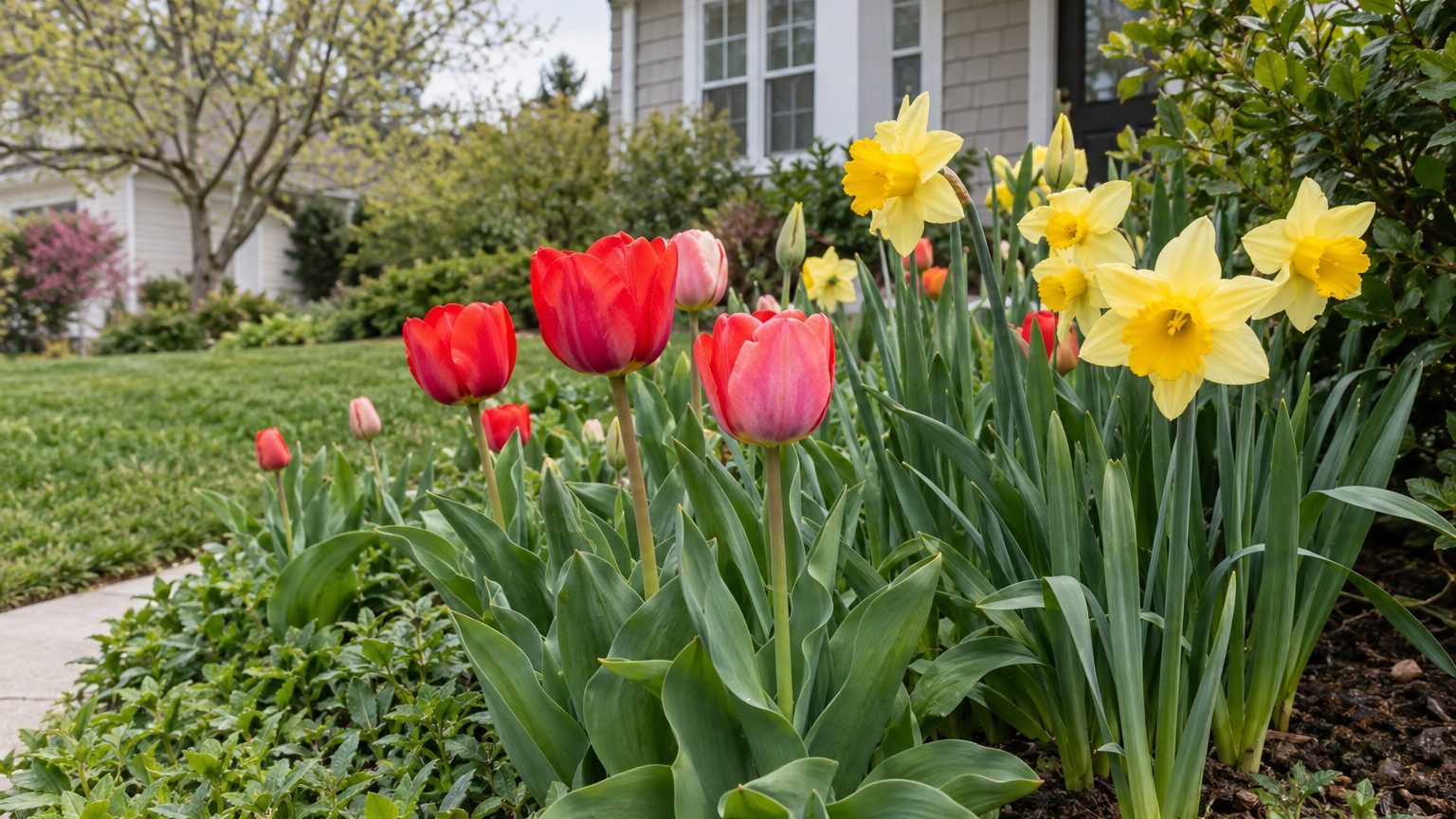
Tulip and daffodil bulbs go into the ground in autumn, and for a long while nothing shows above the soil. In California the timing depends on where you garden, because a frost-free coastal yard and a snowy Sierra one ask for different handling.
When to Plant Tulips and Daffodils in California

Plant in autumn, once the soil has cooled, and where winters are mild, give tulips and hyacinths a spell in the refrigerator before they go in the ground. Here is how a bulb’s year runs.
- In early autumn, buy firm, heavy bulbs while the selection is full, and keep them somewhere cool and dry until planting.
- In mid autumn, if your winters are mild, put tulips and hyacinths in the refrigerator, away from ripening fruit, to give them the cold they will not get outdoors.
- In late autumn, once the soil has cooled, set the bulbs in the ground with the pointed end up.
- Right after planting, spread a layer of mulch to hold moisture and keep the soil temperature steady through winter.
- In late winter on the coast and in early spring where it freezes, the first green tips break through.
Frost shapes the picture. Along the coast and in the south, an average year brings no freeze at all, and the frost-free season runs 365 days at Los Angeles. Northern California, the Central Valley and the Sierra do freeze, and the state spans USDA zones 5a to 11a, so no single date fits everyone.
California — the year and the numbers
- State
- California
- USDA zones
- 5a-11a
- Frost
- none in an average year
- Annual rain
- 12 in
- Lawn zone
- warm-season
- Source
- NOAA NCEI 1991-2020 Climate Normals · Los Angeles
Which Spring Bulbs Do Best in California?
Daffodils are the dependable choice, because they last for years and animals leave them alone. Tulips and hyacinths flower best where winter gives real cold, so mild yards need the refrigerator trick. According to Iowa State University Extension, alliums need the cold of winter to bloom.
Most spring bulbs want about 12 to 16 weeks of cold before they bloom. A yard that never freezes cannot supply that on its own.
| Bulb type | How it does in California | Why |
|---|---|---|
| Daffodils | Reliable, returns for years | Longer lived than tulips, and left alone by voles, squirrels, rabbits and deer |
| Tulips | Best where winters are cold, short-lived in the garden | They need a cool dormancy, so mild yards chill them first |
| Hyacinths | Good with pre-chilling in mild areas | They need cold like tulips and get it from the refrigerator |
| Alliums | Needs winter cold to bloom | They need the cold of winter to bloom |
| Crocus | Pretty but often eaten | Voles, squirrels, rabbits and deer go after them |
If animals dig through your beds, lean on daffodils and alliums and plant tulips and crocus where you can protect them.
When to Plant, Chill and Care for Spring Bulbs in California
The main jobs of the year each have a sign to watch for. Planting follows the soil temperature, chilling applies only where winters are mild, and the leaves get left alone after the flowers fade.
| Task | Best timing in California | Why then |
|---|---|---|
| Plant | In autumn, when the soil is below about 60°F | Roots form before winter, and the bulbs do not sprout too soon |
| Chill | Before planting, in mild-winter areas, for 4 to 6 weeks in the refrigerator | Tulips and hyacinths bloom better after a cold spell, which a frost-free yard cannot provide |
| Leave the foliage | After bloom, while the leaves are still green | The leaves feed the bulb for next year, so remove only the faded flowers |
The 4 to 6 weeks of chilling is the suggested time in California. Planting depth and spacing vary by bulb, so check the package. When the leaves have turned brown, they come off easily and the bed can be tidied.
How Bulb Planting Time Changes Across California
Planting time shifts with how fast the soil cools, and that varies a lot across the state.
- Sierra Nevada: Watch for the soil to cool before planting. Winter cold supplies the chill, so tulips need no refrigerator time.
- Central Valley: Winters freeze here, yet the soil stays warm longer than in the high country, so plant a little later than you would in the mountains.
- Los Angeles and the southern coast: An average year brings no freeze, so the soil cools later than in the north and planting comes later too. Pre-chilling tulips and hyacinths matters here, daffodils are an easier choice, and alliums, like other spring bulbs, need the cold of winter to bloom.
Northern California falls in between, with frosty nights that help the bulbs, though coastal spots stay milder than inland ones.
Where to Get Bulb Advice in California
California’s extension service runs research and advisory programs, and local offices offer practical help for your own soil and climate. Master gardeners can diagnose problems and talk through bulb choices.
- Visit University of California Agriculture and Natural Resources for bulb guides written for California conditions, before you shop in autumn.
- Call your county’s cooperative extension office to ask about a soil test or a diagnosis, ideally before planting.
- Check the local master gardener program for plant clinics, where you can bring a bulb or a photo of a problem.
Common Questions
Do Tulips Come Back Every Year in California?
Often they do not. Tulips are short-lived in many gardens, so plan to replace them, or plant daffodils, which last for years.
Can You Plant Spring Bulbs in Spring?
Spring-flowering bulbs need their cold period to bloom, so they go in the ground in autumn. A bulb planted when the weather has already warmed has missed its chance for that year.
How Should You Water Bulbs During Drought or Water Restrictions?
Water after planting to settle the soil around the bulb, then let rainfall and local rules guide you. Because bulbs rest underground and go dormant after the leaves fade, they need very little extra water.