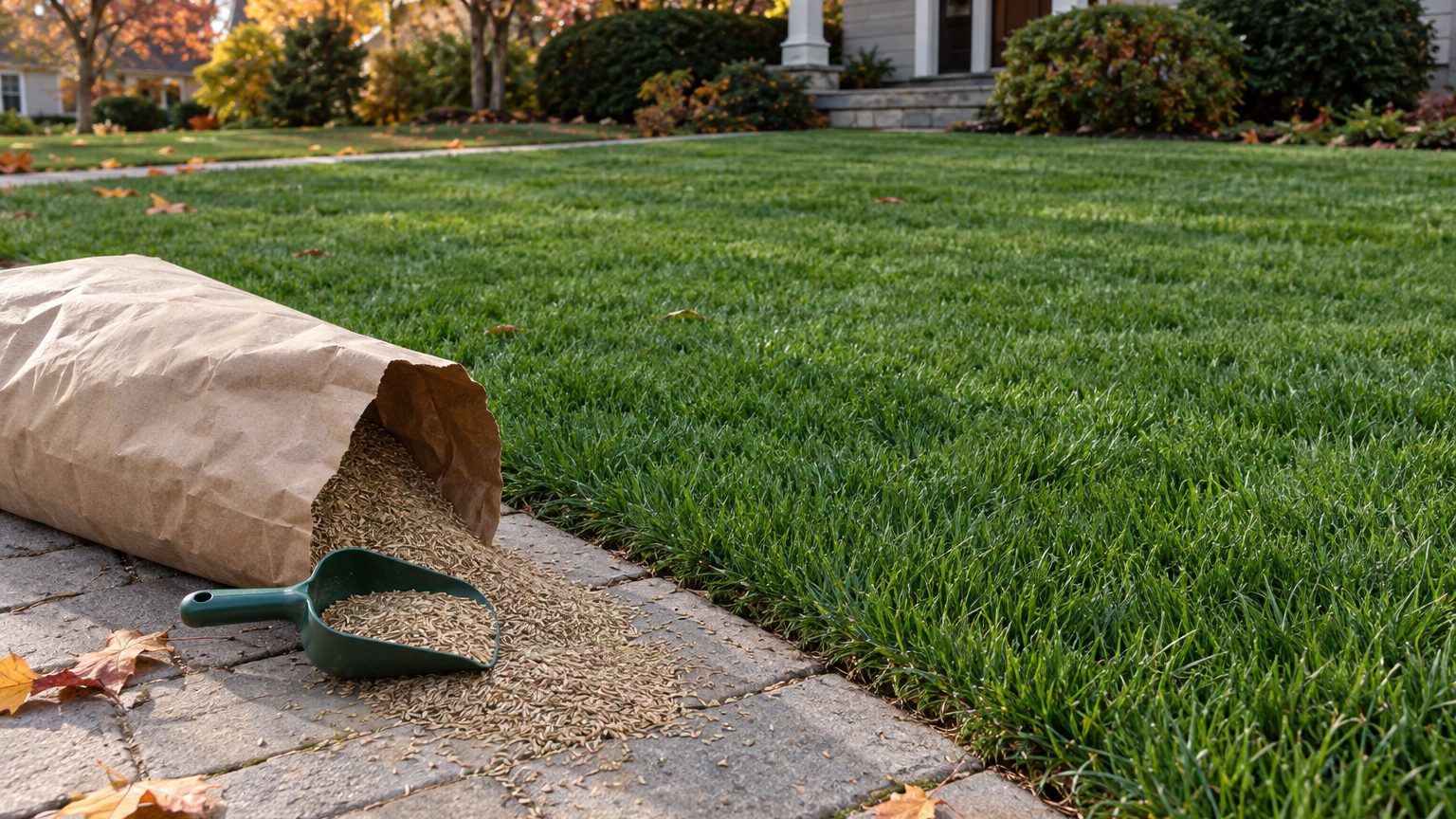
Thin, patchy turf in late summer sends many Virginia homeowners shopping for seed, and the aisle offers more choices than the climate allows. Virginia sits where cool-season and warm-season lawn grasses both struggle a little, so the right seed depends on your part of the state and how much work you want to do. Tall fescue suits most yards.
Which Grass Grows Best in Virginia?
Virginia is transition-zone country, so cool-season grasses carry most lawns, with warm-season grasses filling in on hot, sunny, low ground. Across the state, USDA hardiness zones run from 5a to 8b, but that winter-minimum range alone does not decide which lawn grass will thrive. The main choices are tall fescue, Kentucky bluegrass, bermudagrass and zoysiagrass.
Tall Fescue
Tall fescue is the workhorse for Virginia yards. It is a cool-season grass with deep roots, so it rides out summer heat better than other cool-season turf, and it stays green through most of the year.
Seed it in August, and if you miss that, September still works. Feed it in early spring and fall, never in summer, when the grass is stressed and fertilizer only pushes weak growth.
Kentucky Bluegrass
Kentucky bluegrass belongs on cooler, higher ground, where summers ease off and the grass spreads to repair itself. In the heat of the Piedmont and the coast it browns and thins, and it asks for more water to hold its color.
Many homeowners get a good result by blending a little bluegrass into a tall fescue lawn in the higher country, rather than planting it alone.
Bermudagrass
Bermudagrass loves heat and full sun, and it can be started from seed or sod. It turns tan after the first hard frosts and stays dormant through winter, which some neighbors enjoy and others find frustrating.
Seed it in May, with June as a fallback. It crowds out weeds well, but it will creep into flower beds and needs plenty of sun to stay dense.
Zoysiagrass
Zoysiagrass makes a thick, soft carpet that handles heat and foot traffic, but it grows slowly and is mostly sold as sod or plugs rather than seed. That slow growth means it fills in gradually.
Like bermudagrass, it goes dormant and brown in winter, so expect a straw-colored lawn from late fall into spring.
Virginia — the year and the numbers
- State
- Virginia
- USDA zones
- 5a-8b
- Last spring frost
- March 20 to April 3
- First fall frost
- November 10 to November 24
- Annual rain
- 47 in
- Lawn type
- cool- and warm-season
- Source
- NOAA NCEI 1991-2020 Climate Normals, 32F freeze probabilities · Virginia Beach
How to Choose Grass Seed for a Virginia Yard
Start with sunlight, since it narrows the field fastest. Yards with at least part shade lean toward tall fescue, while open, baking lawns with little shade give bermudagrass or zoysiagrass a real shot at success.
Then think about how you live in the yard. Kids and dogs wear on turf, so a dense grass that recovers quickly helps. A willingness to water in June, July and August also widens your options.
| Grass | Season | Seeding or planting | Suits |
|---|---|---|---|
| Tall fescue | Cool | Seed in August, September as a fallback | Sun to part shade, busy yards, most of the state |
| Kentucky bluegrass | Cool | Seed in August, September as a fallback | Cooler, higher ground with regular watering |
| Bermudagrass | Warm | Seed in May, June as a fallback, or lay sod in May through July | Full sun, heavy wear, owners who mow often |
| Zoysiagrass | Warm | Sod or plugs, laid in May through July | Sunny yards where a dense, slow-growing lawn appeals |
If winter color matters, tall fescue is the better fit. Warm-season lawns reward you with heat tolerance in summer, but they ask for sun, patience and a lawn mower that sees regular use from April through October.
Which Grasses Grow Where in Virginia
Virginia’s lawn map changes with elevation and distance from the water, and seed choices shift along with it.
- Blue Ridge and southwest Virginia: Spring arrives weeks later and fall comes earlier, so cool-season grasses do the job. Tall fescue is the main choice, with Kentucky bluegrass doing well on the cooler, higher ground.
- Shenandoah Valley and the Piedmont: This is the heart of the transition zone. Tall fescue carries most lawns, and warm-season grasses work in the sunniest, hottest spots near cities like Richmond.
- Virginia Beach and Hampton Roads: The mild coast stretches the growing season, so bermudagrass and zoysiagrass feel at home, though tall fescue still works in shadier yards.
When in doubt, tilt toward tall fescue inland and consider warm-season grasses as you near the water.
Grass Seed Mistakes to Avoid in Virginia
Planting the Wrong Grass for the Spot
Bermudagrass thins in a shaded yard, and tall fescue struggles in a baking, treeless lot by midsummer. Match the grass to the light your yard actually gets, not to what looks good on the bag.
Seeding at the Wrong Time
Cool-season seed does best in August, when warm soil sprouts it quickly and cooler weather follows as the seedlings root. Spring seeding runs into crabgrass season, and a preventer applied in March can also stop your new grass from sprouting. Warm-season seed belongs in May.
Burying Seed or Skipping Contact
Seed needs light and firm contact with soil. Cover it with no more than 0.25 inch of soil or compost, then press it down with a roller or your feet. Thick piles of seed crowd one another and fail, so spread evenly and follow the rate on the bag.
Where to Get Lawn Advice in Virginia
Local soil, shade and elevation vary widely across Virginia, and a little local guidance saves a lot of reseeding.
- Virginia Cooperative Extension publishes lawn guides for the state, and they are worth reading before you buy seed.
- Your county extension office can test your soil and answer questions about your yard, and a visit in summer leaves time to plan for August seeding.
- Take a soil sample to the office before you buy seed, so you know what the lawn needs.
Common Questions
When Should You Put Down Crabgrass Preventer in Virginia?
March is the target. February also works, as do April and May if March passes. Skip it on any spot you plan to seed.
When Should You Aerate and Dethatch a Virginia Lawn?
For cool-season lawns, core aeration works best in August, with September as a fallback, and dethatching in August or September. Warm-season lawns are dethatched in May and June, with April as a fallback.
When Should You Stop Mowing a Virginia Lawn?
Tall fescue and other cool-season grasses keep growing, so mowing continues through November. Bermudagrass and zoysiagrass slow down earlier, and mowing for them wraps up in October.