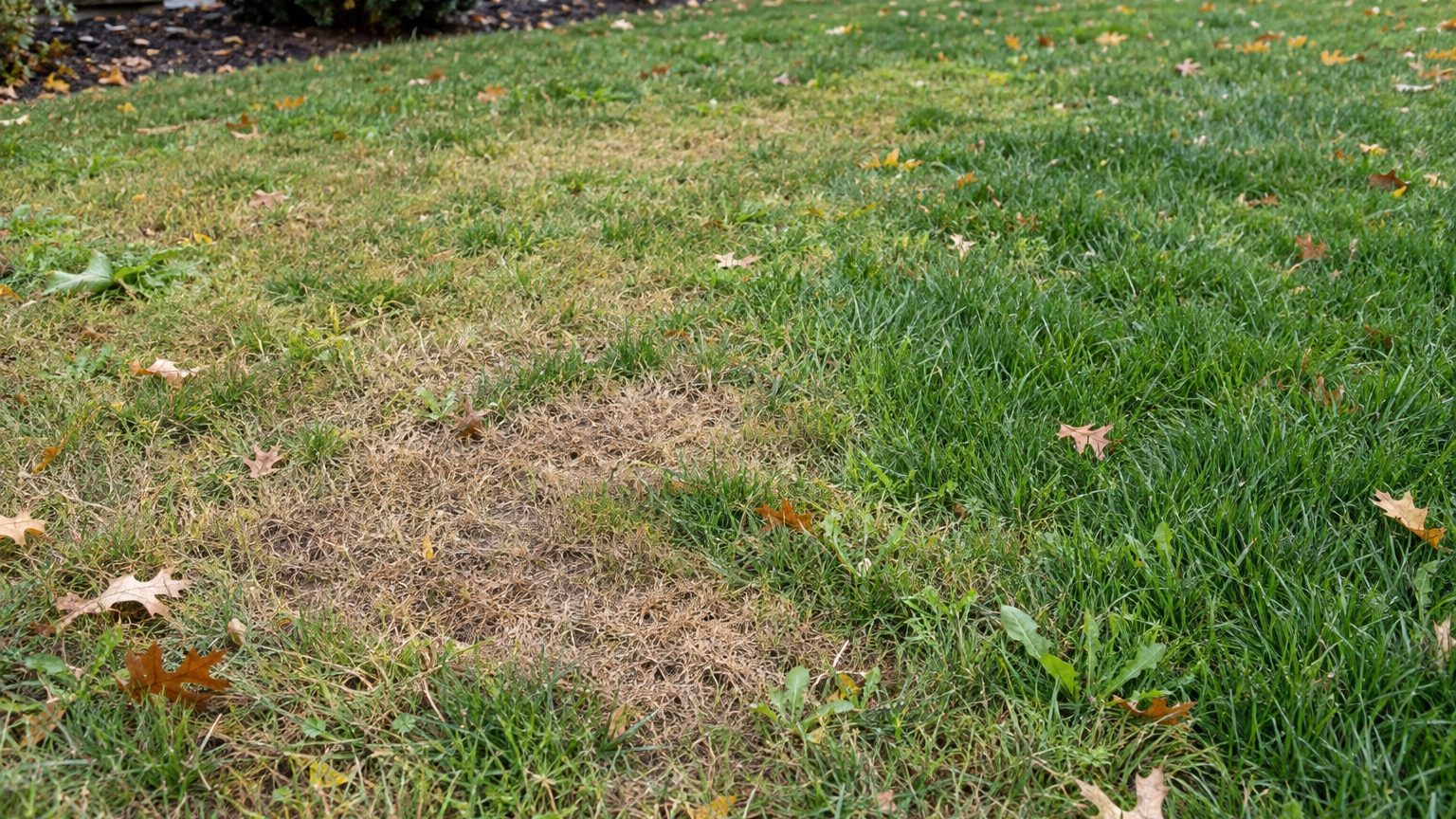
Tan rings in July, spongy turf that peels like a rug in late summer, and crabgrass crowding the driveway edge are the usual Rhode Island lawn complaints. Humid summers, coastal moisture and compacted soil can contribute to these problems. Each problem leaves a distinct mark, and each has a fix that fits a particular time of year.
Lawn Pests and Diseases in Rhode Island
Snow Mold in Early Spring

When the last snow melts, you may find matted, grayish or pinkish circles where grass blades lie flat and stuck together. Snow mold shows up after long snow cover on damp turf.
Rake the patches gently to lift the blades and let air in. Most lawns recover on their own as the weather warms.
Crabgrass in Thin Spots
Crabgrass looks like pale green clumps that sprawl outward along the ground, mostly where the lawn is thin or the edges are baked by pavement. It dies with the first hard frost but leaves bare gaps and plenty of seed.
A preventer works best in April, and it still helps in March or May. Thick turf is the lasting defense.
Dollar Spot in Late Spring
Small, straw-colored spots about the size of a silver dollar appear on mown turf, sometimes joining into larger blotches. Cobweb-like threads show on dewy mornings. It favors lawns that run short on nitrogen and stay damp overnight.
Water deeply in the morning rather than lightly at night, and feed on schedule.
Brown Patch in Midsummer
Brown patch makes tan circles that may merge into larger areas, sometimes with a dark smoky ring at the edge on humid mornings. Rhode Island’s muggy nights suit it well, especially on lawns that were fed heavily or watered late in the day.
The blades are usually damaged but the crowns survive, so lawns often fill back in once the weather cools.
White Grubs in Late Summer
Grubs are plump, C-shaped, creamy larvae that chew grass roots. Damaged turf feels loose and lifts like carpet, and crows, skunks or raccoons may tear up the lawn looking for them.
Lift a small flap of sod and inspect the soil just below the root zone. If you find grubs, ask the local extension service whether treatment is needed, then reseed bare areas in August or September.
Moss in Shady Corners
Moss forms a soft green mat where grass has already given up, usually under trees, along the north side of the house, or in soggy, compacted ground. It signals poor growing conditions rather than killing the lawn itself.
Rake it out, thin the canopy for more light, loosen the soil, and seed a shade-tolerant mix.
Rhode Island — the year and the numbers
- State
- Rhode Island
- USDA zones
- 6a-7b
- Last spring frost
- April 7 to April 17
- First fall frost
- October 24 to November 3
- Annual rain
- 48 in
- Lawn type
- cool-season
- Source
- NOAA NCEI U.S. Climate Normals 1991-2020, 32F freeze probabilities · Providence
How to Tell Which Lawn Problem You Have
A visual clue rarely settles it. Pair what the patch looks like with where it sits and when it appeared, then test the grass by tugging it or lifting a flap of turf.
| What you see | Where and when | Points to |
|---|---|---|
| Matted gray or pink circles | Right after snow melts | Snow mold |
| Coarse, light green clumps | Thin sunny areas in summer | Crabgrass |
| Silver-dollar straw spots | Late spring, dewy mornings | Dollar spot |
| Tan rings, smoky edge | Hot, humid midsummer nights | Brown patch |
| Turf pulls up like a rug | Late summer, animals digging | White grubs |
| Green mat, soft ground | Shade or wet, compacted soil | Moss |
Spongy turf that feels bouncy underfoot can indicate thatch, but inspect the layer before deciding what to do. A layer up to 1/2 inch thick is healthy, and above 1/2 inch you should dethatch or core aerate. August and September suit that work best, and April or May also work.
Where Lawn Problems Are Worst in Rhode Island
Rhode Island is small, but conditions shift enough to change which problem you meet. The state spans USDA hardiness zones 6a-7b, and conditions near the water differ from those inland.
- Narragansett Bay and the South County coast: Salt air, sandy soil and sea fog mean humid nights and quick drying of sandy ground. Brown patch and dollar spot are common, and drought stress arrives fast on sandy soil.
- Providence and the inner suburbs: Compacted soil, paved edges and heat held by buildings favor crabgrass and thin turf. Shade from older trees brings moss.
- Northwest Rhode Island (Burrillville, Glocester, Foster): Higher, cooler ground holds frost later and keeps snow longer, so snow mold appears more often and spring growth starts later.
Check conditions in your own neighborhood, since a shaded, low-lying yard behaves differently from its sunny neighbor.
Lawn Care Mistakes That Invite Problems in Rhode Island
Mowing Too Short
Scalped grass has fewer leaves to feed the roots, which lets crabgrass seed find sunlight on bare soil. Mowing runs from April through November here, so there are plenty of chances to get it wrong.
Raise the deck so you remove only a modest amount of the blade, and keep the mower blade sharp.
Watering Lightly at Night
A brief evening sprinkle keeps the blades wet all night, which is exactly what brown patch and dollar spot want. Watering matters most in June, July and August, when summer heat dries the soil.
Water deeply and early in the morning so the grass dries during the day.
Feeding in the Heat
Lush summer growth from a heavy dose of fertilizer feeds brown patch and invites more mowing. Fertilizer works best in May and September, with April and November as fallbacks.
Skip midsummer feeding, and let the fall application do the heavy lifting.
Where to Get Lawn Advice in Rhode Island
Local experts know your soil, your pests and your neighborhood’s quirks. University of Rhode Island Cooperative Extension is the state’s land-grant extension service and the place to start.
- Take a photo and a sample of the damaged turf to the extension when a patch won’t fit any description above, ideally as soon as you see it.
- Ask about a soil test in early spring, before you choose a fertilizer or lime.
- Visit a local garden center in August to match seed to your sun and shade before fall seeding.
Common Questions
Is September Too Late to Seed a Bare Patch in Rhode Island?
No. August and September are the best months for seeding, and the young grass roots in warm soil with cooling nights. If you miss them, April and May also work.
Is Sod a Faster Fix than Seed for a Damaged Lawn?
Sod gives an instant green cover and works best when laid in August or September. It also works in April, May and October, as long as you water it regularly while it roots.
Should You Keep Mowing in November?
Yes, as long as the grass is still growing. Mowing stays on the calendar through November, and a final cut before the lawn goes dormant helps limit snow mold.