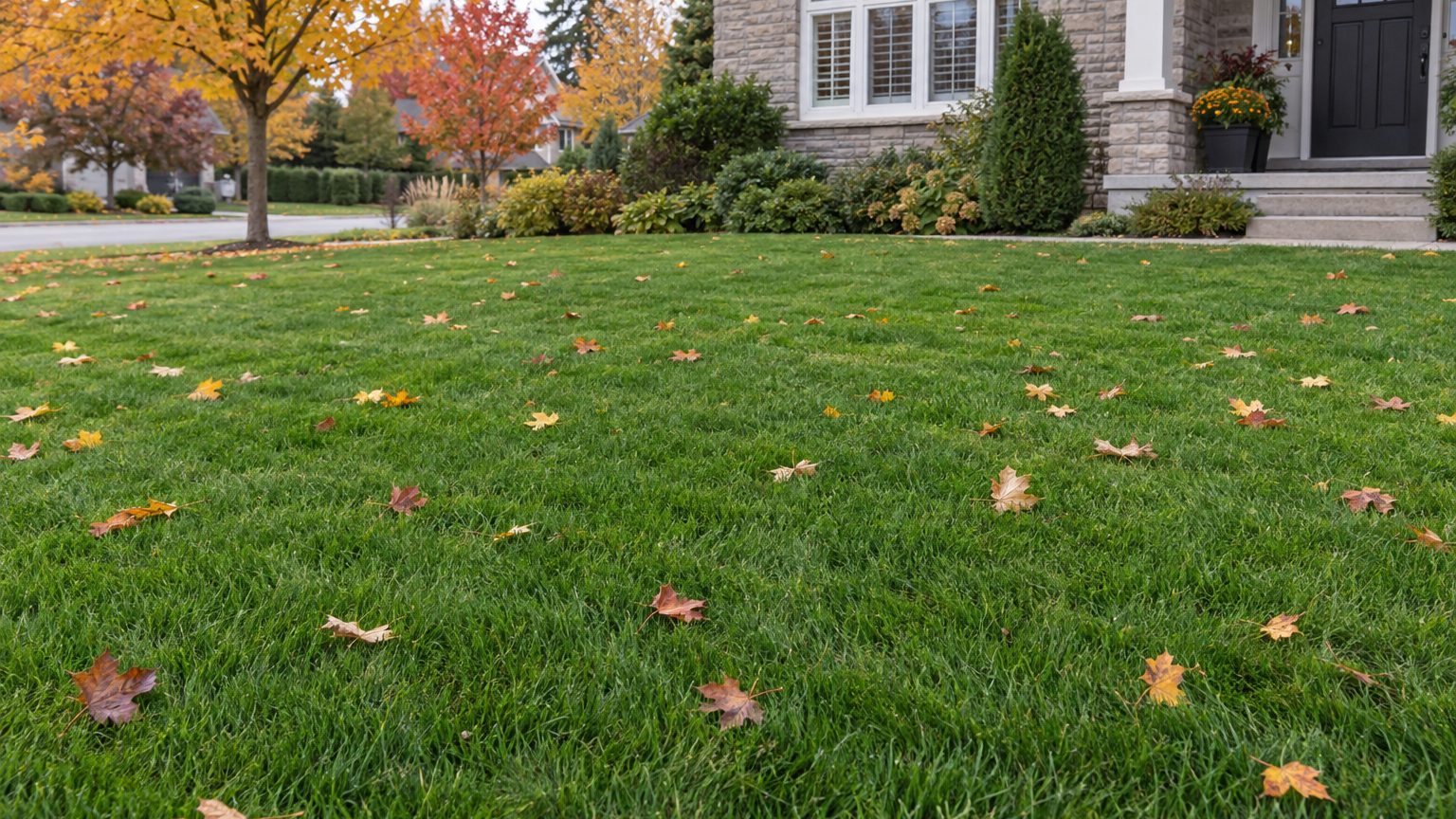
Mowing starts as the grass greens up in spring, and the heaviest work comes in late summer, when seeding, aeration and feeding all land together. Across Ontario, the lawn year follows soil warmth far more than the calendar page.
What to Do Each Month in an Ontario Lawn
Most of the work gathers in May and again from August through October. The months between are for mowing, watering and staying off the grass when it cannot take traffic.
| Month | In the lawn |
|---|---|
| January | Rest. The grass is dormant, so keep heavy snow piles and foot traffic off the frozen turf. |
| February | Rest. Nothing grows, and this is the month to service the mower and sharpen the blade. |
| March | Rest, mostly. Stay off soggy ground as the thaw comes, because wet crowns tear and leave ruts. |
| April | The first mow works once the grass is truly growing. Rake out matted patches gently and leave the heavy jobs for later. |
| May | Apply crabgrass preventer now, before the weed seed sprouts. Ontario’s Cosmetic Pesticides Ban, in force since 2009, bars most weed killers and insecticides on lawns, including 2,4-D, so only products on the province’s allowable list may be used. Mowing is in full swing. Aeration, feeding and seeding also work this month if fall gets away from you. |
| June | Mow regularly and begin watering deeply as the rain thins out. Roots grow down when you water less often but more thoroughly. |
| July | Keep watering and mowing. Heat slows cool-season grass, so a tan, tired lawn in a dry spell may be resting rather than dying. |
| August | Dethatch if the spongy layer is thick, then seed bare or thin areas. Keep watering and mowing through the heat. |
| September | The big month. Core aerate, feed, seed and dethatch while the soil is still warm and the nights are cooling. |
| October | Keep mowing as long as the grass grows. If you missed September, feeding still works now and helps roots store energy for winter. |
| November | Make the last cut early in the month. Seeding on cold soil also works now, since the seed waits and sprouts in spring. |
| December | Rest. The grass is dormant, and the only job is keeping salt and heavy loads off the edges. |
September rewards the effort because the seed and the roots both have warm soil and cooler air. Spring offers a gentler fallback.
Ontario — the year and the numbers
- State
- Ontario
- Hardiness zones
- 7a
- Last spring frost
- April 30
- First fall frost
- October 16
- Annual rain
- 31 in
- Lawn type
- cool-season
- Source
- Environment and Climate Change Canada — Canadian Climate Normals 1981-2010, station TORONTO LESTER B. PEARSON INT'L A · Toronto
When Does the Lawn Season Start and End in Ontario?
Grass wakes up when the soil warms, not when the last frost passes. Seed germinates once the soil sits between 10 and 18 °C (50 and 65 °F), and Ontario’s cool-season grasses, such as Kentucky bluegrass, fescues and ryegrass, grow most willingly in the mild stretches of spring and fall.
Frost dates only mark the risk to young seedlings. In Toronto, the last spring frost falls on average around April 30, which means in about half of years it comes later. Treat that as the middle of a window, and hold off on tender new seed until the cold nights are clearly behind you.
In fall, the first frost arrives on average around October 16 in Toronto, and again it can come later or earlier. Seed sown in August and September has time to root before that. Growth slows well before the first frost and stops once the soil turns cold, which is when the final mow happens.
How the Lawn Calendar Shifts Across Ontario
Ontario stretches from the Great Lakes shoreline to the boreal north, so the months above fit the south best and slide later or earlier as you move.
- Windsor and Essex County: Spring arrives early here and fall lingers, so mowing begins early and fall seeding can run a little later than elsewhere. Summer heat can stress the lawn, so attentive watering matters.
- Niagara Peninsula: The lakes soften both ends of the season, with an early spring start and a mild autumn that gives seed extra time to root.
- Ottawa Valley: Winters are colder and spring comes later, so shift the spring jobs toward the end of their window and finish fall seeding on the early side.
- Northern Ontario, around Sudbury and Thunder Bay: The season is shorter and runs weeks behind the south. Aim for the early end of the fall window, and expect frost on new seedlings later into spring.
Watch your own lawn as well. If the grass is still dormant and brown while a neighbour’s is green, wait.
Lawn Care Timing Mistakes to Avoid in Ontario
Crabgrass Preventer Applied Late

Preventer works by stopping weed seed as it sprouts. Put it down after the seedlings are up and it does very little, so you pay for a product that cannot work. May is the window, so apply it early in the month, before the soil warms enough for the seed to get going.
Seeding After the Window
Seed sown in late October may sprout, then die when the cold arrives with roots still shallow. August and September give seedlings time to establish. If the window passes, either wait for May or seed deliberately on cold soil in November, so the seed stays dormant until spring.
Dethatching in Spring
Spring grass is tender, and raking hard at a thatch layer pulls out crowns that are only starting to grow. Dethatch in August or September, when the lawn can recover quickly, and follow with seed while the soil is warm enough for it to take.
Where to Get Lawn Advice in Ontario
Canada has no county extension offices, so advice comes from the province, from local gardeners and from nurseries that know your soil and your town.
- The Ontario agriculture and food pages are the place to start for provincial guidance, and they are worth a look before spring work begins.
- A local master gardener group can answer questions about your neighbourhood’s soil and shade, and a call in early spring gives you time to plan the fall.
- A garden centre can confirm which products are on the province’s allowable list before you buy anything for May.
Common Questions
Should You Bag Grass Clippings in Ontario?
Usually not. Short clippings drop between the blades, break down quickly and return nutrients to the soil. Bag them only when the grass was very long or wet and the clippings would lie in clumps that smother the turf.
Is It Bad to Walk on Frost-Covered Grass?
Yes, when the blades are stiff and white with frost, they crack under your weight and leave brown footprints. Look for the pattern of dark lines along the paths you walk. Wait until the frost has melted before crossing the lawn.
How Do You Handle Dandelions Without Weed Killer?
Pull them by hand after a rain, when the soil is loose and the whole taproot slides out. Then fill the gaps with seed in September, since a thick lawn leaves little room for new weeds to settle.