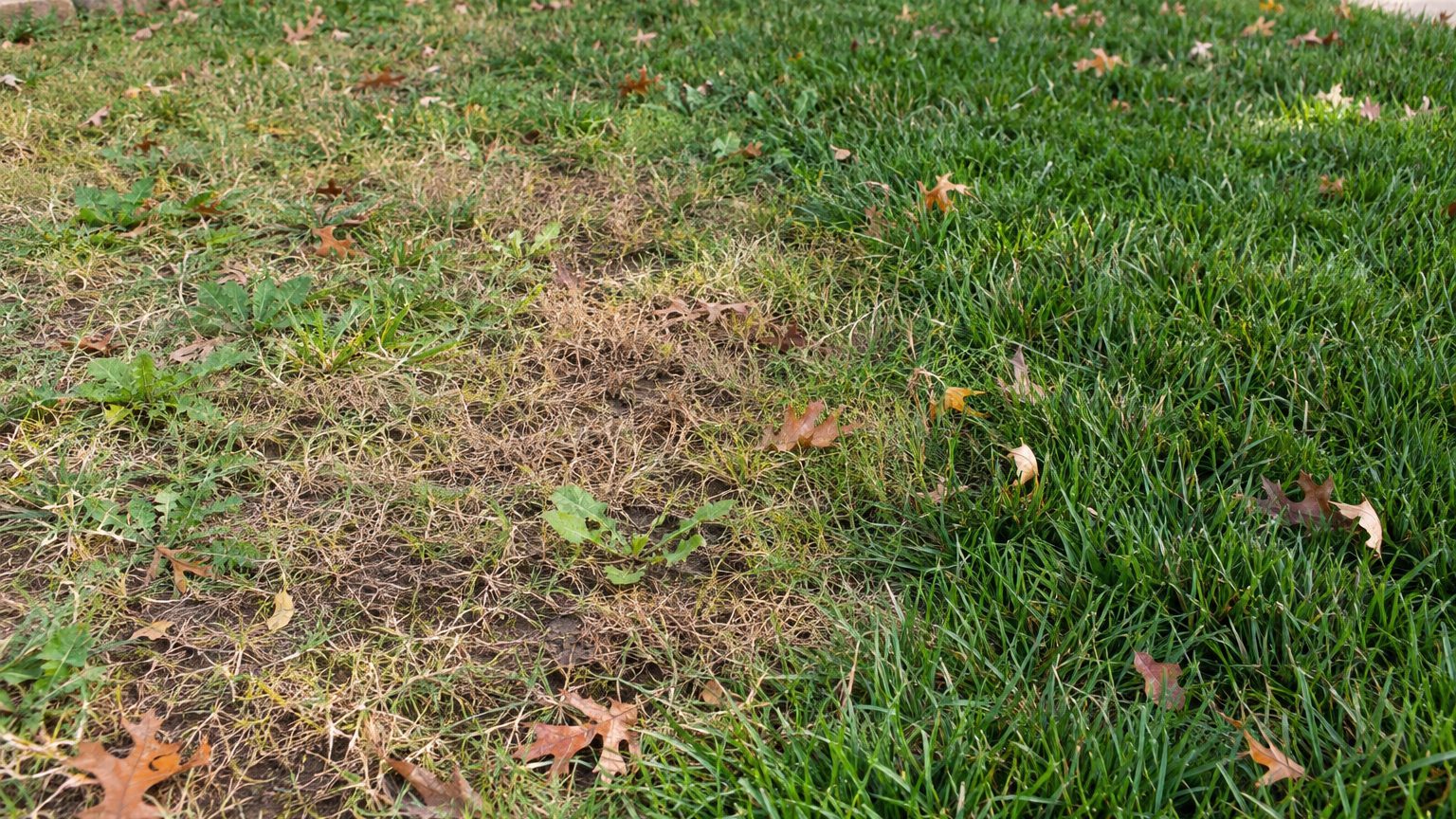
Tan rings in a bermuda lawn as it wakes up, crabgrass crowding thin spots, and sod that peels back like carpet in late summer are familiar troubles in Oklahoma yards. Hot summers and hard winter swings shape nearly all of them, and each one has a window when the fix works best.
Lawn Pests and Diseases in Oklahoma
Spring Dead Spot
Circular straw-colored patches show up in bermuda just as the rest of the lawn greens up. Roots under the patch are dead or rotted, so the grass tugs loose with no resistance. It tends to follow a stressful, over-fed fall.
Keep feeding to the warm months, since bermuda eats best in May, June and July, and expect the patches to fill in slowly once the soil is warm.
Crabgrass

Coarse, light green clumps sprawl flat from a central point and thrive in thin turf and along hot driveway edges. Each plant dies with the first cold, but not before dropping seed for next year.
Stopping it means acting before seedlings appear. March is the best month for a preventer, though February, April and May also work. A thick lawn shades out most of the rest.
Brown Patch in Tall Fescue
Tall fescue is a cool-season grass working through a hot, humid Oklahoma summer, and that is when brown patch strikes. Look for roundish tan patches with a darker, smoky edge that appear in muggy weather, often after evening watering.
Water early in the day so blades dry quickly, and hold off on nitrogen until fall.
White Grubs
Beetle larvae chew roots in the soil, and by late summer the turf above them turns brown and lifts like a loose rug. Skunks, armadillos and birds digging up the lawn are another sign that grubs may be present.
Healthy, deeply rooted grass is more resilient to grub feeding. Lawns with large, spreading dead areas need treatment aimed at the larvae, so confirm by peeling back a patch first.
Thick Thatch Layer
Thatch is the mat of stems and roots between green blades and soil. A layer up to 1/2 inch is healthy. Beyond that it holds moisture against the crown, shelters pests and sheds water, and the lawn feels spongy underfoot.
Dethatch bermuda and zoysia in May or June. For tall fescue, August is the month for core aeration, with dethatching in August or September.
Oklahoma — the year and the numbers
- State
- Oklahoma
- USDA zones
- 6a-8a
- Last spring frost
- March 28 to April 10
- First fall frost
- October 29 to November 8
- Annual rain
- 36 in
- Lawn type
- cool- and warm-season
- Source
- NOAA NCEI U.S. Climate Normals 1991-2020, 32F freeze probabilities · Oklahoma City
How to Tell Which Lawn Problem You Have
A single sign can mislead, so consider what the damage looks like along with when or where it appears. Pull gently on the grass at the edge of a patch. Whether it resists or comes away tells you whether the roots are still working.
| What you see | When and where | Likely cause |
|---|---|---|
| Straw-colored rings, roots dead | Spring green-up, bermuda | Spring dead spot |
| Coarse, flat, light green clumps | Summer heat, thin turf or edges | Crabgrass |
| Tan patches with a dark rim | Humid summer, tall fescue | Brown patch |
| Turf lifts like carpet, no roots | Late summer, animals digging | White grubs |
| Spongy feel, water beads up | Any season, older lawns | Thick thatch |
Shade and sun matter too. Thinning that follows the shadow of a tree points to a light problem rather than a pest, and bermuda in particular fades fast with too little sun.
Where Lawn Problems Are Worst in Oklahoma
Oklahoma spans hardiness zones 6a to 8a on the USDA system, and rainfall drops steadily from east to west, so the same lawn faces different threats depending on where it grows.
- Panhandle: Drier air and colder winters mean fewer fungal outbreaks but more winter injury and drought stress, so deep, infrequent watering matters most.
- Tulsa and Green Country: Heavier rainfall and humidity favor brown patch and other fungal trouble in tall fescue, along with wet, compacted soil.
- Oklahoma City and central Oklahoma: Hot summers and swings between wet and dry spells can bring crabgrass, grubs and spring dead spot.
- Lawton and the Red River country: Longer heat favors bermuda, so fescue struggles and summer stress shows up sooner.
Suburban and rural yards usually see frost later in spring and earlier in fall than city readings suggest, so check dates with your own county.
Lawn Care Mistakes That Invite Problems in Oklahoma
Mowing Too Short
Cutting low weakens roots and opens bare soil to crabgrass seed. Tall fescue is mowed regularly from March through November, and bermuda and zoysia from April through October.
Raise the blade and keep it sharp so the tips don’t fray.
Light, Frequent Watering
Short, frequent sprinkles keep the surface wet and the roots shallow, which feeds brown patch and leaves grass helpless in July heat. Watering matters most from June through August.
Soak the lawn deeply in the early morning, then wait until the soil surface begins to dry before watering again.
Feeding at the Wrong Time
Tall fescue fed in summer pushes soft growth that fungus loves, so feed it in early spring and fall. Feed tall fescue in March, September and October.
Bermuda and zoysia are the opposite. Feed them from May through July, when they are actively growing and can use it.
Where to Get Lawn Advice in Oklahoma
Local help matches your soil and grass type better than general advice. Local guidance is worth checking before you buy any treatment.
- Oklahoma State University Extension publishes lawn fact sheets on grass types, weeds and diseases, and is worth checking before planting or treating.
- Your county extension office can identify a problem from a sample or photo, so bring a plug of affected turf with roots attached when you visit.
Common Questions
Is October Too Late to Seed Tall Fescue in Oklahoma?
Yes, for most lawns. Seeding works best in August, with September as the fallback, because young grass needs time to root before winter. October is better used for feeding an established lawn.
When Does the First Fall Frost Reach Oklahoma Lawns?
In Oklahoma City, the first freeze typically arrives between October 29 and November 8. Yards outside the city often see it sooner, and bermuda goes dormant and turns tan afterward, which is normal.
When Should You Lay Sod in Oklahoma?
Bermuda and zoysia sod does best in May. June and July also work if you can water it regularly while it roots.