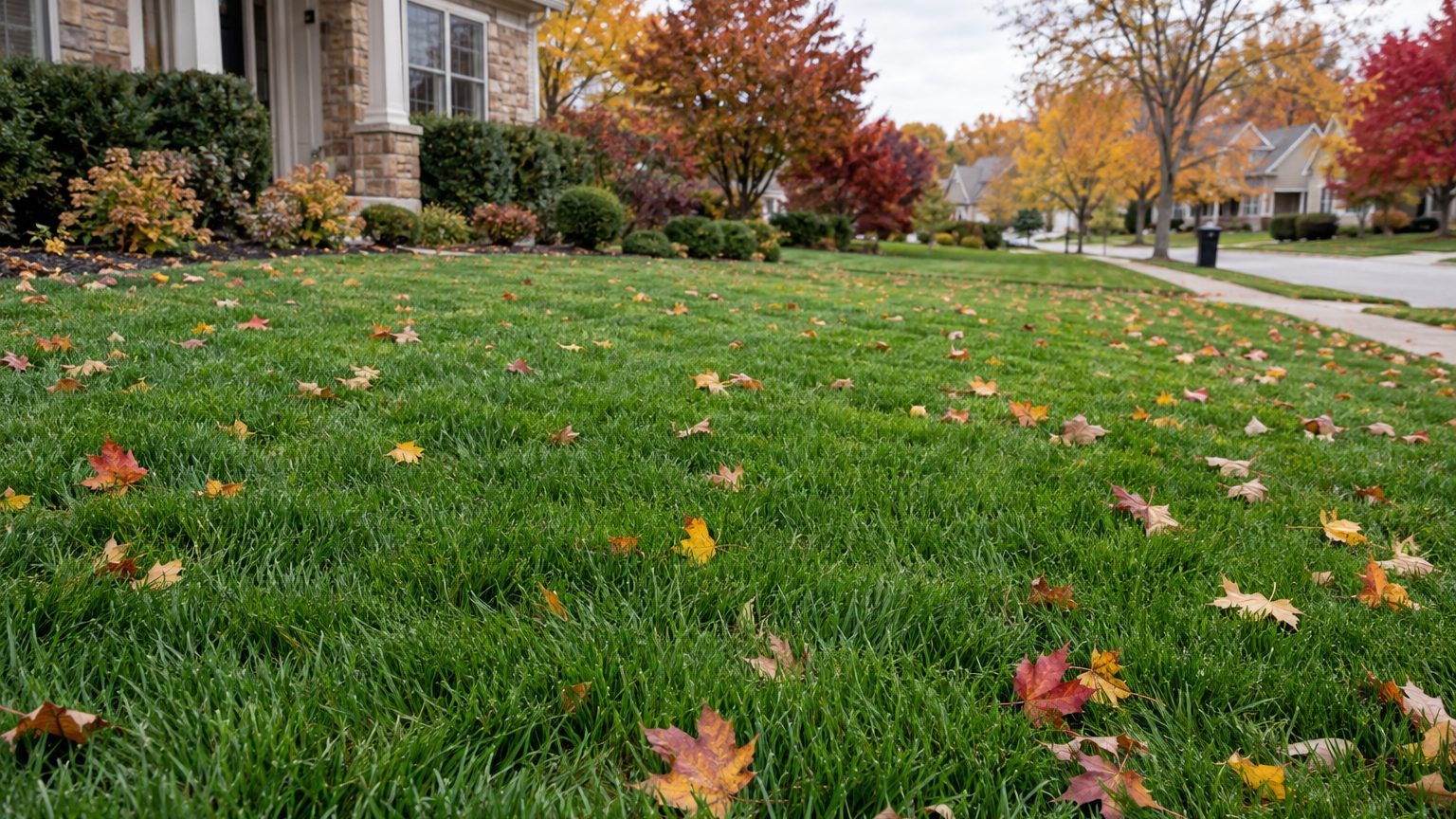
Ohio lawns spend the spring mowing, the summer coping with heat, and the fall doing the work that matters most. Cool-season grass such as bluegrass, fescue and ryegrass grows hardest when the air cools down, so the big jobs of aerating, seeding and feeding belong to late summer and early fall, with a short spring window for crabgrass control.
What to Do Each Month in an Ohio Lawn
The workload changes with the season, and winter is mostly quiet. Follow the rhythm and the lawn rarely needs rescuing. Dates below fit central Ohio, and the north and south shift a little.
| Month | In the lawn |
|---|---|
| January | Rest. The grass is dormant, so keep heavy traffic and salt off frozen turf. |
| February | Rest. Dormant grass cannot use feed or seed, so use the time to clean and sharpen the mower. |
| March | Rest, mostly. The soil is still cold and wet, so stay off soggy turf and let it wake on its own. |
| April | Put down crabgrass preventer before the seeds sprout, and start mowing as growth picks up. Core aeration and dethatching also work now, and bare patches can be seeded if you missed fall. |
| May | Keep mowing. If April slipped by, preventer still works now, and so does a light feeding, aeration or seeding of thin spots. |
| June | Mow regularly and begin watering deeply as the heat arrives, since roots follow the moisture. |
| July | Mow and water through the hottest weather. Cool-season grass slows down, so check the soil before deciding whether browning grass needs water. |
| August | Dethatch, then start seeding as the heat eases. Keep watering and mowing, because new seed needs steady moisture. |
| September | The busiest stretch. Core aerate, dethatch, seed and fertilize while the soil is warm and the nights are cool. |
| October | Keep mowing and pull fallen leaves off the grass so it does not smother. The lawn is still growing. |
| November | Fertilize once more to feed roots through winter, and keep mowing until growth stops. |
| December | Rest. The grass is dormant, so stay off frosted turf. |
Seeding in August or September gives new grass a long, mild runway before winter, which is why fall beats spring for building thick turf.
Ohio — the year and the numbers
- State
- Ohio
- USDA zones
- 5b-6b
- Last spring frost
- May 5 to May 15
- First fall frost
- October 5 to October 15
- Annual rain
- 42 in
- Lawn type
- cool-season
- Source
- Ohio State University Extension — Ohio Gardening Calendar · Columbus
When Does the Lawn Season Start and End in Ohio?
Grass wakes up when the soil warms, not when the calendar flips. Seed sprouts best with soil at 50 to 65 °F, which is why April and May work for spring seeding and late summer works even better. Mowing begins in April and runs through November, as long as the grass keeps growing.
Frost dates matter mostly for young seedlings. In Columbus (zone 6a), the last spring frost falls between May 5 and May 15, so tender spring seedings can get nipped if they come up too early. Ohio spans USDA zones 5b to 6b, so your own frost dates may sit a little earlier or later.
In Columbus, the first fall frost falls between October 5 and October 15. By then, seed sown in August or September has had time to root, while seed sown later struggles. Growth keeps going after the first frost, tapering off through November as the soil cools, and the mower can stay out until then.
How the Lawn Calendar Shifts Across Ohio
Ohio is not one climate, and a few places pull the calendar earlier or later.
- Cleveland and the Lake Erie shore: The lake keeps spring cooler and holds fall warmth longer, so spring jobs run a little later and fall seeding stays open a bit longer.
- Cincinnati and the Ohio River valley: Warmer soil wakes the grass earlier in spring and summer heat stresses cool-season turf harder, so lean on fall for seeding.
- The Appalachian foothills of southeast Ohio: Hilly ground and cooler pockets mean frost can linger, so young grass there deserves a little extra patience in spring.
Central Ohio around Columbus sits near the middle, which makes the monthly guide a good starting point anywhere in the state.
Lawn Care Timing Mistakes to Avoid in Ohio
Crabgrass Preventer Applied Too Late

Preventer works by stopping seeds before they sprout, so a late application misses the window. Apply it in April, with May as the fallback, and skip it on any area you plan to seed, because it blocks grass seed too.
Seeding in Midsummer Heat
Seed thrown down in July dries out quickly and the seedlings cook before they root. Wait for August or September, when warm soil and cooler nights let new grass establish well before winter.
Feeding Too Early in Spring
A heavy spring feeding pushes soft top growth that struggles in summer heat. Save the main feedings for September and November, when the nutrients build roots, and if you must feed in spring, a light application in May is enough.
Where to Get Lawn Advice in Ohio
Local help can fine-tune the schedule for your soil and neighborhood. Start with Ohio State University Extension, then reach out to the office in your county.
- The state extension site has turf guides and seasonal reminders, so check it before the August to September seeding window.
- Your county extension office can advise on local problems and soil testing, and spring is a good time to ask.
Common Questions
Can You Seed an Ohio Lawn in Spring?
Yes, April and May both work, especially for patching thin areas. Spring seedings face summer heat and weeds before they mature, so they usually need more watering than fall seedings.
Do You Need to Water an Ohio Lawn All Year?
No. Watering matters most in June, July and August, when heat and dry spells stress the grass. In the cooler months, rainfall usually covers what the lawn needs, and dormant grass needs little.
When Should You Stop Mowing in Ohio?
Mow into November, as long as the grass is still growing. Once growth stops and the lawn goes dormant, put the mower away until April.