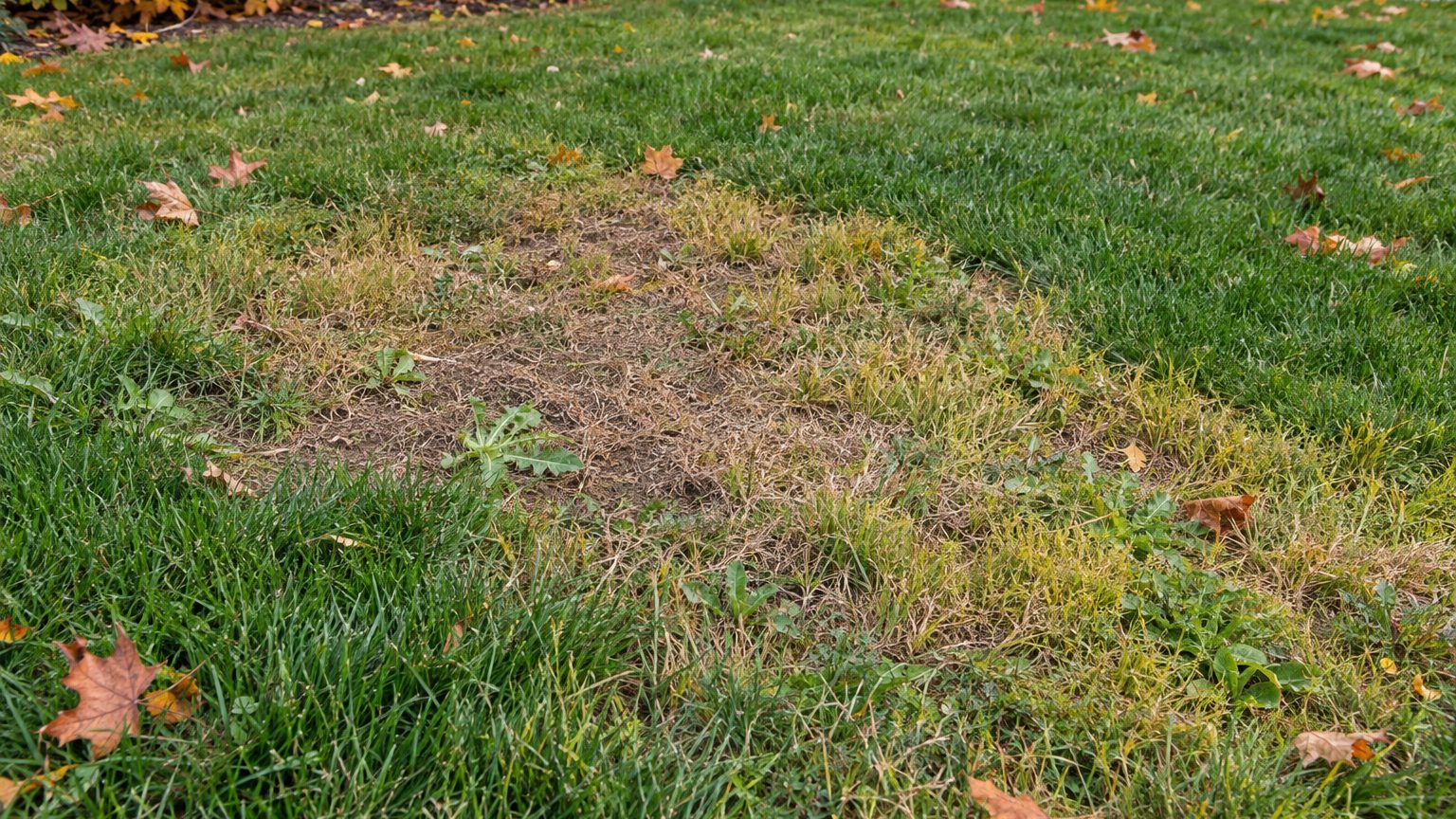
Pale, matted patches show up where the snowdrift melted last, and thin grass lingers in the low spots that stay soggy. In Nunavut, long cold and a very short growing season cause lawn trouble alongside insects and fungus. Knowing which problem you have tells you whether to wait, rake, drain or reseed.
Lawn Pests and Diseases in Nunavut
Snow Mold Patches

Matted, grayish or pinkish circles appear right after the snow melts, where the drift sat longest on unfrozen grass. Cold and damp let the fungus work under the snow. Rake the patches gently to lift the blades and let air in. Most lawns recover without any treatment once the ground warms.
Frost Heave and Winterkill
Bare, bumpy ground with roots left exposed points to freezing and thawing, not to a pest. Canada’s hardiness system rates Rankin Inlet at zone 0a, a Canadian rating rather than a USDA zone. Press heaved sod back into place when the soil softens, then reseed bare spots in June.
Moss in Wet Spots
A green, spongy carpet where the grass has thinned usually means soil that stays wet, compacted or cold. Moss takes over because the grass has already given up there. Loosen the soil, improve drainage and reseed in June. Scraping out the moss without fixing the wet ground only brings it back.
Thatch Buildup
Cold slows decay, so dead stems and roots can pile up in a springy layer above the soil. A layer up to 1.3 cm (1/2 inch) is healthy. Beyond that, dethatch or core aerate so water and air reach the roots.
Nunavut — the year and the numbers
- State
- Nunavut
- Hardiness zones
- 0a
- Last spring frost
- June 19
- First fall frost
- September 13
- Annual rain
- 12 in
- Lawn type
- cool-season
- Source
- Environment and Climate Change Canada — Canadian Climate Normals 1981-2010, station RANKIN INLET A · Rankin Inlet
How to Tell Which Lawn Problem You Have
What you see can mislead you unless you pair it with when and where it appears. A gray patch means little until you know whether snow lay there. A thin area means little until you know whether the ground stays wet.
Pulling at the grass helps too. Blades that lift off easily in a mat suggest disease, while turf that rolls back with its roots showing suggests heaving.
| What you see | When and where | Likely problem |
|---|---|---|
| Gray or pink matted circles | Just after snowmelt, under old drifts | Snow mold |
| Bumpy bare ground, roots exposed | Spring thaw, on exposed or poorly drained ground | Frost heave |
| Green, spongy mat replacing grass | Summer, in wet or compacted spots | Moss |
| Springy layer above the soil | Any time, on older lawns | Thatch |
Dry, straw-colored grass in a windy open spot, with soil that feels hard and dusty below the surface, points to drought stress rather than disease. Check the soil before you reach for anything else.
Where Lawn Problems Are Worst in Nunavut
Lawns here are few and small, and conditions shift a lot among Nunavut’s regions. Frost dates for the northern and upland districts run weeks behind those of the Hudson Bay shore.
- Rankin Inlet and the Kivalliq coast: In Rankin Inlet, the last spring frost falls on average June 19, so half of all years it comes later. Wind off Hudson Bay dries exposed turf and piles snow into drifts that invite snow mold.
- Iqaluit and southern Baffin Island: Cool, damp coastal air and rock-and-gravel ground make wet pockets and moss more likely. Drainage matters more than feeding.
- Cambridge Bay and the Kitikmeot: Colder, windier and treeless, with a still shorter season. Winterkill and heaving can threaten a lawn here, and a sheltered site gives the grass a better chance.
Wherever you live, a spot sheltered from wind and well drained gives grass a better chance.
Lawn Care Mistakes That Invite Problems in Nunavut
Mowing Too Short
Cutting low strips the blades the plant needs to gather energy in a brief season. Mow from June through September, and keep the grass on the tall side so it shades its own roots and shrugs off wind.
Watering at the Wrong Time
Soggy soil breeds moss, while a dry spell during the short summer stresses young grass. Water from June through August, only when the soil is dry a little way down, and skip it when the ground is already wet or the weather is cool.
Feeding Too Early or Too Heavily
Fertilizer applied before the grass is growing is wasted on cold soil. Give the first feeding in June, once the turf has greened up. If you miss the June feeding, a light feeding in August still works. Heavy doses push soft growth that the first fall frost, on average September 13 in Rankin Inlet, can damage.
Where to Get Lawn Advice in Nunavut
Canada has no county extension offices, so advice comes from different places. Nunavut conditions differ from the rest of the country, so ask someone who has grown grass in your community.
- The federal department Agriculture and Agri-Food Canada offers general guidance on soils and growing, useful to read before spring thaw.
- Local garden centers and greenhouse growers in your community know which seed mixes and soil fixes have worked nearby, so ask them in early June before you seed.
- Territorial government staff and neighbors who keep a lawn can tell you how your local drifts and wet spots behave.
Common Questions
What Does Zone 0a Mean for a Lawn in Nunavut?
For Rankin Inlet, zone 0a is a Canadian hardiness rating, and it does not convert to a USDA zone. It signals very cold winters, so choose only the hardiest grass types and expect slow recovery after winter damage.
Can You Seed a Lawn in Nunavut in the Fall?
The season is too short for fall seeding. Seed in June once the ground has thawed, and if you miss that window, July still works.
When Can You Start Mowing in Nunavut?
Mowing runs from June through September. Start once the grass has actually grown tall enough to cut, and not before.