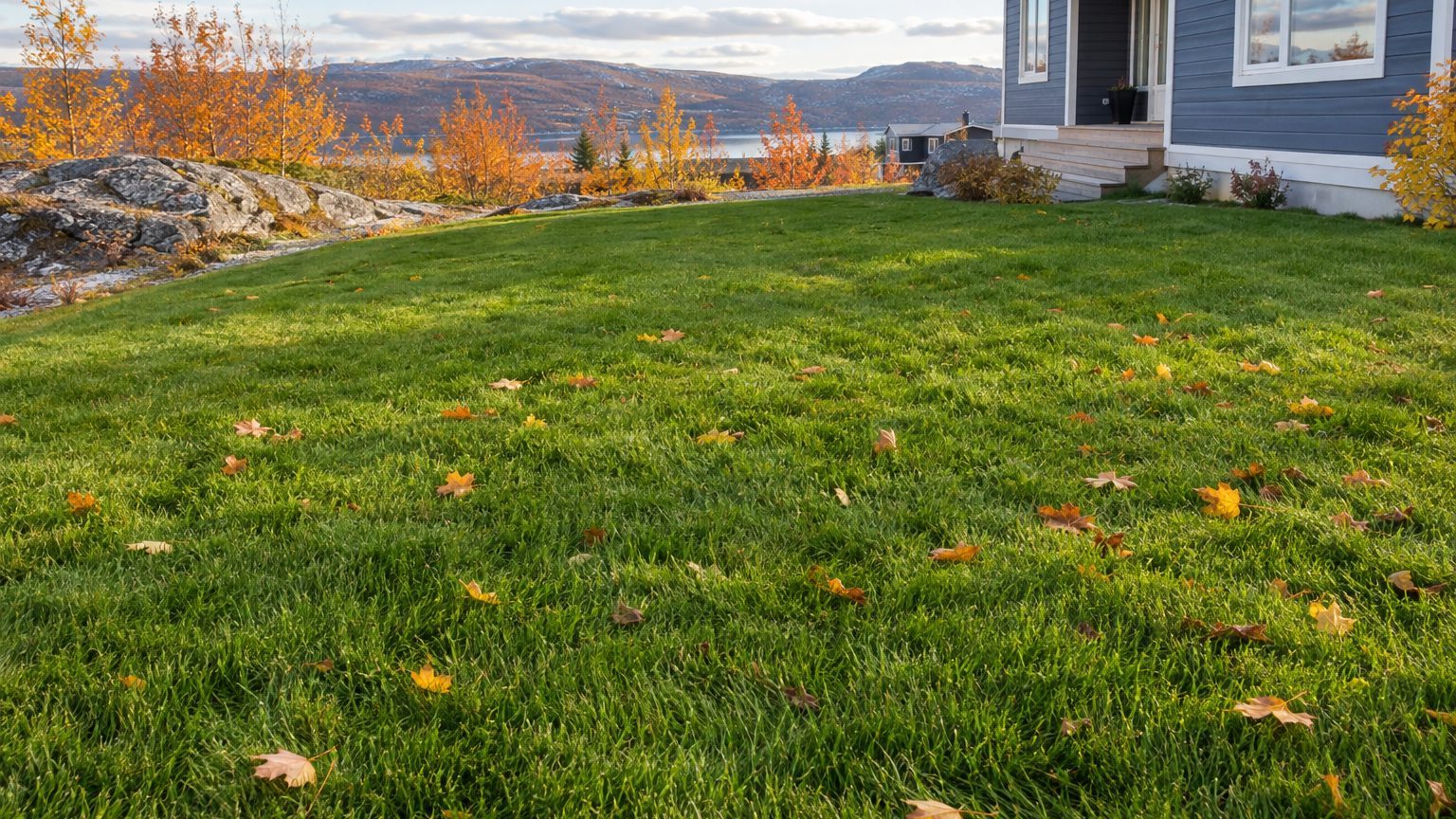
A Nunavut lawn gets a short burst of green once the snow has gone and the ground has softened, then it goes quiet again for most of the year. Nearly all the work fits into one stretch of summer. The schedule here covers the whole territory, with the weeks that matter for seeding, feeding, mowing and watering.
What to Do Each Month in a Nunavut Lawn

Lawn work here is compressed into summer, and the rest of the year is rest. Seeding comes first, and everything else follows the grass once it is actually growing.
| Month | In the lawn |
|---|---|
| January | Rest. The grass is dormant under snow and frozen ground. |
| February | Rest. Nothing to do, and nothing to feed. |
| March | Rest. The ground is still locked, so the lawn stays dormant. |
| April | Rest. Snow is still the cover, and the soil has not begun to thaw. |
| May | Rest. Watch the thaw, because bare spots appear as snow retreats, but the grass is not growing yet. |
| June | Seed bare patches once the ground has thawed, since the season is too short for fall seeding. Water new seed and start mowing as the grass grows. A first feeding works now that growth has begun. |
| July | If you missed June, July still works for seeding. Mow as needed and water through dry spells. |
| August | Mow and water. If you skipped the June feeding, August also works for fertilizing. |
| September | Keep mowing while the grass still grows. Watering is no longer on the schedule as growth slows. |
| October | Rest. The grass is going dormant, and cold arrives quickly. |
| November | Rest. The lawn sleeps under early snow. |
| December | Rest. Dormant, with nothing to do until the thaw. |
Treat June as the month that matters most. A seed sown then has the full summer to root, and a lawn started late has little time before the cold returns.
Nunavut — the year and the numbers
- State
- Nunavut
- Hardiness zones
- 0a
- Last spring frost
- June 19
- First fall frost
- September 13
- Annual rain
- 12 in
- Lawn type
- cool-season
- Source
- Environment and Climate Change Canada — Canadian Climate Normals 1981-2010, station RANKIN INLET A · Rankin Inlet
When Does the Lawn Season Start and End in Nunavut?
Grass wakes up when the soil warms, not when the calendar says so. Most lawn seed germinates once the soil reaches 10 to 18 °C (50 to 65 °F), and in much of Nunavut that only happens in the short summer after the thaw. The grass type matters too, since only hardy kinds cope with this much cold.
Frost dates tell you about risk to young plants, not about growth. At Rankin Inlet, the last spring frost falls on average around June 19. That is a midpoint, so in one year out of two the frost comes later, and northern districts run weeks behind it. A seedling that sprouts before then may still get nipped.
At the other end of the season, the first fall frost at Rankin Inlet comes on average around September 13, with half of all years later and half earlier. For a lawn, that means growth slows and then stops soon after. Seed sown in July needs to be well rooted before that frost arrives, which is why June is the better start.
How the Lawn Calendar Shifts Across Nunavut
Nunavut is huge, and the lawn season is not the same from one community to the next. The dates here lean on the Hudson Bay coast, so adjust for where you live.
- Rankin Inlet and the Kivalliq coast: Cold water and sea ice from Hudson Bay hold the spring back, so the soil thaws late and the season is short and abrupt.
- Iqaluit and southern Baffin Island: Sea air keeps summer cool, so growth is slow, and the calendar usually runs a little later than the coastal mainland.
- Cambridge Bay and the Kitikmeot: Exposed, windswept ground thaws late and dries out fast, so sow as soon as the ground has thawed and water during dry spells.
The farther north you go, the later the thaw and the earlier the cold, so seed as soon as the ground has thawed and expect less growth overall.
Lawn Care Timing Mistakes to Avoid in Nunavut
Seeding in Fall
Fall seeding works in much of the country, but not here. The season is too short, and seed sown late has no time to root before the cold. Plan seeding for June, with July as the fallback.
Feeding Before the Grass Grows
Fertilizer put down on frozen or snow-covered ground just washes away or sits unused. The grass cannot take it up until it is growing. Wait for June, once the lawn is green and actively growing, and feed then. August also works if you missed it.
Trusting the Last Frost Date
The average spring frost date is the middle of a spread, not a safe line. Half of years bring frost later than that. If you seed in early June, be ready for a cold snap, and wait for settled weather before you count on the new grass.
Where to Get Lawn Advice in Nunavut
Canada has no county extension offices, so advice comes from other places. For crops and growing in general, Agriculture and Agri-Food Canada is the federal starting point.
- Your territorial government agriculture contacts can tell you what grows locally, so ask them before you buy seed in spring.
- A local garden group or hamlet greenhouse is worth a visit before you decide what to sow.
- A garden center or supplier can help you choose hardy seed, ideally before the June thaw so it arrives in time.
Common Questions
Can You Use a USDA Zone for Nunavut?
No. Canada uses its own system, and Rankin Inlet sits in zone 0a on the Canadian scale. That does not convert to a USDA zone, because the two systems measure different things.
Does a Nunavut Lawn Need Any Winter Care?
No tasks are scheduled from October through May. The grass is dormant, so there is nothing to mow, feed or water until the ground thaws and growth resumes.
Should You Keep Watering into September?
Watering belongs to June, July and August. In September the grass is slowing down, so mowing is the main job and the hose can be put away.