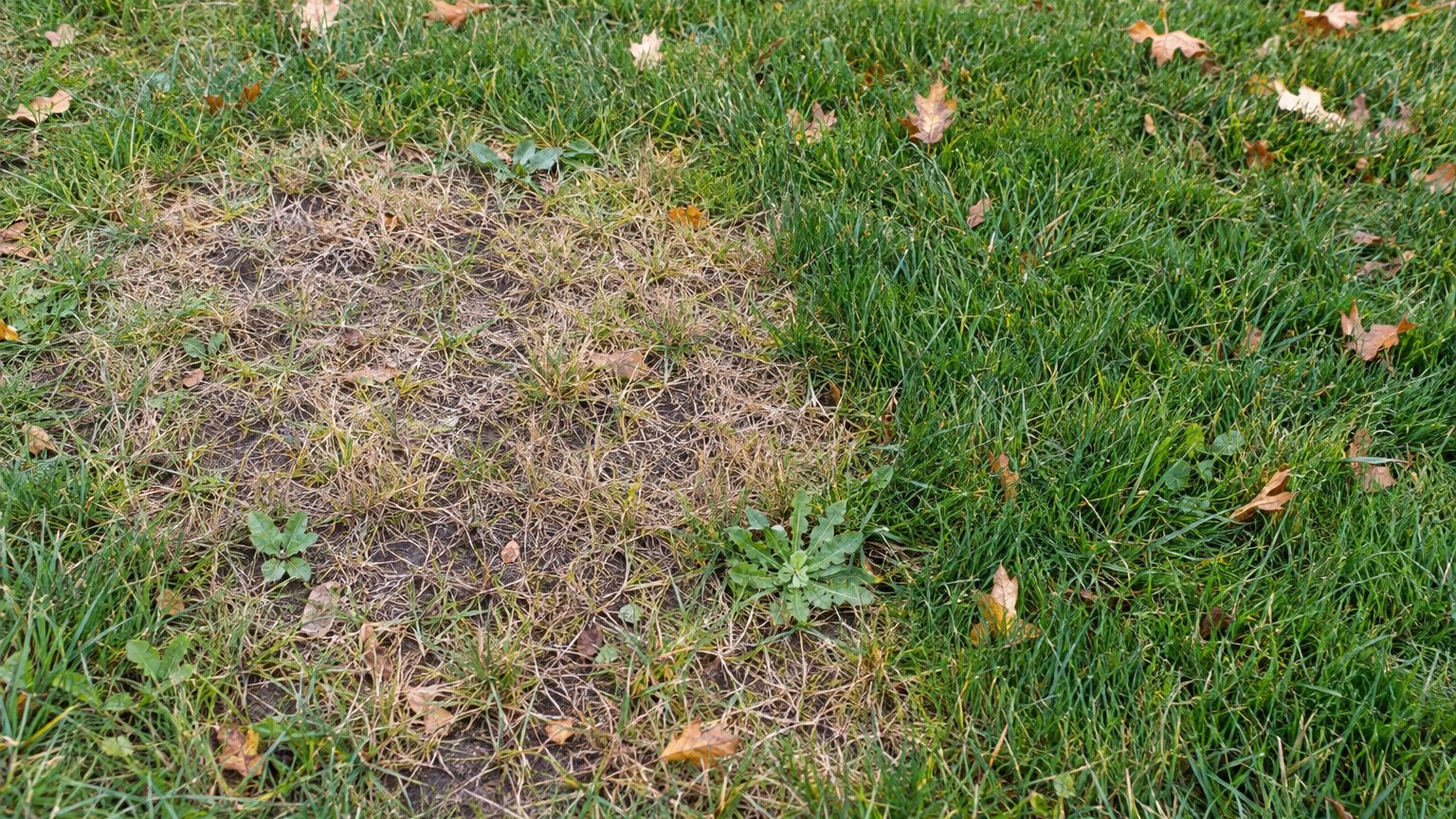
A lawn in North Dakota can come out of winter with gray matted patches where snow lingered, followed by dandelions as the soil warms. These problems have recognizable signs and become easier to fix once you match the sign to the cause.
Lawn Pests and Diseases in North Dakota

Snow Mold

Snow mold shows up as circular gray or pinkish matted patches right after the snow melts. It develops under deep, long-lasting snow on grass that went into winter long and unraked. North Dakota lawns often spend long stretches under snow. Rake the patches gently so air reaches the crowns, and turf often recovers on its own.
Crabgrass in Warm Spells

Crabgrass appears as light green, sprawling clumps that lie flat and spread from the center. It sprouts in bare or thin spots once the soil warms. In Fargo, the last spring frost falls between May 4 and May 15, and gardens outside the city usually see it a week or two later, so check your own county.
A pre-emergence preventer goes down in May, before seedlings show. A thick lawn helps suppress later crabgrass.
Dandelions and Broadleaf Weeds
Dandelions, clover and plantain move into lawns that are thin, compacted or mown too short. You will see them first along driveways and in worn paths. Pulling works for a few plants if you get the taproot. For larger patches, the lasting fix is a denser lawn, which comes from overseeding in late summer and feeding on schedule.
Dollar Spot in Midsummer
Dollar spot leaves small, straw-colored spots about the size of a silver dollar, and they can merge into larger blotches. Look for it in July and August when nights are humid and the lawn is short on nitrogen. Water deeply in the early morning, and wait until September to feed. Avoid evening sprinkling, which keeps the blades wet through the night.
White Grubs in Late Summer
Grubs are fat, C-shaped, cream-colored larvae that feed on roots. The sign is turf that feels spongy and lifts like a loose carpet, often with skunks or birds digging at it. Pull back a small section of sod and look. A handful of grubs is normal, but a crowded patch means the roots are being cut off and the lawn will not hold water.
North Dakota — the year and the numbers
- State
- North Dakota
- USDA zones
- 3a-4b
- Last spring frost
- May 4 to May 15
- First fall frost
- September 25 to October 5
- Annual rain
- 24 in
- Lawn type
- cool-season
- Source
- NOAA NCEI U.S. Climate Normals 1991-2020, 32F freeze probabilities · Fargo
How to Tell Which Lawn Problem You Have
Start with the shape of the damage and the time of year. Then kneel down and tug on the grass. Whether it lifts like a rug, pulls out in clumps or stays firmly rooted narrows the list quickly.
Shade versus sun matters too, since fungus tends to favor damp, shaded corners while drought stress shows first on open, sunny ground.
| What you see | When it appears | Likely cause |
|---|---|---|
| Gray or pink matted circles | Right after snowmelt | Snow mold |
| Sprawling light green clumps in thin spots | Late spring into summer | Crabgrass |
| Small straw-colored spots that merge | Humid midsummer nights | Dollar spot |
| Turf that lifts like a rug | Late summer into fall | White grubs |
| Yellow flowers and rosettes in bare areas | Spring and early summer | Dandelions and broadleaf weeds |
Brown, crunchy grass in full sun that springs back after a good soaking is usually plain drought stress and not a disease at all. Spongy turf that feels bouncy underfoot but has no insect damage points to a thick thatch layer, which is a different fix from any of the above.
Where Lawn Problems Are Worst in North Dakota
The state is big and flat, yet conditions shift from the humid east to the drier west and from the southern border toward Canada.
- Red River Valley: Heavy soil and wet springs can keep turf damp, so watch for snow mold and dollar spot around Fargo and Grand Forks. Compaction is common, which makes weeds easy to establish.
- Bismarck and the Missouri Slope: Drier air and lighter soils mean drought stress shows up faster than disease. Lawns here are more likely to brown in July than to get fungal spots.
- Turtle Mountains and the north: Snow can linger into spring, so snow mold may remain visible and recovery can be slower.
Wherever you live, your own yard can differ from the town next door, especially on low ground or in shade.
Lawn Care Mistakes That Invite Problems in North Dakota
Mowing Too Short
Scalped grass has shallow roots and leaves bare soil exposed to weed seeds. Mowing runs from May through October, and for the whole season it pays to set the blade higher. Taller turf shades the soil and helps the lawn compete with crabgrass and dandelions.
Shallow Daily Watering
A quick sprinkle every day keeps the surface wet and the roots lazy. Water from May through September, but soak deeply and less often so moisture reaches the root zone. Water in early morning so the blades dry by midday, which cuts down on dollar spot.
Feeding at the Wrong Time
Heavy fertilizer in midsummer pushes soft growth that invites disease and burns in heat. Feed in May and again in September. The fall feeding helps the lawn thicken before winter, and a thick lawn handles snow mold better. In Fargo, the first fall frost lands between September 25 and October 5, and outlying yards often get it earlier.
Where to Get Lawn Advice in North Dakota
NDSU Extension publishes lawn guidance written for the state’s soils and climate, and your county office can look at a sample or a photo of what you are seeing.
- Search the state extension site in spring to match early symptoms like snow mold before you treat anything.
- Call or visit the county extension office in midsummer if brown patches spread or the cause is unclear.
- Bring a small plug of sod with roots and soil when you suspect grubs or compaction.
Common Questions
When Should You Seed a Lawn in North Dakota?
Seed in August or September, when warm soil and cooler air help seedlings root before winter. May is another option. Seed can also go down on cold soil in November, or October as a backup, and it will sprout in spring.
When Should You Aerate or Dethatch a North Dakota Lawn?
Both jobs fit August and September, just ahead of overseeding. A thatch layer up to 1/2 inch thick is healthy, and anything thicker calls for dethatching or core aeration. Press a finger into the turf or slice out a small plug to see how thick it really is.
Is Dormant Seeding Worth Trying on a Thin Lawn?
It works well for thin or bare patches you could not get to earlier. The idea is to wait until the soil is truly cold so the seed stays put over winter. It then germinates with the first spring warmth, giving the grass a head start on weeds.