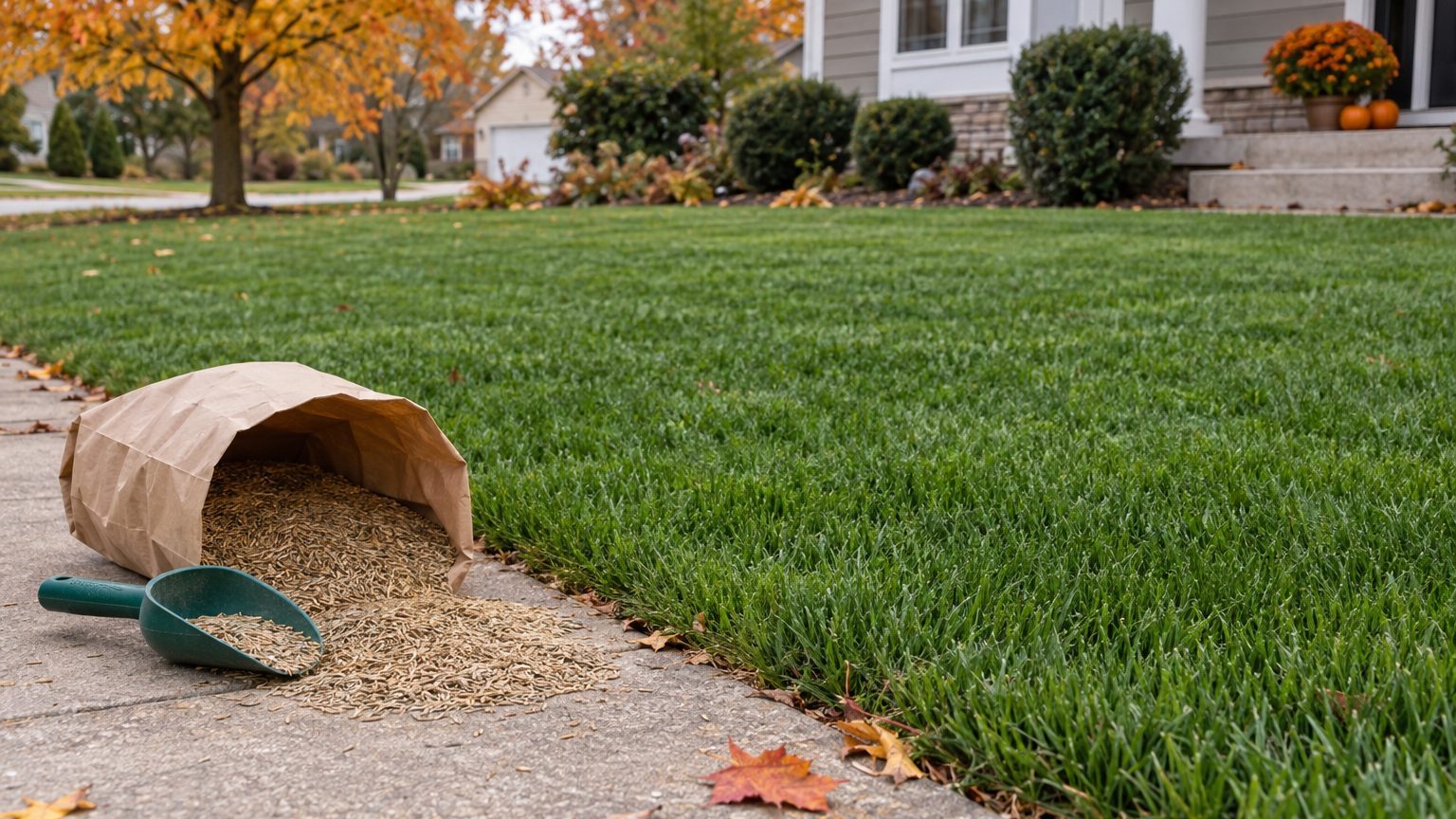
Cool-season grasses can stay green through Nebraska summer heat and survive winter cold. Kentucky bluegrass and tall fescue lead the list, with fine fescues and perennial ryegrass filling specific roles. Seeding in late summer gives any of them the best start.
Which Grass Grows Best in Nebraska?
Nebraska spans USDA hardiness zones 4a to 5b, and the cool-season grasses below suit its cold winters. Cool-season types grow hardest in spring and fall, then slow in midsummer. Here are the cool-season seed options and the yards they suit.
Kentucky Bluegrass
This is the classic Nebraska lawn grass. It shrugs off hard winters and spreads by underground stems, so thin spots slowly fill in. It wants sun and regular water through the hottest months.
Tall Fescue
Deep roots let tall fescue ride out dry spells better than bluegrass. It grows in clumps rather than spreading, so overseed bare patches instead of waiting for them to heal. It is a sturdy choice for a busy yard.
Fine Fescues
Creeping red, chewings, and hard fescue are the shade specialists. They stay fine-leaved and suit lower-input areas. They sulk in heavy foot traffic, so use them under trees and on quiet corners.
Perennial Ryegrass
Ryegrass sprouts fast, which makes it handy for quick cover and for blending into a mix. Alone, it is less dependable in a Nebraska winter because it has less cold tolerance than bluegrass. Treat it as a partner, not the whole lawn.
Nebraska — the year and the numbers
- State
- Nebraska
- USDA zones
- 4a-5b
- Last spring frost
- April 12 to April 23
- First fall frost
- October 15 to October 26
- Annual rain
- 32 in
- Lawn type
- cool-season
- Source
- NOAA NCEI U.S. Climate Normals 1991-2020, 32F freeze probabilities · Omaha
How to Choose Grass Seed for a Nebraska Yard
Start with the light your yard gets, then think about foot traffic and how much watering you will really do. The grass that fits those conditions will outlast a choice based only on a bag label.
Mowing runs from April through November, but grass type, water, shade, and mowing habits all matter when you choose.
| Your yard | Grass to seed | Why it fits |
|---|---|---|
| Full sun, lawn you water | Kentucky bluegrass | Dense, self-repairing turf |
| Full sun, limited watering | Tall fescue | Deep roots handle dry stretches |
| Shade under trees | Fine fescues | Tolerate low light |
| Kids and pets, heavy use | Tall fescue with some ryegrass | Tough blades, quick cover |
| Mixed sun and shade | Bluegrass with fine fescue | Each grass takes its own spot |
Watering is most useful in June, July, and August, when cool-season grasses are stretched thin. If you will not water then, lean toward tall fescue and accept that bluegrass may go dormant and brown for a while.
Which Grasses Grow Where in Nebraska
The same four grasses work statewide, but the weather shifts as you travel, and so does how much you can lean on each one.
- Omaha and Lincoln: The eastern side is milder and wetter, so Kentucky bluegrass does well here with regular care. Frost in the reference-city area typically ends between April 12 and April 23, though suburban yards often get it later.
- The Panhandle: Higher ground means colder winters and drier air, so tall fescue and fine fescues earn their place. Expect frost to linger later in spring and arrive earlier in fall than in the east.
- Central Nebraska and the Platte Valley: Summers dry out faster than in the east, which favors tall fescue where watering is limited.
Check your own county for frost timing, since suburban and rural yards often freeze later in spring and earlier in fall than the Omaha reference point.
Grass Seed Mistakes to Avoid in Nebraska
Buying Warm-Season Seed
Seed marketed for southern lawns can look tempting online, but it struggles in Nebraska winters. Stick with the four cool-season types and read the bag for the species names rather than a brand promise.
Seeding at the Wrong Time
August and September are the best months for new seed, because warm soil and cooler air let seedlings root before winter. If you miss that window, April and May still work. Fall frost can arrive between October 15 and October 26 at the Omaha reference point, so late sowing leaves little time for roots.
Burying or Scattering Seed Badly
Cover seed with no more than 0.25 inch of soil, and press it down so it touches the ground firmly. Deep burial smothers seedlings, while seed left loose on top dries out or washes away. Rake lightly, roll or walk the area, then keep the surface damp.
Where to Get Lawn Advice in Nebraska
Local soil and rainfall vary enough that a quick check with a local expert can save a season of guessing.
- University of Nebraska–Lincoln Extension publishes turf guidance written for the state, so browse it before you buy seed.
- Your county extension office can discuss your soil and shade, and a spring or late-summer visit fits before seeding.
Common Questions
Can You Mix Grass Seed Types in Nebraska?
Yes. Blends such as bluegrass with fine fescue cover sun and shade across a yard, and ryegrass adds quick sprouting. Match the mix to the conditions you actually have.
Is Spring a Good Time to Seed a Nebraska Lawn?
April and May work as a fallback if you missed late summer. Seedlings must then face summer heat with young roots, so plan to water regularly.
Can You Plant St. Augustinegrass in Nebraska?
No. It is never sold as seed and is a southern grass, so it does not fit Nebraska winters.