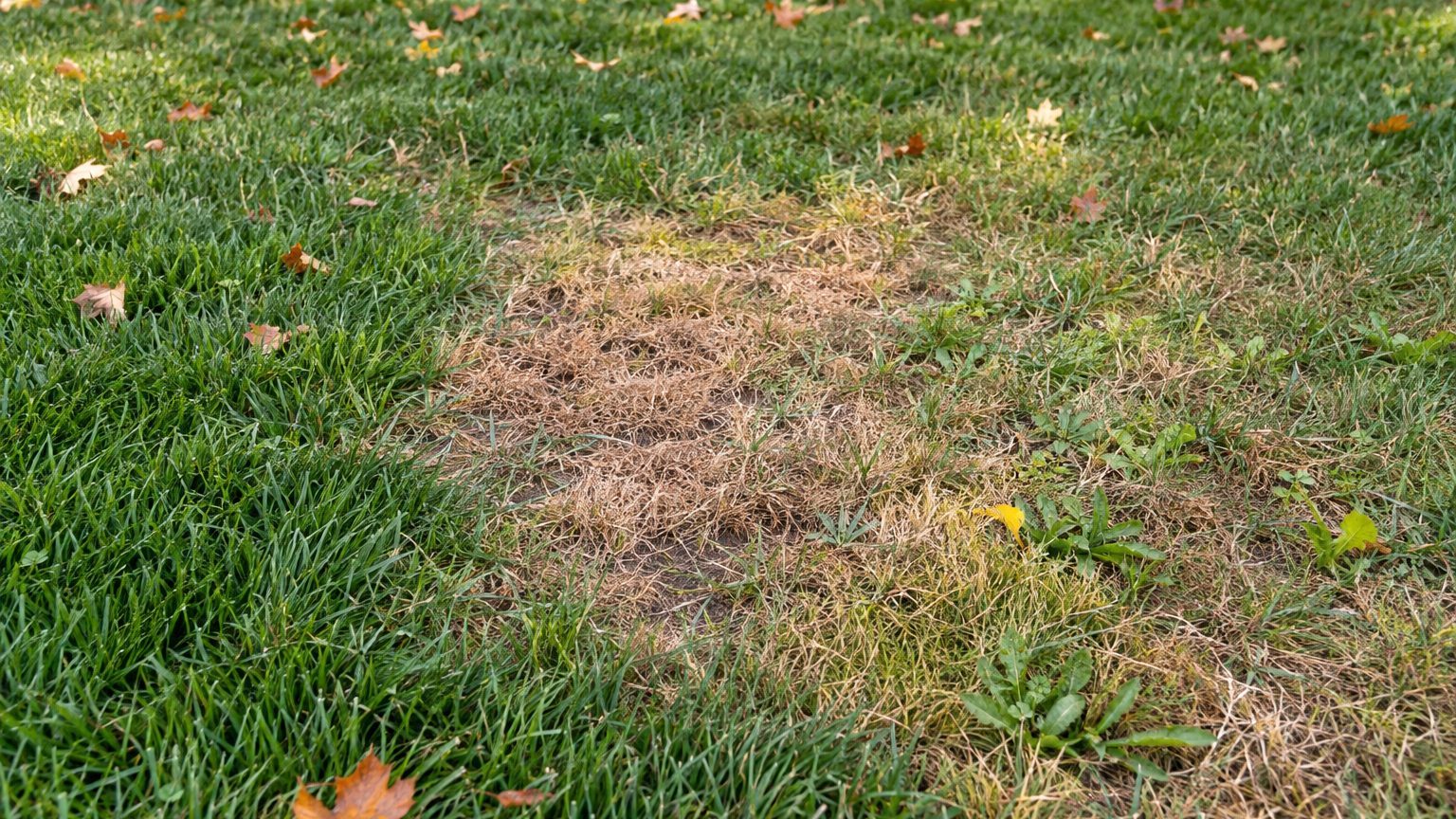
Brown circles in July, crabgrass in the driveway edge, a lawn that thins out under the maple: Missouri yards show their troubles in predictable seasons. The state sits where cool-season and warm-season grasses both struggle, so common problems often trace back to summer stress, wet springs, or a mismatch between grass and care.
Lawn Pests and Diseases in Missouri
Crabgrass in Thin Spots

Crabgrass shows up as coarse, light green clumps that spread flat along the ground, usually where turf is thin or beside pavement. Seeds sprout as the soil warms in spring. A preventer applied in March works best, and February, April or May still work if you missed it.
Mowing at a steady height and keeping the lawn dense shades out the seedlings you did not catch.
Thatch Buildup
Pull back the grass and look at the brown, spongy layer above the soil. Up to 1/2 inch is healthy. Beyond that, water and fertilizer struggle to reach the roots, and disease settles in.
Dethatch or core aerate tall fescue in August or September. Bermuda and zoysia lawns are dethatched in May or June, and April also works.
Brown Patch in Summer Heat
Brown patch appears as roundish tan to brown areas on tall fescue during warm, humid stretches. Missouri summers give it plenty of chances, especially on lawns watered in the evening or fed too heavily in warm weather.
Water deeply in the morning during June, July and August, and keep nitrogen out of the summer schedule for fescue. Patches usually fill in once cooler weather and fall seeding arrive.
Thin Turf After Summer
Tall fescue often comes out of summer weak and bare in places. Late summer is the repair window: aerate and overseed in August, and if you miss it, September still works.
Seed placed in loosened soil can root before the first fall frost, which falls between October 18 and October 29 around Kansas City and varies elsewhere in Missouri. Warm-season lawns follow a different schedule: seed in May, or in June if May gets away from you.
Missouri — the year and the numbers
- State
- Missouri
- USDA zones
- 5b-7b
- Last spring frost
- April 6 to April 20
- First fall frost
- October 18 to October 29
- Annual rain
- 39 in
- Lawn type
- cool- and warm-season
- Source
- NOAA NCEI 1991-2020 Climate Normals, 32F freeze probabilities · Kansas City
How to Tell Which Lawn Problem You Have
Do not rely on appearance alone. Pair what the damage looks like with where it sits and when it appeared, then check the plant itself: does it pull up, does it have roots, is the soil spongy underfoot?
Shade, sun and season narrow things quickly. A problem that follows the shadow line of a tree points elsewhere than one that sprawls across open, sunny turf.
| What you see | Where and when | Likely cause |
|---|---|---|
| Coarse, flat, light green clumps | Thin spots and edges, summer | Crabgrass |
| Round tan patches on fescue | Open lawn, hot humid spells | Brown patch |
| Spongy turf, water runs off | Whole lawn, any season | Thatch buildup |
| Thin, weak grass | Under trees, after summer | Shade and summer stress |
If the grass lifts easily like a loose carpet and has no roots beneath, the cause is likely in the soil rather than a leaf disease, which is worth confirming with an extension office before treating anything.
Where Lawn Problems Are Worst in Missouri
Missouri stretches across USDA hardiness zones 5b to 7b, so the same lawn faces different pressure depending on where it sits.
- Northern Missouri: Colder winters favor tall fescue and bluegrass, while spring growth starts later, so early-season care may need to wait.
- Kansas City and St. Louis: Hot, humid summers put cool-season lawns under disease stress, and brown patch is a regular visitor.
- The Bootheel and southern Missouri: Milder winters and longer heat make warm-season grasses like bermuda and zoysia a natural fit, with growth starting earlier in spring.
Check your grass type before you apply any regional advice, because timing changes with grass type.
Lawn Care Mistakes That Invite Problems in Missouri
Mowing Too Short
Scalped grass loses shade for its own roots and leaves bare soil where crabgrass takes hold. Mow regularly from March through November for tall fescue, and from April through October for bermuda and zoysia.
Instead of cutting low, raise the blade and take off only a small portion of the leaf at a time.
Shallow Evening Watering
Light, frequent watering after sundown keeps leaves wet overnight and invites brown patch. Water deeply and in the morning during June, July and August, when lawns need it most.
Feeding at the Wrong Time
Fertilizing tall fescue in summer feeds disease and weeds more than turf. Feed it in March, September and October, and April works too. Warm-season lawns are the opposite, fed in May, June and July when they grow actively.
Where to Get Lawn Advice in Missouri
University of Missouri Extension publishes lawn guidance for the state and offers local help that can account for conditions in your area.
- The state site has articles on turf, weeds and disease that can help you decide what to do next.
- Your county extension office can identify a problem from a sample or photo, so contact them before treating a patch you cannot name.
Common Questions
Can You Fix a Missouri Lawn in One Season?
Often you can start. Late summer seeding and aeration give tall fescue a useful head start, while warm-season lawns recover best with late spring care.
Why Does My Fescue Struggle While My Neighbor’s Bermuda Looks Fine?
Fescue is a cool-season grass that stalls in Missouri heat, while bermuda thrives in it. Each also has different timing for seeding and feeding.
Should You Dethatch Every Lawn?
No. A modest thatch layer is healthy, and dethatching only helps once it becomes excessive.