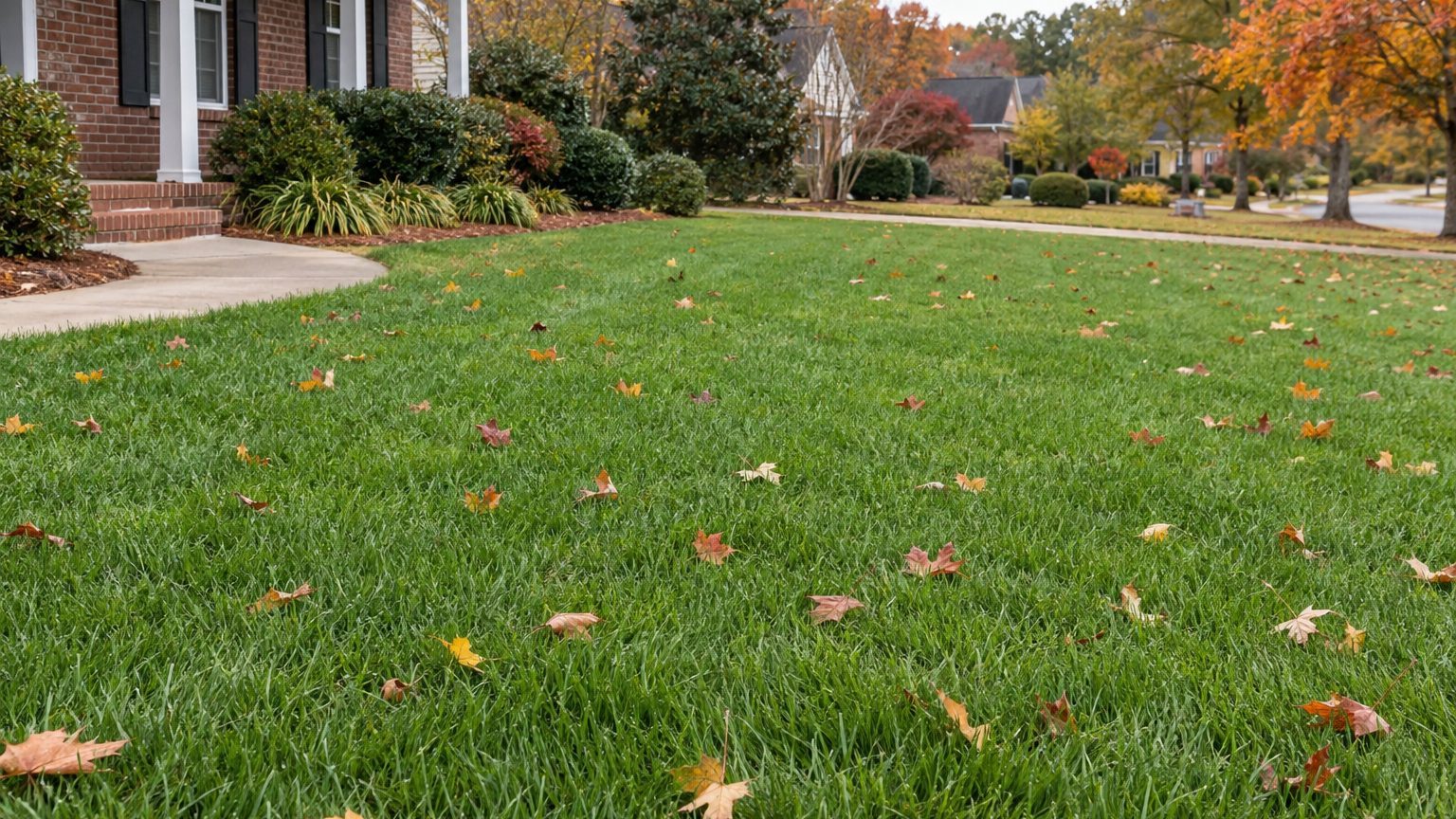
Brown, crunchy turf in January is not a dead lawn. In Mississippi, warm-season grasses go dormant in winter and wake when the soil warms, so each task has a short stretch of months where it works best. A Mississippi lawn care schedule is mostly a matter of matching your chores to those stretches.
What to Do Each Month in a Mississippi Lawn

Most of the real work lands between spring and late summer, when bermuda, centipede, zoysia and St. Augustine are growing hard. The cooler months are for resting and watching.
| Month | In the lawn |
|---|---|
| January | Rest. The grass is dormant, so keep foot traffic light and pick up fallen limbs and leaves. |
| February | Rest. Dormant turf still looks brown, and wet ground is easily torn up by heavy boots or equipment. |
| March | Mowing begins as the first green shows. Cut off the dead top growth and keep the blade sharp. |
| April | Keep mowing as growth picks up. Dethatching works now if the thatch is thick, and sod can go down too. |
| May | The busiest month. Core aerate, dethatch, seed bermuda, centipede or bahia, lay sod, start fertilizing and begin regular watering. |
| June | Fertilize, dethatch, water and mow. If you missed May, aeration, seeding and sod all still work now. |
| July | Heat peaks. Keep fertilizing and watering, mow regularly, and lay sod only if you can keep it consistently moist. |
| August | Finish the season’s fertilizing and keep watering through the heat. Mow as the grass demands. |
| September | Keep watering while the weather stays dry, and mow as growth slows. |
| October | Mow until growth stops. Skip fertilizer, since feeding now only pushes tender growth toward the cold. |
| November | Last mowings as the grass fades to brown. Rake leaves so they do not smother the turf. |
| December | Rest. The lawn is dormant, and the job is to keep leaves and debris off it. |
St. Augustine has no seed, so it gets sod or plugs. For bermuda, centipede and bahia, May is the cleanest month to start a lawn from seed.
Mississippi — the year and the numbers
- State
- Mississippi
- USDA zones
- 7b-9a
- Last spring frost
- March 6 to March 22
- First fall frost
- November 7 to November 22
- Annual rain
- 57 in
- Lawn type
- warm-season
- Source
- NOAA NCEI 1991-2020 Climate Normals, 32F freeze probabilities · Jackson
When Does the Lawn Season Start and End in Mississippi?
Grass starts growing when the soil warms, not when the last frost passes. Warm-season seed wants soil at 65 to 70 °F and rising, which is why seeding waits for May even though spring feels well underway by March.
Frost dates matter mostly for young grass. In Jackson, the last spring freeze usually falls between March 6 and March 22. Suburban and rural yards tend to freeze later than the city, and higher ground later still, so check with your county office for your own dates.
Fall works the same way in reverse. The first freeze in Jackson usually comes between November 7 and November 22, and yards outside the city often get it sooner. Growth fades well before that as soil cools, which is why mowing and feeding wind down in the fall while the grass is still green.
How the Lawn Calendar Shifts Across Mississippi
The state is long and mostly flat, so differences come from latitude and the Gulf more than from elevation.
- Gulf Coast: Winters are milder along the coast, so grass wakes earlier and goes dormant later. Expect the growing season to run longer than the statewide months, and St. Augustine is common.
- Jackson and the central Pine Belt: These areas fit the calendar as written, making it a practical starting point for local homeowners.
- Northeast Mississippi and the Tupelo area: Spring warms later and fall cools sooner, so hold seeding and sod a little toward the later end of the stretch.
Whichever area you live in, let the warmth of the soil and the look of the grass decide the first mow.
Lawn Care Timing Mistakes to Avoid in Mississippi
Seeding Too Early
A warm week in March tempts many people to scatter seed. Bermuda, centipede and bahia need warm soil to sprout, and a cold snap or a late freeze can wipe out the seedlings. Wait for May, with June as a fallback.
Fertilizing Too Late
Feeding in fall seems kind to a tired lawn, but it pushes soft growth just before dormancy. Fertilize from May through August, when the grass can use it, and stop there.
Aerating in the Wrong Season
Pulling plugs from a dormant or slowing lawn leaves open soil that weeds fill first. Core aerate in May, or in June if you miss it, while the grass is growing fast enough to close the holes.
Where to Get Lawn Advice in Mississippi
Mississippi State University Extension publishes lawn guidance for the state’s grasses and soils, and county offices are staffed to answer homeowner questions.
- Your county extension office can tell you which grass suits your soil and where frost tends to hit in your area, so call before spring seeding or sodding.
- Many offices accept soil samples, which is worth doing before the first fertilizer in May.
Common Questions
Should You Water a Dormant Lawn in Winter?
Generally not. Dormant warm-season grass uses very little water, and soggy winter soil invites disease. Regular watering belongs to the growing months, from May through September.
Can You Lay Sod in Mississippi During Summer?
Yes. Sod goes down from April through July, with May the strongest choice. In midsummer heat, the new roots need steady moisture to take hold.
Is Thick Brown Thatch the Same as Dead Grass?
No. Thatch is a spongy layer of old stems and roots at the soil surface, while dead grass may remain rooted even after the blades turn brown. Press on the lawn and check whether the layer feels springy. If it does, dethatch in May or June.