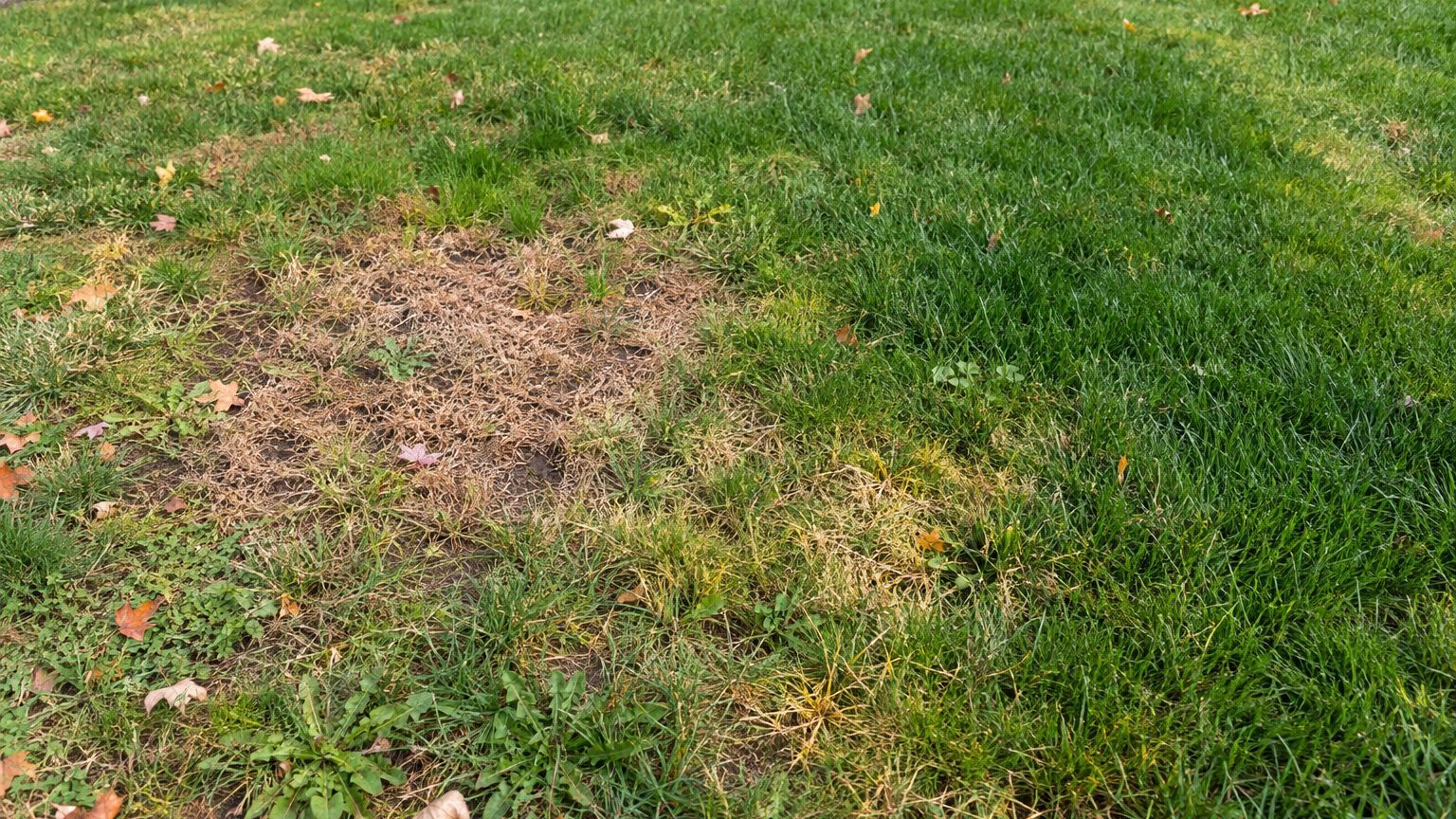
Straw-colored patches in July, a lawn that peels back like carpet in September, crabgrass crowding the edge of the driveway: Massachusetts yards show their troubles in a fairly predictable order. Most of them trace back to the same few causes, a cool damp spring, a humid summer and turf that is stressed before either arrives. Knowing which problem you have decides what to do next.
Lawn Pests and Diseases in Massachusetts
Red Thread in Cool Wet Weather
Look for pinkish-red threads sticking out of the leaf tips, with patches that look faded and ragged rather than dead. It shows up in cool, damp stretches, mostly on lawns that are short on nitrogen.
The grass usually recovers by itself. Feed in May or September so the turf grows out of it, and keep the clippings light.
Crabgrass in Thin Spots

Crabgrass is a coarse, light green weed that sprawls flat from a center point and turns purple and then tan with the first frosts. It sprouts where bare soil warms up, so thin lawns and sunny edges are hit first.
A preventer goes down in April, and it also works in May. Once the weed is up, hand-pull small clumps before they set seed and thicken the surrounding turf in fall.
Dollar Spot in Small Straw Circles
Small, sunken, bleached spots about the size of a silver dollar are the sign, sometimes joining into larger patches. Tan lesions with a darker edge appear across individual blades. Dollar spot is common on lean, dry-at-the-roots lawns that stay damp on top at night.
Water deeply and early in the day, and fertilize on schedule. A well-fed lawn shakes it off.
Brown Patch in Midsummer
Brown Patch makes irregular tan to brown rings, often with a dark smoky edge on grass that is wet at dawn. It favors tall fescue and ryegrass during hot, muggy nights and gets worse with heavy nitrogen in summer.
Skip summer feeding, water only in the morning, and mow with a sharp blade so the cuts dry quickly.
White Grubs Under Browning Turf
Grubs are fat, C-shaped, creamy white larvae that chew grass roots. The giveaway is turf that lifts like a loose rug, with no roots holding it down, often followed by skunks or crows tearing up the lawn.
Peel back a corner of the damaged sod and look at the soil. Healthy, deeply rooted grass tolerates some grub feeding, so late-summer seeding and September aeration make a real difference.
Massachusetts — the year and the numbers
- State
- Massachusetts
- USDA zones
- 5a-7b
- Last spring frost
- April 1 to April 8
- First fall frost
- November 3 to November 14
- Annual rain
- 44 in
- Lawn type
- cool-season
- Source
- NOAA NCEI 1991-2020 Climate Normals, 32F freeze probabilities · Boston
How to Tell Which Lawn Problem You Have
Looks alone are rarely enough. Pair what the patch looks like with where it sits, when it appeared and whether the grass pulls up. Give a suspect patch a gentle tug and look at the roots before you buy anything.
| What you see | Where and when | Likely problem |
|---|---|---|
| Sod lifts, no roots | Late summer, sunny turf | White grubs |
| Brown ring, dark edge | Hot humid nights, tall fescue | Brown Patch |
| Small bleached spots | Late spring into summer, lean soil | Dollar spot |
| Pink threads on blades | Cool, damp weather | Red thread |
| Coarse sprawling clumps | Bare, sunny edges | Crabgrass |
| Thin turf, green moss | Shade, compacted soil | Low light, not disease |
Spongy lawn that feels bouncy underfoot points to thatch, and a layer up to 1/2 inch thick is healthy. Above that, dethatch or core aerate in September, or in May if fall slips by. Dead grass that pulls up easily is a root problem, while grass that stays rooted is usually a leaf disease or drought.
Where Lawn Problems Are Worst in Massachusetts
Conditions change from the harbor to the hills, and so does the problem list.
- Boston and the harbor coast: The waterfront is generally milder than inland areas, so spring often starts earlier here. Crabgrass and brown patch can get going early here, and warm, humid summers keep disease pressure steady.
- Cape Cod and the Islands: Sandy, fast-draining soil dries out quickly, so drought stress and dollar spot show up more than rot. Deep, infrequent watering and compost help the soil hold moisture.
- Worcester County and inland suburbs: Frost comes earlier in fall and lingers longer in spring, which shortens the window for seeding and delays crabgrass germination.
- The Berkshires: Cooler and shorter-seasoned, with slower soil warm-up. Red thread and snow-related issues matter more than summer heat diseases.
Wherever you live, shade and compacted soil can compound problems caused by the regional climate.
Lawn Care Mistakes That Invite Problems in Massachusetts
Mowing Too Short
Scalped grass has less leaf to feed deep roots, lets crabgrass seed see sunlight and dries out fast in July. Raise the deck, keep the blade sharp and leave the clippings where they fall.
Mowing is a task for April through November, so a consistent routine matters more than any one cut.
Watering a Little Every Day
Frequent shallow sprinkles keep the surface wet, which is exactly what brown patch and dollar spot want, and they train roots to stay near the top. Water deeply but less often in the morning during June, July and August, and let the soil dry between sessions.
Fertilizing at the Wrong Time
Feeding in May and September builds roots and thickness. A heavy dose in midsummer pushes soft growth that disease loves. Massachusetts rules (330 CMR 31.05) bar fertilizer on frozen, snow-covered or saturated ground, and on drought-dormant, cold-dormant or brown turf.
If you miss September, October and November still work while the grass is green and growing.
Where to Get Lawn Advice in Massachusetts
UMass Extension publishes lawn guidance written for New England soils and weather, and its staff can help identify what is going wrong in your yard.
- Its website has turf management guides, so check it before you buy treatments for a problem you have not confirmed.
- Ask your local extension contact whether staff can examine a sample of damaged turf before the patch spreads.
- A soil test through the extension program tells you what the lawn needs, so send one in before the September feeding.
Common Questions
Can You Seed a Lawn in Massachusetts in Spring?
You can, and May is the workable spring window. August and September are better because soil is warm, weeds are slowing and young grass can root before winter. Spring seedlings must compete with crabgrass and summer heat.
When Should You Aerate a Massachusetts Lawn?
September is the time, ideally just before overseeding. May works if you missed fall. Aerating relieves compaction and helps water reach roots, so it also reduces disease-friendly puddling.
Do You Stop Mowing When Frost Arrives?
Not necessarily. Around Boston, the first fall frost tends to arrive between November 3 and November 14, and inland yards see it sooner. Grass growth follows soil warmth, so keep mowing until it truly stops growing.