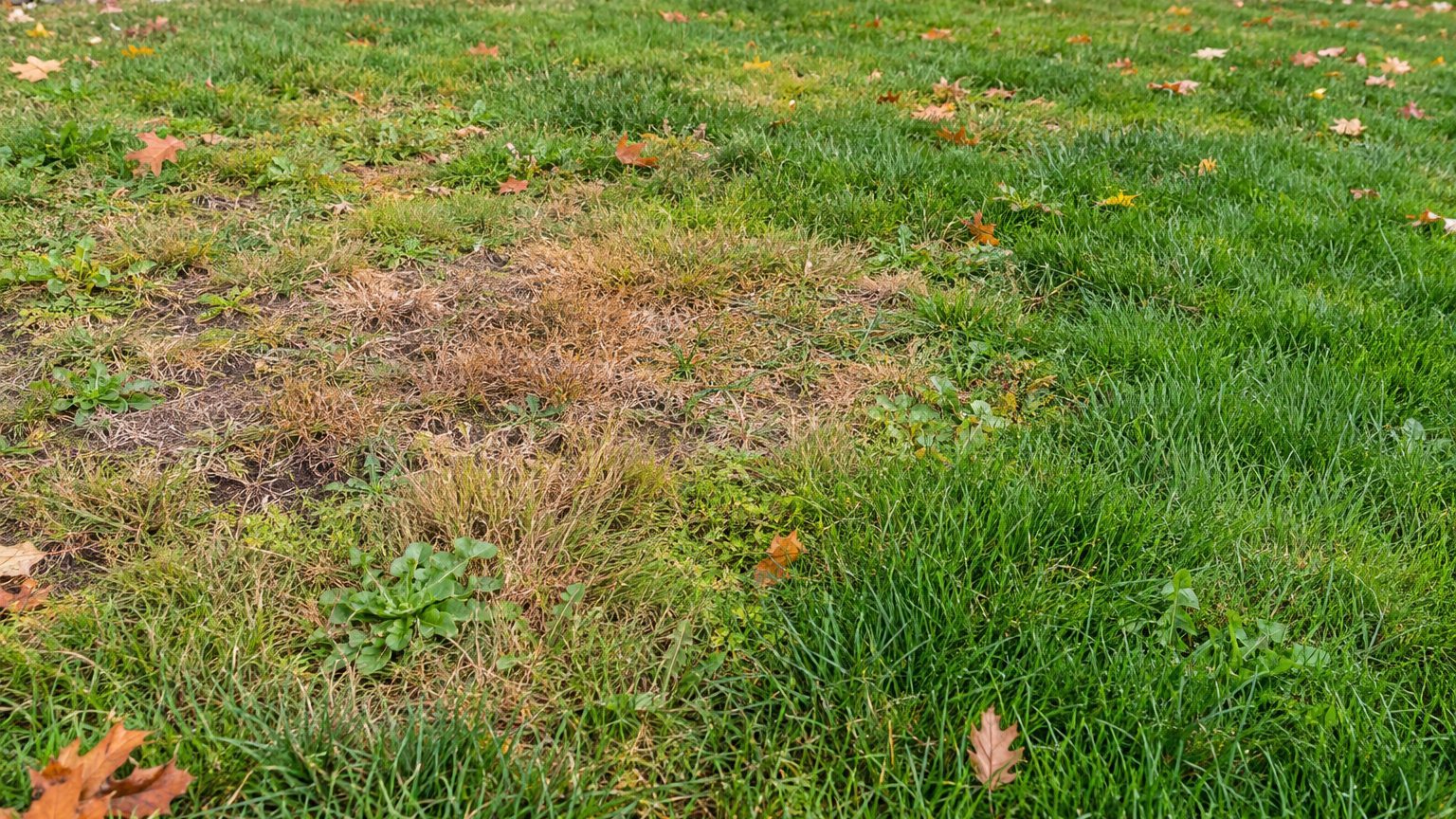
Gray, matted patches show up when the snow melts. Crabgrass edges the driveway by summer, and in late summer a section of turf can peel back like a loose carpet. Maine yards get a short, cold growing season, and each of these problems has a face you can learn to recognize. Most trace back to timing, shade, and a few mowing and feeding habits.
Lawn Pests and Diseases in Maine
Snow Mold After the Melt

Look for circular patches of flattened, grayish or pinkish grass as the last snow disappears. The fungus grows under a long snow cover on ground that never froze hard, so Maine’s deep winters set it up.
Rake the matted blades gently so air and sun can dry them. Most patches regrow from the crowns, and any that stay bare can be reseeded.
Crabgrass in Summer
Crabgrass is a coarse, light green grass that spreads flat from a central point, like a star. It moves into thin, sunny spots where soil warms fast, such as the edge of a driveway or walkway.
A pre-emergence preventer works if it goes down in April, and it still works in May. Once the plants are up, pull them young, before they set seed.
Spongy Thatch Layer
Press your foot on the lawn. If it feels springy, pull a small plug and look at the brown, fibrous mat between the green blades and the soil. A layer up to 1/2 inch thick is healthy and even protects roots.
Above that thickness, dethatch or core aerate. September is the preferred month in Maine, and May also works.
White Grubs in Late Summer
Grub damage appears as irregular dead patches where the turf lifts like carpet because the roots are gone. Crows, skunks, and raccoons tearing up the lawn are another clue. Cut a flap of sod and look for plump, C-shaped white larvae.
Find them before you treat anything. A few grubs are normal, and a lawn with deep roots tolerates them far better than a stressed one. Your county extension office can help you judge the numbers.
Moss in Shade and Wet Soil
Moss forms soft green mats under spruce and pine, along north-facing walls, and wherever the soil stays damp and packed. It shows that grass is struggling, and it rarely crowds out healthy turf on its own.
Fix the cause. Thin the tree canopy to let in light, loosen compacted soil, and overseed with a shade-tolerant grass mix. A soil test will show whether acidity is part of the problem.
Maine — the year and the numbers
- State
- Maine
- USDA zones
- 3b-6a
- Last spring frost
- April 22 to May 1
- First fall frost
- October 9 to October 21
- Annual rain
- 48 in
- Lawn type
- cool-season
- Source
- NOAA NCEI 1991-2020 Climate Normals, 32F freeze probabilities · Portland
How to Tell Which Lawn Problem You Have
A sign can mislead you, so compare the clues. Note the shape of the damage and when it appeared, then check sun or shade and whether the grass pulls up easily.
Checking those clues usually settles the question before you buy a treatment.
| What you see | When it shows | Points to |
|---|---|---|
| Matted gray or pink circles | Right after snow melts | Snow mold |
| Coarse, light green clumps spreading outward | Midsummer, in thin sunny areas | Crabgrass |
| Spongy feel, thick mat above the soil | Any season, in older lawns | Thatch |
| Turf lifts like carpet, no roots | Late summer into fall | White grubs |
| Soft green mats in damp, shaded soil | Spring and fall | Moss |
Dog urine spots look different again, a dead circle ringed with dark green grass, and the roots stay firmly in place. That firm grip is the quick test. Grass that tugs up with no roots points to grubs, while grass that stays put points to something else.
Where Lawn Problems Are Worst in Maine
Maine is a long state, and the problems shift with the cold, the shade, and how long snow stays on the ground.
- Southern coast around Portland: Spring arrives earlier here than in inland and northern Maine, with the last frost typically between April 22 and May 1, so crabgrass and grubs get a longer season. Sheltered shady lots can still grow moss.
- Aroostook County: Deep, long-lasting snow can make snow mold a spring problem. The growing season is short, so thin patches recover slowly.
- Western mountains around Rangeley and Bethel: Heavy tree cover, cold nights, and damp soil favor moss and thin grass under conifers.
- Down East coast: Cool, foggy summers keep turf moist, which suits moss and fungal spots, and acidic soils are common.
Inland and northern Maine run substantially later in spring, so shift timing to match your own town.
Lawn Care Mistakes That Invite Problems in Maine
Mowing Too Short
Scalped grass has shallow roots and leaves bare soil open to crabgrass seed. Mowing runs from April through November here, so there is plenty of opportunity to repeat the habit.
Raise the mower deck to a taller setting and leave the clippings in place. Taller blades shade the soil and keep weed seeds from sprouting.
Watering a Little, Often
Light, frequent sprinkling keeps roots near the surface and the thatch damp, which suits fungus. Watering matters most from June through August, when Maine’s summer dry spells stress turf.
Water deeply and let the surface dry between rounds. Skip watering during cool, wet stretches.
Feeding at the Wrong Time
Heavy feeding in midsummer pushes soft top growth that disease and drought punish. Maine lawns do best fed in May and in September, when roots are active and cool weather helps the grass recover.
If you miss September, October and November still work. Match the amount to a soil test instead of guessing.
Where to Get Lawn Advice in Maine
Local advice beats general rules in a state with this much variety. University of Maine Cooperative Extension and your county office can identify problems and answer questions specific to your soil and region.
- The extension website has lawn guides and soil testing information, so check it before you buy seed or fertilizer.
- Your county extension office can look at a sample of damaged turf or a grub-filled sod flap, which is useful in late summer when you suspect grubs.
Ask your county extension office what photos or samples it needs before you visit.
Common Questions
When Should You Seed Bare Patches in Maine?
August and September give new grass time to root before winter. If you miss that window, May is the fallback. Rake out dead grass first so the seed touches soil.
Can You Mow in November in Maine?
Yes, as long as the grass is still growing and the ground is not frozen. Keep the mower deck high, and stop when growth stops.
Can You Seed and Apply Crabgrass Preventer in the Same Spring?
Not usually, because a preventer stops grass seed from sprouting as well as crabgrass. Apply it in April and save major seeding for late summer.