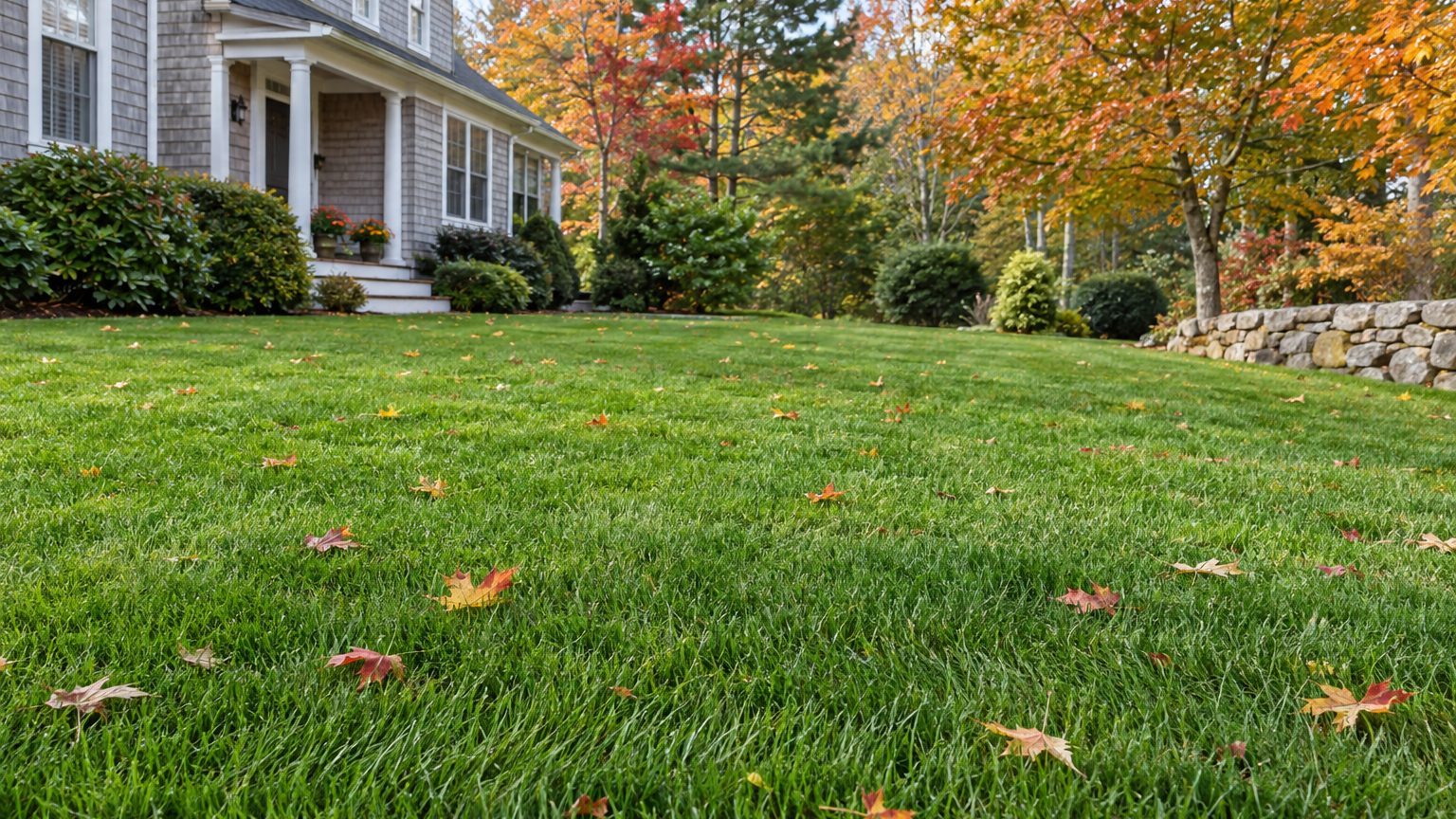
Snow pulls back from the lawn in a gray, matted sheet, and the grass underneath stays tan until the soil warms. Then the work comes in a tight run, with spring feeding, a long mowing season and a big push in late summer.
What to Do Each Month in a Maine Lawn

Maine grass is cool-season, so it grows hardest in spring and early fall and rests in summer heat and winter cold. The big jobs cluster in spring and September.
| Month | In the lawn |
|---|---|
| January | Rest. The grass is dormant under snow and ice, so keep heavy equipment and piled snow off it. |
| February | Rest. Nothing is growing, and a quiet month is a good time to sharpen the mower blade. |
| March | Mostly rest as the snow melts. Watch for matted, grayish patches where snow lingered, and stay off soggy ground. |
| April | Put down crabgrass preventer before the weed seeds sprout. The first mowing of the year usually comes now too. |
| May | Feed the lawn now, and use a phosphorus-free fertilizer. Maine law bars phosphorus on lawns unless a soil test shows a need or you are starting a new lawn. Preventer still works this month, and so do seeding, aeration and dethatching if spring slipped by. |
| June | Mow regularly and start watering when rain falls short. Roots go deeper when you water slowly and less often. |
| July | Keep watering through the heat and mow the grass a little taller. Growth slows, and cool-season turf may fade to straw if it gets dry. |
| August | Seeding season opens as the nights cool. Keep watering, and keep new seed damp. |
| September | A good month for major lawn work. Aerate, dethatch, seed and feed while the soil is warm and the air is cool. |
| October | Keep mowing, and rake leaves so they do not smother the grass. If you missed September, feeding still works now. |
| November | Make the last mowing pass as growth stops. A late feeding still works, and then the lawn goes to sleep. |
| December | Rest. The grass is dormant, so keep salt and plow piles off the edges. |
The lawn rewards effort in spring and fall. Summer is for mowing and watering, and winter is for staying off the turf.
Maine — the year and the numbers
- State
- Maine
- USDA zones
- 3b-6a
- Last spring frost
- April 22 to May 1
- First fall frost
- October 9 to October 21
- Annual rain
- 48 in
- Lawn type
- cool-season
- Source
- NOAA NCEI 1991-2020 Climate Normals, 32F freeze probabilities · Portland
When Does the Lawn Season Start and End in Maine?
Grass wakes up when the soil warms, not when the calendar says spring. Seed sprouts best in soil at 50 to 65 °F, which is why both spring and late-summer seeding can work, and why a sunny March day does little. The grass type matters too, since the fescues and bluegrasses common here start early and slow down in July heat.
Frost dates matter mainly for young grass. In coastal Portland, the last spring frost usually falls between April 22 and May 1, so May seeding there rarely meets a killing freeze. Inland yards run later, so wait a little longer before sowing.
The first fall frost in Portland usually arrives between October 9 and October 21. Seedlings need to be well rooted by then, and that is why August and September are the seeding months. Mowing carries on until growth stops in November.
How the Lawn Calendar Shifts Across Maine
Portland sits at the mild end of the state, so lawns elsewhere run behind in spring and finish sooner in fall.
- Portland and the southern coast: The ocean softens the swings, so the soil tends to warm sooner here and seeding can start sooner. Fall work can stretch a little later too.
- Bangor and central Maine: Spring comes later and fall arrives earlier than on the coast, so lean toward the early end of August and September for seeding.
- Rangeley and the western mountains: Elevation shortens the season, with snow lingering and cold nights coming early. Seed in August and give the grass as much time as you can before frost.
- Aroostook County: The north has a short growing season. Spring jobs shift later, and fall seeding needs to be done early.
Treat the monthly guide as a starting point and shift it by the weather in your own yard.
Lawn Care Timing Mistakes to Avoid in Maine
Feeding Too Early in Spring
A warm spell in March tempts people to fertilize, but the grass is barely awake and the soil is cold. The fertilizer can wash off with snowmelt and rain. Wait for May, when the lawn is growing and can use it.
Seeding Too Late
Seed scattered after September rarely gets established before the ground freezes. Thin seedlings with shallow roots heave out of the soil in winter. Aim for August and September, and if you miss them, May is the fallback.
Putting Down Preventer Too Late
Crabgrass preventer works only before the weed seeds sprout, and it also blocks new grass seed. Apply it in April, and use May as the fallback. Do not apply it on areas you plan to seed in the same season.
Where to Get Lawn Advice in Maine
Local help fits your soil and weather better than general advice, and in Maine it comes through the state’s land-grant university and its county offices.
- University of Maine Cooperative Extension offers lawn guidance and soil testing information, which is worth checking before spring feeding.
- Your county extension office can answer questions about local pests, weeds and soil, and it is a good call in spring or late summer.
Common Questions
Is October Too Late to Seed a Maine Lawn?
Yes, for most yards. Seeding works best in August and September, and May is the fallback. Seed sown in October rarely roots well before the ground freezes, so wait for spring.
Can You Seed and Use Crabgrass Preventer in the Same Spring?
Not on the same ground. Preventer stops grass seed from sprouting as well as weed seed. If you need to seed, do it in late summer and apply preventer the following April.
Does a Maine Lawn Need Watering in Spring and Fall?
Usually rain covers it. Regular watering matters most in June, July and August, and newly seeded areas need to stay damp whatever the month.